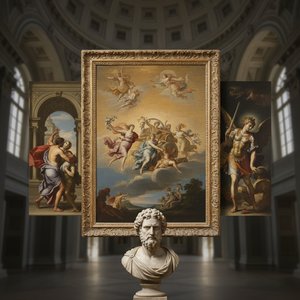
Agostino Ciampelli: A Baroque Visionary
Agostino Ciampelli (1565–1630) stands as a pivotal figure within the Italian Baroque artistic landscape, an artist whose prolific output graced churches and palaces across Rome and Florence, leaving behind a legacy of luminous frescoes and emotionally resonant sculptures. Despite scant biographical details—a testament to the ephemeral nature of patronage during his era—Ciampelli’s impact on the visual arts is undeniable, primarily due to his masterful execution of commissions from influential patrons like Alessandro de Medici and his unwavering devotion to religious iconography.
- Early Life & Training: Born in Florence around 1565, Ciampelli's formative years unfolded under the tutelage of Santi di Tito, a leading sculptor and painter whose workshop served as a crucible for shaping the sensibilities of Florentine artists destined for greatness. This association instilled within him a profound understanding of classical ideals blended seamlessly with Baroque dynamism—a stylistic hallmark that would permeate his subsequent oeuvre.
- Florence: The Tornabuoni Chapel & Alessandro’s Patronage Ciampelli's artistic journey commenced in Florence where he undertook the ambitious task of decorating the Tornabuoni Chapel, a project commissioned by Palazzo Pitti’s influential Medici family. Alongside Andrea Commodi at the Gesu, Ciampelli produced emotionally charged depictions of Saint Ignatius and his followers—a testament to Alessandro de Medici’s unwavering support for artistic endeavors.
- Rome: A Papal Embrace & Artistic Flourishing Ciampelli's relocation to Rome during Clement VIII’s papacy marked a transformative period in his career. He swiftly gained recognition as a skilled fresco painter, securing commissions from prominent ecclesiastical institutions and demonstrating an exceptional ability to convey spiritual fervor through color and composition. Notable achievements include the monumental Crucifixion for Santa Prassede—a masterpiece of dramatic realism—and the intricate angelic figures adorning the apse of Santa Maria in Trastevere.
- Notable Commissions & Artistic Style: Ciampelli’s artistic style is characterized by a masterful blend of classical restraint and Baroque exuberance. His frescoes are imbued with vibrant hues, meticulously crafted details, and expressive gestures that capture the essence of biblical narratives. Recurring motifs—particularly angelic depictions—reflect his profound engagement with theological themes and underscore the pervasive influence of Santi di Tito's teachings.
- Legacy & Influence: Ciampelli’s contribution to Baroque art extends beyond individual commissions; he established a workshop that nurtured talent and disseminated stylistic innovations. His works continue to inspire admiration for their technical brilliance and emotional depth, cementing his place as one of the foremost painters of his time—a true embodiment of the artistic spirit of the Counter Reformation.
Sources: Wikipedia Article on Agostino Ciampelli