
The Luminous Revolution: Moving Beyond the Optical Moment
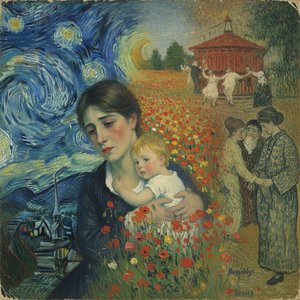 Capturing the Soul: The Most Emotionally Moving Impressionist and Post-Impressionist Masterpieces
The Luminous Revolution: How Impressionism Redefined the Art of Seeing Impressionistic Landscapes: 10 Masterpieces That Changed Art & Decor Introduction To gaze upon these ten canvases is to step directly into a world transformed by light, color, and...
To step into a room filled with Impressionist canvases is to leave behind the heavy, somber shadows of academic tradition and enter a realm bathed in dappled sunlight. For those of us who have spent decades admiring these works, we recognize that they do not just depict a place; they capture the very sensation of being present within it. In the mid-1s80s, a group of courageous rebels in France sought to dismantle the rigid constraints of the Salon, turning their gaze away from historical grandeur toward the ephemeral beauty of the present moment. This was not merely a shift in technique; it was a revolution in perception, a bold declaration that reality is not a fixed, static entity, but rather a shimmering, subjective experience.
The Impressionists were masters of the optical moment, capturing the way light dances across a river's surface or shimmers through a summer breeze before it inevitably changes. Through the invention of portable paint tubes, visionaries like Monet and Renoir were able to work en plein air, directly under the vast sky, capturing the direct effects of atmosphere and movement. Their canvases became windows into a world transformed by light, where colors dance and vibrate with an ethereal quality. While the world saw only fleeting impressions of landscapes and modern life, we see the profound courage required to embrace the transient nature of existence.
The Soul in the Brushstroke: Emotional Resonance in Impressionist Landscapes
 La Poste at Cagnes
A Glimpse into Provençal Life: Pierre-Auguste Renoir’s *La Poste at Cagnes* Pierre-Auguste Renoir's *La Poste at Cagnes*, painted in 1905, is more than just a depiction of a rural scene; it’s an evocative distillation of the French Impressionist aest...
While much is said about the light in Impressionism, there is a deeper, more quiet pulse beneath the surface. Consider the works of Pierre-Auguste Renoir, particularly his 1905 masterpiece, La Poste at Cagnes. This painting is far more than a mere depiction of a rural scene; it is an evocative distillation of the French Impressionist aesthetic and a testament to Renoir’s enduring fascination with the beauty of everyday life. Created during a period when Renoir sought respite from physical ailment in the warmer climate of Cagnes-sur-Mer, the work captures not only a physical location but a profound sense of tranquility and contentment.
In such works, the artist abandons meticulous detail in favor of capturing the impression of a moment—the way light filters through foliage or the warmth of the sun on stone. Renoir masterfully employs broken color, applying small strokes of pure pigment side-by-side, allowing the viewer’s eye to blend them optically. This technique creates a luminous and vibrant effect that speaks to the soul's desire for harmony. Even in his more serene landscapes, such as those evoking a countryside at sunset with warm hues of pink, orange, and gold, there is an emotional warmth that invites the viewer into a dreamlike, subjective lens, celebrating the simple pleasures of a life lived in the light.
From Light to Psyche: The Visceral Rebellion of Post-Impressionism
 10 Post-Impressionist Masterpieces That Changed Art Forever
Introduction To step into the world of Post-Impressionism is to leave behind the mere observation of light and enter a realm where color breathes, shapes vibrate, and the artist's inner psyche dictates the landscape. While the Impressionists sought t...
As we move from the soft edges of Impressionism into the era of Post-Impressionism, the art undergoes a high-voltage rebellion. If the Impressionists were obsessed with capturing a single moment of light, the Post-Impressionists wanted to capture something much more visceral: emotion, structure, and raw, unadulterated soul. Imagine stepping into a room where color doesn't just sit on the canvas—it vibrates, screams, and pulls you into another dimension. These artists traded realistic accuracy for expressive power, using thick, textured brushstrokes and saturated palettes that felt less like a window into the world and more like a direct line to the human psyche.
This movement was a departure from the mere observation of light toward a realm where color breathes and shapes vibrate. The Post-Impressionists decided that art should do more than reflect the eye; it should speak to the soul. They utilized bold outlines and expressive pigments to create a structural depth that fundamentally altered the course of modern art. This was an era of visionaries who used the canvas to communicate their inner truths, transforming the landscape into a map of human feeling, where the boundaries between the external world and the internal spirit began to dissolve.
< Gi>A Symphony of Color and Texture: Decoding Van Gogh and Renoir
 Irises\n\n(Front)
Vibrant Depiction of Nature’s Beauty This stunning artwork captures a lush, exuberant garden scene centered around a dense cluster of irises in full bloom. The composition bursts with vitality, showcasing the natural elegance and intricate details of...
Nowhere is this emotional intensity more palpable than in the works of Vincent van Gogh. To gaze upon his Irises is to witness a vibrant depiction of nature’s beauty, where the composition bursts with vitality. His masterful use of bold, swirling brushstrokes brings the flowers to life, creating a dynamic visual rhythm that draws the viewer into the heart of the garden. The vivid blues and violets contrast beautifully with the lively greens, evoking a sense of freshness and natural abundance. Yet, even in his most exuberant works, there is a profound connection to his personal journey; painted during his time at Saint-Rémy-de-Provence, these irises symbolize hope and renewal amidst his personal struggles.
Contrast this with the more tender, celebratory textures of Renoir’s still lifes, such as Bouquet in front of a Mirror. Here, the artist uses lively, expressive brushwork to embody the essence of Impressionism, capturing a moment of joyful abundance. The thick, textured application of oil paints creates a sense of movement and immediacy, inviting us to experience the fleeting beauty of nature through a lens of pure emotion. Whether it is the hypnotic, electric glow of Van Gogh’s Starry Night or the sun-drenched tranquility of Renoir, both artists use the physical medium of paint—the very weight and texture of the pigment—to bridge the gap between the seen and the felt.
The Enduring Legacy: How Masterpieces Continue to Speak to the Human Spirit
 Capturing the Soul: How Impressionist and Post-Impressionist Masters Painted the Human Psyche
The Luminous Revolution: Beyond the Surface of Light and Color Capturing the Soul: The Most Emotionally Moving Impressionist and Post-Impressionist Masterpieces The Luminous Revolution: How Impressionism Redefined the Art of Seeing Impressionistic La...
The legacy of these masters remains as vibrant today as it was in the nineteenth century. We see their fingerprints everywhere, from the high-impact aesthetics of contemporary design to the way we perceive color and light in our own lives. These works remain legendary because they didn't just document life; they reimagined it through a lens of intense personal truth. They teach us that beauty is found not only in the grand and the monumental but in the fleeting, the ordinary, and the ephemeral.
For the true lover of art, these paintings are more than historical artifacts; they are companions. They offer a sanctuary of light and a reminder of the resilience of the human spirit. Whether through the shimmering light of a Manet or the raw, poignant glimpse into a troubled soul in a Van Gogh self-portrait, these masterpieces continue to resonate with profound emotional power. They invite us to slow down, to look closer, and to find the extraordinary within the ordinary, ensuring that the luminous revolution continues to illuminate our hearts for generations to come.


