The Genesis of Texture: Early Impasto & Renaissance Innovations
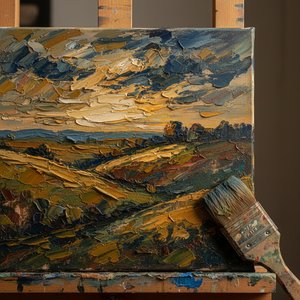
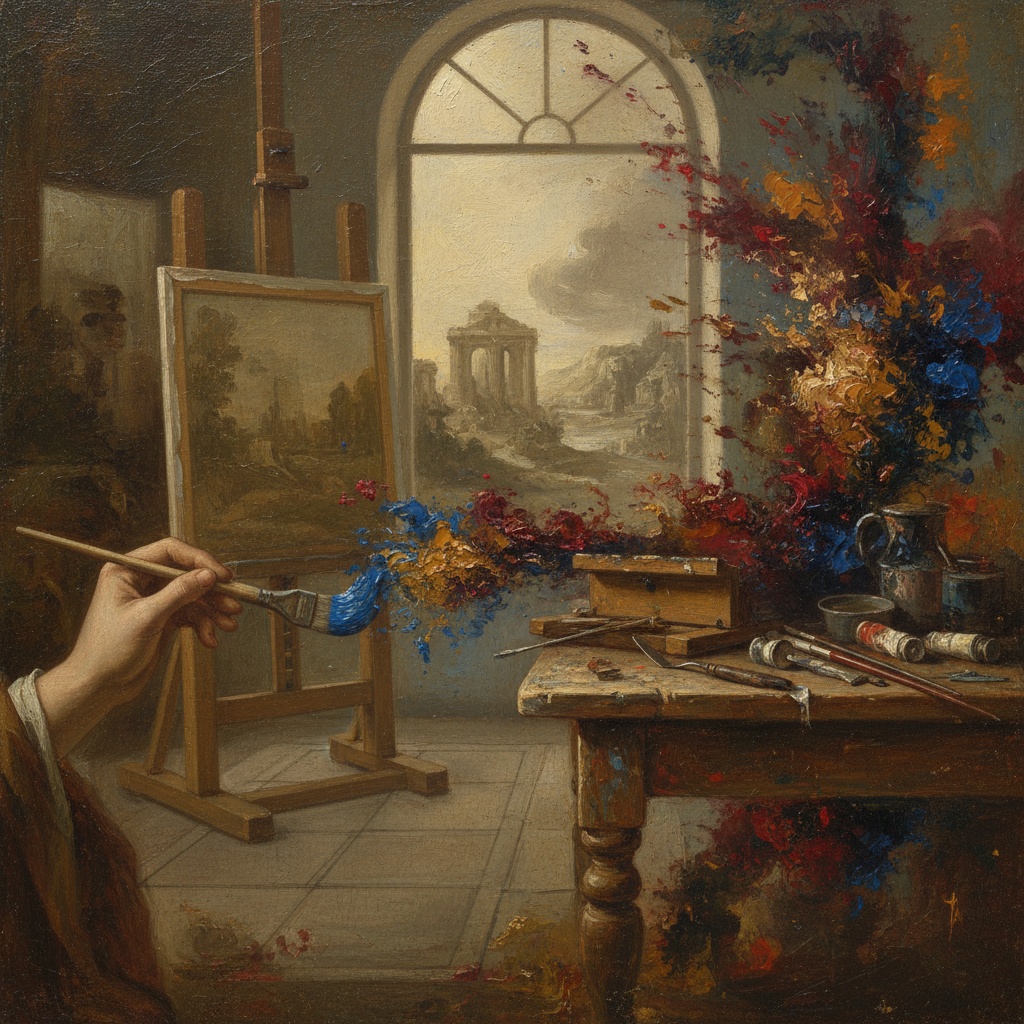
Impasto is a technique used in painting, where paint is laid on an area of the surface thickly, usually thick enough that the brush or painting-knife strokes are visible. Paint can also be mixed right on the canvas. When dry, impasto provides texture...
Before the Impressionists’ vibrant canvases, before Van Gogh’s swirling skies, lay a foundation built by the meticulous hands and innovative spirits of the Renaissance masters. While often associated with modern expressionism, the roots of impasto – that captivating technique of applying paint thickly, leaving visible brush or palette knife strokes – stretch back to the 15th and 16th centuries. Artists like Titian and Tintoretto weren’t simply aiming for a smooth, polished surface; they were exploring how manipulating the very *material* of paint could enhance realism and evoke emotion. Consider Titian's “Assumption of the Virgin,” where impasto isn’t merely decorative but used to render the shimmering folds of fabric, catching light in a way that flat application simply couldn’t achieve. This wasn’t about abandoning precision; it was about elevating it – adding another dimension to the illusion of reality. The technique served a practical purpose too: building up layers allowed for greater depth and luminosity, particularly crucial when depicting jewels or rich textiles. Early impasto was often subtle, integrated into a broader compositional strategy, a means to an end rather than the defining characteristic of the work. It represented a shift in thinking – a recognition that paint itself could be expressive, not just a vehicle for representing something else.
Light, Emotion, and the Rise of Impasto in the Baroque Era
The Baroque period witnessed a dramatic intensification of impasto’s role. Artists like Rembrandt van Rijn and Caravaggio embraced the technique with a newfound boldness, using it not just to depict texture but to sculpt light itself. Rembrandt's masterful use of impasto in works such as “Bathsheba at Her Bath” is particularly striking; thick layers of paint create a palpable sense of weight and volume, drawing the viewer’s eye to key areas of illumination. This wasn’t merely about replicating how light falls on an object but about *feeling* its warmth and intensity. Caravaggio, known for his dramatic chiaroscuro, similarly employed impasto to accentuate highlights and shadows, creating a heightened sense of realism and emotional impact. The brushstroke became more visible, less blended, reflecting a growing interest in the artist’s hand – the very act of creation becoming part of the artwork's narrative. This period saw a move away from idealized forms towards a more visceral, immediate representation of reality. The impasto wasn’t just about what was depicted; it was about *how* it was depicted, and the emotional resonance that came with that process.
Van Gogh & Monet: Revolutionizing Painting with Thick Application
The 19th century brought a seismic shift in the use of impasto, spearheaded by the Impressionists and Post-Impressionists. Claude Monet’s landscapes weren't simply representations of nature; they were attempts to capture fleeting moments of light and atmosphere. His application of thick paint – often directly from the tube – allowed him to convey the shimmering quality of water, the rustling of leaves, the ephemeral beauty of a sunset. But it was Vincent van Gogh who truly revolutionized impasto. For Van Gogh, thick paint wasn’t just a technique; it was an expression of his inner turmoil and passionate engagement with the world. “Starry Night Over the Rhone” is perhaps the most iconic example – swirling brushstrokes create a sense of movement and energy, conveying not just what he *saw* but how he *felt*. The paint itself becomes almost sculptural, rising from the canvas in a three-dimensional dance of color and light. Van Gogh’s impasto wasn't about illusionism; it was about direct expression, about making the viewer feel the intensity of his experience. He kneaded the paint – the very origin of the word “impasto” from the Italian *impastare* – imbuing each stroke with a raw emotional power.
Beyond Oil: Exploring Impasto Techniques Across Diverse Media
While oil paint remains the traditional medium for impasto, artists have consistently pushed the boundaries of what’s possible. The inherent qualities of acrylic paint—its faster drying time and versatility—offer unique opportunities for textural experimentation. Adding heavy body gels to acrylics allows for similar levels of thickness and dimensionality as oils, though with a different working process. However, the exploration doesn't end there. Artists have successfully employed impasto techniques with gouache, even watercolors (though requiring thickening agents). The key lies in understanding how each medium behaves and adapting the technique accordingly. Even pastels can achieve a limited form of impasto by pressing soft pastel firmly onto textured paper, building up layers to create a tactile surface. The underlying principle remains consistent: manipulating the paint’s consistency to create texture, depth, and expressive brushwork. Modern artists like Willem de Kooning further expanded these possibilities, utilizing acrylics and various mediums to redefine aesthetic values and emotional impact through bold impasto applications.
The Legacy of Impasto: Modern Masters & Contemporary Expressions
Impasto’s influence continues to resonate in contemporary art. Abstract Expressionists such as Hans Hofmann embraced the technique, motivated by a desire to record the very *action* of painting itself – the energy and physicality of the artist at work. Frank Auerbach takes impasto to an almost sculptural extreme, building up layers of paint so thickly that his canvases become three-dimensional objects. Today’s artists continue to explore new ways of utilizing texture, combining traditional techniques with innovative materials and approaches. The enduring appeal of impasto lies in its ability to connect the viewer directly to the artist's hand – to feel their presence in the work. It’s a reminder that painting isn’t just about representation; it’s about expression, emotion, and the transformative power of material itself. At OriginalUniqueArt.com, we celebrate this rich legacy by offering meticulously crafted reproductions of masterpieces showcasing impasto's captivating beauty, allowing you to experience the texture and depth firsthand. Whether you are drawn to the subtle nuances of Renaissance works or the bold strokes of Van Gogh, our handmade oil paintings capture the essence of these iconic techniques, bringing a touch of artistic history into your home.