The High Renaissance: A Foundation of Ideal Beauty
Renaissance art (1350 – 1620) is the painting, sculpture, and decorative arts of the period of European history known as the Renaissance, which emerged as a distinct style in Italy in about AD 1400, in parallel with developments which occurred in phi...
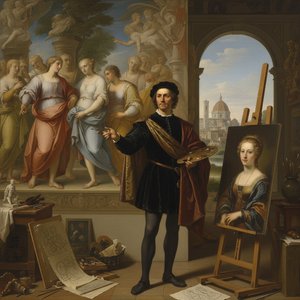
The early decades of the 16th century witnessed a flowering of artistic achievement in Italy that we now recognize as the High Renaissance. Artists like Leonardo da Vinci, Raphael, and Michelangelo established standards of anatomical accuracy, compositional balance, and psychological realism that profoundly influenced generations to come. Their work was characterized by a harmonious blend of classical ideals – proportion, symmetry, and clarity – with burgeoning humanist philosophies emphasizing human potential and dignity. The pursuit of *perfezione*, or perfection, wasn’t merely aesthetic; it reflected a belief in the inherent order and beauty of the universe. Raphael's serene Madonnas, Michelangelo’s monumental figures, and Leonardo’s sfumato technique all contributed to an artistic landscape where grace, balance, and intellectual depth reigned supreme. This period provided not just a stylistic apex but also a foundational set of principles against which subsequent artists would inevitably react.
Emergence of Mannerism: Breaking with Classical Harmony
Mannerism is a style in European art that emerged in the later years of the Italian High Renaissance around 1520, spreading by about 1530 and lasting until about the end of the 16th century in Italy, when the Baroque style largely replaced it. Northe...
By the 1520s, however, a subtle yet significant shift began to occur in Italian art. The confident naturalism and balanced compositions of the High Renaissance gradually gave way to a more self-conscious, stylized approach known as Mannerism. This wasn’t a sudden rejection of earlier achievements but rather an evolution – or perhaps a deliberate complication – of them. Several factors contributed to this change: political instability following the Sack of Rome in 1527 created a sense of anxiety and uncertainty; increased intellectual sophistication led artists to explore more complex allegorical themes; and a growing awareness of artistic conventions prompted experimentation with form, space, and expression. The emphasis moved from representing reality as it *was* perceived to exploring how it could be *represented*, prioritizing elegance and virtuosity over straightforward imitation.
Key Characteristics of Mannerist Style: Distortion, Elegance & Artifice
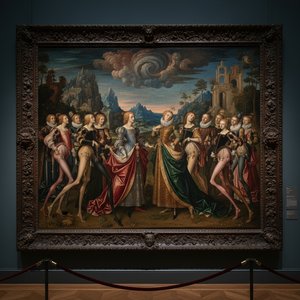
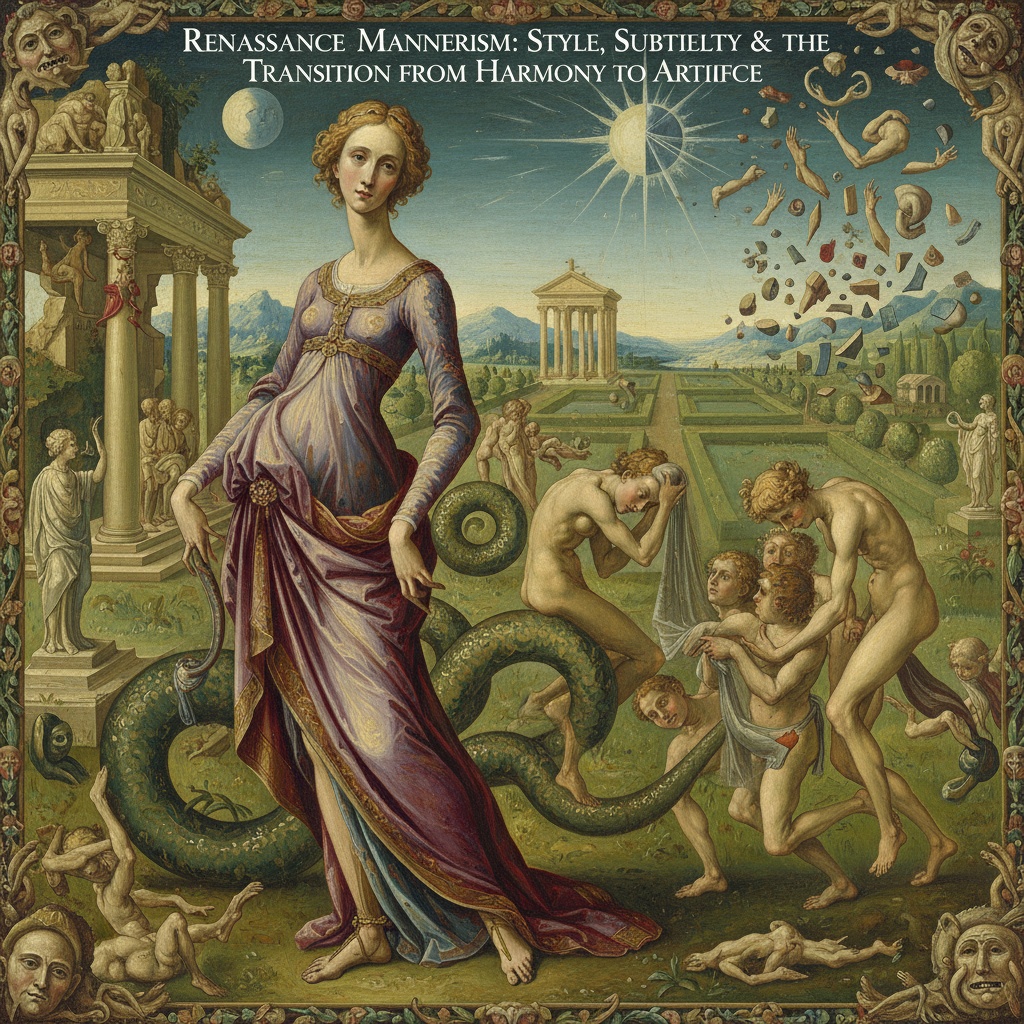
Mannerism is perhaps best understood through its defining characteristics. Where High Renaissance artists sought natural proportions, Mannerists often elongated figures, creating a sense of graceful but unsettling distortion. Compositions became more complex and asymmetrical, frequently featuring crowded scenes with ambiguous spatial relationships. The use of color shifted from the harmonious palettes of Raphael to more vibrant, sometimes jarring combinations. Perhaps most importantly, Mannerist paintings are characterized by *artifice* – a deliberate display of skill and ingenuity. Artists reveled in demonstrating their mastery of technique, often employing complex poses (*figura serpentinata*, or serpentine figures) and dramatic lighting effects. This wasn’t simply about beauty; it was about showcasing the artist's intellectual prowess and creative freedom. The emotional tone also shifted, moving away from High Renaissance serenity towards a more melancholic, introspective mood.
Pontormo and Rosso Fiorentino: Pioneering Figures of Florentine Mannerism
 Wikipedia: Pontormo
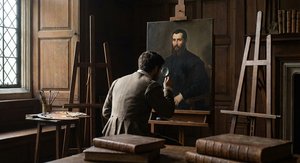
Jacopo Carucci or Carrucci (IPA: [ˈjaːkopo ka(r)ˈruttʃi]; May 24, 1494 – January 2, 1557), usually known as Jacopo (da) Pontormo or simply Pontormo (IPA: [ponˈtormo]), was an Italian Mannerist painter and portraitist from the Florentine School. His ...
Jacopo Pontormo and Rosso Fiorentino stand as pivotal figures in the development of Florentine Mannerism. Both artists, initially trained within the tradition of Leonardo and Michelangelo, began to push the boundaries of established norms. Pontormo’s *Deposition from the Cross* (c. 1525-1528) exemplifies many key characteristics of the style: elongated figures, a shallow, ambiguous space, and an unsettling emotional intensity. The composition eschews traditional narrative clarity in favor of a more symbolic and expressive approach. Rosso Fiorentino, similarly, embraced distortion and dramatic color in works like *Descent from the Cross* (c. 1521), creating a sense of unease and psychological tension. Both artists rejected the High Renaissance emphasis on naturalism, instead prioritizing emotional impact and stylistic innovation. Their work, though initially controversial, paved the way for a new generation of Mannerist painters.
Mannerism Beyond Florence: Regional Variations and Notable Artists
While Florence served as an early center for Mannerism, the style quickly spread throughout Italy – and beyond. In Rome, artists like Giulio Romano and Benvenuto Cellini embraced Mannerist principles in their paintings, sculptures, and architectural designs. Parmigianino, working in Parma, is renowned for his elegant figures and sophisticated compositions, exemplified by *Madonna dal collo lungo* (c. 1534-1540), a painting that perfectly embodies the style’s elongated proportions and refined grace. In Venice, artists like Tintoretto incorporated Mannerist elements into their dramatic compositions and dynamic use of light and shadow. Each region developed its own unique interpretation of Mannerism, reflecting local artistic traditions and patronage demands. Bronzino, active in Florence, became known for his highly polished portraits that captured the aristocratic elegance and psychological complexity of his sitters.
The Legacy of Mannerism: A Bridge to the Baroque
By the late 16th century, Mannerism began to wane, gradually giving way to the more dynamic and emotionally charged style of the Baroque. However, its influence was profound. Mannerism’s emphasis on artifice, emotional intensity, and complex composition paved the way for the dramatic narratives and theatrical effects that characterize Baroque art. Artists like El Greco, working in Spain, continued to embrace Mannerist principles well into the 17th century. Moreover, Mannerism challenged the very notion of artistic representation, prompting artists to explore new ways of expressing emotion, intellect, and individual style. It stands as a crucial transitional period – a bridge between the harmonious ideals of the Renaissance and the dramatic exuberance of the Baroque, leaving an indelible mark on the history of Western art. Explore these fascinating works further with reproductions available at OriginalUniqueArt.com, bringing the beauty and complexity of this pivotal era into your home.