Shadow, Light, and Spectacle: The Dramatic Evolution of Baroque Landscape Painting
Explore the breathtaking drama of Baroque landscapes. Our expert guide delves into the interplay of light and shadow in 17th-century masterpieces. Discover art history and find museum-quality, hand-painted oil reproductions to bring classical grandeur to your home.
The Seismic Shift: From Renaissance Harmony to Baroque Emotion The Visceral Stage: Exploring Dramatic Narratives & Emotional Intensity in Baroque Art The Baroque Embrace of Emotion: A Shift from Renaissance Rationality Wikipedia: Baroque painting Bar...
To understand the breathtaking intensity of the Baroque landscape, one must first remember the quietude that preceded it. For generations, the Renaissance reigned supreme, offering a world defined by rationality, balance, and mathematical harmony. It was an era of clarity, where every horizon line felt measured and every figure placed with surgical precision, inviting intellectual contemplation rather than visceral reaction. However, as Europe grappled with the profound religious and political upheavals of the seventeenth century—most notably the Counter-Reformation—the art world underwent a seismic shift. The calm, symmetrical compositions of the past were no longer sufficient to express the intense spiritual fervor and the burgeoning power of absolute monarchies. The Baroque movement emerged not as a rejection of Renaissance principles, but as an exuberant, visceral expansion upon them. In the realm of landscape painting, this meant moving away from static, idealized vistas toward scenes that felt alive, unpredictable, and deeply immersive, capturing the very breath of a changing world.
Chiaroscuro and the Elements: The Art of Light, Shadow, and Atmospheric Drama
The Genesis of Grandeur: Understanding the Baroque Aesthetic Shift The Dramatic Flourish: Exploring the Baroque Movement's Enduring Legacy in Art History The Genesis of Grandeur: Historical Context & The Counter-Reformation Wikipedia: Counter-Reforma...
The visual language of the Baroque was forged in the crucible of contrast. At the heart of this movement lies chiaroscuro—the dramatic use of strong contrasts between light and dark to affect an entire composition. This technique allowed artists to sculpt form out of shadow, creating a sense of three-dimensional weight and psychological depth. In landscape painting, this manifested as a mastery over the elements; clouds were no longer mere decorations but heavy, turbulent masses that broke to reveal sudden, divine shafts of light. This use of tenebrism—a more intense form of chiaroscuro—created a theatrical stage where the natural world seemed to pulsates with hidden energy. Whether it was the way light caught the spray of a waterfall in Guercino’s works or the way shadows pooled beneath ancient trees, the goal was to move the soul. The landscape became a medium for emotional spectacle, where the interplay of sun and storm mirrored the internal struggles of the human spirit.
A Continent in Flux: Regional Variations in Flemish, Spanish, and French Landscapes
Spanish Baroque painting refers to the style of painting which developed in Spain throughout the 17th century and the first half of the 18th century. The style appeared in early 17th century paintings, and arose in response to Mannerist distortions a...
As the Baroque style spread across Europe, it adapted to the unique political and religious textures of different regions. In Spain, the movement was deeply intertwined with the Counter-Reformation and the need for decorum. Spanish painters sought a profound naturalism, using realistic details to make sacred or historical scenes accessible and grounded. Artists like Ignacio de Iriarte explored rugged, wild landscapes that reflected the untamed beauty of the Spanish countryside, imbuing solitude with a sense of divine presence. Conversely, the Southern Netherlands—specifically the hub of Antwerp—became the epicenter of the Flemish Baroque. Here, the influence of Peter Paul Rubens brought a voluptuousness of color and a dynamic energy to the landscape. Meanwhile, in France, the style took a more classical turn. While early seventeenth-century French art retained some Mannerist tendencies, it eventually moved toward a disciplined adherence to proportion and sobriety, attempting to reconcile the raw energy of the Baroque with the rational control of Roman classicism.
Luminaries of the Landscape: The Artistic Contributions of Rubens, Wildens, and Stalbemt
The Serene Visionary of Flemish Baroque Jan Wildens, born in the vibrant heart of Antwerp in 1586, stands as a pivotal figure within the Flemish Baroque landscape tradition. His artistic legacy rests upon meticulously rendered scenes imbued with a pr...
The grandeur of this era was sustained by a lineage of masters who each brought a unique perspective to the natural world. Adriaan van Stalbemt stands as a prominent figure within the Flemish tradition, embodying the spirit of his era through landscapes that blended remarkable realism with decorative, mythological elements. His ability to use atmospheric perspective to convey depth and grandeur made him a master of the vista. In contrast, Jan Wildens offered a more serene vision. While he worked alongside luminaries like Rubens, Wildens cultivated an aesthetic rooted in keen observation and subtle detail, presenting the world through a window of quiet, enduring beauty rather than chaotic theatricality. We also find innovators like Alexander Keirincx, whose journey from the meticulous forest scenes of his training to groundbreaking compositions helped bridge the gap between Flanders and England. These artists did not merely paint scenery; they constructed entire worlds that invited the viewer to inhabit them.
The Eternal Vista: Preserving Baroque Grandeur through Masterful Reproductions
Experience the serene beauty of Guercino’s ‘Landscape with a Waterfall.’ A captivating Baroque masterpiece featuring a waterfall & figures, hand-painted for your walls.
For the modern collector, the challenge lies in bringing this historical majesty into a contemporary space without losing its essential soul. At OriginalUniqueArt.com, we believe that art should be an experience of texture and truth, not merely a visual reference. We do not offer computer-printed posters; instead, we specialize in hand-painted oil reproductions that capture the very essence of the Baroque masters. Our artists, all holders of prestigious Fine Arts degrees, work on 100% cotton canvas to recreate the visible brushstrokes and deep tonal ranges that define the era.
To ensure each piece meets our museum-grade standards, we follow a meticulous six-step process:
Order Confirmation: An immediate confirmation is sent to your email to begin the journey.
Digital Mockup: For complex orders or custom requests, we provide a digital preview so you can approve the composition and colors before a single drop of paint touches the canvas.
Hand-Painted Artistry: Our specialists spend 2–4 weeks layering oils to achieve the authentic impasto and light-drenched effects of the masters.
Pre-ship Approval: We send you a high-resolution photo of your completed painting for your final satisfaction.
Professional Framing: Once approved, your artwork is expertly framed in solid wood—ranging from gold leaf to espresso—or prepared as a premium canvas wrap.
Global Delivery: Your masterpiece is securely packaged and shipped via DHL or FedEx with full tracking to over 70 countries worldwide.
Whether you seek a large-scale mural to recreate the grandeur of a palace ceiling or a custom "remix" that transforms a personal memory into a 17th-century masterpiece, our mission is to preserve the legacy of the Baroque. Through the use of archival materials like flexible gesso and protective Damar varnish, we ensure that the drama, light, and nature captured in these works will remain vibrant for generations to come.
Discover the breathtaking drama of Flemish Baroque art. Explore the mastery of Rubens and Van Dyck through an expert lens, focusing on chiaroscuro, opulent detail, and the emotional intensity that defines this legendary era of visual impact.
Explore the dramatic brilliance of the Flemish Baroque movement. Discover how masters like Peter Paul Rubens utilized chiaroscuro and dynamic composition to redefine art history through light, shadow, and unparalleled emotion.
Discover the life & art of Peter Paul Rubens, the most influential artist of the Flemish Baroque tradition. Explore his masterpieces, legacy, and impact on art history with OriginalUniqueArt.
Explore the profound elegance of Baroque Classicism. Discover how 17th-century masters synthesized dramatic emotion with classical order through the lens of the Counter-Reformation and the works of legends like Carlo Maratta and Andrea Sacchi.
OAsistente de estudioEn línea · responde en un minuto
¡Hola! Puedo ayudarte a elegir una obra de arte, realizar el seguimiento de un pedido o resolver tus dudas sobre la garantía. ¿En qué puedo ayudarte hoy?

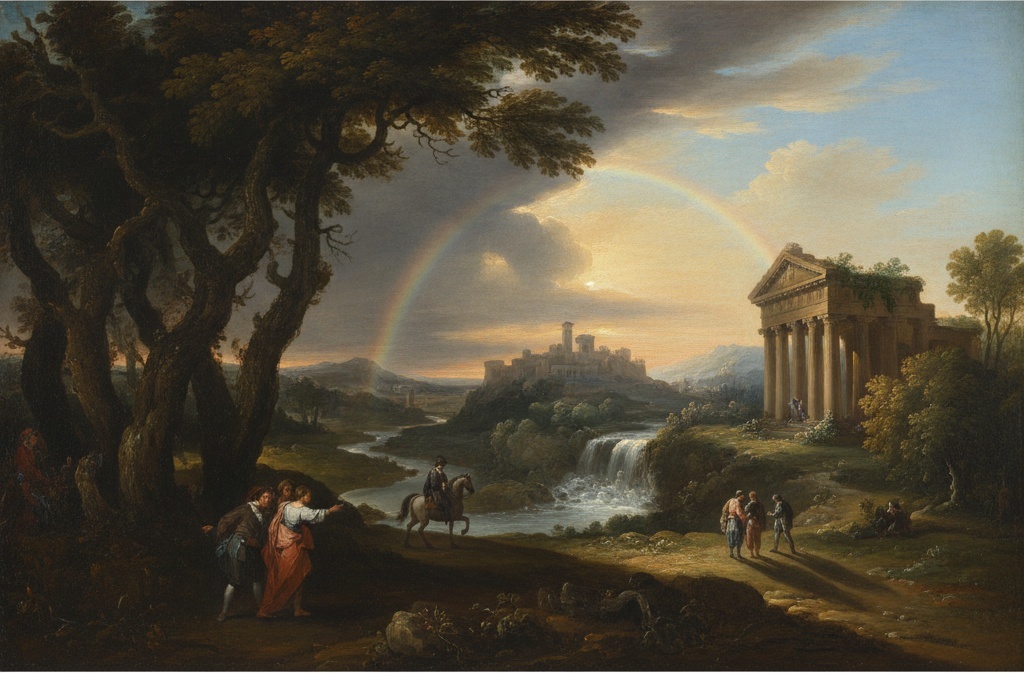
 Drama in Nature: The Captivating Grandeur of Baroque Landscapes and the Art of Emotional Spectacle
 Epic Drama & Dark Vibes: The Ultimate Collector's Guide to Baroque Landscapes
 Spanish Baroque painting
 Jan Wildens
 Landscape with a Waterfall



