Expressionism · 1910
Quérido (Theo van Doesburg, 1910)
Theo van Doesburg (1883–1931) creó Quérido. Data de 1910. Pertenece al movimiento Expressionism. Está realizado en Charcoal.
- 1910
- Charcoal

 Ver en contexto

 Óleo pintado a mano
 Enviar
 Compartir
 Guía


 Descargar
 Similares
 Radiografía
 Presentación de diapositivas
 Preguntas y respuestas

 Estadísticas
Quérido: lo esencial
- Título
- Quérido
- Artista
- Theo van Doesburg (1883–1931)
- Lugar de nacimiento del artista
- Utrecht, Países Bajos
- Fecha
- 1910
- Técnica
- Charcoal
- Movimiento
- Expressionism
- Época
- Modern
- Tema
- man, portrait, face, shoulders, scarf, short hair
¿Qué representa Quérido?
The Portrait of a Man by Theo van Doesburg
In the quiet intensity of Quérido, Theo van Doesburg captures a man caught in a moment of profound stillness. Created about 1910, this portrait presents a figure whose presence feels immediate and heavy. The subject gazes forward with an expression that suggests deep introspection, pulling the viewer into a silent, psychological encounter. He possesses short hair and wears a scarf or collar around his neck, details that anchor the figure within the frame. There is a certain weight to his stare, a directness that refuses to look away.
The composition focuses entirely on the man, cropping the view tightly around his head and shoulders. This closeness strips away the distractions of the surrounding world, leaving only the essential form of the person. Every line and shadow works to define the contours of his face, creating a sense of volume that feels tangible. The man exists in a space where the background has retreated, leaving his features to command the entirety of the viewer's attention. It is a study of a human presence, stripped of ornament and focused on the gravity of a single, unmoving moment.
Composition and Visual Elements of the Portrait
The subject sits centered, facing forward in a tight, intimate framing that leaves no room for distraction. The composition pulls the viewer inward, focusing entirely on the head and shoulders of the man. This close-up approach eliminates any sense of a wider environment, stripping away the background to ensure all attention remains on the figure. His direct gaze meets the viewer with a heavy sense of intensity, suggesting a moment of deep introspection or a quiet, psychological encounter.
A monochromatic palette of grayscale tones defines the visual field, moving from the deepest blacks to the lightest whites. Light descends from above, casting shadows that trace the roundness of the face and the contours of the neck. Because the framing is so close and the background remains empty, perspective feels minimal. Instead, a sense of depth emerges through subtle tonal variations and the way lines overlap to suggest form.
Technique and Artistic Materials Used
The artist works with charcoal or pencil upon paper, leaving behind a stark and graphic presence. Every stroke carries a specific weight, moving between deep, heavy blacks and the lightest grays to build a sense of volume. Through the deliberate application of hatching and cross-hatching, the surface gains a tactile quality that suggests depth without the need for color. These intersecting lines build up tonal values, creating a play of light and shadow that defines the contours of the face and the folds of the clothing.
Lines act as the primary architect of this form, used extensively to trace the delicate features of the eyes, the bridge of the nose, and the curve of the mouth. The texture of the hair and the heavy drape of the fabric emerge from the density and direction of these marks. By varying the thickness and pressure of the tool, the artist simulates the physical sensation of different surfaces. This approach emphasizes a simplification of form, where the focus shifts away from literal representation toward a powerful interplay of line and tonal contrast.
Quérido en alta resolución
Theo van Doesburg, Quérido (1910). Dominio público
Un experto digital coteja los colores con la pintura original y retoca el archivo, respetando fielmente la pincelada del artista.
Comprar la imagen en alta resoluciónPreguntas sobre Quérido
¿En qué año se creó "Quérido" de Theo van Doesburg?
"Quérido" de Theo van Doesburg fue creado en 1910.
¿Qué técnica se utilizó para "Quérido" de Theo van Doesburg?
Theo van Doesburg utilizó la técnica de Charcoal para "Quérido". La técnica define la naturaleza material de la obra original.
¿Qué temas aparecen en "Quérido" de Theo van Doesburg?
Los temas presentes en "Quérido" de Theo van Doesburg incluyen man, portrait, face, shoulders, scarf, short hair, los cuales resumen la temática de la obra.
¿Es "Quérido" de dominio público?
Información sobre los derechos de autor de "Quérido" de Theo van Doesburg: la obra es en el dominio público: sus derechos de autor han expirado. Esto determina si las reproducciones de la imagen pueden realizarse libremente.
¿Quién es el artista detrás de "Quérido"?
El artista detrás de "Quérido" es Theo van Doesburg. La obra está catalogada bajo el nombre de Theo van Doesburg.
¿A qué estilo pertenece "Quérido"?
"Quérido" es una obra de Expressionism. El movimiento indica la tradición artística a la que pertenece la obra.
¿A qué etapa de la trayectoria de Theo van Doesburg pertenece "Quérido"?
Dentro de la trayectoria de Theo van Doesburg, "Quérido" pertenece al Early Period. Esta etapa permite compararla con otras obras del artista.
¿Qué edad tenía Theo van Doesburg cuando creó "Quérido"?
Cuando se creó "Quérido" en 1910, Theo van Doesburg —nacido/a en 1883— tenía 27 años.
¿A qué se debe la situación de los derechos de autor de "Quérido" de Theo van Doesburg?
"Quérido" de Theo van Doesburg es de en el dominio público: sus derechos de autor han expirado. La vigencia de los derechos de autor se cuenta a partir del fallecimiento del artista, que tuvo lugar en 1931.
Sobre el artista, Theo van Doesburg

1883–1931, Países Bajos
Theo van Doesburg
Vida temprana y carrera Theo van Doesburg, un artista holandés, nació el 30 de agosto de 1883 en Utrecht, Países Bajos. Es conocido principalmente como el fundador y líder del De Stijl, un movimiento artístico neoplasticista. El trabajo temprano de Van Doesburg estuvo influenciado por Vincent van Gogh, tanto en estilo como en temática. El nacimiento del Neoplasticismo En 1913, después de leer *Rückblicke* de Wassily Kandinsky, Van Doesburg se dio cuenta de que había un nivel superior, más espiritual en la pintura que originaba de la mente y no de la vida cotidiana.
Sobre Theo van Doesburg Obras destacadas de Theo van Doesburg
Otras obras de Theo van Doesburg
 Composición de contrapunto XV1925
 Ritmo de una danza rusa
 Troelstra1910
 Estudio para la Composición VIII (La Vaca)1918
Ensayos sobre Quérido
 La Intensidad Visceral: Explorando la Expresión Emocional en el ExpresionismoDescubre la intensidad del Expresionismo Alemán. Explora sus orígenes, artistas clave como Munch y Kirchner, y su profundo impacto en el ar…
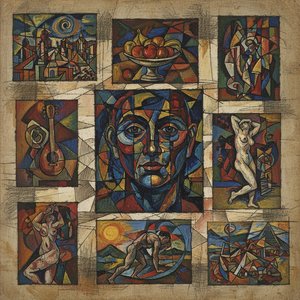 Cubismo Expresionista: 10 Obras Maestras que Transformaron el Arte | OriginalUniqueArtDescubre las 10 obras maestras del Cubismo Expresionista con OriginalUniqueArt. Explora la historia de Picasso, Braque y otros artistas cla…
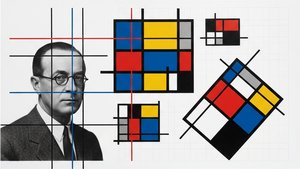 Theo van Doesburg: Pioneering De Stijl & the Evolution of Neo-PlasticismExplore the revolutionary De Stijl movement & Neo-Plasticism with our expert guide. Discover Piet Mondrian, Theo van Doesburg, and the last…