Impressionism · 1931
Peterhof (Pyotr Konchalovsky, 1931)
Pyotr Konchalovsky (1876–1956) creó Peterhof. Data de 1931. Pertenece al movimiento Impressionism. Está realizado en Watercolor. Sus dimensiones son 39 × 52 cm.
- 1931
- Watercolor
- 39 × 52 cm

 Ver en contexto

 Óleo pintado a mano
 Enviar
 Compartir
 Ficha técnica


 Descargar
 Similares
 Radiografía
 Presentación de diapositivas
 Preguntas y respuestas

 Estadísticas
Peterhof en breve
- Título
- Peterhof
- Artista
- Pyotr Konchalovsky (1876–1956)
- Lugar de nacimiento del artista
- Sloviánsk, Ucrania
- Fecha
- 1931
- Técnica
- Watercolor
- Dimensiones
- 39 × 52 cm
- Movimiento
- Impressionism
- Época
- Modern
- Tema
- russian architecture, park landscape”, “watercolor painting”, “historic palace”, “impressionist style”, “peterhof gardens”
¿Qué representa Peterhof?
Identification of the Artwork and Artist
In this watercolor, we encounter Peterhof, a work created by Pyotr Konchalovsky around 1931. The piece offers a quiet study of the intersection between architecture and nature, focusing on a large red brick building situated within a park-like setting. It captures a specific sense of place through a lens that balances the structured lines of the facade with the organic, fluid forms of the surrounding trees.
Pyotr Konchalovsky was a significant figure in the Russian and Soviet art scenes, moving through various stylistic movements throughout his career. This particular work reflects a period in his development where his approach to form and color had become increasingly grounded. The composition relies on a sense of distance between the viewer and the building, using perspective to establish a tranquil atmosphere within the landscape.
Visual Composition and Subject Matter
In this watercolor, the viewer is presented with an exterior view of a large red brick building, positioned within a quiet, park-like setting. The composition is anchored by the building’s facade, which is framed and softened by the surrounding trees. Through a careful use of perspective, the artist creates a sense of depth, drawing the eye into the space between the architectural forms and the organic lines of the foliage. It is a subtle blending of urban and natural elements, where the geometry of the structure meets the fluid, irregular shapes of the landscape.
The subject matter suggests a moment of stillness. There is a certain tranquility in the way the building sits amidst the greenery, offering a nostalgic view of a historic setting. The interplay between the man-made brickwork and the natural environment creates a balanced, quiet atmosphere. Rather than focusing on sharp, rigid details, the work emphasizes the relationship between the architecture and the light of an overcast day, capturing the essence of the site through soft transitions and a sense of distance.
Artistic Technique and Materials
In this watercolor, the artist utilizes a wet-on-wet application to achieve soft transitions and blended colors. This method allows the pigments to bleed into one another, creating a sense of atmosphere that suggests a diffused, overcast light. The texture is built through a layered effect, where visible brushstrokes interact with various washes of color to establish depth within the park-like setting.
The approach is reminiscent of impressionistic or post-impressionistic sensibilities. Rather than focusing on precise architectural detail, the work relies on fluid and expressive lines to define the building's facade and the organic forms of the surrounding trees. These lines provide a sense of movement to the branches and the structural elements of the red brick building. The medium of watercolor on paper allows for a certain transparency, capturing the interplay between the architecture and the natural elements through light and subtle tonal shifts.
Related Works by Pyotr Konchalovsky
To understand the breadth of Konchalovsky’s development, one might look toward his earlier explorations of form and color. In 1912, he painted Family Portrait (Siena), a work that offers a striking portrayal of domesticity. This large-scale oil painting transcends a simple depiction of a family, employing a flattened perspective and simplified forms characteristic of early 20th-century Modernism. The scene centers on a mother, child, and an older man seated around a table within an interior setting.
His output during the 1930s demonstrates a transition toward a more monumental style. He produced Bakhchisaray in 1930 and View on Beshtau place duel with Lermontov in 1938. These works align with the evolving aesthetic of the era, moving away from the fragmented planes of his youth toward a more solid, grounded representation of life. Even his still life compositions, such as Still Life with a Coffeepot from 1919, reveal a consistent interest in the physical presence of his subjects and the weight of their forms.
Imágenes en alta resolución de Peterhof

Pyotr Konchalovsky, Peterhof (1931). Dominio público
Preguntas sobre Peterhof respondidas
¿En qué año se creó "Peterhof"?
"Peterhof" data de 1931. Esta fecha sitúa la obra dentro de la trayectoria de Pyotr Konchalovsky y de su época.
¿Qué técnica se utilizó para "Peterhof" de Pyotr Konchalovsky?
"Peterhof" está realizada en Watercolor.
¿Cuáles son las dimensiones reales de "Peterhof" de Pyotr Konchalovsky?
"Peterhof" mide 39 x 52 cm en su formato original. Las dimensiones originales son una referencia útil al elegir el tamaño de una reproducción.
¿Qué representa "Peterhof" de Pyotr Konchalovsky?
"Peterhof" de Pyotr Konchalovsky representa: russian architecture, park landscape”, “watercolor painting”, “historic palace”, “impressionist style”, “peterhof gardens”, “1930s art”.
¿Es "Peterhof" de Pyotr Konchalovsky de dominio público?
En cuanto a los derechos de autor, "Peterhof" es en el dominio público: sus derechos de autor han expirado.
¿A qué artista se le atribuye "Peterhof"?
"Peterhof" fue creada por Pyotr Konchalovsky. La información en esta página describe la obra original de Pyotr Konchalovsky.
¿A qué estilo pertenece "Peterhof"?
"Peterhof" es una obra de Impressionism. El movimiento indica la tradición artística a la que pertenece la obra.
¿A qué etapa de la trayectoria de Pyotr Konchalovsky pertenece "Peterhof"?
Dentro de la trayectoria de Pyotr Konchalovsky, "Peterhof" pertenece al Mature Period. Esta etapa permite compararla con otras obras del artista.
¿Qué edad tenía Pyotr Konchalovsky cuando creó "Peterhof" en 1931?
Pyotr Konchalovsky tenía 55 años cuando creó "Peterhof" en 1931. La edad se calcula a partir del año de nacimiento del artista, 1876.
Sobre el artista, Pyotr Konchalovsky
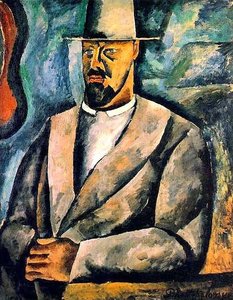
1876–1956, Ucrania
Pyotr Konchalovsky
Primeros años, familia y formación artística La historia de Pyotr Konchalovsky comienza en la aldea de Slavianka, situada en la gobernación de Járkov del Imperio Ruso. Nacido el 21 de febrero de 1876, se adentró en un mundo donde las fronteras entre el arte y el intelecto ya estaban siendo trazadas por quienes le rodeaban. Su padre, Pyotr Petrovich Konchalovsky, era un hombre de letras y editor de arte, una profesión que garantizaba que el hogar estuviera impregnado de las corrientes visuales y literarias de la época. Este entorno le proporcionó una introducción natural, aunque serena, a la vida de un creador, especialmente cuando la familia se trasladó finalmente a Moscú, donde su hogar se convirtió en un punto de encuentro para muchas figuras significativas de la escena artística rusa.
Sobre Pyotr Konchalovsky Obras destacadas de Pyotr Konchalovsky
Otras obras de Pyotr Konchalovsky
 Puente en Abramtsevo1911
 Matador Manuel Gartha1910
 San Gimignano1912
 Piazza della Signoria en Siena1912
Ensayos sobre Peterhof
 Emoción y Color: Las 25 Obras Maestras de Alexej von JawlenskyExplora las 25 obras maestras de Alexej von Jawlensky y su alma expresionista. ¡Descubre toda la colección en OriginalUniqueArt.com!
 Obras ucranianas de la década de 1910Explora el arte ucraniano de 1910 con Malevich y Repin. Descubre obras maestras y reproducciones en OriginalUniqueArt.com.
 Obras maestras rusas de la década de 1890Explora el realismo y simbolismo de Shishkin y Vrubel en la Rusia de 1890. Descubre estas obras maestras en OriginalUniqueArt.com.