Russian Modernism · 1910
scheherezade odalisque (Léon Bakst, 1910)
Léon Bakst (1866–1924) creó scheherezade odalisque. Data de 1910. Pertenece al movimiento Russian Modernism. Está realizado en Watercolor.
- 1910
- Watercolor

 Ver en contexto

 Óleo pintado a mano
 Enviar
 Compartir
 Ficha técnica


 Descargar
 Similares
 Radiografía
 Presentación de diapositivas
 Preguntas y respuestas

 Estadísticas
scheherezade odalisque en breve
- Título
- scheherezade odalisque
- Artista
- Léon Bakst (1866–1924)
- Lugar de nacimiento del artista
- Grodno, Bielorrusia
- Fecha
- 1910
- Técnica
- Watercolor
- Movimiento
- Russian Modernism
- Época
- Modern
- Tema
- odalisque figure, dance motif, oriental scene, russian art style, red and yellow colors, ballet poster design
¿Qué representa scheherezade odalisque?
Identification of Scheherezade Odalisque
The work before us is titled scheherezade odalisque, a watercolor illustration produced in 1910 by the artist Léon Bakst. This piece emerged during a period of significant creative output for the artist, a time when his visual language was actively redefining the boundaries of theatrical and decorative design. It captures a specific moment in the early twentieth century, reflecting the aesthetic shifts occurring within the European avant-garde.
In this 1910 watercolor, Léon Bakst presents a single female figure. The composition focuses on the dancer, utilizing fluid lines to define the contours of her body and the surrounding drapery. The subject is a performer, a dancer, and a nude female figure, rendered with a sense of movement that suggests the atmosphere of an orientalist setting. It is a work that belongs to the realms of Russian Modernism and Art Deco, embodying the stylistic sensibilities of the era.
Composition and Visual Elements
The composition centers entirely on a single female figure, captured in the midst of a dance. There is a sense of rhythmic movement established through the use of fluid lines that define the contours of her body and the surrounding drapery. This focus on the silhouette allows the viewer to follow the grace of her pose as she holds a fan in her hand. A gold bracelet adorns her arm, adding a subtle point of light to the figure's movement.
Color and pattern are used to define the subject's attire. She wears a red dress, which is detailed with a pattern of yellow dots. This motif is repeated on her skirt, creating a visual continuity that emphasizes the motion of her dance. The interplay between the bold red of the garment and the repetitive yellow dots provides a structured yet dynamic visual rhythm across the figure.
Technique and Artistic Materials
In this watercolor illustration, the artist employs a delicate application of pigment on watercolor paper. The medium allows for a specific kind of transparency, achieved through the careful use of watercolor washes. These washes create a sense of depth and atmosphere, allowing colors to bleed into one another with a controlled softness. It is a quiet, methodical process that relies on the natural absorption of the paper to define the form.
The composition is defined by fluid lines that trace the contours of the figure and the surrounding drapery. There is a rhythmic quality to these strokes, which work in tandem with a deliberate layering of color. This layering builds a subtle complexity, where each subsequent wash interacts with the one beneath it to establish shape and shadow. The result is a work that feels both spontaneous and meticulously structured through its technical execution.
Related Works by Léon Bakst
To understand the creative landscape surrounding this piece, one might look to the other explorations the artist undertook during this prolific period. In 1910, he produced Scheherezade negre argent, a work that shares a thematic connection to the orientalist motifs found here. That same year, his influence extended to the stage through his work on the ballet Scheherezade, where he was responsible for both the scenery and the costumes. The year 1910 also saw the creation of Carnaval, further demonstrating his engagement with the theatrical and the decorative.
As his career progressed, his design projects expanded to include the scenery for Le Spectre de la Rose in 1911. He continued to shape the aesthetic of the stage with his designs for the production of Daphnis and Chloe in 1912. Later, in about 1917, he produced a Portrait of a Lady, showing a different facet of his artistic output beyond the grand scale of the ballet stage.
Imágenes en alta resolución de scheherezade odalisque
Léon Bakst, scheherezade odalisque (1910). Dominio público
Preguntas sobre scheherezade odalisque respondidas
¿En qué año se creó "scheherezade odalisque"?
"scheherezade odalisque" data de 1910. Esta fecha sitúa la obra dentro de la trayectoria de Léon Bakst y de su época.
¿En qué técnica está ejecutada "scheherezade odalisque" de Léon Bakst?
La técnica de "scheherezade odalisque" de Léon Bakst es Watercolor. Las reproducciones pretenden recrear la apariencia de esta técnica.
¿Qué temas aparecen en "scheherezade odalisque" de Léon Bakst?
"scheherezade odalisque" de Léon Bakst representa: odalisque figure, dance motif, oriental scene, russian art style, red and yellow colors, ballet poster design, leon bakst artwork.
¿Es "scheherezade odalisque" de Léon Bakst de dominio público?
"scheherezade odalisque" de Léon Bakst es de en el dominio público: sus derechos de autor han expirado. Este estado determina cómo se puede reproducir la imagen de la obra.
¿A qué artista se le atribuye "scheherezade odalisque"?
El artista detrás de "scheherezade odalisque" es Léon Bakst. La obra está catalogada bajo el nombre de Léon Bakst.
¿A qué corriente artística pertenece "scheherezade odalisque" de Léon Bakst?
"scheherezade odalisque" es una obra de Russian Modernism. El movimiento indica la tradición artística a la que pertenece la obra.
¿A qué etapa de la trayectoria de Léon Bakst pertenece "scheherezade odalisque"?
Dentro de la trayectoria de Léon Bakst, "scheherezade odalisque" pertenece al Early Modern. Esta etapa permite compararla con otras obras del artista.
¿Qué edad tenía Léon Bakst cuando se creó "scheherezade odalisque"?
Léon Bakst tenía 44 años cuando creó "scheherezade odalisque" en 1910. La edad se calcula a partir del año de nacimiento del artista, 1866.
¿A qué se debe la situación de los derechos de autor de "scheherezade odalisque" de Léon Bakst?
El estado de los derechos de autor de "scheherezade odalisque" - en el dominio público: sus derechos de autor han expirado - se determina a partir del fallecimiento del artista en 1924.
Sobre el artista, Léon Bakst
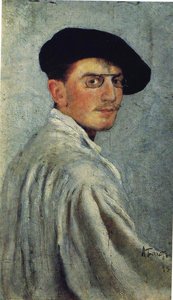
1866–1924, Bielorrusia
Léon Bakst
Primeros Años y Antecedentes Nacimiento: 27 de enero de 1866, Grodno, Bielorrusia (entonces parte del Imperio Ruso) Fallecimiento: 28 de diciembre de 1924, Rueil-Malmaison, cerca de París, Francia Familia: Nació en una familia judía de clase media. Su abuelo fue un renombrado sastre que recibió el favor del Zar. Inclinación Artística Temprana: Mostró talento artístico desde temprana edad, ganando un concurso de dibujo a los 12 años. Enfrentó la desaprobación de sus padres sobre su deseo de convertirse en artista.
Otras obras de Léon Bakst
 Diseño con flores en rejilla
 Diseño de vestuario para el ballet ''Cleopatra''1909
 Diseños de vestuario operístico1911
 Dibujo del disfraz de la joven divinidad Narciso, ballet Diaghilev1911
Ensayos sobre scheherezade odalisque
 Obras rusas de la década de 1910Explora la vanguardia rusa de los 1910s con Kandinsky y Petrov-Vodkin. Encuentra reproducciones de museo en OriginalUniqueArt.com.
 Léon Bakst: A Master of Decadence and the Ballet Russes' Visual RevolutionExplore the captivating world of Léon Bakst, master designer of the Ballets Russes. Discover his opulent costumes, revolutionary stagecraft…
 Obras rusas de la década de 1900Explora obras de Kandinsky y Korovin de la vanguardia rusa. Descubre reproducciones de museo en OriginalUniqueArt.com.