Fauvism · 1923
Nude (André Derain, 1923)
André Derain (1880–1954) creó Nude. Data de 1923. Pertenece al movimiento Fauvism. Está realizado en Oil On Canvas. Sus dimensiones son 44 × 58 cm.
- 1923
- Oil On Canvas
- 44 × 58 cm

 Ver en contexto

 Óleo pintado a mano
 Enviar
 Compartir
 Ficha técnica


 Descargar
 Similares
 Radiografía
 Presentación de diapositivas
 Preguntas y respuestas

 Estadísticas
Nude en breve
- Título
- Nude
- Artista
- André Derain (1880–1954)
- Lugar de nacimiento del artista
- Chatou, Francia
- Fecha
- 1923
- Técnica
- Oil On Canvas
- Dimensiones
- 44 × 58 cm
- Movimiento
- Fauvism
- Época
- Modern
- Tema
- woman, nude, female figure, grayscale, seated woman
¿Qué representa Nude?
Identification of the Nude by André Derain
In this 1923 work, titled Nude, André Derain turns his attention to the quietude of the human form. The painting presents a nude female figure, captured in a moment of stillness that invites a closer, more intimate observation. It is a study of presence and form, rendered with a focus on the essential character of the subject.
The artist, André Derain, approaches the figure with a sense of restraint. Rather than relying on the loud, unmixed hues of his earlier Fauvist period, this piece reflects a more disciplined sensibility. The subject is seated and facing forward, occupying the central space of the composition. There is a certain gravity to her pose, suggesting a state of introspection or perhaps a quiet contemplation of her surroundings.
This work belongs to a period in the artist's career where structure and form began to take precedence. The figure is defined by simplified shapes and a deliberate use of line. It is a direct encounter with the subject, stripped of unnecessary distraction, allowing the viewer to focus entirely on the weight and volume of the female form as it exists within the frame.
Composition and Visual Elements
The figure is centrally positioned within the frame, creating a quiet sense of balance that draws the eye immediately to the subject. She is seated in a moment of stillness, her pose defined by arms crossed and resting upon her legs. This arrangement suggests a state of introspection or perhaps a simple, unhurried relaxation. The composition avoids complex spatial arrangements, opting instead for a relatively flat perspective that lacks a strong sense of depth, keeping the viewer's attention fixed on the immediate presence of the form.
There is a deliberate simplification in how the human form is rendered. The artist employs simplified geometric shapes to represent the body, using curves to trace the silhouette while sharper angles define the features of the face, such as the nose and eyebrows. This structural approach gives the figure a certain weight and presence despite the lack of environmental detail. The background remains largely undefined, which serves to isolate the subject and emphasize the contours of her body.
The palette is strictly monochromatic, relying on a controlled range of shades including gray, white, and black. Rather than using color to create volume, the artist uses subtle variations in tone to model the figure. Strong, visible brushstrokes define the contours of the body and the facial features. These lines are not blended into smooth transitions; instead, they retain an individual character that adds a tactile energy to the surface. The interplay between these textured strokes and the softer areas of the skin creates a visual rhythm that is both disciplined and expressive.
Technique and Material Details
This work is an oil on canvas, executed with a deliberate and tactile approach to the medium. The artist employs visible brushstrokes that remain unblended in many areas, creating a surface defined by its physical texture. These marks are not merely marks of application but are essential to the structural definition of the figure, providing a sense of energy and movement across the form.
There is a clear evidence of layering and careful blending used to achieve subtle tonal variations. This technique allows for a nuanced transition between light and shadow, giving the subject a sense of volume and presence. The interplay of these layers creates a depth that relies on the weight of the paint rather than a reliance on linear perspective. The result is a surface where the materiality of the oil paint is as much a part of the composition as the subject itself.
Imágenes en alta resolución de Nude

André Derain, Nude (1923). Dominio público
Preguntas sobre Nude respondidas
¿En qué año se creó "Nude" de André Derain?
"Nude" de André Derain fue creada en 1923.
¿En qué técnica está ejecutada "Nude" de André Derain?
"Nude" está realizada en Oil On Canvas.
¿Cuáles son las dimensiones de la obra original "Nude"?
"Nude" mide 44 x 58 cm en su formato original. Las dimensiones originales son una referencia útil al elegir el tamaño de una reproducción.
¿Qué temas aparecen en "Nude" de André Derain?
Los temas presentes en "Nude" de André Derain incluyen woman, nude, female figure, grayscale, seated woman, los cuales resumen la temática de la obra.
¿Se puede reproducir libremente la imagen de "Nude" de André Derain?
"Nude" de André Derain es de en el dominio público: sus derechos de autor han expirado. Este estado determina cómo se puede reproducir la imagen de la obra.
¿Quién es el artista detrás de "Nude"?
"Nude" se atribuye a André Derain.
¿A qué corriente artística pertenece "Nude" de André Derain?
"Nude" es una obra de Fauvism. El movimiento indica la tradición artística a la que pertenece la obra.
¿A qué etapa de la trayectoria de André Derain pertenece "Nude"?
Dentro de la trayectoria de André Derain, "Nude" pertenece al Return to order. Esta etapa permite compararla con otras obras del artista.
¿Qué edad tenía André Derain cuando creó "Nude" en 1923?
Cuando se creó "Nude" en 1923, André Derain —nacido/a en 1880— tenía 43 años.
Sobre el artista, André Derain
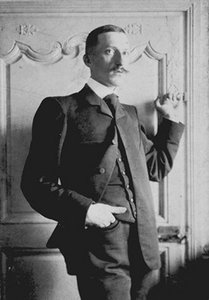
1880–1954, Francia
André Derain
Primeros años, familia y formación En el año 1880, André Derain llegó al mundo en Chatou, un pueblo enclavado en la región de Yvelines, en Francia. Sus primeros años estuvieron moldeados por los paisajes tranquilos de la Île-de-France, donde una curiosidad natural por su entorno comenzó a echar raíces. Para 1895, ya había comenzado a estudiar de forma autodidacta, buscando comprender el mundo visual a través de sus propios ojos en lugar de seguir una instrucción formal. Este periodo de exploración independiente le permitió desarrollar una forma personal de mirar antes de que el rigor de una academia pudiera imponer su voluntad sobre él.
Otras obras de André Derain
 bañistas1907
 London Bridge1906
 Charing Cross desde el suroeste1906
 Paisaje en L'Estaque1906
Ensayos sobre Nude
 Obras maestras francesas de la década de 1920Descubre el arte francés de los 1920s con Matisse y Monet. Explora obras maestras y reproducciones en OriginalUniqueArt.com.
 The Evolving Human Form: Tracing Light and Flesh from Impressionism to Post-ImpressionismExplore the evolution of the human form from academic realism to Post-Impressionism. Trace the history of light and flesh with us.
 The Architecture of Stillness: A Curated Study of Seated Figures in Art HistoryExplore the psychological depth of seated figures from Rembrandt to Roman realism. Discover the secrets of art history now.