School of Paris · 1928
Rita van Leer (André Derain, 1928)
André Derain (1880–1954) creó Rita van Leer. Data de 1928. Pertenece al movimiento School of Paris. Está realizado en Oil On Panel. Sus dimensiones son 41 × 34 cm.
- 1928
- Oil On Panel
- 41 × 34 cm

 Ver en contexto

 Óleo pintado a mano
 Enviar
 Compartir
 Ficha técnica


 Descargar
 Similares
 Radiografía
 Presentación de diapositivas
 Preguntas y respuestas

 Estadísticas
Rita van Leer en breve
- Título
- Rita van Leer
- Artista
- André Derain (1880–1954)
- Lugar de nacimiento del artista
- Chatou, Francia
- Fecha
- 1928
- Técnica
- Oil On Panel
- Dimensiones
- 41 × 34 cm
- Movimiento
- School of Paris
- Época
- Modern
- Tema
- woman, portrait, face, shoulders, gray, black
¿Qué representa Rita van Leer?
The Portrait of Rita van Leer
In this intimate portrait, André Derain turns his attention to Rita van Leer. Created about 1928, the work moves away from the loud colorism of his earlier years, focusing instead on the quiet presence of the sitter. There is a certain stillness here, a moment captured in a way that prioritizes her character over a mere photographic likeness. She meets the viewer with a directness that feels both personal and somewhat guarded.
André Derain captures the subject with an expressive likeness, favoring the essence of her personality over rigid, academic precision. The portrait focuses on the head and shoulders, stripping away unnecessary distractions to ensure the viewer's attention remains fixed upon her gaze. It is a study of a person rather than a mere likeness, offering a glimpse into a specific, fleeting moment of her life.
Composition and Visual Elements
The composition is centered entirely upon the woman’s face, which occupies the majority of the frame. Presented in a close-up view, the subject's head and shoulders emerge from a dark, minimalist background. This lack of environmental detail ensures that the viewer's attention remains fixed on the sitter. Her head is slightly tilted, a subtle movement that introduces a sense of dynamism to an otherwise still moment.
There is a directness in her gaze, as she looks straight toward the viewer. This connection is established through the careful placement of her features and the use of tonal variations rather than sharp, photographic lines. Light and shadow work together to define the contours of her face, creating a sense of three-dimensionality through the layering of different shades.
Technique and Artistic Style
The work is characteristic of early modern art, leaning into the expressive possibilities of Fauvism and Expressionism. Rather than seeking photographic accuracy, the artist employs a loose and gestural application of paint to capture the sitter. There is a palpable sense of immediacy here, driven by the visible brushstrokes that define the form. This approach prioritizes the emotional essence of the subject over a strictly realistic representation.
One notices how the artist uses short, choppy strokes to build up the features of the face and the contours of the hair. This method creates a textured, almost rugged surface. The use of thick impasto is particularly evident, providing a physical depth that makes the paint feel sculptural. These heavy applications of pigment allow the light to catch the ridges of the brushwork, adding a sense of movement to the portrait.
Materials and Physical Properties
This work is executed in oil paint, applied with a deliberate and textured hand. The artist has worked upon a surface of either canvas or panel, a choice that supports the heavy impasto visible throughout the piece. Such tactile application allows the paint to hold its form, creating a physical presence that catches the light in subtle ways. The dimensions of the work are 41 x 34 cm, a scale that invites a close, intimate inspection of the surface.
The palette is notably restrained, eschewing the riotous color often associated with the artist's earlier years. Instead, we find a monochromatic arrangement of gray, black, and white. These tones are layered to build depth and define the contours of the subject. The interplay of light and shadow is achieved through these varying shades, providing a sense of volume without the need for chromatic intensity. It is a quiet, disciplined approach to the medium.
Imágenes en alta resolución de Rita van Leer
André Derain, Rita van Leer (1928). Dominio público
Preguntas sobre Rita van Leer respondidas
¿En qué año se creó "Rita van Leer" de André Derain?
"Rita van Leer" de André Derain fue creado en 1928.
¿En qué técnica está ejecutada "Rita van Leer" de André Derain?
La técnica de "Rita van Leer" de André Derain es Oil On Panel. Las reproducciones pretenden recrear la apariencia de esta técnica.
¿Cuáles son las dimensiones de la obra original "Rita van Leer" de André Derain?
Las dimensiones registradas de "Rita van Leer" de André Derain son 41 x 34 cm. Se pueden solicitar reproducciones en otros tamaños manteniendo las mismas proporciones.
¿Qué representa "Rita van Leer" de André Derain?
Los temas de "Rita van Leer" son woman, portrait, face, shoulders, gray, black, white.
¿Es "Rita van Leer" de dominio público?
Información sobre los derechos de autor de "Rita van Leer" de André Derain: la obra es en el dominio público: sus derechos de autor han expirado. Esto determina si las reproducciones de la imagen pueden realizarse libremente.
¿Quién es el autor de "Rita van Leer"?
El artista detrás de "Rita van Leer" es André Derain. La obra está catalogada bajo el nombre de André Derain.
¿A qué corriente artística pertenece "Rita van Leer" de André Derain?
El movimiento asociado con "Rita van Leer" de André Derain es School of Paris. Esta clasificación sitúa la obra entre artistas y obras relacionadas.
¿A qué etapa de la trayectoria de André Derain pertenece "Rita van Leer"?
"Rita van Leer" representa el Late Period de André Derain.
¿Qué edad tenía André Derain cuando se creó "Rita van Leer"?
André Derain creó "Rita van Leer" a la edad de 48. El artista nació en 1880 y la obra data de 1928.
Sobre el artista, André Derain
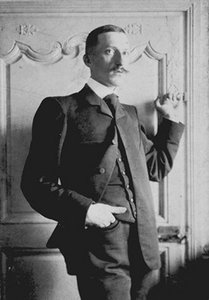
1880–1954, Francia
André Derain
Primeros años, familia y formación En el año 1880, André Derain llegó al mundo en Chatou, un pueblo enclavado en la región de Yvelines, en Francia. Sus primeros años estuvieron moldeados por los paisajes tranquilos de la Île-de-France, donde una curiosidad natural por su entorno comenzó a echar raíces. Para 1895, ya había comenzado a estudiar de forma autodidacta, buscando comprender el mundo visual a través de sus propios ojos en lugar de seguir una instrucción formal. Este periodo de exploración independiente le permitió desarrollar una forma personal de mirar antes de que el rigor de una academia pudiera imponer su voluntad sobre él.
Otras obras de André Derain
 bañistas1907
 London Bridge1906
 Charing Cross desde el suroeste1906
 Paisaje en L'Estaque1906
Ensayos sobre Rita van Leer
 Fauvismo vs. Expresionismo alemán: Distinguir el color y la emociónDomina las diferencias entre el Fauvismo y el Expresionismo alemán con este análisis experto. ¡Descubre el poder del color ahora!
 Obras maestras holandesas de la década de 1860Explora la evolución del arte holandés con Van Gogh y otros maestros de 1860. Encuentra reproducciones de calidad en OriginalUniqueArt.com.
 The Silent Dialogue: Examining Intimacy and Psychological Depth in Classical PortraitureExplore the psychological depth of classical portraiture through masters like Rembrandt and Vermeer. Discover the power of the gaze today.