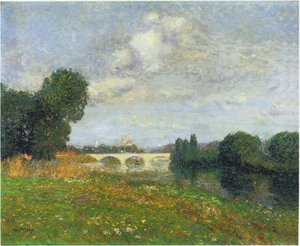
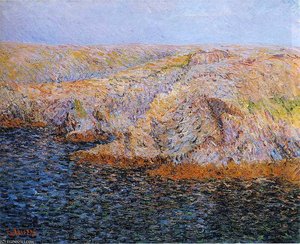
Retrato de Gustave Loiseau

Las 100 pinturas más famosas de Gustave Loiseau, una selección de la galería

Actualizado noviembre 2026 · clasificado según nuestro índice de popularidad (búsquedas, visitas y pedidos de cada obra) · 454 obras de Gustave Loiseau en nuestro catálogo

En resumen

De todos los originales que dejó Gustave Loiseau, la más famosa es Primavera (1906). Le siguen muy de cerca El lugar de la Bastilla (1929) y Fog by the Seine (1900). Nuestro catálogo cuenta con 454 obras de Gustave Loiseau; la galería ha conservado las 100 que el mundo más admira, cada una presentada con su fecha, su museo y su historia.

1865 – 1935, XVI Distrito de París Impressionism Más obras: Museo de Bellas Artes

Las 10 mejores pinturas de Gustave Loiseau: la elección de la galería

1
Primavera (1906) de Gustave Loiseau

Primavera

1906 · Óleo

En esta obra de 1920, nos encontramos en un tranquilo entorno rural, observando un campo que parece respirar con la llegada de una nueva estación. La composición se apoya en dos grandes árboles que se erigen uno al lado del otro, cuya presencia aporta una sensación de estabilidad frente a la suave extensión de la pradera. Dispersos por todo el campo, algunos árboles más pequeños y un par de vacas…

2
El lugar de la Bastilla (1929) de Gustave Loiseau

El lugar de la Bastilla

1929 · Óleo

El aire en la ciudad se siente denso por el movimiento, un flujo constante y rítmico de vida que se niega a permanecer inmóvil. En esta vista de 1929, las calles de París respiran con una energía inquieta. En lo alto del frenesí urbano, la Torre Eiffel atraviesa el cielo, con su silueta de hierro actuando como un ancla silenciosa en medio de la actividad vertiginosa que se desarrolla debajo.…

3
Fog by the Seine (1900) de Gustave Loiseau

Fog by the Seine

1900 · Oil On Canvas

Gustave Loiseau captures a hazy landscape along the Seine River in Fog by the Seine. Painted about 1900, the work portrays a specific moment of atmospheric stillness. The scene focuses on a foggy day by the river, where the elements of nature and human presence meet under a heavy, overcast sky.

4
the small bourgeois house (1905) de Gustave Loiseau

the small bourgeois house

1905 · Oil On Canvas

A small bourgeois house sits centrally within a rural landscape, framed by a brick wall and dense greenery. A single figure moves along a gravel path toward the structure, providing a sense of scale to the domestic scene. The composition uses the diagonal of the pathway to draw the eye inward, while the sky occupies the upper half of the canvas, creating a sense of openness. Light appears diffused, casting…

5
port joie (1901) de Gustave Loiseau

port joie

1901 · Oil On Canvas

The riverbank rests under a heavy, diffused light. A rustic building anchors the left side of the frame, its presence steady against the movement of the water. Trees rise with organic shapes, their forms defined by color rather than sharp lines. The river stretches toward the distance, a pale ribbon cutting through the landscape. Everything feels soft, as if seen through a thin veil of mist on a cloudy day.…

6
Poplars by the Eure River (1903) de Gustave Loiseau

Poplars by the Eure River

1903 · Oil On Canvas

Poplars by the Eure River is a landscape painting by the French artist Gustave Loiseau. Created about 1903, the work presents a naturalistic depiction of trees and water. The scene focuses on a line of tall poplar trees situated along the banks of the Eure River.

7
Cottages by the River (1900) de Gustave Loiseau

Cottages by the River

1900 · Oil On Canvas

Gustave Loiseau’s Cottages by the River presents a tranquil rural landscape, captured about 1900. The composition is broadly horizontal, emphasizing the wide expanse of the field and the sky. A grassy hill and a body of water dominate the scene, providing a natural framework for the landscape. On the left, a red building sits prominently in the foreground, anchoring the viewer's perspective within the environment.

8
Snow at Rouen (1910) de Gustave Loiseau

Snow at Rouen

1910 · Oil On Canvas

A winding road cuts through a snow-covered landscape, drawing the eye toward the distant architecture of a French town. The scene captures a moment of stillness in Rouen, where the weight of winter settles over the buildings and bare trees. Light is diffused through an overcast sky, casting a soft, even glow across the terrain. There are no harsh shadows here, only the muted tones of a cold afternoon.

9
Petit Dalles at Normandy (1908) de Gustave Loiseau

Petit Dalles at Normandy

1908 · Oil On Canvas

In this 1908 oil on canvas, we find ourselves standing before a rugged stretch of the Normandy coastline. The scene is composed of heavy, horizontal layers where the sea meets the cliffs and the beach, creating a sense of immense scale. There is a certain stillness here, a moment captured under a diffused, overcast sky that softens the edges of the world. The palette is restrained, relying on muted blues,…

10
Paysage de Seine et Oise (1906) de Gustave Loiseau

Paysage de Seine et Oise

1906 · Oil On Canvas

A weathered stone cottage with a thatched roof anchors this rural scene, situated beneath a heavy, cloudy sky. The composition prioritizes the atmosphere of a damp, overcast day over sharp anatomical precision. A solitary figure moves through the landscape, suggesting a life of quiet, pastoral routine. The scene is rendered with a sense of nostalgia, capturing a fleeting moment of stillness in the French countryside. Light is diffused, softening the…

La selección de Gustave Loiseau continúa, de 11 a 100

11Village in Spring (1916) de Gustave LoiseauVillage in Spring1916 12The Church of St Gervais (1920) de Gustave LoiseauThe Church of St Gervais1920 13Orne at Caen (1920) de Gustave LoiseauOrne at Caen1920 14Pont Neuf (1921) de Gustave LoiseauPont Neuf1921 15The River (1923) de Gustave LoiseauThe River1923 · Chimei Museum 16Pont-Aven, Grey Weather (1923) de Gustave LoiseauPont-Aven, Grey Weather1923 17El Sena en Herqueville (1912) de Gustave LoiseauEl Sena en Herqueville1912 · Galería Nacional de Canadá 18Overcast Weather at Nesles-la-Vallee (1896) de Gustave LoiseauOvercast Weather at Nesles-la-Vallee1896 19Street in Paris at Ennery de Gustave LoiseauStreet in Paris at Ennery 20Veslez (1906) de Gustave LoiseauVeslez1906 21By the Oise River (1892) de Gustave LoiseauBy the Oise River1892 22Trees by the River (1891) de Gustave LoiseauTrees by the River1891 23Port Joie at the Seine (1889) de Gustave LoiseauPort Joie at the Seine1889 24Village in Spring, The Seine Valley near Les Damps (1898) de Gustave LoiseauVillage in Spring, The Seine Valley near Les Damps1898 · Wallraf-Richartz-Museum 25Near Saint Cyr (1895) de Gustave LoiseauNear Saint Cyr1895 26Landscape in a Valley (1898) de Gustave LoiseauLandscape in a Valley1898 27Valley before a Storm (1896) de Gustave LoiseauValley before a Storm1896 28Apple Trees in October (1898) de Gustave LoiseauApple Trees in October1898 29Landscape in Winter with Fog (1897) de Gustave LoiseauLandscape in Winter with Fog1897 30Landscape of Givre in the Mist (1897) de Gustave LoiseauLandscape of Givre in the Mist1897 31By the Oise at Parmain (1898) de Gustave LoiseauBy the Oise at Parmain1898 32Garden by the House (1898) de Gustave LoiseauGarden by the House1898 33White Frost in Huelgoat, Finistère (1903) de Gustave LoiseauWhite Frost in Huelgoat, Finistère1903 34Factory on the Banks of the Oise, Snow Effect (1905) de Gustave LoiseauFactory on the Banks of the Oise, Snow Effect1905 35On the Banks of Eure in Spring (1900) de Gustave LoiseauOn the Banks of Eure in Spring1900 36Banks of the Eure, Normandy (1901) de Gustave LoiseauBanks of the Eure, Normandy1901 · Buffalo AKG Museo de Arte 37Winter on the Banks of the Eure (1900) de Gustave LoiseauWinter on the Banks of the Eure1900 · Museo de Bellas Artes 38On the Banks of the Eure (1904) de Gustave LoiseauOn the Banks of the Eure1904 · Museo de Bellas Artes 39Landscape (1900) de Gustave LoiseauLandscape1900 · Art Institute of Chicago 40House in Pontoise in Snow (1902) de Gustave LoiseauHouse in Pontoise in Snow1902 41Etretat (1902) de Gustave LoiseauEtretat1902 42Cliffs of Puy (1901) de Gustave LoiseauCliffs of Puy1901 43Docks in Rouen (1899) de Gustave LoiseauDocks in Rouen1899 44Poplars by the Eure River (1900) de Gustave LoiseauPoplars by the Eure River1900 45Cliffs of Etretat (1902) de Gustave LoiseauCliffs of Etretat1902 46Pont du Jars a Cap Frehel (1905) de Gustave LoiseauPont du Jars a Cap Frehel1905 47October in Normandy (1905) de Gustave LoiseauOctober in Normandy1905 48By the Eure River. Mist Effect (1905) de Gustave LoiseauBy the Eure River. Mist Effect1905 49Cliffs by the Sea (1901) de Gustave LoiseauCliffs by the Sea1901 50The Seine in Winter Sunlight (1901) de Gustave LoiseauThe Seine in Winter Sunlight1901 51Oise at Pontoise (1900) de Gustave LoiseauOise at Pontoise1900 52Flood (1901) de Gustave LoiseauFlood1901 53Port Joie (1901) de Gustave LoiseauPort Joie1901 54Landscape in Snow (1900) de Gustave LoiseauLandscape in Snow1900 55Trees in Bloom (1900) de Gustave LoiseauTrees in Bloom1900 56Landscape in Snow (1899) de Gustave LoiseauLandscape in Snow1899 57Port Pinche at the Turn of the Seine (1900) de Gustave LoiseauPort Pinche at the Turn of the Seine1900 58By the Eure River in Summer (1902) de Gustave LoiseauBy the Eure River in Summer1902 59dieppe (1905) de Gustave Loiseaudieppe1905 60cap frehel (1902) de Gustave Loiseaucap frehel1902 61Haystacks (1901) de Gustave LoiseauHaystacks1901 62Etretat - La Point de Batterie (1902) de Gustave LoiseauEtretat - La Point de Batterie1902 63By the Eure River (1903) de Gustave LoiseauBy the Eure River1903 64Pont du Jars a Cap Frehel (1905) de Gustave LoiseauPont du Jars a Cap Frehel1905 65View at Pontoise (1905) de Gustave LoiseauView at Pontoise1905 66Paysage de Bretagne Pont Aven (1903) de Gustave LoiseauPaysage de Bretagne Pont Aven1903 67Street in the Village (1900) de Gustave LoiseauStreet in the Village1900 68Quay at Pontoise (1905) de Gustave LoiseauQuay at Pontoise1905 69Yellow Irises (1902) de Gustave LoiseauYellow Irises1902 70Poplars at Vaudreuil (1905) de Gustave LoiseauPoplars at Vaudreuil1905 71Cottage in Normandy (1902) de Gustave LoiseauCottage in Normandy1902 72Cap Frehel (1902) de Gustave LoiseauCap Frehel1902 73Coast at Chaponival (1901) de Gustave LoiseauCoast at Chaponival1901 74The Port of Pornic, High Tide (1900) de Gustave LoiseauThe Port of Pornic, High Tide1900 75Poplars by the Eure River (1903) de Gustave LoiseauPoplars by the Eure River1903 76Pont Tourant at Dieppe (1903) de Gustave LoiseauPont Tourant at Dieppe1903 77Village by the River (1900) de Gustave LoiseauVillage by the River1900 78The Rocks of Saint-Lunaire (1904) de Gustave LoiseauThe Rocks of Saint-Lunaire1904 79Banks of the Seine in Summer Tournedos sur Seine (1899) de Gustave LoiseauBanks of the Seine in Summer Tournedos sur Seine1899 80Thatched Cottage, Le Vaudreuil (1903) de Gustave LoiseauThatched Cottage, Le Vaudreuil1903 81Le Champ de Ble (1904) de Gustave LoiseauLe Champ de Ble1904 82Autumn near Saint Cyr du Vaudreuil (1899) de Gustave LoiseauAutumn near Saint Cyr du Vaudreuil1899 83belle ile la cote sauvage (1905) de Gustave Loiseaubelle ile la cote sauvage1905 84L'Hermitage in Pontoise (1899) de Gustave LoiseauL'Hermitage in Pontoise1899 85Alley of Poplars (1900) de Gustave LoiseauAlley of Poplars1900 86Port of Dieppe (1903) de Gustave LoiseauPort of Dieppe1903 87Cliffs at Grainval (1902) de Gustave LoiseauCliffs at Grainval1902 88Quay at Dieppe (1902) de Gustave LoiseauQuay at Dieppe1902 89Cliffs at Cap Frehel (1905) de Gustave LoiseauCliffs at Cap Frehel1905 90Moret sur Loing (1902) de Gustave LoiseauMoret sur Loing1902 91Tournedos sur Seine Snow Frost Sun (1901) de Gustave LoiseauTournedos sur Seine Snow Frost Sun1901 92Cliffs at Cap Frehel (1905) de Gustave LoiseauCliffs at Cap Frehel1905 93Tress in Bloom (1900) de Gustave LoiseauTress in Bloom1900 94Poplars on the Banks of the Eure (1903) de Gustave LoiseauPoplars on the Banks of the Eure1903 95The Seine at Port Marly (1902) de Gustave LoiseauThe Seine at Port Marly1902 96Farm in the Country (1900) de Gustave LoiseauFarm in the Country1900 97The Oise at Pontoise (1904) de Gustave LoiseauThe Oise at Pontoise1904 98Porte d'Amont, Etretet (1902) de Gustave LoiseauPorte d'Amont, Etretet1902 99Saint Medard Church in Paris (1903) de Gustave LoiseauSaint Medard Church in Paris1903 100La Pointe du Jars, Cap Frehel (1905) de Gustave LoiseauLa Pointe du Jars, Cap Frehel1905

Pinturas famosas de Gustave Loiseau, época por época

Los temas que cautivaron la mirada de Gustave Loiseau

Los cuatro temas que se repiten con más frecuencia en estas obras originales, cada uno con su mejor ejemplo.

Los museos que conservan los originales de Gustave Loiseau

Los 6 museos que albergan la mayoría de las pinturas de esta página.

Museos Ciudad Obras de Gustave Loiseau Pinturas de esta lista
Museo de Bellas Artes, BostonMuseo de Bellas Artes Boston 2 Winter on the Banks of the Eure, On the Banks of the Eure
Chimei Museum, TainanChimei Museum Tainan 1 The River
Galería Nacional de Canadá, OttawaGalería Nacional de Canadá Ottawa 1 El Sena en Herqueville
Wallraf-Richartz-Museum, ColoniaWallraf-Richartz-Museum Colonia 1 Village in Spring, The Seine Valley near Les Damps
Buffalo AKG Museo de Arte, BuffaloBuffalo AKG Museo de Arte Buffalo 1 Banks of the Eure, Normandy
Art Institute of Chicago, ChicagoArt Institute of Chicago Chicago 1 Landscape

Gustave Loiseau década tras década: la obra original que define cada una

Obras por década

Elige una década para ver la obra original que la define.

Preguntas de coleccionistas sobre las pinturas de Gustave Loiseau

¿Por qué obra es más famoso/a Gustave Loiseau?Descubre la respuesta

Primavera (1906). A continuación, El lugar de la Bastilla (1929) y Fog by the Seine (1900).

¿Qué edad tenía Gustave Loiseau cuando se creó Primavera?Descubre la respuesta

41 años: Primavera data de 1906, y Gustave Loiseau nació en 1865.

¿Cuáles son las diez pinturas más famosas de Gustave Loiseau?Descubre la respuesta

Primavera, El lugar de la Bastilla, Fog by the Seine, the small bourgeois house, port joie, Poplars by the Eure River, Cottages by the River, Snow at Rouen, Petit Dalles at Normandy y Paysage de Seine et Oise. La clasificación anterior indica el año y el museo de cada una.

¿Cuántas pinturas dejó Gustave Loiseau?Descubre la respuesta

Nuestro catálogo cuenta con 454 obras de Gustave Loiseau, datadas desde 1889 hasta 1929.

¿En qué museos se exhiben las obras maestras de Gustave Loiseau?Descubre la respuesta

Principalmente en Museo de Bellas Artes (Boston), Chimei Museum (Tainan) y Galería Nacional de Canadá (Ottawa). La tabla de museos arriba los enumera todos.

¿En qué años pintó Gustave Loiseau sus obras más famosas?Descubre la respuesta

En 1900s: 72 de las 100 obras de esta página se realizaron entonces, Primavera de ellas.

¿Cuáles son las primeras y las últimas obras originales de Gustave Loiseau?Descubre la respuesta

En esta página, la más antigua es Port Joie at the Seine (1889) y la más reciente El lugar de la Bastilla (1929).

¿Qué temas eligió Gustave Loiseau con mayor frecuencia?Descubre la respuesta

Landscape (9), Rivers (8) y Beach (8), en las 100 obras de esta página.

¿Qué técnica utilizó más Gustave Loiseau?Descubre la respuesta

Oil On Canvas, para 14 de las 100 obras de esta página.

¿A qué movimiento artístico pertenece Gustave Loiseau?Descubre la respuesta

Impressionism y Postimpresionismo, a juzgar por los originales de esta página.

¿Qué obras de Gustave Loiseau se exhiben en el Museo de Bellas Artes?Descubre la respuesta

Winter on the Banks of the Eure y On the Banks of the Eure: el Museo de Bellas Artes, Boston posee 2 de las obras de esta página.

Gustave Loiseau: vida y obra

Un Vistazo Parisino: La Vida y el Arte de Gustave Loiseau

Gustave Loiseau, un nombre que quizás no resuene con la misma inmediatez que otros exponentes del Postimpresionismo, ocupa sin embargo un lugar significativo en la historia de la pintura francesa a principios del siglo XX. Nacido en París el 3 de octubre de 1865 y fallecido en la misma ciudad el 10 de octubre de 1935, la vida de Loiseau estuvo profundamente entrelazada con el cambiante panorama artístico de su metrópoli y las corrientes más amplias del modernismo. Su camino no comenzó en los solemnes salones de una academia artística –aunque asistió brevemente a la École des arts décoratifs– sino en el mundo práctico de la carnicería de sus padres. Esta temprana exposición a la vida cotidiana parisina, junto con un posterior aprendizaje con un amigo familiar decorador, moldearía profundamente su sensibilidad artística. Le inculcó una aguda observación de los ritmos y las texturas de la ciudad, una fascinación que se convertiría en el núcleo de su obra. Una modesta herencia de su abuela resultó crucial, permitiendo a Loiseau dedicarse por completo a la pintura en 1887, aunque su formación formal se vio interrumpida por un desacuerdo con un profesor –un testimonio de su espíritu independiente.

De Bretaña al ‘En Treillis’: El Desarrollo de un Estilo Único

El desarrollo artístico de Loiseau no fue inmediato ni sencillo. Inicialmente experimentó con el Puntillismo, la meticulosa técnica defendida por Georges Seurat y Paul Signac, pero finalmente la encontró demasiado restrictiva para su visión. Una experiencia formativa fue su primera visita a Pont-Aven en Bretaña en 1890. Esta colonia de artistas, ya famosa como un refugio para aquellos que buscaban alternativas a la tradición académica –notablemente Paul Gauguin y Émile Bernard– expuso a Loiseau a nuevas ideas sobre el color, la forma y el potencial expresivo del paisaje. Sin embargo, no simplemente adoptó sus estilos; en cambio, comenzó a forjar su propio camino. Esto condujo al desarrollo de su técnica distintiva, *en treillis*, o tramado cruzado. A diferencia de las pinceladas rotas del Impresionismo o los puntos sistemáticos del Puntillismo, Loiseau empleó una red de líneas finas e entrelazadas para construir la forma y capturar los matices de la luz y la atmósfera. Esto creó una calidad textural distintiva en sus pinturas, casi un efecto brillante que lo diferenciaba. Fue una técnica nacida no de la teoría sino de una comprensión intuitiva de cómo traducir sus percepciones al lienzo.

París y el Campo Francés: Temas Recurrentes

El tema del trabajo de Loiseau giró constantemente en torno a dos temas principales: las bulliciosas calles de París y los serenos paisajes de la campiña francesa. Sus escenas parisinas, como *Rue de Clignancourt* y *Avenue de Fiedland*, no son panoramas grandiosos sino vislumbres íntimos de la vida cotidiana. Capturó la energía de la ciudad –el movimiento de los carruajes, el flujo de peatones, el juego de luces sobre los edificios– con una notable sensibilidad al detalle. Simultáneamente, desarrolló una serie de paisajes que a menudo revisitaron los mismos motivos –huertos, jardines, campos– en diferentes épocas del año y bajo diversas condiciones climáticas. Estas series recuerdan la obra de Claude Monet en su exploración de los efectos atmosféricos y los momentos fugaces, pero la técnica *en treillis* de Loiseau les imparte un carácter único. No se limitaba a registrar lo que veía; estaba transmitiendo su respuesta emocional a la escena, su sentido de su belleza inherente y tranquilidad. Sus pinturas están imbuidas de una poesía silenciosa, una celebración de lo ordinario transformado a través de la visión artística.

Reconocimiento y Legado

A lo largo de su carrera, Loiseau expuso regularmente en prestigiosos lugares como el Salon des Indépendants y el Salon de la Société Nationale, obteniendo reconocimiento tanto de críticos como de coleccionistas. Se benefició del apoyo de Paul Durand-Ruel, un destacado marchante de arte que defendió a muchos de los principales artistas impresionistas y postimpresionistas. Aunque nunca alcanzó el mismo nivel de fama que algunos de sus compañeros, la obra de Loiseau encontró su camino en importantes colecciones de museos, incluido el Musée Maurice Denis en Francia. Hoy en día, sus pinturas son cada vez más apreciadas por su estilo distintivo, su atmósfera evocadora y su perspicaz retrato de la vida francesa durante un período de rápidos cambios. Es un testimonio del poder de la visión individual –un artista que se mantuvo fiel a sus propios principios estéticos al tiempo que interactuaba con las corrientes artísticas de su época. Su legado no reside en revolucionar la pintura sino en refinarla, ofreciendo una perspectiva única y cautivadora del mundo que lo rodea.
  • Descubre más sobre la obra de Gustave Loiseau: Visita OriginalUniqueArt.com/@@/gustave-loiseau.
  • Explora artistas relacionados: Aprende sobre Evert Pieters en OriginalUniqueArt.com/@/evert-pieters.
  • Profundiza en el arte japonés: Ve la pintura de Ito Jakuchu de vides de frijoles en OriginalUniqueArt.com/@@/d2vr7s.
  • Aprende más sobre la Galería de Arte Beaverbrook: OriginalUniqueArt.com/@@/a@d3c29v
  • Lee su entrada en Wikipedia: https://en.wikipedia.org/wiki/Gustave_Loiseau.