Julius Rolshoven: A Life in Art
Early Life and Education
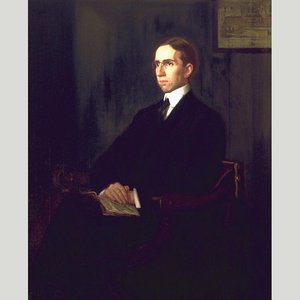
- Born: October 28, 1858, in Detroit, Michigan.
- Rolshoven’s artistic journey began with formal training at the Cooper Union Art School in New York City.
- He continued his studies abroad, first at the Düsseldorf Academy and then in Munich, seeking a rigorous academic foundation.
- A pivotal moment came when he studied under Frank Duveneck in Venice and Florence, becoming one of the esteemed “Duveneck Boys.” This experience profoundly shaped his artistic style and approach.
Artistic Development and Influences
- Duveneck’s Influence: Rolshoven absorbed Duveneck's emphasis on direct painting, realism, and a rejection of academic conventions. This influence is evident in his early portraits and genre scenes.
- Years spent in Paris and London broadened his exposure to diverse artistic trends, but he ultimately found himself drawn back to the Italian Renaissance tradition.
- His work reflects a blend of realism, impressionistic touches, and a keen eye for capturing character and atmosphere.
Life in Florence and “Castello del Diavolo”
- In 1902, Rolshoven made the significant decision to settle in Florence, Italy.
- Discovery of “Devil’s Castle”: In 1905, while painting outdoors, he stumbled upon a dilapidated castle known as "Castello del Diavolo" (Devil's Castle), belonging to the Talani family.
- Enthralled by its charm and history, Rolshoven purchased the property in 1907 and embarked on an extensive restoration project. The estate became his home and a source of inspiration for decades.
- The Italian government eventually recognized the Castello del Diavolo’s historical significance, designating it as a national monument, a testament to Rolshoven's dedication to its preservation.
Return to America and Southwestern Period
- The outbreak of World War I prompted Rolshoven’s return to the United States in 1915. He married Harriette Haynes Blazo in Los Angeles.
- Santa Fe and the Taos Society: By 1916, he had established a studio in Santa Fe, New Mexico, at the Governor’s Palace.
- He became an early member of the prestigious Taos Society of Artists, contributing to the burgeoning art scene in the American Southwest.
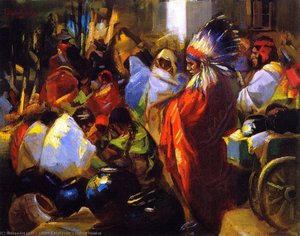
- His Southwestern landscapes and depictions of Native American life reflect his adaptation to a new environment while maintaining his distinctive artistic style.
Later Life and Legacy
- From 1920 until his death, Rolshoven divided his time between Florence, Detroit, and Santa Fe, reflecting his enduring connections to these places.
- Death at Sea: He passed away on December 8, 1930, while traveling by ship across the Atlantic Ocean.
- His widow, Harriette Haynes Blazo Rolshoven, generously donated a substantial sum and twenty of his artworks to the University of New Mexico in 1957, ensuring his legacy would be preserved and appreciated for generations to come.
- Rolshoven’s work offers a glimpse into a cosmopolitan life, bridging European traditions with American landscapes and cultural encounters. His paintings continue to captivate viewers with their realism, sensitivity, and historical resonance.