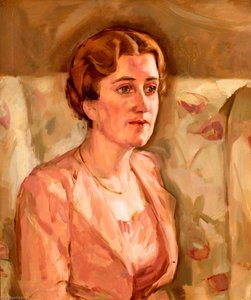
Portrait of Ivor Williams

Ivor Williams Paintings: The 29 Most Famous, Through a Gallery's Eye

Updated November 2026 · ranked by our popularity score (searches, visits and orders for each work) · 29 works by Ivor Williams in our catalogue

In short

To the gallery's eye, Ivor Williams's most famous painting is Morning (1938), whose original hangs in the Aberystwyth University School of Art Museum And Galleries, Aberystwyth. Reclining Nude ('Brown Owl') and Three Musicians (1930) complete the trio every eye recognises. Of the 29 works by Ivor Williams in our catalog, the gallery presents the 29 most famous below, each original with its year, its museum and what makes it unique.
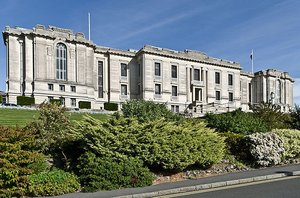
1908 – 1982, London Most works: Aberystwyth University School of Art Museum And Galleries

The gallery's top 10 Ivor Williams paintings

1
Morning (1938) by Ivor Williams

Morning

1938 · Oil On Canvas · Aberystwyth University School of Art Museum And Galleries, Aberystwyth

In the soft, amber glow of a simulated dawn, Ivor Williams’ 1938 masterpiece, Morning, invites the viewer into a sanctuary of profound stillness. This evocative oil painting captures a singular, private moment: a nude female figure seated upon the edge of a bed, caught in the delicate transition between sleep and wakefulness. The composition is masterfully centered yet retains a naturalistic spontaneity, as if the observer has stumbled upon a…

Ivor Williams paintings, ranked 11 to 29

The subjects that held Ivor Williams's eye

The four subjects that come back most often in these originals, each with its finest example.

The museums that keep Ivor Williams's originals

The 3 museums that hold the most of the paintings on this page.

Museum City Works by Ivor Williams Paintings from this list
Aberystwyth University School of Art Museum And Galleries, AberystwythAberystwyth University School of Art Museum And Galleries Aberystwyth 15 Morning, Three Musicians, Soldier
Llyfrgell Genedlaethol Cymru / The National Library of Wales, AberystwythLlyfrgell Genedlaethol Cymru / The National Library of Wales Aberystwyth 4 Howell Elvet Lewis (Elfed) (1860–1953), Major Tasker Watkins (1918–2007), Sir John Edward Lloyd (1861–1947)
Bangor University, BangorBangor University Bangor 1 Leaping Beggar

Ivor Williams, one signature painting per decade

Works per decade

Pick a decade to see the original that defines it.

Ivor Williams's paintings: the gallery answers

Which Ivor Williams painting is the most famous of all?Reveal the answer

Morning (1938), Aberystwyth University School of Art Museum And Galleries, Aberystwyth. Reclining Nude ('Brown Owl') and Three Musicians (1930) come next.

How old was Ivor Williams on completing Morning?Reveal the answer

30 years old: Morning dates from 1938, and Ivor Williams was born in 1908.

Which are Ivor Williams's top 10 paintings?Reveal the answer

Morning, Reclining Nude ('Brown Owl'), Three Musicians, Reverend Philip Jones (1855–1945), The Engagement, Thomas Jones (1870–1955), CH, Howell Elvet Lewis (Elfed) (1860–1953), Soldier, Major Tasker Watkins (1918–2007) and Sir John Edward Lloyd (1861–1947). The ranking above gives each one's year and museum.

How many works did Ivor Williams create?Reveal the answer

Our catalog holds 29 works by Ivor Williams, dated from 1930 to 1950.

Where do Ivor Williams's most famous originals hang?Reveal the answer

Mostly in Aberystwyth University School of Art Museum And Galleries (Aberystwyth), Llyfrgell Genedlaethol Cymru / The National Library of Wales (Aberystwyth) and Bangor University (Bangor). The museum table above lists them all.

When did Ivor Williams create the most famous paintings?Reveal the answer

In 1930s: 5 of the 29 works on this page were made then, Morning among them.

Which are Ivor Williams's earliest and latest famous works?Reveal the answer

On this page, the earliest is Three Musicians (1930) and the latest Sir John Edward Lloyd (1861–1947) (1950).

Which subjects did Ivor Williams return to most?Reveal the answer

Men (8), Women (5) and Portrait (3), across the 29 works on this page.

Which medium did Ivor Williams work in most?Reveal the answer

Oil On Canvas, for 2 of the 29 works on this page.

Which Ivor Williams originals does the Aberystwyth University School of Art Museum And Galleries hold?Reveal the answer

Morning, Three Musicians and Soldier: the Aberystwyth University School of Art Museum And Galleries, Aberystwyth holds 15 of the works on this page.

Ivor Williams: the artist

A Legacy of Vision: The Life and Art of Ivor Williams

Ivor Williams (1908–1982) remains a pivotal figure in the tapestry of Welsh art history, a painter whose work served as a bridge between the enduring traditions of Impressionism and a profound engagement with the monumental narratives of faith and national identity. Born in London to the celebrated Welsh painter Christopher Williams and Emily Appylard, Ivor was immersed in a rich, creative atmosphere from his earliest days. This lineage provided more than just a connection to heritage; it offered a foundational understanding of the artist's role in society. His formal education at the Central School of Art and Design and the prestigious Slade School of Art refined his technical mastery, instilling in him a capacity for meticulous observation paired with an expressive, emotive brushwork that would become his hallmark. The evolution of Williams’ style was deeply intertwined with his personal convictions and familial connections. Influenced by the Quaker values of simplicity, compassion, and social responsibility, his work often transcended mere decoration to touch upon the spiritual and the communal. His artistic journey was also a collaborative one; working alongside his father, he developed a remarkable talent for large-scale figure compositions and portraiture. This period of his life was marked by an ambitious pursuit of subjects that demanded both technical precision and emotional depth, ranging from intimate portraits to sweeping biblical scenes that breathed life into ancient texts through a modern lens.

Mastery of Scale and Commemorative Grandeur

Williams possessed a rare ability to capture the weight of history through his monumental commissions. He was frequently called upon to document moments of immense national significance, translating fleeting historical events into permanent visual legacies. His canvases did not merely record facts; they captured the atmosphere of an era. Notable among these achievements were his depictions of high-profile official celebrations, such as the profound moment Field Marshal Montgomery received the Freedom of Newport in 1945, and the solemn dignity of Sir Winston Churchill’s honors at Cardiff City Hall. These works required a sophisticated command of composition to manage large groups of figures while maintaining a sense of individual character and historical gravity. Beyond the political and the official, Williams found profound inspiration in the sacred. His biblical paintings stand as some of his most enduring contributions to the art world, utilizing light and shadow to evoke the divine within the human experience. Through these works, he explored themes of struggle, redemption, and grace, making complex theological narratives accessible through a visual language that felt both timeless and contemporary. This duality—the ability to move seamlessly between the secular importance of state ceremonies and the spiritual depth of religious iconography—is what defines his unique position in the British art canon.

A Lasting Impression on Welsh Identity

The significance of Ivor Williams extends far beyond the borders of his individual canvases; he was a vital contributor to the cultural fabric of Wales. His frequent exhibitions at prestigious institutions, including the Royal Academy, the New English Art Club, and the Royal Society of British Artists, brought Welsh artistic excellence to a much broader stage. Furthermore, his presence in the Royal National Eisteddfod of Wales solidified his role as a custodian of Welsh heritage. His life was also a testament to a multi-generational commitment to the arts, as seen through his family, including his daughter Annie Williams, an accomplished artist in her own right. To study the work of Ivor Williams is to witness a lifelong dedication to excellence and a deep-seated love for his subject matter. His legacy is found in:
  • The technical brilliance of his large-scale figure compositions that capture the essence of historical figures.
  • The spiritual resonance of his biblical works which bridge the gap between tradition and modernity.
  • The enduring importance of his commemorative paintings that serve as visual archives for Welsh history.
  • A stylistic approach that honors the Impressionist tradition while embracing a uniquely personal, visionary perspective.