The Master of Victorian Elegance: The Life and Legacy of Henry Weigall
In the grand tapestry of nineteenth-century art, few threads possess the refined texture and dignified grace found in the works of Henry Weigall. Born in Philadelphia in 1829, Weigall emerged as a painter who could seamlessly bridge the gap between the rigorous traditions of European Academicism and the burgeoning spirit of American identity. His journey was one of transatlantic movement, beginning with formative years spent in the heart of London’s artistic circles. Under the tutelage of the esteemed Thomas Webster, Weigall absorbed the essential principles of classical realism, learning to manipulate light and shadow to breathe life into his subjects. This early training instilled in him a profound respect for tonal harmony and a disciplined approach to composition that would become the hallmark of his enduring career.
Upon his return to the United States, Weigall’s artistic evolution took on a dual nature. While he found deep inspiration in the sprawling beauty of the American landscape—utilizing atmospheric perspective and subtle, emotive color palettes to capture the quiet majesty of the countryside—it was within the intimate confines of portraiture that he truly found his voice. He possessed a rare, almost intuitive ability to look beyond the surface of a sitter, seeking to capture not just a physical likeness, but the psychological depth and social standing of his subjects. His canvases became windows into the Victorian era, documenting the faces of industrialists, diplomats, and literary luminaries with a level of precision that commanded respect across the Atlantic.
Technique, Light, and the Art of the Portrait
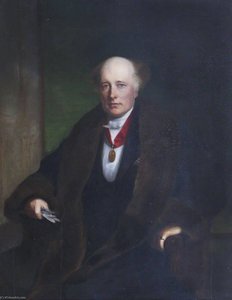
The brilliance of Weigall’s technique lies in his masterful command of tonal gradation. He did not merely apply paint; he sculpted light. By meticulously blending subtle shifts in shade, he achieved a luminous quality that gave his portraits an almost three-dimensional presence. This mastery of light allowed him to create depth within the folds of heavy Victorian fabrics and to render the soft glow of skin with breathtaking realism. His compositions often favored a dignified, frontal approach, which lent his subjects an air of permanence and composure. Yet, beneath this formal exterior, there is always a subtle hint of nuance—a slight tilt of the head or a particular glint in the eye—that suggests the complex inner lives of those he painted.
One of his most captivating achievements can be seen in his depictions of the era's social elite, such as his 1878 portrait of Mary Dickinson, the 6th Viscountess Clifden. In this work, Weigall demonstrates his ability to marry classical realism with an evocative sense of elegance. The painting serves as a testament to his skill in capturing both the material splendor of the age and the quiet, aristocratic grace of the individual. Through such works, Weigall did more than record history; he elevated it, turning the portraits of his contemporaries into timeless icons of cultural heritage.
Historical Significance and Artistic Heritage
As the nineteenth century transitioned into the twentieth, Weigall’s work remained a steadfast anchor to the values of classical beauty and technical excellence. While art movements began to shift toward more experimental and abstract forms, Weigall’s commitment to realism provided a vital link to the traditions of the past. His legacy is not merely found in the museums that house his paintings, but in the way he captured the very soul of an era. He documented a period of immense social and industrial transformation through the eyes of those who lived it, providing a visual record of the dignity and complexity of the Victorian age.
Today, the works of Henry Weigall continue to resonate with collectors and art historians alike. His ability to harmonize technical precision with emotional resonance ensures that his portraits remain much more than historical artifacts; they are living breathing encounters with the past. To study Weigall is to understand the intersection of American ambition and European refinement, a period where art served as both a mirror to society and a monument to the human spirit.
Questions & Answers
What aliases or alternate names does Henry Weigall have?
Henry Weigall is also known as William Henry Purcell Weston.
Which artworks by Henry Weigall are the most viewed?
A Stats page exists for Henry Weigall, presenting statistics about the artist's artworks on this website.
In which historical period did Henry Weigall work?
Henry Weigall worked in the 19th-Century period. The period situates the artist's activity in history.