Evening landscape (forest landscape)
Hand Made Oil Reproduction
Hand-painted oil on canvas in your size and frame, made to order by our artists.
P118B $10
P118H $10
P118W $10
P438Z $10
P508JH $12
P508YH $12
P805H $10
P805Z $10
P919BZ $10
P919G $10
P919XJ $10
P959ZH $10
P968JZ $12
W106C $8
W218G $10
W218JH $8
W218Y $10
W307PJ $10
W316G $10
W316PJ $8
W316Y $10
W398PJ $8
W4111J $10
W500HY $15
W500JH $15
W692G $12
W849H $8
W940BG $15
W953PJ $8
Pick from our preset sizes that match the artwork's original proportions.
You may enter your own dimensions to fit a specific frame or space. If your selected size does not match the original image's proportions, we will either crop the artwork or extend the painting with additional hand-painted elements. A digital mockup will be sent for your approval before production begins.

Please note that the on-screen preview does not reflect the actual cropping or extension. Only the mockup will accurately show the final composition.
While custom sizes are available, we recommend selecting a dimension from the predefined list to preserve the original proportions.
After order, OriginalUniqueArt.com team will email client for instructions and provide a mockup preview
Worldwide Delivery () in 3/4 weeks instead of standard 5 weeks. (18 July). No compromise on quality.
Free Worldwide Express Shipping
High-Quality Linen Canvas
Full Shipping Insurance
Customs Tax Refund Guarantee
True Color Matching Guarantee
60-Day Return Policy (Defects Only)
100% Money-Back Guarantee
Bulk Discount Offer
Evening landscape (forest landscape)
Reproduction Medium
Reproduction Size
-
Total Price
-
Artwork Description
A Symphony of Shadows and Light
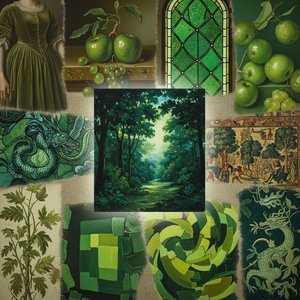
In the quiet transition between day and night, Otto Mueller’s Evening landscape (forest landscape) invites the viewer into a realm where the boundaries between reality and emotion begin to blur. This evocative piece captures a moment of profound stillness, presenting a lush, verdant woodland that feels less like a mere depiction of nature and more like a psychological sanctuary. The foreground is thick with the vitality of life; vibrant green leaves dance alongside the skeletal grace of brown branches, creating a textured tapestry of growth and decay. As the eye wanders deeper into the composition, a gentle hillside rises in the background, anchoring the scene in a sense of eternal, rhythmic stability. It is a painting that does not shout, but rather whispers, offering a serene escape into the heart of the forest.
The technique employed here is a masterful testament to Mueller’s unique position within the German Expressionist movement. Eschewing the harsh, jagged distortions often associated with his contemporaries in Die Brücke, this landscape leans into a more harmonious, almost lyrical approach. The brushwork is deliberate yet fluid, capturing the way light filters through a dense canopy to illuminate patches of foliage while leaving others in soft, mysterious shadow. There is a palpable sense of depth achieved not through rigid perspective, but through the layering of color and the careful interplay of organic shapes. For the discerning collector or interior designer, this piece offers a sophisticated balance of movement and tranquility, making it an ideal focal point for spaces designed to inspire contemplation and peace.
The Soul of the German Expressionist Landscape
To understand this work, one must look toward the restless spirit of Otto Mueller himself. A wanderer by nature, Mueller’s art was deeply informed by his connection to the fringes of society and the raw, unadorned beauty of the natural world. While his name is often linked to the more radical elements of Expressionism, this particular landscape reveals his ability to synthesize influences from Impressionism and Symbolism into something entirely singular. The painting serves as a window into a period where artists sought to capture the "inner truth" of a subject rather than its outward appearance. In this forest scene, the symbolism lies in the cycle of nature—the lushness of the summer leaves juxtaposed with the structural strength of the trunks—representing a continuous, breathing organism.
For those looking to integrate fine art into a modern living environment, this reproduction offers more than just aesthetic appeal; it brings an emotional atmosphere of sanctuary. The painting’s palette, dominated by deep greens and earthy tones, provides a grounding effect that can transform a room into a restorative retreat. It is a work that rewards repeated viewing, revealing new nuances in the shadows and different levels of light with every encounter. Owning such a piece is an invitation to hold onto the fleeting beauty of the twilight hour, preserving a moment of natural perfection within the walls of one's home.
Artist Biography
A Wanderer’s Soul: The Life and Art of Otto Mueller
Otto Mueller, a name often whispered alongside the pioneers of German Expressionism, was an artist deeply attuned to the rhythms of nature and the lives lived on its fringes. Born in 1874 in Liebau, Silesia – now Lubawka, Poland – his journey began amidst a landscape that would forever imprint itself upon his artistic vision. Early training in lithography at Görlitz and Breslau provided him with a foundational skill set, a mastery of line and texture that would characterize much of his later work. He continued his studies at the prestigious academies of Dresden and Munich, though a dismissive assessment from Franz von Stuck at the latter led to a period of self-directed exploration. These formative years saw Mueller absorbing influences from Impressionism, Jugendstil, and Symbolism, yet he remained restless, searching for a voice uniquely his own.Finding Harmony in Distortion: The Expressionist Path
The turning point arrived with Mueller’s relocation to Berlin in 1908. Here, amidst the burgeoning artistic ferment of the city, his style began its dramatic transformation. Interactions with figures like Wilhelm Lehmbruck and Rainer Maria Rilke fueled a growing interest in exploring the emotional depths of human experience. In 1910, he formally joined ‘Die Brücke’ (The Bridge), a group of artists dedicated to rejecting academic conventions and forging a new visual language rooted in raw emotion and subjective perception. While his colleagues often embraced jarring color palettes and aggressive brushwork, Mueller charted a slightly different course. He sought harmony within distortion, simplifying forms and contours to reveal an underlying sense of unity between humanity and the natural world. His landscapes, imbued with a quiet intensity, echo the spirit of Vincent van Gogh, while his figures – particularly those of Romani women – possess a haunting grace. This period cemented his nickname, “Gypsy Müller,” though it was a moniker born more from fascination with his subject matter than any confirmed lineage.A Unique Technique and Recurring Motifs
Mueller’s artistic process was as distinctive as his vision. He favored distemper – a water-based paint – applied to coarse canvas, creating a matte surface that lent his works an earthy, almost primal quality. This technique contributed significantly to the overall mood of his paintings, evoking a sense of intimacy and vulnerability. His subject matter consistently revolved around several key themes: serene landscapes often reminiscent of starry nights, expressive nudes embodying both sensuality and melancholy, and, most notably, depictions of Romani people. These figures were not merely portraits; they represented a longing for freedom, a connection to nature, and an alternative way of life outside the constraints of bourgeois society. He was a prolific printmaker as well, with lithography being his preferred medium, alongside some woodcuts and etchings. The simplicity of line in these prints further emphasized the emotional core of his subjects.Shadows of War and Legacy
Like many of his generation, Mueller’s life was profoundly impacted by World War I. He served as a soldier on both the French and Russian fronts, an experience that undoubtedly left its mark, though it did not dramatically alter his artistic style. After the war, he accepted a professorship at the Academy of Fine Arts in Breslau, dedicating himself to teaching until his death in 1930. Tragically, his work fell victim to the ideological purges of the Nazi regime in 1937, with over three hundred pieces confiscated from German museums and labeled as “degenerate art.” Despite this suppression, Mueller’s artistic legacy endured. Today, he is recognized as a pivotal figure in Expressionism, an artist whose sensitive depictions of humanity and nature continue to resonate with audiences worldwide. His work serves as a poignant reminder of the power of art to transcend political boundaries and speak to the universal human condition.Otto Mueller
1874 - 1930 , Poland
Quick Facts
- Artistic Movement Or Style: Expressionism
- Artists Or Movements Influenced By This Artist: ['Die Brücke']
- Artists Who Influenced This Artist:
- Impressionism
- Jugendstil
- Symbolism
- Date Of Birth: October 16, 1874
- Date Of Death: September 24, 1930
- Full Name: Otto Mueller
- Nationality: German
- Notable Artworks:
- Starry Night landscapes
- Expressive nudes
- Romani women portraits
- Place Of Birth: Liebau, Poland


Glass option is only available in size under 110 CM