Street Scene With A Procession In Progress (Karl Bodmer)
Karl Bodmer (1809–1893) made Street Scene With A Procession In Progress.

 Preview

 Hand Made Oil Painting
 Send
 Share
 Fact sheet


 Download
 Similars
 X-Ray
 Diaporama
 Q&A

 Stats
Street Scene With A Procession In Progress, in brief
- Title
- Street Scene With A Procession In Progress
- Artist
- Karl Bodmer (1809–1893)
- Artist born in
- Zurich, Switzerland
- Subject
- roads, scenes
High-resolution images of Street Scene With A Procession In Progress
Karl Bodmer, Street Scene With A Procession In Progress.
Karl Bodmer (1809–1893), Street Scene With A Procession In Progress. Public domain. Image: OriginalUniqueArt.com.
Questions on Street Scene With A Procession In Progress, answered
What subjects appear in "Street Scene With A Procession In Progress" by Karl Bodmer?
The subjects of "Street Scene With A Procession In Progress" are roads, scenes.
Can the image of "Street Scene With A Procession In Progress" by Karl Bodmer be freely reproduced?
The copyright answer for "Street Scene With A Procession In Progress" by Karl Bodmer: the work is in the public domain - its copyright has expired. This determines whether reproductions of the image may be freely made.
Who created "Street Scene With A Procession In Progress"?
"Street Scene With A Procession In Progress" is attributed to Karl Bodmer.
Why is the copyright status of "Street Scene With A Procession In Progress" what it is?
"Street Scene With A Procession In Progress" by Karl Bodmer is in the public domain - its copyright has expired. Copyright duration runs from the artist's death, which occurred in 1893.
About the artist, Karl Bodmer
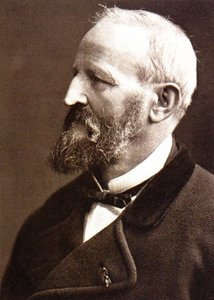
1809–1893, Switzerland
Karl Bodmer
A Swiss Eye on the American West: The Life and Art of Karl Bodmer Born in Zurich, Switzerland, in 1809, Johann Carl Bodmer – known to art history as Karl Bodmer – embarked on a path that would uniquely intertwine European Romanticism with the vanishing world of the North American frontier. His early life remains somewhat shrouded in mystery, yet it’s clear his artistic inclinations were nurtured from a young age through tutelage under his uncle, Johann Jakob Meier, a respected engraver. This foundational training instilled in Bodmer a meticulous attention to detail and a mastery of draftsmanship that would become hallmarks of his style. Initially gaining recognition for picturesque views of the Rhine and Moselle valleys, etched and published for the burgeoning tourist market, Bodmer’s talent soon caught the eye of Prince Maximilian zu Wied-Neuwied, a German aristocrat with a passion for natural history and ethnography.
Also by Karl Bodmer
 Kiasax, a Piegen Blackfeet Warrior1833
 Capture of the Daughters of D. Boone and Callaway by the Indians1852
 Idols of the Mandan Indians, plate 25 from volume 2 of `Travels in the Interior of North America'1844
 New-harmony Aus Wabash
Essays around Street Scene With A Procession In Progress
 Kinetic Urbanism: Examining Human Presence and Movement in Street Art and Impressionist WorksExplore the intersection of Impressionism and street art through expert analysis of urban movement. Discover the pulse of the city today.
 Umberto Boccioni: 25 Powerful Artworks Representing Motion and the Machine Age25 works trace the shift from the structured Cloister of S. Onofrio to the aggressive dynamism of Futurism. How did Boccioni redefine space?
 Luminous Intersections: The Atmospheric Soul of Impressionist Urban ArtExplore the atmospheric soul of Impressionist urban art through masterworks. Discover how light and motion define the city's living canvas.