Preview
 Send
Send Share
Share
 Details
 Guide
Guide

 Download
 Similars
 X-Ray
X-Ray Diaporama
 Stats
StatsBelphagore
 Etching
- WallArt
- Baroque
 1734
1734- Early Modern
 31.0 x 26.0 cm
 J. Paul Getty Museum
 Read More
Hand Made Oil Reproduction
Hand-painted oil on canvas in your size and frame, made to order by our artists. ( Switch to Print Switch to Digital Image)




P118B $10

P118H $10

P118W $10

P438Z $10

P508JH $12

P508YH $12

P805H $10

P805Z $10

P919BZ $10

P919G $10

P919XJ $10

P959ZH $10

P968JZ $12

W106C $8

W218G $10

W218JH $8

W218Y $10

W307PJ $10

W316G $10

W316PJ $8

W316Y $10

W398PJ $8

W4111J $10

W500HY $15

W500JH $15

W692G $12

W849H $8

W940BG $15

W953PJ $8




Pick from our preset sizes that match the artwork's original proportions.

Type the width and the height you need, to fit your frame or your wall. This is hand-painted, so for a size with a different shape the artist can paint a bit more around the picture, or cut a bit — you choose. We send you a digital mockup to approve before the painting starts. The picture shown on this page does not show the real result — only the mockup does.
After order, OriginalUniqueArt.com team will email client for instructions and provide a mockup preview
Worldwide Delivery () in 3/4 weeks instead of standard 5 weeks. (25 October). No compromise on quality.

Free Worldwide Express Shipping

High-Quality Linen Canvas

Full Shipping Insurance

Customs Tax Refund Guarantee

True Color Matching Guarantee

100-Day Return Policy (Defects Only)

100% Money-Back Guarantee

Bulk Discount Offer
 Glass option is only available in size under 110 CM

Belphagore
Reproduction Medium
Reproduction Size
-


Total Price
$ 375
A Descent into the Baroque Shadows
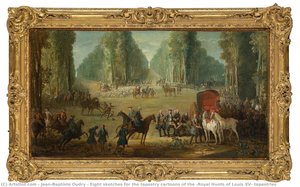
In the dim, flickering light of history, Jean-Baptiste Oudry’s 1734 masterpiece, Belphagore, emerges as a hauntingly beautiful window into the theatricality of the Baroque era. This is not merely a drawing; it is a meticulously crafted tableau vivant—a living scene frozen in time—that captures the very essence of cosmic struggle. The artwork transports the viewer to a realm where classical mythology and biblical lore collide, specifically referencing the chilling tales of Belphagor, the fallen angel of Lucifer’s retinue. As one gazes upon this monochrome drama, rendered in ethereal shades of blue and grey, there is an immediate sense of being a silent witness to a ritualistic event that transcends the boundaries of the paper it inhabits.
The composition is masterfully orchestrated through a dramatic pyramidal structure, a hallmark of Baroque design that anchors the eye amidst a sea of chaos. At the heart of this infernal gathering stands a powerfully sculpted male figure, an embodiment of authority and dread, surrounded by a cohort of grotesque, muscular demons. The scene is set against a backdrop of jagged, untamed rock formations, where smoke billows upward from a central ritualistic fire. This use of chiaroscuro—the stark contrast between light and shadow—simulates a divine radiance struggling to pierce through an encroaching, demonic darkness, creating a palpable atmosphere of unease and spiritual tension.
The Precision of the Line and the Weight of Symbolism
Oudry’s technical prowess is on full display through his use of fine-line etching, a technique that allows for extraordinary precision in depicting the textures of both the monstrous and the elemental. Every sinew of the demonic figures, every plume of rising smoke, and every rugged edge of the stone landscape is delineated with meticulous care. The subtle shading provides a profound sense of depth, making the musculature appear almost tactile and the atmosphere heavy with the scent of ash and sulfur. This level of detail ensures that the artwork possesses a lifelike quality that continues to captivate collectors and art enthusiasts centuries after its creation.
Beyond its visual splendor, Belphagore is rich with symbolic resonance. The ritualistic burning depicted in the scene serves as a potent metaphor for purification and divine judgment, reflecting the deep-seated moral anxieties of the Enlightenment period. The struggle between the defiance of Lucifer and the ultimate sovereignty of God mirrors the broader human conflict between chaos and order, good and evil. For the discerning decorator or collector, this piece offers more than just aesthetic beauty; it provides a profound narrative depth that can serve as a powerful focal point in any curated space, inviting contemplation on the eternal cycles of transgression and redemption.
An Evocative Addition to the Sophisticated Interior
For interior designers and lovers of fine art, a high-quality reproduction of Belphagore offers an unparalleled opportunity to introduce drama, history, and intellectual weight into a room. The monochrome palette allows it to integrate seamlessly into various sophisticated decors, from the moody, dark aesthetics of a contemporary study to the grand, classical atmosphere of a traditional gallery wall. It is a piece that demands attention, acting as a conversation starter that bridges the gap between the 18th-century French court and the modern era.
Owning or displaying such a work is an act of embracing the sublime. The emotional impact of Oudry’s vision—the mixture of fear, awe, and fascination—creates a lingering presence that transforms a mere room into a sanctuary of culture. Whether placed in a private collection or used to anchor a large-scale design project, this reproduction of Belphagore stands as a testament to the enduring power of the Baroque spirit, offering a timeless elegance that is as intellectually stimulating as it is visually breathtaking.
Questions & Answers
How do I discover artworks close to "Belphagore" by Jean-Baptiste Oudry?
The Similars page of "Belphagore" by Jean-Baptiste Oudry presents related artworks.
How do I preview a reproduction of "Belphagore" by Jean-Baptiste Oudry?
To preview a reproduction of "Belphagore" by Jean-Baptiste Oudry, open the artwork's Preview page.
Where can I buy a digital image of "Belphagore" by Jean-Baptiste Oudry?
A digital image of "Belphagore" by Jean-Baptiste Oudry can be purchased on its Digital Image page: a high-resolution digital image download.
Artist Biography
Jean-Baptiste Oudry: A Life in Art
Early Life and Training
- Born: March 17, 1686, in Paris, France.
- Oudry came from an artistic family; his father, Jacques Oudry, was a painter and art dealer. His mother, Nicole Papillon, was related to the engraver Jean-Baptiste-Michel Papillon.
- He began his training at the Académie de Saint-Luc, studying under Nicolas de Largillière from 1707 to 1712. This foundational period shaped his early skills in portraiture and observation.
- He quickly progressed, becoming an assistant professor at the Académie de Saint-Luc in 1714 and a full professor by 1717.
Artistic Development and Style
- Initially focused on portraiture, Oudry gradually expanded his repertoire to include still lifes, particularly of fruits and animals, as well as religious subjects.
- His style evolved towards the Rococo, characterized by elegance, naturalism, and a playful depiction of aristocratic life and leisure.
- Oudry’s meticulous attention to detail and his ability to capture the textures and characteristics of animals became hallmarks of his work.
- He demonstrated mastery in both painting and design, seamlessly transitioning between canvas and tapestry creation.
Major Achievements and Notable Works
- The Pastoral Amusements (Les Amusements Champêtres): A series of tapestries designed for the Royal Beauvais Tapestry Manufactory, showcasing idyllic scenes of rural life and hunting.
- Louis XV Hunting a Deer in the Forest of Saint-Germain (1730): This painting solidified Oudry’s reputation as the official painter of the royal hunt. It exemplifies his skill in depicting both the grandeur of the hunt and the natural environment.
- Royal Hunts of Louis XV (Chasses Royales Gobelins): A series of tapestry designs for the Gobelins Manufactory, further establishing Oudry’s prominence as a tapestry designer.
- Numerous portraits of dead game commissioned by King Louis XV, demonstrating his expertise in animal anatomy and still life composition.
Influences and Legacy
- Influenced By: Nicolas de Largillière played a crucial role in Oudry’s early artistic development, providing foundational training in portraiture and technique.
- Oudry's work influenced subsequent generations of animal painters and tapestry designers. His naturalistic style and attention to detail set a new standard for depicting wildlife.
- He contributed significantly to the decorative arts of the French court, creating luxurious tapestries that adorned royal residences.
Historical Significance
- Oudry’s work provides valuable insights into 18th-century aristocratic life and the importance of hunting as a pastime for the French nobility.
- His tapestries are considered masterpieces of French decorative art, showcasing the technical skill and artistic creativity of the period.
- He was appointed to prestigious positions within the Académie Royale de Peinture et de Sculpture, demonstrating his recognition as a leading artist of his time.
- Died: April 30, 1755, leaving behind a legacy of exquisite paintings and tapestries that continue to be admired today.

Jean-Baptiste Oudry
1686 - 1755 , France
Quick Facts
- Name: Jean-Baptiste Oudry
- Movement: Rococo
- Birth Date: 17 March 1686
- Death Date: 30 April 1755
- Birth Place: Paris, France
- Nationality: French
- Date Of Birth: 1686
- Date Of Death: 1755
- Influenced By: Nicolas de Largillière
- Notable Works:
- The Pastoral Amusements
- Louis XV hunting a deer in the forest of Saint-Germain
- Place Of Birth: Paris, France
Related Articles

Rococo's Radiant Legacy: 10 Masterpieces for Your Home |
Indulge in the elegance of Rococo! Explore 10 masterpieces by Fragonard, Boucher & Watteau. Discover the stories behind these iconic paintings and bring timeless art to your home with museum-quality reproductions from .
Kay Rasmus Nielsen: A Golden Age Illustrator's Enchanting Legacy of Symbolism & Narrative
Explore the captivating world of Kay Rasmus Nielsen, a celebrated Golden Age illustrator renowned for his Art Nouveau fairy tale art & Disney contributions. Discover his unique style, enduring legacy, and how to collect his enchanting works.

Angelo Chiacchio: A Mid-Century American Illustration Master & the Rise of Commercial Art
Explore the captivating world of Angelo Chiacchio, a master of mid-century American illustration. Discover his evolution, signature style, and lasting impact on commercial art & design. Learn about his legacy at the Museum of American Illustration.

The Rococo Aesthetic: Opulence, Rebellion & the Pursuit of Pleasure in 18th-Century Art
Explore the opulent world of Rococo art! Discover its origins, key artists like Watteau & Boucher, and lasting influence on design. Expert insights for collectors & enthusiasts.
The Rococo Style: Aristocratic Leisure & the Pursuit of Delight in 18th-Century Art
Explore the opulent world of Rococo art! Discover Watteau, Boucher & Nattier's masterpieces. Expert insights for collectors seeking museum-quality reproductions and custom portraits at OriginalUniqueArt.