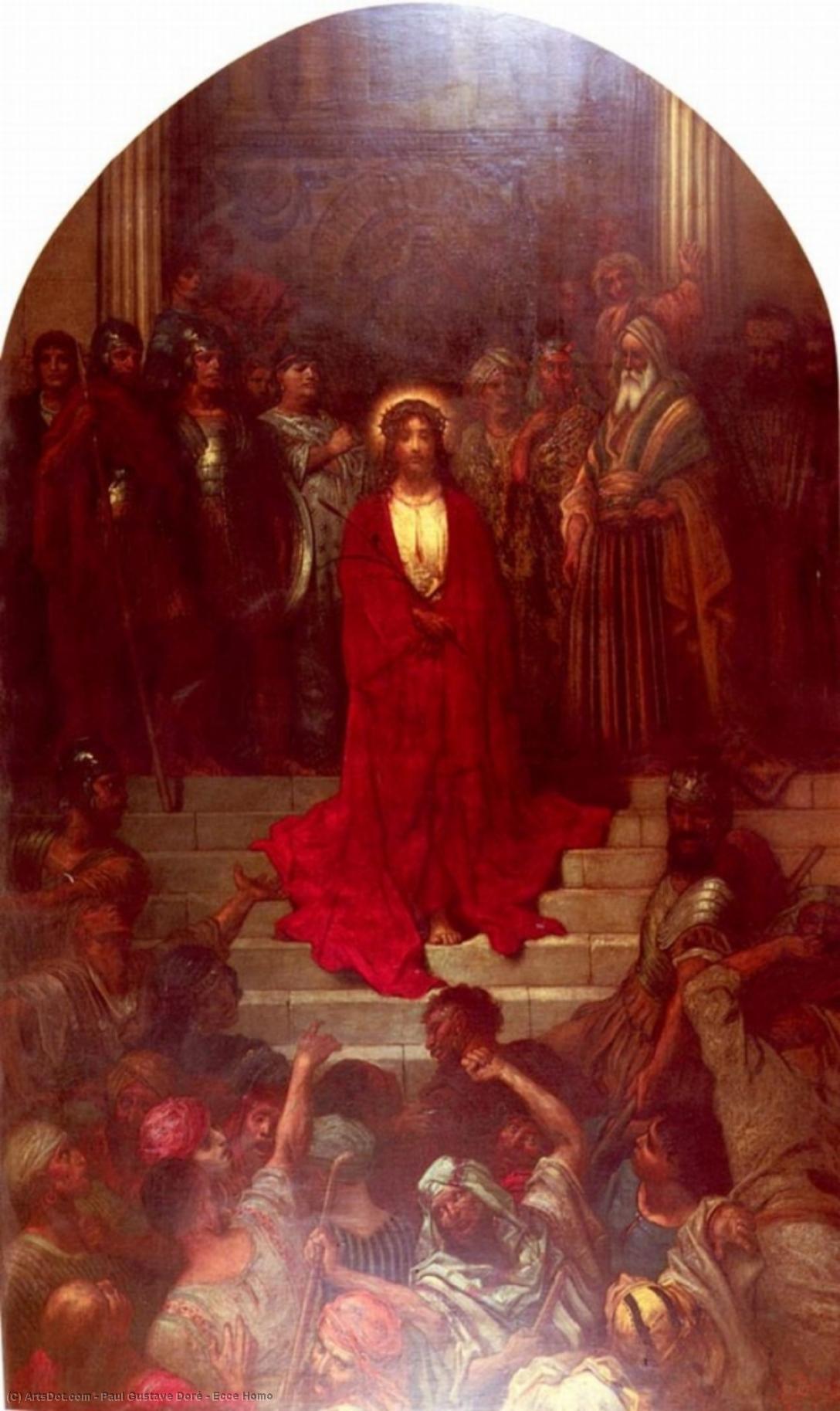
Experience Paul Gustave Doré's dramatic 'Ecce Homo,' a monumental 1877 oil painting depicting the poignant crucifixion scene with intense emotion and masterful Romantic style – perfect for art lovers seeking a captivating masterpiece to own.
Ecce Homo: A Dramatic Echo of Christ's Suffering
Paul Gustave Doré’s “Ecce Homo,” completed in 1877, is not merely a depiction of the biblical scene; it’s an immersive experience, a plunge into the heart of human suffering and divine judgment. Measuring a monumental 354 x 585 cm, this oil on canvas work commands attention with its raw emotional power and masterful execution – hallmarks of Doré's distinctive Romantic style. The painting immediately confronts the viewer with the agonizing image of Jesus Christ, held aloft by Roman soldiers while he hangs upon the cross, a scene steeped in both physical pain and spiritual torment. Doré’s genius lies not just in his technical skill but in his ability to translate complex theological concepts into a visceral, unforgettable visual narrative.
Technique and Composition – A Symphony of Light and Shadow
- Dramatic Lighting: Doré was renowned for his manipulation of light and shadow, and “Ecce Homo” is a prime example. The stark contrasts heighten the drama, focusing attention on Christ’s tortured form and emphasizing the cold, impassive faces of the Roman guards. This technique wasn't simply aesthetic; it served to underscore the moral weight of the scene – the deliberate cruelty juxtaposed with divine sacrifice.
- Strong Lines & Composition: The composition is deliberately forceful, utilizing strong diagonal lines to draw the eye across the canvas and intensify the sense of instability and despair. The figures are rendered with a powerful realism, reflecting Doré’s meticulous attention to detail and his commitment to capturing human emotion authentically.
- Oil on Canvas: Doré's use of oil paint allowed for rich textures and subtle gradations in tone, contributing significantly to the painting's overall depth and luminosity. The brushwork is visible yet controlled, adding a sense of immediacy and urgency to the scene.
Historical Context & Symbolism – Romanticism at its Most Intense
Created during the late 19th century, “Ecce Homo” embodies the core tenets of Romanticism: an emphasis on emotion, imagination, and the sublime. The painting reflects a period of intense religious fervor and social unrest, mirroring anxieties about morality, justice, and the fate of humanity. The inclusion of the bowl and book – objects laden with symbolic meaning – further deepens the narrative. The bowl could represent both sorrow and compassion, while the book alludes to scripture and Christ’s sacrifice as a testament to divine law. The swords, strategically placed, symbolize Roman authority and the ultimate betrayal of Jesus.
Emotional Impact & Legacy – A Timeless Masterpiece
"Ecce Homo" continues to resonate with viewers today due to its profound emotional impact. Doré’s ability to convey Christ's suffering—his anguish, vulnerability, and ultimate sacrifice—is both harrowing and deeply moving. The painting is a testament to the enduring power of art to confront difficult truths and explore fundamental questions about faith, humanity, and redemption. Its influence can be seen in countless subsequent depictions of the crucifixion, solidifying Doré’s place as one of the most significant artists of his era. This monumental reproduction offers an unparalleled opportunity to experience the full force of this iconic work firsthand.