Marceline Valmore
Bronze
Sculpture
Neoclassical Idealism
1832
19th Century
15.0 x 15.0 cm
The Louvre
Hand Made Oil Reproduction
Hand-painted oil on canvas in your size and frame, made to order by our artists.
Pick from our preset sizes that match the artwork's original proportions.
You may enter your own dimensions to fit a specific frame or space. If your selected size does not match the original image's proportions, we will either crop the artwork or extend the painting with additional hand-painted elements. A digital mockup will be sent for your approval before production begins.
Please note that the on-screen preview does not reflect the actual cropping or extension. Only the mockup will accurately show the final composition.
While custom sizes are available, we recommend selecting a dimension from the predefined list to preserve the original proportions.
After order, OriginalUniqueArt.com team will email client for instructions and provide a mockup preview
Worldwide Delivery () in 3/4 weeks instead of standard 5 weeks. (23 July). No compromise on quality.
Free Worldwide Express Shipping
High-Quality Linen Canvas
Full Shipping Insurance
Customs Tax Refund Guarantee
True Color Matching Guarantee
60-Day Return Policy (Defects Only)
100% Money-Back Guarantee
Bulk Discount Offer
Marceline Valmore
Reproduction Medium
Reproduction Size
-
Total Price
-
Artwork Description
A Portrait of Dignity Amidst Republican Idealism
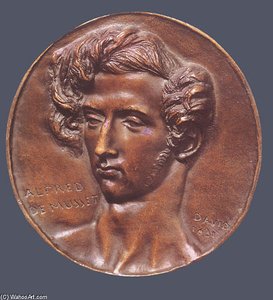
The bronze medallion depicting Marceline Valmore stands as a testament to Pierre-Jean David d’Angers' unwavering commitment to neoclassical sculpture and the ideals of republican France. Crafted in 1832, this piece transcends mere commemoration; it embodies a profound philosophical statement about beauty and virtue—a sentiment eloquently articulated by David himself regarding Valmore: “Nothing compares to this woman. Her face is ugly, yet she is admirable,” he confessed, recognizing that true artistry resided not merely in flawless representation but in elevating the subject’s character. David’s formative years were steeped in Republican fervor, witnessing firsthand the tumultuous Chouan rebellion and fostering within him a deep connection to civic duty. Trained under Jean-Jacques Delusse and Philippe-Laurent Roland in Paris, he absorbed the stylistic precepts of Jacques-Louis David's studio—a crucible for shaping artistic sensibilities during Napoleon’s reign—establishing himself as a sculptor deeply influenced by the monumental grandeur of Roman sculpture. This lineage is palpable in Valmore’s pose: upright, serene, conveying an aura of composure and intellectual strength—characteristics prized within the neoclassical aesthetic. The Technique of Lost-Wax Casting: The creation of this medallion exemplifies the mastery of lost-wax casting, a technique perfected during antiquity and revived with meticulous precision by David’s contemporaries. This method involves meticulously modeling a wax figurine, encasing it in clay to create a mold, melting away the wax, pouring molten bronze into the mold, allowing it to solidify, and finally breaking off the remaining clay to reveal the finished sculpture—a process demanding exceptional skill and patience. The resulting surface texture reflects this laboriousness: subtly rough, matte, bearing delicate variations that hint at the passage of time and imbue the piece with an inherent sense of history. Symbolism Beyond Aesthetics: More than just a visually pleasing object, Valmore’s portrait carries symbolic weight—a deliberate reflection of David’s belief in art's capacity to inspire moral contemplation. The idealized features—the smooth skin, flowing hair—represent beauty and virtue—concepts central to neoclassical philosophy. Simultaneously, the circular frame symbolizes wholeness and eternity, encapsulating Valmore’s essence within a timeless form. As David himself noted, “I am ashamed when I look at the medallion I made of her,” acknowledging that artistic endeavor demanded not only technical proficiency but also an earnest desire to capture the soul of one's subject—a sentiment resonating powerfully across centuries. Emotional Resonance and Artistic Legacy: Viewing Valmore evokes a feeling of quiet dignity—a contemplation of inner strength tempered by grace. The neoclassical style, rooted in Roman portraiture, speaks to enduring values of honor, intellect, and moral integrity. David’s masterpiece continues to inspire artists and collectors alike, serving as an exemplar of sculptural excellence and a poignant reminder that true beauty resides not merely in outward appearance but in the cultivation of virtuous character—a legacy cemented by this singular bronze medallion.Artist Biography


Pierre-Jean David d’Angers: The Sculptor of Heroic Idealism
Pierre-Jean David d’Angers (1788 – 1856) stands as a pivotal figure in the neoclassical artistic landscape of France, embodying the spirit of republican idealism and monumental sculptural achievement. Born in Angers, Loiret, his early life was marked by familial ties to the Republican army—his father, a wood carver and sculptor himself, participated valiantly against the Chouan rebellion—a formative experience that instilled within him a profound appreciation for civic duty and artistic expression as instruments of national pride. This heritage profoundly shaped his artistic trajectory, propelling him toward a distinguished career centered on sculpting and modeling, particularly during the influential period of Jacques-Louis David’s studio.- Early Training & Influences: David's formative years were spent honing his craft under Jean-Jacques Delusse and Philippe-Laurent Roland in Paris, absorbing the stylistic precepts of Romanticism alongside the enduring legacy of classical sculpture. Notably, he encountered Antonio Canova—a sculptor whose meticulous attention to anatomical detail and emotive portrayal captivated David’s imagination—establishing a crucial connection with the artistic traditions of Rome that would define his oeuvre.
- The École des Beaux-Arts & The Prix de Rome: Recognizing his talent, David secured admission to the École des Beaux-Arts in 1808 where he excelled, culminating in victory at the École’s competition for *tête d'expression* and subsequently claiming the prestigious Prix de Rome in 1811. This scholarship afforded him unparalleled access to Roman artistic ideals and allowed him to develop his sculptural technique—characterized by a masterful command of marble and bronze—further refining his ability to capture human emotion and heroic grandeur.
- Roman Period & Artistic Evolution: David’s five-year sojourn in Rome proved transformative, fostering collaborations with fellow artists and immersing himself in the artistic fervor of the era. He meticulously studied the works of Michelangelo Buonarroti and Bernini, absorbing their techniques and stylistic sensibilities—influences that would permeate his subsequent sculptures and etchings. During this time he undertook expeditions to Venice, Naples and Florence, broadening his artistic horizons and enriching his understanding of classical art history.
- Monumental Sculpture & Notable Commissions: David’s reputation soared as a sculptor during the Restoration period, securing commissions for monumental works that cemented his place in French cultural history. Among his most celebrated achievements are the Pantheon frieze—a breathtaking depiction of Roman mythology commissioned to commemorate Napoleon Bonaparte's triumph—the equestrian statue of Marshal Jacques-Nicolas Gobert erected in Père Lachaise Cemetery—and the monumental sculpture commemorating the Greek liberator Markos Botsaris, a testament to David’s commitment to portraying heroic figures with unwavering conviction.
- Legacy & Recognition: David’s prolific output encompassed over 500 medallions and busts, capturing portraits of luminaries from across Europe—including Voltaire, Rousseau, Goethe, Napoleon Bonaparte, and Friedrich Schiller—demonstrating his versatility as an artist and cementing his enduring influence on subsequent generations of sculptors. His unwavering dedication to classical ideals and his ability to convey profound emotion through sculptural form ensured that David d’Angers would remain a revered figure in the annals of French art history, securing his place among the foremost sculptors of his time.
Key Works & Artistic Style
David’s artistic style is characterized by an unwavering commitment to neoclassical principles—specifically anatomical accuracy, idealized beauty, and dramatic composition—reflecting the influence of Michelangelo Buonarroti and Bernini. He skillfully employed marble and bronze to convey emotion and grandeur, prioritizing clarity of form and expressive gesture above mere decorative embellishment. His sculptures are imbued with a palpable sense of pathos and nobility, capturing moments of profound human experience with meticulous detail and unwavering conviction. The Pantheon frieze exemplifies his mastery of monumental sculpture, presenting an ambitious undertaking that celebrates Roman mythology and commemorates Napoleon Bonaparte’s victory—a testament to David's ambition and artistic vision. Similarly, the equestrian statue of Marshal Gobert stands as a symbol of French military prowess and civic virtue, demonstrating David’s ability to elevate sculptural form into a vehicle for conveying complex narratives and emotional resonance.David d'Angers
1788 - 1856 , France
Quick Facts
- Artistic Movement Or Style: Neoclassical art
- Artists Or Movements Influenced By This Artist: Antonio Canova
- Artists Who Influenced This Artist: Jacques-Louis David
- Date Of Birth: March 12, 1788
- Date Of Death: January 4, 1856
- Full Name: Pierre-Jean David d'Angers
- Nationality: French
- Notable Artworks:
- Pantheon frieze
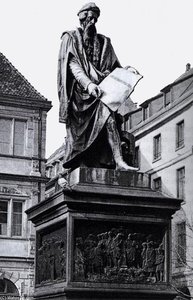
- Gutenberg at Strassburg
- Place Of Birth: Angers, France

Glass option is only available in size under 110 CM