

 Preview
 Send
Send Share
Share
 Details
 Guide
Guide

 Download
 Similars
 X-Ray
X-Ray Diaporama
 Q&A
Q&A Stats
StatsThree Masted Ship near Lighthouse
 Acrylic On Canvas
- WallArt
- Impressionistic Landscape
 1930
1930 53.0 x 75.0 cm
 Kettle's Yard
 Read More
Giclée / Art Print
Museum-quality giclée or canvas print with fast production and flexible finish options. ( Buy Hand Made Painting Switch to Digital Image)




P118B $10

P118H $10

P118W $10

P438Z $10

P508JH $12

P508YH $12

P805H $10

P805Z $10

P919BZ $10

P919G $10

P919XJ $10

P959ZH $10

P968JZ $12

W106C $8

W218G $10

W218JH $8

W218Y $10

W307PJ $10

W316G $10

W316PJ $8

W316Y $10

W398PJ $8

W4111J $10

W500HY $15

W500JH $15

W692G $12

W849H $8

W940BG $15

W953PJ $8




Pick from our preset sizes that match the artwork's original proportions.

Type the width and the height you need, to fit your frame or your wall. A print can only be cut, never made bigger than the picture, so a size with a different shape loses a part of the image. We send you a digital mockup to approve before we print anything. The picture shown on this page does not show the real cut — only the mockup does.
Worldwide Delivery () in 2 weeks instead of standard 4/5 weeks. (29 October)

Free Worldwide Express Shipping

High-Quality Linen Canvas

Full Shipping Insurance

Customs Tax Refund Guarantee

True Color Matching Guarantee

100-Day Return Policy (Defects Only)

100% Money-Back Guarantee

Bulk Discount Offer
 Glass option is only available in size under 110 CM

Three Masted Ship near Lighthouse
Giclée / Art Print
Reproduction Size
-


Total Price
$ 81
Alfred Wallis’s Vision of Cornwall: Three Masted Ship Near Lighthouse
The Cornish landscape holds an enduring fascination for artists—a rugged beauty that speaks to the soul and invites contemplation. Alfred Wallis, arguably Britain's most enigmatic painter of the early 20th century, captured this spirit with unparalleled precision and understated emotion in “Three Masted Ship near Lighthouse,” a watercolor completed in 1930. More than just a depiction of maritime scenery, this artwork embodies Wallis’s singular approach to artmaking—a distillation of observation honed by years spent crafting wooden vessels against the ceaseless roar of the Atlantic.A Masterclass in Minimalist Style
Wallis eschewed academic conventions entirely, rejecting grand narratives and elaborate ornamentation for a starkly reductive aesthetic. His canvases rarely exceed 53 x 75 cm, yet within these compact dimensions resides an astonishing level of detail—a testament to his meticulous technique. He employed a limited palette dominated by muted blues and greens, mirroring the hues of the Cornish coastline. Lines are bold and decisive, conveying solidity and permanence, reflecting Wallis’s belief that art should strive for clarity and directness. The artist's deliberate simplification isn’t merely stylistic; it serves to heighten the emotional impact of the scene, forcing the viewer to confront the essential elements of nature—the ship, the lighthouse, and the timeless expanse of sea.Historical Context: Echoes of Tradition
“Three Masted Ship near Lighthouse” emerged during a period of significant artistic experimentation in Britain, yet Wallis remained steadfastly rooted in tradition. Influenced by Cézanne’s geometric explorations and Impressionism's fleeting effects of light, he nevertheless prioritized accuracy over stylistic innovation. The painting speaks to the legacy of Cornish seafaring history—a tradition stretching back centuries—where ships were vital to the region’s economy and identity. The lighthouse itself symbolizes guidance and resilience, representing not only navigational safety but also a steadfast presence against the unpredictable forces of the ocean. Its stark white glow contrasts powerfully with the darker tones of the sea and sky, creating a dramatic visual tension that underscores the painting's emotional core.Symbolism Beyond Representation
Beyond its literal depiction, “Three Masted Ship near Lighthouse” resonates with deeper symbolic meanings. The ship embodies exploration, ambition, and connection to the past—a reminder of humanity’s enduring relationship with the sea. Simultaneously, it represents vulnerability – confronting the immensity of nature requires courage and acceptance of limitations. Wallis's masterful use of color contributes to this layered interpretation; blues evoke tranquility and depth, while greens convey growth and renewal. The inclusion of a clock on the wall subtly reinforces the passage of time—a poignant acknowledgement of mortality within the grandeur of the natural world.Emotional Resonance: A Quiet Triumph
Ultimately, “Three Masted Ship near Lighthouse” succeeds in conveying a profound sense of stillness and contemplation. Wallis’s understated style invites viewers to linger upon the canvas, absorbing its subtle nuances and allowing themselves to be transported back to Cornwall's windswept shores. It is not an artwork that shouts for attention; rather, it whispers—a testament to the artist’s conviction that true beauty resides in simplicity and honesty. This painting continues to inspire collectors and interior designers alike who appreciate Wallis’s ability to capture the essence of place and emotion with remarkable grace.- Artist: Alfred Wallis
- Year Created: 1930
- Medium: Watercolor
- Dimensions: 53 x 75 cm
- Location: Kettle’s Yard Museum, Cambridge
Questions & Answers
What emotion does "Three Masted Ship near Lighthouse" by Alfred Wallis convey?
"Three Masted Ship near Lighthouse" is associated with a nostalgic feeling. The emotional tone describes the impression the work gives.
Do the colors of "Three Masted Ship near Lighthouse" appear strong or soft?
The colors in "Three Masted Ship near Lighthouse" by Alfred Wallis have a monochromatic intensity.
Are there works similar to "Three Masted Ship near Lighthouse"?
The Similars page of "Three Masted Ship near Lighthouse" by Alfred Wallis presents related artworks.
Artist Biography
The Cornish Mariner’s Vision
Alfred Wallis (1855-1942) stands apart from the traditional artistic landscape of his era—a figure whose quiet simplicity belies a profound engagement with observation and an unwavering dedication to capturing the essence of coastal Cornwall. Born in Devonport, England, Wallis possessed no formal art training; he was a self-taught craftsman who worked as a shipbuilder for much of his life, shaping timbers into vessels that sailed the Atlantic waters. This practical, hands-on mastery instilled in him a meticulous attention to detail and an intimate understanding of materials that would later translate into his evocative paintings. His formative years were spent honing skills in shipbuilding, a trade passed down through generations of Cornish families, which provided him with a unique, visceral connection to the maritime world he would eventually immortalize on canvas.
It was not until the 1920s that Wallis’s artistic career truly blossomed, following his relocation to the vibrant artistic enclave of St Ives, Cornwall. Drawn by the creative energy of this community—which included notable figures such as Ben Burrell and George Nash—he began producing a prolific series of works depicting boats, harbors, and landscapes bathed in the distinctive Cornish light. His aesthetic is undeniably unique, characterized by flattened perspectives, bold outlines, and a muted color palette dominated by deep blues and sea-greens. Wallis’s work embodies the principles of naive art, a style rooted in direct sensory experience rather than intellectualized academic theory. He eschewed complex compositions and elaborate brushstrokes, prioritizing clarity and an immediate, emotional impact.
A Legacy of Maritime Memory
The significance of Wallis's contribution to art lies in his ability to transform the mundane elements of seafaring life into something deeply spiritual and atmospheric. His paintings are not merely representations of places; they are imbued with a palpable sense of movement and memory. Through works such as Trawler and Boat, one can sense the weight of the Atlantic and the rhythmic pulse of the tides. Even in more turbulent compositions like Rough Sea, his expressive style and evocative brushwork capture the raw power of the ocean through a lens of folk art tradition. By rejecting the rigid academic conventions of his time, Wallis achieved a level of honesty that resonates with viewers seeking a connection to the elemental forces of nature.
His historical importance is cemented by his role as a bridge between the rugged reality of maritime labor and the modern art movements of the 20th century. While he lacked formal instruction, his "primitive" approach offered a refreshing alternative to the sophisticated techniques of the era, influencing how we perceive the relationship between subject and medium. His life's work remains a testament to the power of the untrained eye, proving that true artistic vision often emerges from a deep, lifelong intimacy with one's surroundings. Today, his legacy continues to inspire those drawn to the charm of Cornish life and the timeless beauty of the sea.

Alfred Wallis
1855 - 1942 , United Kingdom
Quick Facts
- Full Name: Alfred Wallis
- Nationality: British
- Date Of Birth: 1855
- Date Of Death: 1942
- Place Of Birth: Devonport, United Kingdom
- Notable Artworks:
- Boat
- Trawler
- Three Masted Ship near Lighthouse
- Artistic Movement Or Style: Naive painting
- Artists Or Movements Influenced By This Artist: ['Cornish Art']
Related Articles

Watercolor Wonders: 10 Masterpieces That Redefined Art History | OriginalUniqueArt
Journey through 10 legendary watercolor masterpieces by Sargent, Turner & Homer! Explore iconic landscapes, portraits & floral art that redefined history. Find museum-quality reproductions and curated decor ideas at OriginalUniqueArt.com.

Sir Alfred Munnings' Masterpieces: 25 Paintings That Define Equine Art | OriginalUniqueArt
Explore 25 iconic Sir Alfred Munnings paintings! Discover the beauty of British Impressionism, equine art & rural England. Find museum-quality reproductions and elevate your home decor with OriginalUniqueArt. Explore the full collection online.
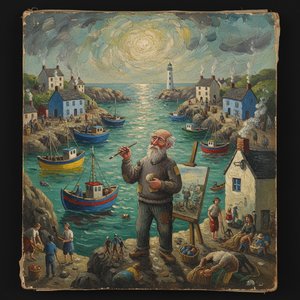
Alfred Wallis: Rediscovering the Naïve Visionary of Cornish Life
Discover the captivating world of Alfred Wallis, the self-taught Cornish painter championed by modernists. Explore his unique naive style, maritime scenes & lasting legacy with OriginalUniqueArt.

Ephemeral Visions: Exploring the Artistic Legacy & Contemporary Practice of Watercolor Painting
Explore the captivating world of watercolor painting! Discover its rich history, essential techniques, influential artists & collecting tips. A comprehensive guide for art enthusiasts from OriginalUniqueArt.

Ephemeral Visions: Exploring the History & Emotional Resonance of Watercolor Painting
Explore the captivating history of watercolor painting, from ancient techniques to modern masters like Kandinsky & Blake. Discover essential artists, collecting tips & the emotional power of this luminous medium. Expert insights for art enthusiasts.


