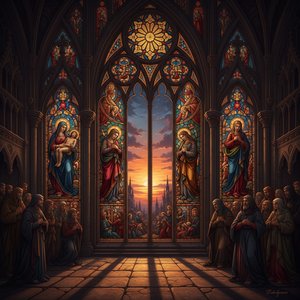
A Singular Testament to Faith and Form: Exploring L’Assomption-de-Notre-Dame
Nestled in the picturesque Minervois region of Occitanie, France, L’Assomption-de-Notre-Dame stands as an extraordinary testament to medieval artistry and spiritual devotion. More than just a church building, it's a captivating crossroads where architectural innovation meets profound religious symbolism—a destination that resonates deeply with anyone interested in art history or regional cultural heritage.- Architectural Distinction: The church’s defining characteristic is its heptagonal Romanesque design dating back to the 12th century. This audacious geometric form, remarkably rare for its time, immediately draws attention and speaks volumes about the ambition of its builders—a bold departure from conventional ecclesiastical structures.
- A Window into Medieval France: Constructed during a period marked by fervent religious fervor, L’Assomption-de-Notre-Dame offers invaluable insight into the artistic sensibilities and spiritual beliefs prevalent in 12th-century France. The church's walls whisper tales of monastic craftsmanship and devotion to Mary.
The collection housed within its walls is equally impressive. Visitors are greeted by intricately carved Romanesque sculptures—masterpieces of medieval artistry that depict biblical scenes with meticulous detail and expressive dynamism. These sculptures serve as tangible reminders of the artistic prowess of a bygone era, skillfully blending geometric precision with humanist ideals.
- Archaeological Echoes: Excavations surrounding the church have unearthed fascinating artifacts—fragments of pottery, tools, and even human remains—providing crucial evidence for reconstructing the daily life and social customs of the region’s inhabitants throughout history.
- Paleontological Wonders: Perhaps unexpectedly, L’Assomption-deNotre-Dame houses a remarkable paleontological exhibit showcasing fossils discovered in the Minervois area. This juxtaposition of art and science underscores the museum's commitment to presenting a holistic understanding of cultural heritage.
What truly distinguishes L’Assomption-deNotre-Dame is its ability to transport visitors across centuries, fostering contemplation on faith, artistry, and the enduring legacy of medieval civilization. Its heptagonal form itself seems to invite reflection—a deliberate architectural gesture that elevates it beyond mere building material into a vessel for spiritual experience.
- Notable Exhibitions: Recent exhibitions have explored themes of pilgrimage and medieval iconography, illuminating the significance of L’Assomption-deNotre-Dame within the broader context of European religious art.
A visit to L’Assomption-deNotre-Dame is an opportunity to immerse oneself in a unique artistic panorama—a journey into the heart of Occitanie's cultural heritage and a celebration of architectural ingenuity.