Buckingham Palace: A Legacy of Royalty and Artistic Patronage
Buckingham Palace stands as an enduring emblem of British monarchy—a living testament to centuries of royal history and artistic patronage, nestled in the heart of London’s Westminster district. More than just a building, it embodies tradition, ceremony, and the evolving tastes of successive monarchs, captivating visitors with its grandeur and offering glimpses into Britain's cultural heritage. Its story begins long before the opulent State Rooms we admire today, rooted in humble origins as Buckingham House—a townhouse commissioned by Duke Buckingham in 1703—and transformed dramatically during the Victorian era under Queen Victoria’s reign.
-
Early Foundations:
The initial site was occupied by a mulberry garden planted by King James I, aiming to cultivate silkworms and bolstering England's textile industry. This seemingly simple gesture speaks volumes about royal ambition and engagement with practical pursuits alongside artistic endeavors.
-
Georgian Refinement:
George III acquired Buckingham House in 1761 for Queen Charlotte, establishing it as a comfortable family residence—a space reflecting the Georgian aesthetic characterized by symmetry, elegance, and restrained ornamentation. John Nash’s ambitious redesign expanded the building's footprint and incorporated neoclassical influences, shaping its iconic façade.
-
Victorian Transformation:
Under George IV, Buckingham Palace underwent a monumental transformation into a palace worthy of his regal stature—a project overseen by architect Edward Blore who skillfully complemented Nash’s work with grand architectural additions. The East Front, featuring the famed balcony where royal family members greet crowds during ceremonial events, became a focal point for national identity and tradition.
-
The Twentieth Century:
During World War II, Buckingham Palace endured a poignant moment of vulnerability when its chapel was destroyed by a German bomb—a testament to resilience and prompting a rebuilding effort that honored the palace’s heritage while embracing modern design principles.
-
Contemporary Significance:
Today, Buckingham Palace continues to serve as the official London residence of the British monarch and hosts countless state occasions—from Trooping the Colour celebrations to Garden Parties—solidifying its role as a symbol of Britain's constitutional monarchy and captivating audiences worldwide.
A Treasury of Royal Art:
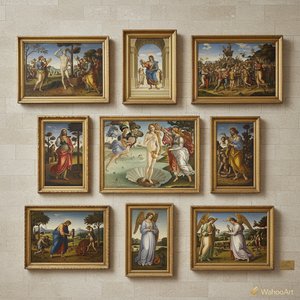
The Palace’s collection, known as the Royal Collection, boasts over 7,000 paintings spanning centuries and reflecting diverse artistic styles and historical periods—a remarkable testament to royal patronage and taste. Among its treasures are masterpieces by Rembrandt van Rijn, Anthony Van Dyck, Peter Paul Rubens, Canaletto, and many others—each offering a unique window into the sensibilities of past monarchs. These artworks aren’t merely decorative; they represent significant cultural artifacts that illuminate Europe's artistic landscape throughout history.
Notable Artists Within The Collection:
-
Rembrandt van Rijn:
His portraits capture the intimacy and psychological depth characteristic of Baroque artistry, portraying European nobility with remarkable sensitivity.
-
Anthony Van Dyck:
A leading portrait painter during the Elizabethan era, Van Dyck’s works embody elegance and grace—celebrated for their refined compositions and masterful execution.
-
Peter Paul Rubens:
Rubens' paintings exemplify Baroque dynamism and vibrancy—characterized by bold colors and dramatic gestures that convey emotion and grandeur.
Architectural Context and Historical Significance:
Buckingham Palace’s location within Westminster—a historic center of government and royal power—underscores its role as a landmark reflecting Britain’s evolving political landscape. Its architectural journey mirrors the nation's history, from humble beginnings as a townhouse to grand transformations under visionary architects like John Nash and Edward Blore—each contributing to its enduring legacy as a symbol of British heritage and artistic excellence. The palace continues to inspire awe and admiration for its beauty and grandeur, reminding visitors of Britain’s rich cultural traditions.