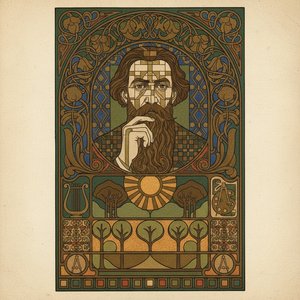
A Pioneer of Modernity: The Life and Vision of Otto Koloman Wagner
Otto Koloman Wagner, born in Vienna in 1841, stands as a pivotal figure bridging the gap between 19th-century historicism and the dawn of modern architecture. His journey wasn’t one of immediate revolution, but rather a gradual evolution—a thoughtful dismantling of established norms coupled with an unwavering commitment to functionality and honest expression. Initially steeped in classical training at the Vienna Polytechnic Institute and later refined at the Royal Academy of Architecture in Berlin, Wagner's early work reflected the prevailing academic styles. However, even within these traditional frameworks, seeds of innovation were sown. His studies under August Sicardsburg and Eduard von der Nüll instilled a crucial principle: architecture must possess a “rational expression” suited to its modern purpose—a concept that would become central to his life’s work. These formative years weren't merely about mastering technique; they were about questioning the very foundations of architectural thought, setting the stage for Wagner’s eventual break from convention. He began building a reputation through speculative ventures, designing apartment houses that subtly blended classical elements with emerging modernist ideas, financing these projects himself and demonstrating an entrepreneurial spirit alongside his artistic vision. Wagner's early career was marked by a fascination with classical forms—particularly those of the Renaissance—influenced profoundly by the architectural achievements of Michelangelo and Palladio. His designs for buildings like the Vienna Opera House showcased this stylistic inclination, blending ornate sculptural decoration with meticulously crafted structural elements. Yet, Wagner never succumbed to mere imitation; he sought to reinterpret these traditions in ways that honored their grandeur while simultaneously anticipating the aesthetic sensibilities of his time. This intellectual curiosity fueled his exploration of diverse architectural styles—from neo-Baroque to Moorish Revival—demonstrating a willingness to experiment and push boundaries. His commitment to craftsmanship was unwavering, and he insisted on utilizing the finest materials and employing skilled artisans to realize his ambitious visions.The Vienna Secession and a Blossoming Style
A transformative moment arrived in 1893 with Wagner’s participation in the Vienna city-planning competition. Though not awarded the overall prize, his proposals—particularly those concerning an integrated urban rail network—captured considerable attention and secured him the prestigious role of chief architect of the municipal railway system in 1894. This marked a decisive shift towards urban planning and a more pragmatic approach to design—a departure from the purely aesthetic concerns that had dominated much of his previous work. Simultaneously, Wagner became deeply involved with the burgeoning Vienna Secession movement, founded in 1897 by artists like Gustav Klimt and Josef Maria Olbrich. This group challenged the conservative artistic establishment, advocating for a radical rethinking of artistic expression and rejecting the stylistic conventions of the Belle Époque. Wagner embraced this spirit of innovation wholeheartedly, recognizing that true beauty lay not merely in ornamentation but in harmonious relationships between form and function. The Secession’s influence on Wagner’s aesthetic sensibilities is palpable in his subsequent architectural projects—most notably the Majolica House (1900-1904), designed collaboratively with Josef Maria Olbrich, and the Karlsplatz Pavillion (1897-1904). These buildings exemplify Wagner’s commitment to geometric abstraction and minimalist decoration—a deliberate rejection of historical references in favor of a purely expressive language. He championed the use of new materials—steel, glass, aluminum—believing that they offered unparalleled opportunities for architectural innovation. Wagner's vision was underpinned by a conviction that architecture should serve as a catalyst for social progress—a belief reflected in his designs for public spaces and housing projects intended to enhance the quality of life for urban dwellers.Landmark Creations and Architectural Innovations
Wagner’s legacy is cemented in Vienna through buildings that stand as testaments to his pioneering spirit and artistic genius. The Kirche am Steinhof (Church of St. Leopold), completed between 1897 and 1902, represents a culmination of Wagner’s stylistic evolution—a monumental edifice characterized by soaring arches, expansive stained glass windows, and intricate sculptural ornamentation. It embodies Wagner's belief that architecture could inspire spiritual contemplation and elevate the human experience. The Austrian Postal Savings Bank building (1894-1905) exemplifies his mastery of structural engineering combined with elegant aesthetic considerations—a striking example of modernist design achieved through meticulous attention to detail and innovative construction techniques. His later works, including the Medallion House and the Vienna Metro Stations, solidified Wagner’s reputation as a visionary architect who anticipated the trends of the 20th century. Wagner's influence extended far beyond his own architectural creations—inspiring generations of artists and architects who sought to forge new paths toward artistic expression. He championed functionalism as an antidote to excessive ornamentation, advocating for designs that prioritized practicality and responsiveness to human needs. His unwavering belief in structural honesty—the principle that buildings should reveal their underlying framework—became a cornerstone of modernist architecture. Otto Koloman Wagner remains a towering figure whose work continues to inspire architects and designers seeking to create structures that are both aesthetically compelling and socially meaningful—a true pioneer who irrevocably transformed the landscape of Viennese art and architecture.Ερωτήσεις και Απαντήσεις
Σε ποια ιστορική περίοδο δραστηριοποιήθηκε ο/η Ότο Βάγκενερ;
Ο/Η Ότο Βάγκενερ δραστηριοποιήθηκε κατά την περίοδο του/της 19ος αιώνας. Η συγκεκριμένη εποχή τοποθετεί τη δραστηριότητα του/της καλλιτέχνη/στη στην ιστορία.
Μπορώ να περιηγηθώ στα έργα του/της Ότο Βάγκενερ ανά καλλιτεχνικό κίνημα;
Μπορείτε να περιηγηθείτε στα έργα του/της Ότο Βάγκενερ ανά καλλιτεχνικό κίνημα στη σελίδα των κινημάτων για τον/την Ότο Βάγκενερ (Όλα τα Ρευmatά).
Μπορώ να εξερευνήσω τα έργα του/της Ότο Βάγκενερ μέσω λέξεων-κλειδιών;
Για να βρείτε έργα του Ότο Βάγκενερ με συγκεκριμένο θέμα, επισκεφθείτε τη σελίδα Με Λέξεις-Κλειδιά του καλλιτέχνη, η οποία ομαδοποιεί τα έργα ανά λέξη-κλειδί.