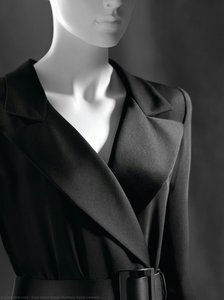
Ο/Η Ιβέλ Σαντ Λωράν (1936–2008) είναι γνωστός/η κυρίως για το Silkdress from the fashion line „Trapéze“· ο κατάλογος περιλαμβάνει 37 έργα του/της καλλιτέχνη/στην.
A Revolutionary Silhouette: The Life and Legacy of Yves Saint Laurent
Yves Henri Donat Mathieu-Saint Laurent, universally known as Yves Saint Laurent or YSL, wasn’t merely a fashion designer; he was a true architect of style, a cultural seismograph who fundamentally reshaped the landscape of 20th and 21st-century dress. Born in Oran, Algeria, in 1936, his formative years were steeped in the vibrant colors, exotic textures, and rich traditions of North Africa – an environment that instilled within him a lifelong appreciation for beauty, luxury, and a profound sense of global perspective. This early exposure to a world far removed from the Parisian haute couture scene proved profoundly influential, shaping an aesthetic characterized by bold experimentation, cultural fusion, and a constant challenge to established norms. From his childhood fascination with creating intricate paper dolls to his meticulous sketching of designs that captivated industry insiders, Saint Laurent’s destiny seemed inextricably linked to the world of fashion – a path he pursued with unwavering determination and unparalleled talent. His relocation to Paris at the age of seventeen marked not just a geographical shift but a plunge into the heart of the most prestigious realm of haute couture, where he swiftly distinguished himself through an innate understanding of form, fabric, and the power of visual storytelling.
From Dior’s Protégé to Independent Visionary
Saint Laurent's ascent within the fashion world was nothing short of meteoric. His designs immediately caught the discerning eye of Christian Dior, who recognized in the young designer a rare combination of technical skill, artistic sensibility, and an audacious spirit. Recognizing Saint Laurent’s potential, Dior took him on as an assistant, providing invaluable mentorship and access to the inner workings of one of the most influential houses in the world. The sudden, tragic death of Dior in 1957 thrust a remarkably young Saint Laurent – just twenty-one years old – into the unprecedented position of artistic director for the House of Dior. This appointment was revolutionary, placing immense pressure on the fledgling designer to uphold Dior’s legacy while simultaneously forging his own distinct voice. He responded with a collection that stunned the fashion world, demonstrating both profound respect for Dior's established aesthetic and an emerging individual style characterized by a daring modernity. However, this period wasn’t without its turbulence. A compulsory military service in 1958, coupled with the emotional strain of leadership and the pressures of maintaining Dior’s exacting standards, led to a severe nervous breakdown – a deeply personal crisis that profoundly impacted his life. Despite this challenging chapter, it ultimately proved pivotal, liberating Saint Laurent from the constraints of conformity and allowing him to pursue his own creative vision unburdened by expectations. In 1962, fueled by financial support from Roland Fréy, he boldly established Yves Saint Laurent YSL, a venture that would irrevocably alter the course of fashion history and establish him as an independent force within the industry.
Challenging Norms: Le Smoking and Beyond
Yves Saint Laurent wasn’t content to simply replicate existing trends; he actively *created* them, often by dismantling established conventions and challenging deeply ingrained societal norms. Perhaps his most iconic creation, “Le Smoking” (1968), stands as a testament to this revolutionary approach. This impeccably tailored tuxedo suit designed for women was more than just clothing—it was a powerful statement of female empowerment, gender fluidity, and sophisticated rebellion. It shattered traditional notions of femininity by presenting a masculine silhouette in a traditionally feminine context, instantly captivating the fashion world and inspiring countless imitators. The design wasn’t merely aesthetically pleasing; it represented a deliberate provocation – a challenge to the restrictive expectations placed upon women at the time. Beyond “Le Smoking,” Saint Laurent consistently pushed boundaries through his diverse collections, introducing groundbreaking designs such as the "Mondrian Dress" (1965), inspired by the geometric abstractions of Piet Mondrian, and the “Trapeze” dress, a revolutionary A-line shape that liberated women from the constraints of cinched waists. He also embraced bold color blocking, incorporating vibrant hues and contrasting patterns to create visually arresting ensembles. His willingness to experiment with unconventional materials and silhouettes cemented his reputation as a true innovator – a designer who wasn’t afraid to disrupt the status quo and redefine what was considered fashionable.
A Lasting Influence: Redefining Femininity and Beyond
Yves Saint Laurent's legacy extends far beyond specific garments or fleeting trends; it represents a fundamental shift in how women perceived themselves through fashion. He didn’t simply design clothes—he redefined femininity, offering women clothing that combined elegance with comfort, strength, and self-expression. His work was characterized by an astute understanding of the changing social landscape of the 1960s and 70s, reflecting a growing desire for liberation and individuality. Recognizing the need to make high fashion more accessible to a wider audience, Saint Laurent launched Rive Gauche in 1966, a revolutionary ready-to-wear line that democratized his designs, bringing sophisticated style within reach of everyday consumers. This innovative approach blurred the lines between couture and prêt-à-porter, fundamentally altering the structure of the fashion industry. His artistic explorations weren’t limited to tailoring; he drew inspiration from diverse sources – African textiles and motifs, Russian folk costumes, and the works of modern artists – showcasing a global perspective and a deep appreciation for cultural heritage. Saint Laurent became a cultural icon, celebrated not only for his creative genius but also for his unwavering commitment to pushing boundaries and challenging conventions. His designs continue to be studied and admired by fashion students and designers worldwide, solidifying his place as one of the most influential figures in the history of fashion. He didn't just dress women; he liberated them.
Key Works & Artistic Echoes
Le Smoking (1968): The iconic tuxedo suit for women, a symbol of empowerment and gender fluidity.
Mondrian Dress (1965): A groundbreaking design inspired by Piet Mondrian’s geometric paintings, showcasing the intersection of art and fashion.
Rive Gauche Line (1966): The revolutionary ready-to-wear line that democratized high fashion.
Velvet Collections: Luxurious evening dresses crafted from sumptuous velvet, embodying opulence and glamour.
African Inspired Designs: Incorporation of African textiles and motifs, reflecting a global perspective and cultural appreciation.
Από την επιβλεπόμενη ομάδα της OriginalUniqueArt.com
Κουίζ
Για κάθε ερώτηση υπάρχει μόνο μία σωστή απάντηση.
Ερώτηση 1:
Ποια ήταν η γενέτειρα του Yves Saint Laurent;
Ερώτηση 2:
Τι είδους ρούχο είναι το πιο διάσημο δημιούργημα του Yves Saint Laurent;
Ερώτηση 3:
Με ποιον συνεργάστηκε ο Yves Saint Laurent για να ιδρύσει τη δική του εταιρεία μόδας;
Ερώτηση 4:
Ποια ήταν η πρώτη ready-to-wear σειρά που δημιούργησε ο Yves Saint Laurent;
Ερώτηση 5:
Ποια καλλιτεχνική κίνηση επηρέασε ιδιαίτερα το σχέδιο της φούσκας Mondrian του;
Ανακαλύψτε τα 25 κορυφαία έργα τέχνης του James Abbott McNeill Whistler! Εξερευνήστε πίνακες, πορτρέτα & νυχτερινά τοπία που καθόρισαν τον Aestheticism. Υψηλής ποιότητας αναπαραγωγές στην OriginalUniqueArt.gr. Δείτε τη συλλογή!
Γεια σας! Μπορώ να σας βοηθήσω στην επιλογή ενός έργου τέχνης, στην παρακολούθηση μιας παραγγελίας ή στην απάντηση ερωτήσεων σχετικά με την εγγύηση. Πώς μπορώ να σας φανώ χρήσιμος;