Πορτρέτο του William De Morgan

Τα 6 πιο διάσημα έργα του William De Morgan, μια επιλογή γκαλερί

Ενημερωμένο Νοέμβριος 2026 · κατάταξη βάσει του σκορ δημοφιλίας μας (αναζητήσεις, επισκέψεις και παραγγελίες για κάθε έργο) · 6 έργα του William De Morgan στον κατάλογό μας

Με σύντομη περιγραφή

Από όλα τα πρωτότυπα έργα που άφησε ο William De Morgan, το πιο διάσημο είναι το tile (1900), το οποίο βρίσκεται στη συλλογή του Μουσείο Λονδίνου, Λονδίνο. Ακολουθούν στενά η The Welsh Bible (1588) και η Plate (1890). Ο κατάλογός μας περιλαμβάνει 6 έργα του William De Morgan· η γκαλερί έχει διατηρήσει τα 6 κομμάτια που θαυμάζει ο κόσμος, το καθένα με την ημερομηνία, το μουσείο και την ιστορία του.

1839 – 1917, London Arts and crafts Περισσότερα έργα: Μουσείο Λονδίνου

Τα 10 κορυφαία έργα του William De Morgan: η επιλογή της γκαλερί

1
tile (1900) του William De Morgan

tile

1900 · Ceramics · Μουσείο Λονδίνου, Λονδίνο

William Frend De Morgan (1839-1917) stands as a singular figure within the Victorian artistic landscape—a testament to intellectual curiosity and an unwavering dedication to blending scientific observation with profound aesthetic expression. His artwork transcends mere decoration; it’s imbued with layers of symbolism that speak to themes of mortality, regeneration, and the interconnectedness of nature and humanity. “Tile,” created around 1900, exemplifies this distinctive approach, offering a captivating glimpse into De…

2
The Welsh Bible (1588) του William De Morgan

The Welsh Bible

1588 · National Library of Wales, Aberystwyth

To gaze upon The Welsh Bible is to step through a temporal threshold, leaving the frenetic pace of the modern era for the quiet, reverent atmosphere of the sixteenth century. This exquisite piece, dating back to 1588, serves as more than just a historical artifact; it is a tactile connection to an age of profound spiritual and linguistic transformation. The artwork captures the intimate essence of a title page that…

5
Music Cabinet (1880) του William De Morgan

Music Cabinet

1880 · Furniture Art · William Morris Gallery, Walthamstow

In the quiet corners of the William Morris Gallery, there exists a masterpiece that transcends the boundary between functional furniture and fine art: the Music Cabinet. Created in 1880, this exquisite piece is not merely a storage vessel but a lyrical dialogue between two titans of the Arts and Crafts movement, Philip Webb and William Frend De Morgan. As one gazes upon its imposing 241 x 115 cm frame, one…

6
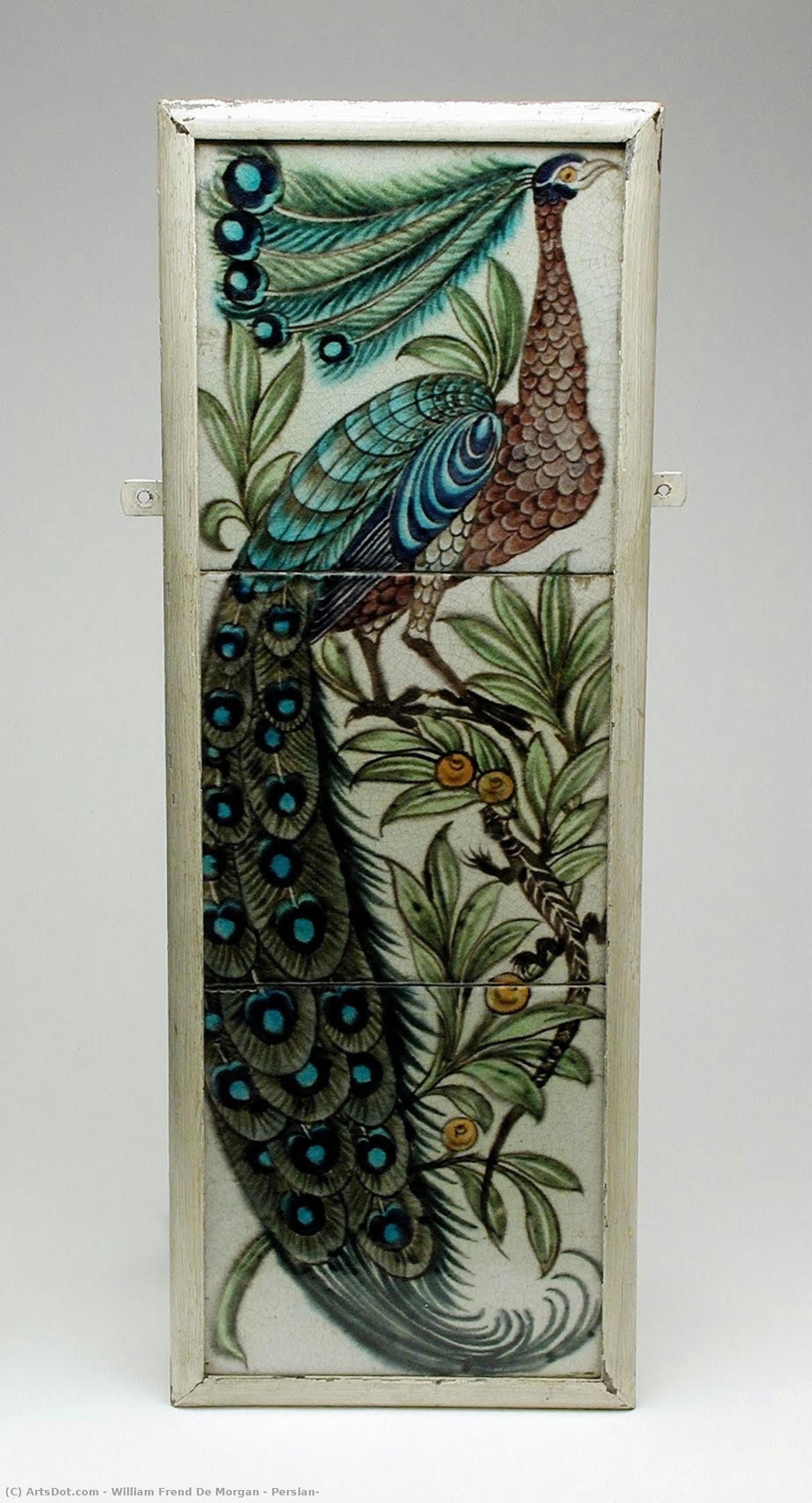
Persian (1897) του William De Morgan

Persian

1897 · Ceramics · Los Angeles County Museum of Art, Λος Άντζελες

Within the rich tapestry of 19th-century decorative arts, few pieces possess the captivating blend of artistry and exoticism as William Frend De Morgan’s “Persian” tile panel. Created in 1888-1897 during his prolific period at Merton Abbey, this work transcends mere ornamentation; it's a portal to a reimagined East, infused with Victorian sensibilities and a profound understanding of ancient artistic traditions. More than just a decorative object, it’s a testament to…

Τα θέματα που κίνησαν το ενδιαφέρον του William De Morgan

Τα τέσσερα θέματα που εμφανίζονται πιο συχνά σε αυτά τα πρωτότυπα έργα, το καθένα με το εξαιρετικό του παράδειγμα.

Τα μουσεία που διατηρούν τα πρωτότυπα έργα του William De Morgan

Τα 6 μουσεία που φιλοξενούν το μεγαλύτερο μέρος των έργων σε αυτήν τη σελίδα.

Μουσείο Πόλη Έργα του William De Morgan Πάτρια από αυτή τη λίστα
Μουσείο Λονδίνου, ΛονδίνοΜουσείο Λονδίνου Λονδίνο 1 tile
National Library of Wales, AberystwythNational Library of Wales Aberystwyth 1 The Welsh Bible
Μετροπολιτικό Μουσείο Τέχνης, Νέα ΥόρκηΜετροπολιτικό Μουσείο Τέχνης Νέα Υόρκη 1 Plate
The Potteries Museum - Art Gallery, Stoke-on-TrentThe Potteries Museum - Art Gallery Stoke-on-Trent 1 William De Morgan Tiles
William Morris Gallery, WalthamstowWilliam Morris Gallery Walthamstow 1 Music Cabinet
Los Angeles County Museum of Art, Λος ΆντζελεςLos Angeles County Museum of Art Λος Άντζελες 1 Persian

Ο William De Morgan δεκαετία προς δεκαετία: το πρωτότυπο που ορίζει κάθε μία

Έργα ανά δεκαετία

Επιλέξτε μια δεκαετία για να δείτε το πρωτότυπο έργο που την χαρακτηρίζει.

Ερωτήσεις συλλεκτών για τα έργα του William De Morgan

Για ποιο έργο είναι πιο γνωστός ο William De Morgan;Αποκαλύψτε την απάντηση

tile (1900), Μουσείο Λονδίνου, Λονδίνο. Στη συνέχεια ακολουθούν το The Welsh Bible (1588) και το Plate (1890).

Πόσο ηλικία είχε ο/η William De Morgan όταν δημιουργήθηκε το tile;Αποκαλύψτε την απάντηση

61 ετών: το έργο tile είναι του 1900, και ο/η William De Morgan γεννήθηκε το 1839.

Πόσα έργα δημιούργησε ο/η William De Morgan;Αποκαλύψτε την απάντηση

Ο κατάλογός μας περιλαμβάνει 6 έργα του William De Morgan, με ημερομηνίες από 1880 έως 1907.

Σε ποια μουσεία εκτίθενται τα αριστούργημα του William De Morgan;Αποκαλύψτε την απάντηση

Κυρίως σε Μουσείο Λονδίνου (Λονδίνο), National Library of Wales (Aberystwyth) και Μετροπολιτικό Μουσείο Τέχνης (Νέα Υόρκη). Ο πίνακας μουσείου παραπάνω τους περιλαμβάνει όλους.

Σε ποιες χρονιές δημιούργησε ο/η William De Morgan τα πιο διάσημα έργα του/της;Αποκαλύψτε την απάντηση

Κατά την περίοδο 1890s: 2 από τα 6 έργα σε αυτήν τη σελίδα δημιουργήθηκαν τότε, με Plate από αυτά να είναι μοναδικά.

Ποια είναι τα πρώτα και τα τελευταία διάσημα πρωτότυπα του William De Morgan;Αποκαλύψτε την απάντηση

Σε αυτήν τη σελίδα, το παλαιότερο είναι Music Cabinet (1880) και το νεότερο William De Morgan Tiles (1907).

Ποια τεχνική χρησιμοποίησε περισσότερο ο William De Morgan;Αποκαλύψτε την απάντηση

Ceramics, για 2 από τα 6 έργα σε αυτήν τη σελίδα.

Σε ποιο καλλιτεχνικό κίνημα ανήκει ο/η William De Morgan;Αποκαλύψτε την απάντηση

Arts and crafts, όπως προκύπτει από τα πρωτότυπα σε αυτήν τη σελίδα.

William De Morgan: ζωή και έργο

A Life Immersed in Pattern and Innovation

William Frend De Morgan, born in London in 1839, was a figure who defied easy categorization. He wasn’t simply a potter, nor merely a tile designer, or even solely a novelist—he was a polymath whose artistic spirit permeated multiple disciplines. Born into an intellectually stimulating environment – his father, Augustus De Morgan, was a renowned mathematician, and his mother, Sophia Elizabeth Frend, a progressive thinker and writer – young William received encouragement to pursue his creative inclinations. Though he initially enrolled at the Royal Academy Schools, a sense of disillusionment soon set in, leading him toward a more collaborative and aesthetically aligned path. This pivotal shift came with his introduction to William Morris, a meeting that would profoundly shape De Morgan’s artistic trajectory and immerse him within the burgeoning Arts and Crafts movement.

From Stained Glass to Ceramic Revelation

De Morgan's early explorations centered on stained glass, working alongside Morris & Co., contributing designs imbued with medieval and mythological narratives. However, it was a fascination with lustre – that shimmering, iridescent quality found in ancient Hispano-Moresque pottery and Italian maiolica – that truly ignited his artistic passion. He dedicated himself to rediscovering the lost techniques of lustreware, meticulously experimenting with glazes and firing processes. This pursuit wasn’t merely about replicating an aesthetic; it was a scientific investigation driven by an insatiable curiosity. By 1872, De Morgan had fully committed to ceramics, establishing his own pottery in Chelsea. The decade that followed proved remarkably fruitful, though marked by technical challenges. He skillfully combined commercially produced tiles with his own creations, notably developing a high-quality biscuit tile celebrated for its irregularities and durability. His designs during this period began to coalesce around recurring motifs: fantastical creatures, galleons, fish, and intricate floral patterns, all rendered in a distinctive “Persian” palette of deep blues, turquoise, manganese purple, greens, Indian red, and lemon yellow.

Eastern Influences and Artistic Flourishing

De Morgan’s artistic vision was deeply informed by his profound interest in Eastern art, particularly Islamic tilework. This fascination wasn't superficial imitation but a genuine appreciation for the complex geometric patterns, vibrant colors, and symbolic richness of these traditions. He absorbed these influences, translating them into a unique visual language that blended medieval aesthetics with Oriental motifs. Between 1882 and 1900, De Morgan received significant commissions, most notably producing elaborate tile panels for twelve P&O liners under the direction of T.E. Colcutt, as well as earlier work for Tsar Alexander II’s yacht, Livadia. These large-scale projects showcased his ability to translate intricate designs into expansive decorative schemes. His pottery also flourished, encompassing chargers, rice dishes, and vases, often brought to life through the skilled hands of decorators like Charles Passenger, Fred Passenger, Joe Juster, and Miss Babb – artists who faithfully executed De Morgan’s visionary concepts.

A Legacy Beyond Ceramics

Though his pottery and tile designs remain his most celebrated achievements, William De Morgan's creative energy extended into the realm of literature. In his later years, he embarked on a second career as a novelist, publishing nine works between 1906 and 1917. His novels, characterized by realistic dialogue and insightful social commentary, were well-received during his lifetime. De Morgan’s impact resonates through the enduring appeal of his art. He wasn't simply replicating historical styles; he was innovating, experimenting, and forging a unique aesthetic that continues to captivate audiences today. The De Morgan Centre in London stands as a testament to his legacy, preserving and showcasing his remarkable contributions to Victorian decorative arts. His work embodies the spirit of the Arts and Crafts movement – a commitment to craftsmanship, artistic integrity, and the harmonious integration of art into everyday life.

Key Dates & Notable Works

  • 1839: Born in Gower Street, London.
  • 1863: Began experimenting with stained glass and ventured into pottery.
  • 1872: Established his own pottery in Chelsea.
  • 1882-1900: Commissioned to produce tile panels for P&O liners and the Tsar’s yacht.
  • 1906-1917: Published nine novels.
  • 1917: Passed away in London.