Πορτρέτο του William Aikman

Τα 65 πιο διάσημα έργα του William Aikman, κάθε ένα μοναδικό

Ενημερωμένο Νοέμβριος 2026 · κατάταξη βάσει του σκορ δημοφιλίας μας (αναζητήσεις, επισκέψεις και παραγγελίες για κάθε έργο) · 73 έργα του William Aikman στον κατάλογό μας

Με σύντομη περιγραφή

Το έργο John Campbell, Second Duke of Argyll and Duke of Greenwich (1680-1743) (1709) είναι το ποίτευμα του William Aikman που τραβάει τα περισσότερα βλέμματα· το πρωτότυπο ανήκει στο Royal Collection, Λονδίνο. Μετά από αυτό, το βλέμμα στρέφεται στο Anne Dalrymple, Lady Steuart, d. 1736 (1710) και στο James Gibbs (1682-1754) holding a Plan of St Mary le Strand, London (1713). Ανάμεσα στα 73 έργα του William Aikman στον κατάλογό μας, αυτά τα 65 είναι τα πιο διάσημα, το καθένα ένα μοναδικό πρωτότυπο που παρουσιάζεται με την χρονολογία του, το μουσείο του και τον λόγο για τον οποίο παραμένει αιώνιο.

1682 – 1731, Άเบρντινσέρ Neoclassicism Περισσότερα έργα: Εθνική Πινάκοθήκη της Σκωτίας

Τα 10 κορυφαία έργα του William Aikman, μέσα από το βλέμμα της γκαλερί

1
John Campbell, Second Duke of Argyll and Duke of Greenwich (1680-1743) (1709) του William Aikman

John Campbell, Second Duke of Argyll and Duke of Greenwich (1680-1743)

1709 · Oil On Canvas · Royal Collection, Λονδίνο

The subject of this oil on canvas is John Campbell, Second Duke of Argyll and Duke of Greenwich. He is depicted in a vertical, three-quarter length pose, positioned slightly off-center against a background of heavy dark drapery and a distant, hazy landscape. The sitter wears a deep crimson coat accented by metallic silver and gold details, paired with a bright blue sash. His posture is upright, conveying a sense of…

2
Anne Dalrymple, Lady Steuart, d. 1736 (1710) του William Aikman

Anne Dalrymple, Lady Steuart, d. 1736

1710 · Oil On Canvas · Εθνική Πινάκοθήκη της Σκωτίας, Έδιμβουργο

This three-quarter length portrait presents Anne Dalrymple, Lady Steuart, d. 1736, captured by the hand of William Aikman. Painted about 1710, the work fixes the subject in a moment of quietude. She exists within a space of soft light and deep shadow, her presence defined by the stillness of her posture. The artist, William Aikman, focuses on the steady gaze of the sitter, anchoring the composition with her steady, pale…

3
James Gibbs (1682-1754) holding a Plan of St Mary le Strand, London (1713) του William Aikman

James Gibbs (1682-1754) holding a Plan of St Mary le Strand, London

1713 · Oil On Canvas · Wimpole Hall

The air in the studio feels heavy and still as the light catches the fine, white powder of a meticulously styled wig. We find ourselves in the presence of an older man, his gaze fixed forward with a quiet, steady intensity that suggests a mind preoccupied with geometry and stone. He sits in a three-quarter pose, his dark brown coat absorbing the shadows of the room, while a crisp white…

4
Archibald Campbell, Earl of Ilay, later 3rd Duke of Argyll (1682-1761) (1715) του William Aikman

Archibald Campbell, Earl of Ilay, later 3rd Duke of Argyll (1682-1761)

1715 · Oil On Canvas · Royal Collection, Λονδίνο

Archibald Campbell, Earl of Ilay, later 3rd Duke of Argyll, occupies the space with a commanding stillness that demands immediate recognition. He stands in a vertical three-quarter length pose, his figure cutting a sharp silhouette against a dark, muted background of umber and black. A single light source from the upper left sweeps across the scene, catching the pale sheen of his wig and the luminous texture of his skin.…

5
Patie Birnie, the Fiddler of Kinghorn (1721) του William Aikman

Patie Birnie, the Fiddler of Kinghorn

1721 · Oil On Canvas · Εθνική Πινάκοθήκη της Σκωτίας, Έδιμβουργο

The air feels heavy with the scent of aged wood and wool as Patie Birnie, the Fiddler of Kinghorn, meets our gaze. He sits in a three-quarter pose, his body angled slightly away while his eyes lock onto ours with a warmth that suggests a shared joke or a song just about to begin. A gentle smile creases his weathered face, softening the deep lines carved by years of laughter…

6
Sir Thomas Saunders Sebright, 4th Bt (1692-1736) or Mr Crawley (1730) του William Aikman

Sir Thomas Saunders Sebright, 4th Bt (1692-1736) or Mr Crawley

1730 · Oil On Canvas · Blickling Hall

A single figure occupies the center of this vertical landscape, a man caught in a moment of poised stillness. He wears a grey frock coat, its surface punctuated by the hard glint of silver buttons. Beneath the coat, a blue tunic reveals a pattern of brown damask braid, a subtle detail against the pale skin of his neck. A white cravat is knotted precisely, leading the eye upward to a…

7
An Unfinished Study of the Head of James Thomson (1725) του William Aikman

An Unfinished Study of the Head of James Thomson

1725 · Oil · Yale Center for British Art, New Haven

In this unfinished oil study, the young man James Thomson emerges from a haze of muted tones. William Aikman captures a fleeting moment of quietude, freezing the subject in a three-quarter view as he gazes toward the right. The portrait feels immediate, as if the artist has just stepped back to observe the play of light across a face that is still being brought into being. It is a glimpse…

8
Henry Kelsall (1692–1762) (1729) του William Aikman

Henry Kelsall (1692–1762)

1729 · Oil On Canvas · National Trust, Νόριτς

In this 1729 portrait, we encounter Henry Kelsall, a man whose presence commands the space he occupies. He is depicted in a full-length pose, standing with a quiet authority that suggests a life of significant social standing. The composition is traditional, placing him centrally against a backdrop that hints at a stately interior. A heavy red curtain drapes to one side, providing a deep, saturated contrast to the cool tones…

9
Sir Robert Walpole (1676–1745), 1st Earl of Orford, KG (1730) του William Aikman

Sir Robert Walpole (1676–1745), 1st Earl of Orford, KG

1730 · Oil On Canvas · National Trust, Νόριτς

This oil on canvas portrait, dating to 1730, depicts Sir Robert Walpole, 1st Earl of Orford, KG. The subject is presented in a three-quarter pose, facing slightly to the left, and occupies most of the frame. He is dressed in elaborate robes that signify wealth, power, and rank. The composition is centered, with the figure set against a dark and indistinct background that serves to highlight the subject. The lighting…

10
Dorothy Boyle (1699–1758), Countess of Burlington (1728) του William Aikman

Dorothy Boyle (1699–1758), Countess of Burlington

1728 · Oil On Canvas

In this 1728 oil on canvas, we encounter Dorothy Boyle, Countess of Burlington, presented in a formal, waist-up portrait. She gazes toward the viewer with a composure that suggests a life lived within the highest circles of British nobility. The composition is intimate, utilizing an oval frame to focus our attention entirely upon her figure against a muted, neutral brown background. There is a quietude in her expression, a seriousness…

Τα διάσημα έργα του William Aikman, από το 11 έως το 65

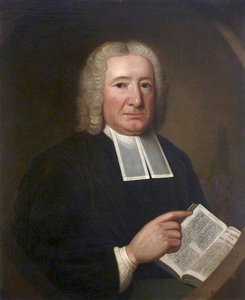
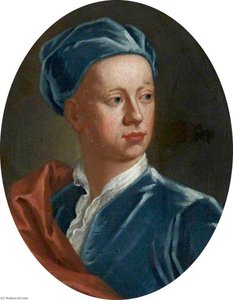
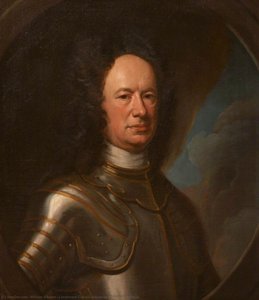
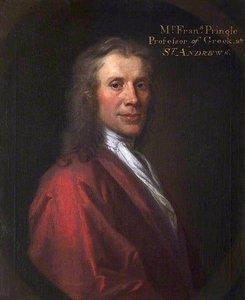
11Caroline of Brandenburg Ansbach (1683–1737), and Her Son Prince William Augustus (1721–1765), Duke of Cumberland (1730) του William AikmanCaroline of Brandenburg Ansbach (1683–1737), and Her Son Prince William Augustus (1721–1765), Duke of Cumberland1730 · Εθνική Πινακοθήκη Λονδίνου 12James Hadow του William AikmanJames HadowUniversity of St Andrews 13George Alexander (1704) του William AikmanGeorge Alexander1704 14Robert Geddes, FRCSEd (1709) (1709) του William AikmanRobert Geddes, FRCSEd (1709)1709 · The Royal College of Surgeons of Edinburgh 15John Lauder (c.1680–1737), FRCSEd (1709) (1700) του William AikmanJohn Lauder (c.1680–1737), FRCSEd (1709)1700 · The Royal College of Surgeons of Edinburgh 16Robert Clerk (1664–1720), FRCSEd (1689) (1700) του William AikmanRobert Clerk (1664–1720), FRCSEd (1689)1700 · The Royal College of Surgeons of Edinburgh 17John Gay, Poet and Dramatist (1720) του William AikmanJohn Gay, Poet and Dramatist1720 18James Thomson, Poet (1720) του William AikmanJames Thomson, Poet1720 19John Campbell, 2nd Duke of Argyll and Greenwich, Soldier and Statesman (1720) του William AikmanJohn Campbell, 2nd Duke of Argyll and Greenwich, Soldier and Statesman1720 20James Thomson (1700–1748), Poet (1720) του William AikmanJames Thomson (1700–1748), Poet1720 · Εθνική Πινάκοθήκη της Σκωτίας 21Allan Ramsay (1684–1758), Poet (1722) του William AikmanAllan Ramsay (1684–1758), Poet1722 · Εθνική Πινάκοθήκη της Σκωτίας 22John Gay (1685–1732), Poet and Dramatist (1720) του William AikmanJohn Gay (1685–1732), Poet and Dramatist1720 · Εθνική Πινάκοθήκη της Σκωτίας 23John McGill (d.1735), FRCSEd (1710) (1711) του William AikmanJohn McGill (d.1735), FRCSEd (1710)1711 · The Royal College of Surgeons of Edinburgh 24Sir Patrick Hume (1641–1724), 1st Earl of Marchmont, Statesman (1720) του William AikmanSir Patrick Hume (1641–1724), 1st Earl of Marchmont, Statesman1720 · Εθνικό Μουσείο Βαρσοβίας 25William Aikman (1682–1731), Artist, Self Portrait (1711) του William AikmanWilliam Aikman (1682–1731), Artist, Self Portrait1711 · Εθνική Πινάκοθήκη της Σκωτίας 26John Campbell (1680–1743), 2nd Duke of Argyll and Greenwich, Soldier and Statesman (1720) του William AikmanJohn Campbell (1680–1743), 2nd Duke of Argyll and Greenwich, Soldier and Statesman1720 · Εθνική Πινάκοθήκη της Σκωτίας 27John Monro (1670–1740), FRCSEd (1703) (1715) του William AikmanJohn Monro (1670–1740), FRCSEd (1703)1715 · The Royal College of Surgeons of Edinburgh 28Lieutenant Colonel Alexander Campbell of Finab (1715) του William AikmanLieutenant Colonel Alexander Campbell of Finab1715 · The Black Watch Castle - Museum 29Field Marshal Sir Robert Rich (1685–1768), 4th Bt (1729) του William AikmanField Marshal Sir Robert Rich (1685–1768), 4th Bt1729 · National Trust 30Francis Pringle, Professor of Greek at St Andrews (1723) του William AikmanFrancis Pringle, Professor of Greek at St Andrews1723 · University of St Andrews 31Sir Thomas Saunders Sebright (1692–1736), 4th Bt (or 'Mr Crawley') (1730) του William AikmanSir Thomas Saunders Sebright (1692–1736), 4th Bt (or 'Mr Crawley')1730 · National Trust 32Colonel Harbord Harbord (1675 –1742) (Harbord Cropley) (1732) του William AikmanColonel Harbord Harbord (1675 –1742) (Harbord Cropley)1732 · National Trust 33Sir John Cope (1690–1760) (1730) του William AikmanSir John Cope (1690–1760)1730 · National Trust 34Edmund Prideaux (1693–1745) (detail) (1730) του William AikmanEdmund Prideaux (1693–1745) (detail)1730 · National Trust 35Sir William Harbord (1696 –1770), MP, KB (1729) του William AikmanSir William Harbord (1696 –1770), MP, KB1729 · National Trust 36Thomas Coke (1697–1759), 1st Earl of Leicester (1731) του William AikmanThomas Coke (1697–1759), 1st Earl of Leicester1731 · National Trust 37Sir William Leman (d.1741), 2nd Bt of Northaw, Hertfordshire (1729) του William AikmanSir William Leman (d.1741), 2nd Bt of Northaw, Hertfordshire1729 · National Trust 38William Kent (1725) του William AikmanWilliam Kent1725 · Εθνική Πορτραίτητος Γκαλερί 39Sir Charles Blois (1657–1738), 1st Bt, MP for Ipswich and Dunwich (1725) του William AikmanSir Charles Blois (1657–1738), 1st Bt, MP for Ipswich and Dunwich1725 40John Hay, 4th Marquess of Tweeddale, Lord Justice General for Scotland (1728) του William AikmanJohn Hay, 4th Marquess of Tweeddale, Lord Justice General for Scotland1728 41Sir Gilbert Elliot (1693–1766), 1st Lord Minto (1726) του William AikmanSir Gilbert Elliot (1693–1766), 1st Lord Minto1726 · Εθνική Πινάκοθήκη της Σκωτίας 42Sir Henry Harpur (1708–1748), 5th Bt (1728) του William AikmanSir Henry Harpur (1708–1748), 5th Bt1728 · National Trust 43Mary Savile (1700–1751), Countess of Thanet (1728) του William AikmanMary Savile (1700–1751), Countess of Thanet1728 44John St John (1702–1748), 2nd Viscount St John (1742) του William AikmanJohn St John (1702–1748), 2nd Viscount St John1742 · Lydiard House 45Adam Cockburn, Lord Ormiston, 1656 - 1735. Lord Justice-Clerk του William AikmanAdam Cockburn, Lord Ormiston, 1656 - 1735. Lord Justice-ClerkΕθνική Πινάκοθήκη της Σκωτίας 46Sir James Steuart, 1st Baronet, of Goodtrees and Coltness, 1681 - 1727 του William AikmanSir James Steuart, 1st Baronet, of Goodtrees and Coltness, 1681 - 1727Εθνική Πινάκοθήκη της Σκωτίας 47John Dalrymple (1673–1747), 2nd Earl of Stair or John Campbell (1680–1743), Duke of Argyll and Greenwich του William AikmanJohn Dalrymple (1673–1747), 2nd Earl of Stair or John Campbell (1680–1743), Duke of Argyll and Greenwich 48Lady Anne Maxwell του William AikmanLady Anne Maxwell 49John Erskine, 14th of Dun, Son of Lord Dun, Aged 10 του William AikmanJohn Erskine, 14th of Dun, Son of Lord Dun, Aged 10 50Landscape with a River του William AikmanLandscape with a River 51Katherine Erskine, Daughter of Sir Charles Erskine of Alva, Wife of Patrick Campbell of Monzie του William AikmanKatherine Erskine, Daughter of Sir Charles Erskine of Alva, Wife of Patrick Campbell of Monzie 52Elizabeth Graham of Airth του William AikmanElizabeth Graham of AirthThe National Trust For Scotland 53John Erskine (1712–1787), 14th of Dun, Son of Lord Dun, Aged 10 του William AikmanJohn Erskine (1712–1787), 14th of Dun, Son of Lord Dun, Aged 10Εθνικό Φοροκατάλογος της Σκωτίας 54Self Portrait του William AikmanSelf PortraitΕθνική Πινάκοθήκη της Σκωτίας 55Elizabeth Ogilvy, Countess of Lauderdale του William AikmanElizabeth Ogilvy, Countess of Lauderdale 56John Lumsden of Blanearn του William AikmanJohn Lumsden of BlanearnThe National Trust For Scotland 57Charles Maitland (1688–1744), 6th Earl of Lauderdale του William AikmanCharles Maitland (1688–1744), 6th Earl of Lauderdale 58Rachel Graham, Wife of John Lumsden of Blanearn του William AikmanRachel Graham, Wife of John Lumsden of BlanearnThe National Trust For Scotland 59David Erskine (1672–1758), 13th of Dun, in the Robes of the Court of Session του William AikmanDavid Erskine (1672–1758), 13th of Dun, in the Robes of the Court of SessionΕθνικό Φοροκατάλογος της Σκωτίας 60Anne Erskine (1709–1735), Daughter of Lord Dun and Wife Successively of James, 9th Earl of Airlie and Sir Alexander Macdonald του William AikmanAnne Erskine (1709–1735), Daughter of Lord Dun and Wife Successively of James, 9th Earl of Airlie and Sir Alexander MacdonaldΕθνικό Φοροκατάλογος της Σκωτίας 61George Watson (1654–1723) του William AikmanGeorge Watson (1654–1723)The Merchant's Hall 62Walter Scott, 'Beardie' (1679–1729), Great Grandfather of Sir Walter Scott του William AikmanWalter Scott, 'Beardie' (1679–1729), Great Grandfather of Sir Walter ScottAbbotsford House 63Susanna Kennedy (1689–1780), Countess of Eglinton, Third Wife of the 9th Earl of Eglinton, Patroness of Letters του William AikmanSusanna Kennedy (1689–1780), Countess of Eglinton, Third Wife of the 9th Earl of Eglinton, Patroness of LettersΕθνική Πινάκοθήκη της Σκωτίας 64Sir James Campbell of Lawers and Rowallan (1667–1745), Soldier του William AikmanSir James Campbell of Lawers and Rowallan (1667–1745), SoldierΕθνική Πινάκοθήκη της Σκωτίας 65John Campbell, 2nd Duke of Argyll and Duke of Greenwich (1725) του William AikmanJohn Campbell, 2nd Duke of Argyll and Duke of Greenwich1725 · Εθνική Πορτραίτητος Γκαλερί

Τα διάσημα έργα του William Aikman, ανά περίοδο

Τα θέματα που κίνησαν το ενδιαφέρον του William Aikman

Τα τέσσερα θέματα που εμφανίζονται πιο συχνά σε αυτά τα πρωτότυπα έργα, το καθένα με το εξαιρετικό του παράδειγμα.

Τα μουσεία που διατηρούν τα πρωτότυπα έργα του William Aikman

Τα 8 μουσεία που φιλοξενούν το μεγαλύτερο μέρος των έργων σε αυτήν τη σελίδα.

Μουσείο Πόλη Έργα του William Aikman Πάτρια από αυτή τη λίστα
Εθνική Πινάκοθήκη της Σκωτίας, ΈδιμβουργοΕθνική Πινάκοθήκη της Σκωτίας Έδιμβουργο 12 Anne Dalrymple, Lady Steuart, d. 1736, Patie Birnie, the Fiddler of Kinghorn, James Thomson (1700–1748), Poet
National Trust, ΝόριτςNational Trust Νόριτς 10 Henry Kelsall (1692–1762), Sir Robert Walpole (1676–1745), 1st Earl of Orford, KG, Field Marshal Sir Robert Rich (1685–1768), 4th Bt
The Royal College of Surgeons of Edinburgh, ΕδιμβούργοThe Royal College of Surgeons of Edinburgh Εδιμβούργο 5 Robert Geddes, FRCSEd (1709), John Lauder (c.1680–1737), FRCSEd (1709), Robert Clerk (1664–1720), FRCSEd (1689)
The National Trust For Scotland, ΕδιμβούργοThe National Trust For Scotland Εδιμβούργο 3 Elizabeth Graham of Airth, John Lumsden of Blanearn, Rachel Graham, Wife of John Lumsden of Blanearn
Εθνικό Φοροκατάλογος της Σκωτίας, ΜοντρόζΕθνικό Φοροκατάλογος της Σκωτίας Μοντρόζ 3 John Erskine (1712–1787), 14th of Dun, Son of Lord Dun, Aged 10, David Erskine (1672–1758), 13th of Dun, in the Robes of the Court of Session, Anne Erskine (1709–1735), Daughter of Lord Dun and Wife Successively of James, 9th Earl of Airlie and Sir Alexander Macdonald
Royal Collection, ΛονδίνοRoyal Collection Λονδίνο 2 John Campbell, Second Duke of Argyll and Duke of Greenwich (1680-1743), Archibald Campbell, Earl of Ilay, later 3rd Duke of Argyll (1682-1761)
University of St Andrews, Σεντ ΆντριουςUniversity of St Andrews Σεντ Άντριους 2 James Hadow, Francis Pringle, Professor of Greek at St Andrews
Εθνική Πορτραίτητος Γκαλερί, ΛονδίνοΕθνική Πορτραίτητος Γκαλερί Λονδίνο 2 William Kent, John Campbell, 2nd Duke of Argyll and Duke of Greenwich

Ο William Aikman μέσα από τις δεκαετίες: ένα μοναδικό πρωτότυπο για κάθε εποχή

Έργα ανά δεκαετία

Επιλέξτε μια δεκαετία για να δείτε το πρωτότυπο έργο που την χαρακτηρίζει.

Οι πίνακες του William Aikman: ερωτήσεις για την γκαλερί

Ποιο είναι το πιο διάσημο έργο του William Aikman;Αποκαλύψτε την απάντηση

John Campbell, Second Duke of Argyll and Duke of Greenwich (1680-1743) (1709), Royal Collection, Λονδίνο. Στη συνέχεια ακολουθούν το Anne Dalrymple, Lady Steuart, d. 1736 (1710) και το James Gibbs (1682-1754) holding a Plan of St Mary le Strand, London (1713).

Σε τι ηλικία δημιούργησε ο/η William Aikman το έργο John Campbell, Second Duke of Argyll and Duke of Greenwich (1680-1743);Αποκαλύψτε την απάντηση

27 ετών: το έργο John Campbell, Second Duke of Argyll and Duke of Greenwich (1680-1743) είναι του 1709, και ο/η William Aikman γεννήθηκε το 1682.

Ποια είναι τα δέκα πιο διάσημα έργα του William Aikman;Αποκαλύψτε την απάντηση

John Campbell, Second Duke of Argyll and Duke of Greenwich (1680-1743), Anne Dalrymple, Lady Steuart, d. 1736, James Gibbs (1682-1754) holding a Plan of St Mary le Strand, London, Archibald Campbell, Earl of Ilay, later 3rd Duke of Argyll (1682-1761), Patie Birnie, the Fiddler of Kinghorn, Sir Thomas Saunders Sebright, 4th Bt (1692-1736) or Mr Crawley, An Unfinished Study of the Head of James Thomson, Henry Kelsall (1692–1762), Sir Robert Walpole (1676–1745), 1st Earl of Orford, KG και Dorothy Boyle (1699–1758), Countess of Burlington. Η κατάταξη παραπάνω αναγράφει το έτος και το μουσείο για το κάθε έργο.

Πόσα έργα του William Aikman είναι γνωστά;Αποκαλύψτε την απάντηση

Ο κατάλογός μας περιλαμβάνει 73 έργα του William Aikman, με ημερομηνίες από 1700 έως 1731.

Πού μπορούν να θαυμαστούν τα πιο διάσημα πρωτότυπα έργα του William Aikman;Αποκαλύψτε την απάντηση

Κυρίως σε Εθνική Πινάκοθήκη της Σκωτίας (Έδιμβουργο), National Trust (Νόριτς) και The Royal College of Surgeons of Edinburgh (Εδιμβούργο). Ο πίνακας μουσείου παραπάνω τους περιλαμβάνει όλους.

Κατά ποια περίοδο δημιούργησε ο/η William Aikman τα πιο γνωστά του/της έργα;Αποκαλύψτε την απάντηση

Κατά την περίοδο 1720s: 23 από τα 65 έργα σε αυτήν τη σελίδα δημιουργήθηκαν τότε, με Patie Birnie, the Fiddler of Kinghorn από αυτά να είναι μοναδικά.

Ποιο διάσημο έργο του William Aikman είναι το παλαιότερο και ποιο το νεότερο;Αποκαλύψτε την απάντηση

Σε αυτήν τη σελίδα, το παλαιότερο είναι John Lauder (c.1680–1737), FRCSEd (1709) (1700) και το νεότερο Thomas Coke (1697–1759), 1st Earl of Leicester (1731).

Ποια θέματα προτίμησε ο/η William Aikman;Αποκαλύψτε την απάντηση

Man (46), Portrait (17) και Wig (12), σε συνολικά 65 έργα σε αυτήν τη σελίδα.

Με ποια υλικά χρησιμοποίησε περισσότερο ο William Aikman;Αποκαλύψτε την απάντηση

Oil On Canvas, για 44 από τα 65 έργα σε αυτήν τη σελίδα.

Ποιο καλλιτεχνικό κίνημα ανήκει το έργο του William Aikman;Αποκαλύψτε την απάντηση

Neoclassicism, όπως προκύπτει από τα πρωτότυπα σε αυτήν τη σελίδα.

Ποια πρωτότυπα έργα του William Aikman μπορώ να δω στο Εθνική Πινάκοθήκη της Σκωτίας;Αποκαλύψτε την απάντηση

Anne Dalrymple, Lady Steuart, d. 1736, Patie Birnie, the Fiddler of Kinghorn και James Thomson (1700–1748), Poet: το Εθνική Πινάκοθήκη της Σκωτίας, Έδιμβουργο διαθέτει 12 από τα έργα σε αυτήν τη σελίδα.

William Aikman: ένα πορτρέτο του καλλιτέχνη

The Soul of the Scottish Enlightenment: The Life and Art of William Aikman

In the vibrant intellectual landscape of eighteenth-century Scotland, few figures embodied the harmonious union of visual artistry and literary depth as gracefully as William Aikman. Born in 1682 into a family that envisioned a future for him within the rigorous halls of jurisprudence, Aikman ultimately chose a path far more evocative and ethereal. Rather than pursuing the dry complexities of law, he surrendered himself to the brush, becoming a portraitist whose work would capture the very essence of the Scottish Enlightenment. His life was not merely a pursuit of technical mastery, but a profound engagement with the humanist ideals that were beginning to reshape the European consciousness.

The foundation of Aikman’s artistic identity was laid during his formative years at Edinburgh University. It was here that he forged an enduring and transformative bond with Allan Ramsay, the celebrated poet of the Doriment tradition. This friendship was far more than a social connection; it was a shared intellectual journey. Through Ramsay, Aikman became deeply immersed in a poetic ethos characterized by sincerity, emotional resonance, and a delicate appreciation for nature. This literary sensitivity would later manifest in his paintings, lending a certain psychological depth and quiet dignity to his subjects that transcended the mere recording of physical likeness.

A Journey Through Classical Grandeur

To refine his burgeoning talent, Aikman sought the rigorous training available in London, where he encountered the burgeoning influences of Italian neoclassicism. However, his true artistic metamorphosis occurred during his extensive travels through Italy. Immersed in the cradle of the Renaissance, Aikman meticulously studied the masters, finding profound inspiration in the balanced compositions and idealized forms of Raphael and Michelangelo. This period of pilgrimage allowed him to absorb the principles of antiquity, integrating a sense of structural permanence and classical grace into his portraiture.

Upon his return to Scotland, Aikman’s style emerged as a sophisticated blend of Northern sensitivity and Southern grandeur. His work was characterized by a serene elegance, avoiding the overly dramatic flourishes of the Baroque in favor of a more composed and thoughtful presentation. He possessed a remarkable ability to render textures—the subtle sheen of silk, the weight of velvet, and the softness of skin—with a precision that felt both lifelike and elevated by an artistic ideal. His portraits were not merely-looking glass reflections but were imbued with a sense of character and intellectual presence.

Patronage, Legacy, and Historical Significance

Beyond his individual technical achievements, Aikman played a pivotal role in the cultural ecosystem of his era. He was a crucial bridge between the worlds of fine art and literature, acting as an early champion for figures such as James Thomson. By leveraging his social connections to secure patronage from influential figures like Robert Walpole, Aikman helped foster an environment where Scottish intellectuals could thrive on a broader European stage. His ability to navigate the corridors of power while maintaining his artistic integrity made him a central figure in the burgeoning cultural renaissance of Edinburgh.

The legacy of William Aikman resides in the quiet strength of his portraits, which continue to serve as windows into the spirit of an age defined by reason and refinement. His contributions can be summarized through several key pillars of his career:

  • The Synthesis of Arts: He successfully merged the visual language of Italian neoclassicism with the emotional sincerity of Scottish poetry.
  • Cultural Stewardship: Through his patronage and connections, he helped elevate the status of Scottish intellectuals within the British Isles.
  • Technical Mastery: His dedication to studying the Old Masters allowed him to introduce a level of classical sophistication to Scottish portraiture that was previously unseen.
  • Enduring Influence: His work remains a vital touchstone for understanding the aesthetic and intellectual currents of the eighteenth-century Enlightenment.

Though his life was relatively brief, ending in 1731, the impact of William Aikman remains etched in the history of British art. He stands as a testament to the power of following one's true vocation, proving that when the brush is guided by the intellect and the heart, it can capture not just a face, but the very soul of an era.