Πορτρέτο του Βίλεμ ντε Κούνινγκ

Τα 100 πιο διάσημα έργα του Βίλεμ ντε Κούνινγκ, κάθε ένα μοναδικό

Ενημερωμένο Νοέμβριος 2026 · κατάταξη βάσει του σκορ δημοφιλίας μας (αναζητήσεις, επισκέψεις και παραγγελίες για κάθε έργο) · 117 έργα του Βίλεμ ντε Κούνινγκ στον κατάλογό μας

Με σύντομη περιγραφή

Το έργο Ζήστε το «Woman I» (1952) του Willem de Kooning. Ένα μνημειώδες αριστούργημα του Αφηρημένου Εξπρεσιονισμού που ξεχειλίζει από ωμή συναισθηματικότητα και ζωντανό χρώμα. Εξερευνήστε τη πολυεπίπεδη τεχνική και τον ισχυρό συμβολισμό του. (1952) είναι το ποίτευμα του Βίλεμ ντε Κούνινγκ που τραβάει περισσότερα βλέμματα. Μετά από αυτό, το βλέμμα στρέφεται στο Εξαγώγηση (1950) και στο Η Πύλη Στον Ποταμό (1960). Ανάμεσα στα 117 έργα του Βίλεμ ντε Κούνινγκ στον κατάλογό μας, αυτά τα 100 είναι τα πιο διάσημα, το καθένα ένα μοναδικό πρωτότυπο που παρουσιάζεται με την χρονολογία του, το μουσείο του και τον λόγο για τον οποίο παραμένει αιώνιο.

1904 – 1997, Ρότερνταμ Αφηρημένος εκφραστισμός Περισσότερα έργα: Art Institute of Chicago

Τα 10 κορυφαία έργα του Βίλεμ ντε Κούνινγκ, μέσα από το βλέμμα της γκαλερί

1
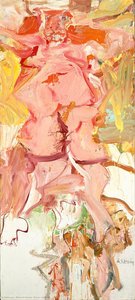
Ζήστε το «Woman I» (1952) του Willem de Kooning. Ένα μνημειώδες αριστούργημα του Αφηρημένου Εξπρεσιονισμού που ξεχειλίζει από ωμή συναισθηματικότητα και ζωντανό χρώμα. Εξερευνήστε τη πολυεπίπεδη τεχνική και τον ισχυρό συμβολισμό του. (1952) του Βίλεμ ντε Κούνινγκ

Ζήστε το «Woman I» (1952) του Willem de Kooning. Ένα μνημειώδες αριστούργημα του Αφηρημένου Εξπρεσιονισμού που ξεχειλίζει από ωμή συναισθηματικότητα και ζωντανό χρώμα. Εξερευνήστε τη πολυεπίπεδη τεχνική και τον ισχυρό συμβολισμό του.

1952 · Άνθρακα και λάδι σε καμβά

Ζωγραφισμένο μεταξύ 1950 και 1952, αυτό το εμβληματικό έργο αποτελεί ένα κορυφαίο επίτευγμα στην περίφημη σειρά “Γυναίκα” του Willem de Kooning. Περισσότερο από ένα απλό πορτρέτο, είναι μια αισθητική εξερεύνηση της γυναικείας μορφής – και, κατ’ επέκταση, μια ωμή απεικόνιση των μεταπολεμικών κοινωνικών ανησυχιών, της κατακερματισμένης ταυτότητας και του πρωτόγονου συναισθήματος.

2
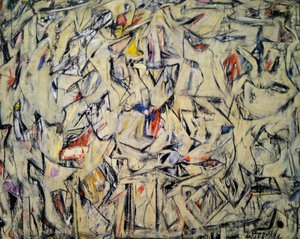
Εξαγώγηση (1950) του Βίλεμ ντε Κούνινγκ

Εξαγώγηση

1950 · Άνθρακα και λάδι σε καμβά · Art Institute of Chicago, Σικάγκο

Το αριστούργημα του 1950, η "Εγκατάσταση" του Willem de Kooning, δεν είναι απλώς ένα έργο τέχνης – είναι μια εγκατάσταση, μια ορμητική ανασκαφή μορφής και συναισθήματος. Αποθεωτημένο στο Μουσείο Τέχνης του Σικάγο, αυτό το τεράστιο έργο αποτελεί καθοριστική στιγμή στην εξέλιξη του Αφηρημένου Εξπρεσιονισμού, σηματοδοτώντας μια αποφασιστική απόδραση από την παραδοσιακή αναπαράσταση και βουτών στα βάθη του εσωτερικού κόσμου του καλλιτέχνη. Περισσότερο από μια απλή αφηρημένη σύνθεση, η "Εγκατάσταση" μας…

3
Η Πύλη Στον Ποταμό (1960) του Βίλεμ ντε Κούνινγκ

Η Πύλη Στον Ποταμό

1960 · Ακρυλικά πάνω σε καμβά

Για όσους επιθυμούν να βιώσουν τη δύναμη και τον δυναμισμό του Βίλεμ Ντε Κούνινγκ στο έργο του «Πέρα από τον Πόρο» πρώτα απ όλα μπορείτε να παρακολουθήσετε υψηλής ποιότητας αναπαραγωγές μέσω AllPaintingsStore.com και AllPaintingsStore.com Επίσης μπορείτε να εξερευνήσετε την καλλιτεχνική πορεία του Ντε Κούνινγκ και τα έργα του όπως το «Ανταλλαγή» στο Wikipedia: Wikipedia.

4
Στατική Συλλογή (1945) του Βίλεμ ντε Κούνινγκ

Στατική Συλλογή

1945 · Άνθρακα και λάδι σε καμβά

Προσωπογραφία της Ενέργειας και της Αίσθησης στην Τέχνη του Βίλλεμ Ντε Κούνινγκ Η Προσθήκη ενός έργου τέχνης όπως η «Προσωπογραφία» του Βίλλεμ Ντε Κούνινγκ από το 1945 είναι μια πραγματική μεταφορά στην καρδιά της Αφηρημένης Εκφραστικής Τέχνης. Αυτή η δημιουργία δεν είναι απλώς ένα καμβά βαμμένος με χρώματα και πούδρες αλλά μια βαθιά εξερεύνηση των συναισθημάτων και των τεχνικών προόδων που οδήγησαν σε μια επανάσταση στην καλλιτεχνική σκηνή της εποχής…

5
Γυναίκες που Καταβάζουν (1966) του Βίλεμ ντε Κούνινγκ

Γυναίκες που Καταβάζουν

1966 · Άνθρακα και λάδι σε καμβά

Η εικονογραφία της «Γυναίκες που Καταβάζουν II» του Βίλλεμ Ντε Κούνινγκ αποτελεί ένα συναρπαστικό παράδειγμα της Αμερικανικής Επανάστασης στην τέχνη και μια εντυπωσιακή ματιά στην ψυχική κατάσταση μιας εποχής γεμάτης πάθος και δημιουργικότητα. Δημιουργημένη το 1966, η σκηνή απεικονίζει τρεις γυναίκες που στέκονται δίπλα στις πλευρές τους στο κέντρο του καμβαζιού και φαίνεται να τραγουδούν μαζί με ενθουσιασμό.

6
Άσβιλ (1948) του Βίλεμ ντε Κούνινγκ

Άσβιλ

1948 · Ακρυλικά πάνω σε καμβά

Το έργο «Άσβιλ» του Willem de Kooning δεν είναι απλώς μια απεικόνιση ενός προσώπου· είναι η ενσάρκωση μιας ψυχολογικής αναταραχής. Ζογραφισμένο το 1948, κατά την κορύφωση της περιόδου του ως Εκστακτικός Αφηρημένος Εκφραστής, το πορτρέτο αλληκολληθεί μια στιγμή έντονης αντιπαράθεσης με τον εαυτό του – μια οπτική αναπαράσταση μιας εσωτερικής πάλης και ανεκπλήρωτων αγωνιών.

7
Marilyn Monroe (1954) του Βίλεμ ντε Κούνινγκ

Marilyn Monroe

1954 · Άνθρακα και λάδι σε καμβά

Created in 1954, Willem de Kooning's *Marilyn Monroe* is not a conventional portrait of the iconic actress. Instead, it’s a visceral and emotionally charged interpretation that reflects the artist’s engagement with popular culture and his signature Abstract Expressionist style. This painting offers a fascinating glimpse into De Kooning’s approach to figuration and his ability to convey complex emotions through abstract means.

8
Η επίσκεψη Tate Gallery (1966) του Βίλεμ ντε Κούνινγκ

Η επίσκεψη Tate Gallery

1966 · Ακρυλικά πάνω σε καμβά

Willem de Kooning’s *The Visit*, acquired by Tate Gallery in 1969, stands as a cornerstone of Abstract Expressionism—a movement that irrevocably altered the landscape of postwar art. This monumental oil painting transcends mere representation; it embodies a profound exploration of emotion and physicality, capturing a moment frozen in time yet brimming with dynamism.

9
Women singing ii tate gallery (1966) του Βίλεμ ντε Κούνινγκ

Women singing ii tate gallery

1966 · Oil On Paper

Three figures emerge from a thicket of paint, their mouths open in a shared, wordless note. The canvas holds a moment caught from a television broadcast, where pop singers once flickered in the glow of 1966. One woman leans toward the left, her face caught in a sudden expression, while another turns her gaze away, lost in the rhythm. A third figure stands near the edge, part of a crowded,…

10
Zurich (1947) του Βίλεμ ντε Κούνινγκ

Zurich

1947 · Oil On Paper

In the annals of mid-century modernism, few works capture the raw, unbridled energy of the post-war era quite like Willem de Kooning’s “Zurich.” Painted in 1947, this masterpiece serves as a profound testament to the dawn of Abstract Expressionism. Rather than offering a literal window into a Swiss cityscape, the work presents a psychological landscape—a swirling, monochromatic vortex that speaks to the fractured consciousness of a world recovering from global…

Τα διάσημα έργα του Βίλεμ ντε Κούνινγκ, από το 11 έως το 100

11Abstraction (1950) του Βίλεμ ντε ΚούνινγκAbstraction1950 12The Acrobat (1942) του Βίλεμ ντε ΚούνινγκThe Acrobat1942 · Munch Museum 13Clam Diggers (1963) του Βίλεμ ντε ΚούνινγκClam Diggers1963 14Seated Woman (1940) του Βίλεμ ντε ΚούνινγκSeated Woman1940 15The Visit (1967) του Βίλεμ ντε ΚούνινγκThe Visit1967 16Woman and Bicycle (1952) του Βίλεμ ντε ΚούνινγκWoman and Bicycle1952 17Gotham News (1955) του Βίλεμ ντε ΚούνινγκGotham News1955 18Suburb in havana (1958) του Βίλεμ ντε ΚούνινγκSuburb in havana1958 19Untitled (10) (1950) του Βίλεμ ντε ΚούνινγκUntitled (10)1950 20Άγνωστο έργο (21) του Βίλεμ ντε ΚούνινγκΆγνωστο έργο (21) 21Seated woman 2,1940, private του Βίλεμ ντε ΚούνινγκSeated woman 2,1940, private 22Σαββατοκύριακο (1956) του Βίλεμ ντε ΚούνινγκΣαββατοκύριακο1956 23Woman V, 1952-53 (oil ^ charcoal on canvas) (1953) του Βίλεμ ντε ΚούνινγκWoman V, 1952-53 (oil ^ charcoal on canvas)1953 24Πίεση (1948) του Βίλεμ ντε ΚούνινγκΠίεση1948 25Two Women in the Country (1954) του Βίλεμ ντε ΚούνινγκTwo Women in the Country1954 26Litho 2 (Waves 2) (1960) του Βίλεμ ντε ΚούνινγκLitho 2 (Waves 2)1960 27Composition του Βίλεμ ντε ΚούνινγκComposition 28Sphinx (1964) του Βίλεμ ντε ΚούνινγκSphinx1964 29Seated Man (1939) του Βίλεμ ντε ΚούνινγκSeated Man1939 30Woman with a Green and Beige Background του Βίλεμ ντε ΚούνινγκWoman with a Green and Beige Background 31Untitled (1950) του Βίλεμ ντε ΚούνινγκUntitled1950 · Art Institute of Chicago 32Untitled (1950) του Βίλεμ ντε ΚούνινγκUntitled1950 33Untitled (1949) του Βίλεμ ντε ΚούνινγκUntitled1949 34Zot (1949) του Βίλεμ ντε ΚούνινγκZot1949 35Woman (1950) του Βίλεμ ντε ΚούνινγκWoman1950 36Untitled III (1981) του Βίλεμ ντε ΚούνινγκUntitled III1981 37Woman (1949) του Βίλεμ ντε ΚούνινγκWoman1949 38Two Standing Women (1963) του Βίλεμ ντε ΚούνινγκTwo Standing Women1963 39Μύθος και Πραγματικότητα (1940) του Βίλεμ ντε ΚούνινγκΜύθος και Πραγματικότητα1940 40Pink Lady (1965) του Βίλεμ ντε ΚούνινγκPink Lady1965 41Two Standing Men (1938) του Βίλεμ ντε ΚούνινγκTwo Standing Men1938 42Seated figure (male classical) (1939) του Βίλεμ ντε ΚούνινγκSeated figure (male classical)1939 43Night (1948) του Βίλεμ ντε ΚούνινγκNight1948 44Standing Man (1942) του Βίλεμ ντε ΚούνινγκStanding Man1942 45Woman, Sag Harbor (1964) του Βίλεμ ντε ΚούνινγκWoman, Sag Harbor1964 46Untitled (17) (1965) του Βίλεμ ντε ΚούνινγκUntitled (17)1965 47Parc rosenberg,1957, private του Βίλεμ ντε ΚούνινγκParc rosenberg,1957, private 48Asheville (1948) του Βίλεμ ντε ΚούνινγκAsheville1948 · The Phillips Collection 49Woman Verso Untitled (1948) του Βίλεμ ντε ΚούνινγκWoman Verso Untitled1948 50Special Delivery (1946) του Βίλεμ ντε ΚούνινγκSpecial Delivery1946 51Queen of Hearts (1946) του Βίλεμ ντε ΚούνινγκQueen of Hearts1946 52White Nude (1967) του Βίλεμ ντε ΚούνινγκWhite Nude1967 53Untitled (1964) του Βίλεμ ντε ΚούνινγκUntitled1964 54Woman with a Hat (1966) του Βίλεμ ντε ΚούνινγκWoman with a Hat1966 55Special Delivery (1946) του Βίλεμ ντε ΚούνινγκSpecial Delivery1946 56Secretary (1948) του Βίλεμ ντε ΚούνινγκSecretary1948 57Ένα Δέντρο στο Νάπολι του Βίλεμ ντε ΚούνινγκΈνα Δέντρο στο Νάπολι 58Summer couch (detail) mid (1900) του Βίλεμ ντε ΚούνινγκSummer couch (detail) mid1900 59With Love (1971) του Βίλεμ ντε ΚούνινγκWith Love1971 60Painting,1950, private του Βίλεμ ντε ΚούνινγκPainting,1950, private 61Untitled (11) (1958) του Βίλεμ ντε ΚούνινγκUntitled (11)1958 62Two trees on Mary Street . . . Amen! (1975) του Βίλεμ ντε ΚούνινγκTwo trees on Mary Street . . . Amen!1975 63Brooding Woman (1965) του Βίλεμ ντε ΚούνινγκBrooding Woman1965 64Woman Red Hair, Large Mouth, Large Foot (1965) του Βίλεμ ντε ΚούνινγκWoman Red Hair, Large Mouth, Large Foot1965 65Meg (1955) του Βίλεμ ντε ΚούνινγκMeg1955 · Dallas Museum of Art 66Figure and Landscape No. 2 (1951) του Βίλεμ ντε ΚούνινγκFigure and Landscape No. 21951 67Landscape at Stanton Street (1971) του Βίλεμ ντε ΚούνινγκLandscape at Stanton Street1971 68Reclining Man (John F. Kennedy) (1963) του Βίλεμ ντε ΚούνινγκReclining Man (John F. Kennedy)1963 69Επαναλαμβάνεται το ίδιο μήνυμα όπως παραπάνω και ζητείται μόνο έγκυρο JSON στην ελληνική γλώσσα χωρίς επιπλέον κείμενο ή σχόλια. Μην δημιουργείτε Markdown ή άλλα μορφοποιημένα στοιχεία.

Η μετάφραση του τίτλου της τέχνης στα ελληνικά είναι: Πύρηνη Νησιωτι (1946) του Βίλεμ ντε ΚούνινγκΕπαναλαμβάνεται το ίδιο μήνυμα όπως παραπάνω και ζητείται μόνο έγκυρο JSON στην ελληνική γλώσσα χωρίς επιπλέον κείμενο ή σχόλια. Μην δημιουργείτε Markdown ή άλλα μορφοποιημένα στοιχεία. Η μετάφραση του τίτλου της τέχνης στα ελληνικά είναι: Πύρηνη Νησιωτι1946 70Untitled (1962) του Βίλεμ ντε ΚούνινγκUntitled1962 71Untitled (23) (1968) του Βίλεμ ντε ΚούνινγκUntitled (23)1968 72Untitled (verso: Untitled) (1959) του Βίλεμ ντε ΚούνινγκUntitled (verso: Untitled)1959 73Γυναίκα (1964) του Βίλεμ ντε ΚούνινγκΓυναίκα1964 74Excavation,1950, art institute of chicago του Βίλεμ ντε ΚούνινγκExcavation,1950, art institute of chicago 75Woman i (detail),1950-52, moma ny του Βίλεμ ντε ΚούνινγκWoman i (detail),1950-52, moma ny 76The Marshes (1971) του Βίλεμ ντε ΚούνινγκThe Marshes1971 77Untitled (woman) (1971) του Βίλεμ ντε ΚούνινγκUntitled (woman)1971 78Untitled (19) (1967) του Βίλεμ ντε ΚούνινγκUntitled (19)1967 79Άγνωστο -2 από Τέσσερις Λιθογραφίες (1986) του Βίλεμ ντε ΚούνινγκΆγνωστο -2 από Τέσσερις Λιθογραφίες1986 80Untitled (14) (1964) του Βίλεμ ντε ΚούνινγκUntitled (14)1964 81Merritt Parkway (1959) του Βίλεμ ντε ΚούνινγκMerritt Parkway1959 82Two Figures (1964) του Βίλεμ ντε ΚούνινγκTwo Figures1964 83The Glazier (1940) του Βίλεμ ντε ΚούνινγκThe Glazier1940 84Detour (1958) του Βίλεμ ντε ΚούνινγκDetour1958 · Bavarian State Painting Collections 85Queen of Hearts (1943) του Βίλεμ ντε ΚούνινγκQueen of Hearts1943 86Untitled XIII (1985) του Βίλεμ ντε ΚούνινγκUntitled XIII1985 · Μουσείο Τέχνης Κλίβελαντ 87Two Woman IV (1952) του Βίλεμ ντε ΚούνινγκTwo Woman IV1952 88Devil at the Keyboard (1976) του Βίλεμ ντε ΚούνινγκDevil at the Keyboard1976 89The Wave του Βίλεμ ντε ΚούνινγκThe Wave 90Άγνωστο I (1981) του Βίλεμ ντε ΚούνινγκΆγνωστο I1981 91Untitled XII (1983) του Βίλεμ ντε ΚούνινγκUntitled XII1983 92Whose Name Was Writ in Water (1975) του Βίλεμ ντε ΚούνινγκWhose Name Was Writ in Water1975 93The Wave (1943) του Βίλεμ ντε ΚούνινγκThe Wave1943 · Smithsonian American Art Museum 94Two Standing Men (1938) του Βίλεμ ντε ΚούνινγκTwo Standing Men1938 · Μετροπολιτικό Μουσείο Τέχνης 95Lily Pond (1959) του Βίλεμ ντε ΚούνινγκLily Pond1959 · Toledo Museum of Art 96Woman VIII (1961) του Βίλεμ ντε ΚούνινγκWoman VIII1961 · Smithsonian American Art Museum 97Woman (1965) του Βίλεμ ντε ΚούνινγκWoman1965 98Woman in the Pool (1968) του Βίλεμ ντε ΚούνινγκWoman in the Pool1968 · Phoenix Art Museum 99Woman (1964) του Βίλεμ ντε ΚούνινγκWoman1964 100Woman (1964) του Βίλεμ ντε ΚούνινγκWoman1964

Τα διάσημα έργα του Βίλεμ ντε Κούνινγκ, ανά περίοδο

Περιόδος Ωριμότητας

1948 – 1966 · 3 έργα σε αυτή τη λίστα

Τα θέματα που κίνησαν το ενδιαφέρον του Βίλεμ ντε Κούνινγκ

Τα τέσσερα θέματα που εμφανίζονται πιο συχνά σε αυτά τα πρωτότυπα έργα, το καθένα με το εξαιρετικό του παράδειγμα.

Τα μουσεία που διατηρούν τα πρωτότυπα έργα του Βίλεμ ντε Κούνινγκ

Τα 8 μουσεία που φιλοξενούν το μεγαλύτερο μέρος των έργων σε αυτήν τη σελίδα.

Μουσείο Πόλη Έργα του Βίλεμ ντε Κούνινγκ Πάτρια από αυτή τη λίστα
Art Institute of Chicago, ΣικάγκοArt Institute of Chicago Σικάγκο 3 Εξαγώγηση, Untitled
Smithsonian American Art Museum, Ουάσινγκτον, D.C.Smithsonian American Art Museum Ουάσινγκτον, D.C. 2 The Wave, Woman VIII
Munch Museum, ΌσλοMunch Museum Όσλο 1 The Acrobat
The Phillips Collection, Ουάσιγκτον, D.C.The Phillips Collection Ουάσιγκτον, D.C. 1 Asheville
Dallas Museum of Art, ΝτάλαςDallas Museum of Art Ντάλας 1 Meg
Bavarian State Painting Collections, ΜόναχοBavarian State Painting Collections Μόναχο 1 Detour
Μουσείο Τέχνης Κλίβελαντ, ΚλίβελαντΜουσείο Τέχνης Κλίβελαντ Κλίβελαντ 1 Untitled XIII
Μετροπολιτικό Μουσείο Τέχνης, Νέα ΥόρκηΜετροπολιτικό Μουσείο Τέχνης Νέα Υόρκη 1 Two Standing Men

Ο Βίλεμ ντε Κούνινγκ μέσα από τις δεκαετίες: ένα μοναδικό πρωτότυπο για κάθε εποχή

Έργα ανά δεκαετία

Επιλέξτε μια δεκαετία για να δείτε το πρωτότυπο έργο που την χαρακτηρίζει.

Οι πίνακες του Βίλεμ ντε Κούνινγκ: ερωτήσεις για την γκαλερί

Ποιο είναι το πιο διάσημο έργο του Βίλεμ ντε Κούνινγκ;Αποκαλύψτε την απάντηση

Το Ζήστε το «Woman I» (1952) του Willem de Kooning. Ένα μνημειώδες αριστούργημα του Αφηρημένου Εξπρεσιονισμού που ξεχειλίζει από ωμή συναισθηματικότητα και ζωντανό χρώμα. Εξερευνήστε τη πολυεπίπεδη τεχνική και τον ισχυρό συμβολισμό του. (1952). Στη συνέχεια ακολουθούν το Εξαγώγηση (1950) και το Η Πύλη Στον Ποταμό (1960).

Σε τι ηλικία δημιούργησε ο/η Βίλεμ ντε Κούνινγκ το έργο Ζήστε το «Woman I» (1952) του Willem de Kooning. Ένα μνημειώδες αριστούργημα του Αφηρημένου Εξπρεσιονισμού που ξεχειλίζει από ωμή συναισθηματικότητα και ζωντανό χρώμα. Εξερευνήστε τη πολυεπίπεδη τεχνική και τον ισχυρό συμβολισμό του.;Αποκαλύψτε την απάντηση

48 ετών: το έργο Ζήστε το «Woman I» (1952) του Willem de Kooning. Ένα μνημειώδες αριστούργημα του Αφηρημένου Εξπρεσιονισμού που ξεχειλίζει από ωμή συναισθηματικότητα και ζωντανό χρώμα. Εξερευνήστε τη πολυεπίπεδη τεχνική και τον ισχυρό συμβολισμό του. είναι του 1952, και ο/η Βίλεμ ντε Κούνινγκ γεννήθηκε το 1904.

Ποια είναι τα δέκα πιο διάσημα έργα του Βίλεμ ντε Κούνινγκ;Αποκαλύψτε την απάντηση

Ζήστε το «Woman I» (1952) του Willem de Kooning. Ένα μνημειώδες αριστούργημα του Αφηρημένου Εξπρεσιονισμού που ξεχειλίζει από ωμή συναισθηματικότητα και ζωντανό χρώμα. Εξερευνήστε τη πολυεπίπεδη τεχνική και τον ισχυρό συμβολισμό του., Εξαγώγηση, Η Πύλη Στον Ποταμό, Στατική Συλλογή, Γυναίκες που Καταβάζουν, Άσβιλ, Marilyn Monroe, Η επίσκεψη Tate Gallery, Women singing ii tate gallery και Zurich. Η κατάταξη παραπάνω αναγράφει το έτος και το μουσείο για το κάθε έργο.

Πόσα έργα του Βίλεμ ντε Κούνινγκ είναι γνωστά;Αποκαλύψτε την απάντηση

Ο κατάλογός μας περιλαμβάνει 117 έργα του Βίλεμ ντε Κούνινγκ, με ημερομηνίες από 1938 έως 1986.

Πού μπορούν να θαυμαστούν τα πιο διάσημα πρωτότυπα έργα του Βίλεμ ντε Κούνινγκ;Αποκαλύψτε την απάντηση

Κυρίως σε Art Institute of Chicago (Σικάγκο), Smithsonian American Art Museum (Ουάσινγκτον, D.C.) και Munch Museum (Όσλο). Ο πίνακας μουσείου παραπάνω τους περιλαμβάνει όλους.

Κατά ποια περίοδο δημιούργησε ο/η Βίλεμ ντε Κούνινγκ τα πιο γνωστά του/της έργα;Αποκαλύψτε την απάντηση

Κατά την περίοδο 1960s: 29 από τα 100 έργα σε αυτήν τη σελίδα δημιουργήθηκαν τότε, με Η Πύλη Στον Ποταμό από αυτά να είναι μοναδικά.

Ποιο διάσημο έργο του Βίλεμ ντε Κούνινγκ είναι το παλαιότερο και ποιο το νεότερο;Αποκαλύψτε την απάντηση

Σε αυτήν τη σελίδα, το παλαιότερο είναι Two Standing Men (1938) και το νεότερο Άγνωστο -2 από Τέσσερις Λιθογραφίες (1986).

Ποια θέματα προτίμησε ο/η Βίλεμ ντε Κούνινγκ;Αποκαλύψτε την απάντηση

Woman (16), American art (14) και Emotional intensity (14), σε συνολικά 100 έργα σε αυτήν τη σελίδα.

Με ποια υλικά χρησιμοποίησε περισσότερο ο Βίλεμ ντε Κούνινγκ;Αποκαλύψτε την απάντηση

Oil On Canvas, για 37 από τα 100 έργα σε αυτήν τη σελίδα.

Ποιο καλλιτεχνικό κίνημα ανήκει το έργο του Βίλεμ ντε Κούνινγκ;Αποκαλύψτε την απάντηση

Αφηρημένος εκφραστισμός, όπως προκύπτει από τα πρωτότυπα σε αυτήν τη σελίδα.

Ποια πρωτότυπα έργα του Βίλεμ ντε Κούνινγκ μπορώ να δω στο Art Institute of Chicago;Αποκαλύψτε την απάντηση

Εξαγώγηση και Untitled: το Art Institute of Chicago, Σικάγκο διαθέτει 2 από τα έργα σε αυτήν τη σελίδα.

Βίλεμ ντε Κούνινγκ: ένα πορτρέτο του καλλιτέχνη

The Life of Willem de Kooning

Rotterdam, 1904. The air in the Netherlands carries the weight of a family in transition. Willem de Kooning enters the world on April 24, born to Leendert de Kooning and Cornelia Nobel. His early years are defined by a familial split, a divorce that leaves a sense of restless searching in its wake. This internal displacement follows him across the Atlantic. In 1926, he arrives in America not as a traveler, but as a stowaway on a British freighter, landing at Newport News, Virginia. He is an outsider looking for a foothold in a new landscape.

The grit of New York City becomes his reality. He navigates the urban sprawl through manual labor, working as a house painter and a carpenter to sustain his vision. This period of survival is not a detour; it is the foundation. He absorbs the pulse of the city, moving from the physical toil of construction to the intense, gestural demands of the canvas. His existence becomes a continuous negotiation between the structured world of his training and the chaotic energy of the New York School.

He remains a central figure in the Abstract Expressionist movement, a presence that persists through decades of stylistic evolution. He moves from the depiction of urban scenes toward a more visceral, fragmented language of form. This trajectory continues until his death on March 19, 1997, at the age of 92. He leaves behind a body of work that reflects a lifelong struggle to articulate the human psyche through paint.

Early Life and Artistic Training

Rotterdam, 1916. The classroom is abandoned. At twelve years old, Willem de Kooning leaves formal schooling behind to enter the world of commercial art. He begins an apprenticeship with a firm of commercial artists, learning the technical mechanics of the trade. The focus is on precision and the practical application of pigment. It is a period of disciplined labor, building a foundation of craftsmanship that remains present even as his later work moves toward abstraction.

The evenings belong to the Academie van Beeldende Kunsten en Technische Wetenschappen. From his teenage years until 1924, he attends these classes in Rotterdam, balancing the demands of work with the study of formal art. He is honing his ability to see, to map form, and to understand the structure of the visual world. By the time he leaves the academy, he is no longer just an apprentice. He is a portrait painter, capturing the likenesses of his subjects with a growing sense of technical command. This period of focused training provides the essential tools for the radical shifts that await him across the Atlantic.

Arrival and Life in New York

The Atlantic crossing is a gamble of shadows. In 1926, de Kooning arrives in the United States not as a passenger, but as a stowaway on the British freighter Shelley. The ship docks at Newport News, Virginia, on August 15, 1926. From there, the momentum shifts toward the grit of New York City. The city provides a landscape of labor and survival. He navigates the urban environment by working as a house painter, a carpenter, and a commercial artist. These manual trades keep him tethered to the physical reality of the city while he pursues his vision.

By 1934, the struggle for recognition takes a more organized form. He joins the Artists Union, a move that places him within the collective energy of the New York art scene. The work is demanding. He moves between the precision of commercial art and the heavy, physical labor of his various jobs. This period is defined by a relentless, daily grind in the city that will eventually become his home. He is an outsider working from within the machinery of New York life.

Key Works and Major Series

The early years of the 1930s find him working through the tension between representation and the emerging abstract impulse. Around 1938, he produces Two Standing Men, a work that captures a sense of the figure before the total dismantling of form takes hold. This period of experimentation leads toward a radical shift in the early 1950s. Between 1950 and 1953, he produces the Woman series, a sequence of paintings that confront the viewer with fragmented, visceral depictions of the female form. These works do not seek to idealize; instead, they use aggressive brushwork to explore the complexities of human emotion and sexuality.

Within this intense period, Woman I emerges, created between 1950 and 1952. The canvas is a site of struggle, where the figure is caught in a web of thick impasto and jarring color. This focus on the human figure eventually gives way to a different kind of spatial tension. By 1955, he completes Interchange. This work marks a departure from the figurative intensity of the previous years, moving toward an expansive, abstract urban landscape. The transition is visible in the way he handles space and color, shifting from the carnal focus of the Woman series to the more architectonic, gestural compositions of the mid-century.

Technique and Artistic Style

The canvas becomes an arena of physical struggle. De Kooning attacks the surface with aggressive brushwork, building up layers of thick impasto that create a heavy, tactile topography. He does not merely apply paint; he manipulates it, often employing a wet-on-wet technique aided by the addition of salad oil to the pigment. This method allows for a fluid, unpredictable interaction between colors, where edges blur and new textures emerge from the constant movement of the brush. His marks are rarely controlled or static. Instead, they are gestural, leaving behind calligraphic black images that slash through the composition with sudden, decisive energy.

He refuses the comfort of a single category. While many of his contemporaries move toward pure abstraction, de Kooning maintains a restless tension between the recognizable and the chaotic. He frequently merges abstraction and figuration, pulling elements of the human form into a fractured, non-linear space. A face might emerge from a tangle of strokes only to be dismantled by the next layer of paint. This refusal to settle on a definitive shape creates a sense of constant becoming. The work exists in a state of perpetual revision, where the act of painting is as much about the struggle to find a form as it is about the form itself.

Influences and Artistic Circles

The shift from representation toward abstraction happens in the company of others. In New York, de Kooning finds a mentor in Arshile Gorky. The relationship is profound; Gorky is the master who pushes him toward experimentation and the dismantling of traditional forms. This connection provides the bridge between de Kooning's early urban landscapes and the visceral abstraction that defines his later years. He moves through a landscape of ideas, absorbing the influence of Stuart Davis and John Graham, whose presence helps steer his vocabulary away from literal depiction.

The visual language he develops is a collision of disparate forces. He draws from the structural lessons of Cubism and the psychological depth of Surrealism. The influence of Picasso is felt in his approach to form, while the work of Franz Kline introduces a new dimension to his practice. From Kline, he adopts a more calligraphic approach, utilizing black and white enamel compositions and gestural marks that replace violent brushstrokes. This evolution marks a departure from his earlier, more heavy-handed methods.

He becomes a central figure within the New York School. This group of artists, including figures like Jackson Pollock and Lee Krasner, redefines the creative epicenter of the art world. They reject the sterile formalism of previous movements, opting instead for a space where the canvas becomes an arena for spontaneous, emotional truth. Within this circle, de Kooning’s work oscillates between the figurative and the abstract, never fully settling into one or the other.

Marriage and Personal Life

The year 1943 marks a shift in the domestic landscape of his life when he marries Elaine Fried. Their union is a complex entanglement of mutual artistic support and personal struggle. They share studio spaces, navigating the high-pressure environment of the New York art scene together. The marriage is characterized by an open relationship and a shared commitment to their respective careers, yet it is also shadowed by the heavy presence of alcoholism. This tension defines their years together, a period of intense creative output and private instability.

In 1956, the family structure expands with the birth of his daughter, Lisa de Kooning. However, the internal fractures in the marriage deepen. By 1957, the couple is separated. The distance between them persists for nearly two decades, a long hiatus in their shared history. The separation remains a constant, even as their professional lives continue to intersect within the same artistic circles. The rift eventually closes in 1976 when he and Elaine reunite.

Legacy and Global Impact

The shift in the center of the art world moves from the traditional salons of Paris to the experimental frontiers of America. De Kooning is at the heart of this transition. As a central figure in the Abstract Expressionist movement, he helps establish New York City as a global center for art. His presence in the New York School helps redefine the visual language of the mid-20th century, moving away from the sterile formalism of previous decades toward a more visceral, gestural approach to the canvas.

His influence reaches far beyond the immediate post-war era. He is considered one of the most important American artists of the 20th century, a status cemented by his ability to bridge the gap between abstraction and figuration. His work continues to provoke debate and inspire awe through its refusal to conform to established norms. The tension between chaos and order remains present in his canvases, challenging viewers to confront the raw, untamed essence of his subjects.