Πορτρέτο του Wang Yuanqi

Τα 22 πιο διάσημα έργα του Wang Yuanqi, μια επιλογή γκαλερί

Ενημερωμένο Νοέμβριος 2026 · κατάταξη βάσει του σκορ δημοφιλίας μας (αναζητήσεις, επισκέψεις και παραγγελίες για κάθε έργο) · 22 έργα του Wang Yuanqi στον κατάλογό μας

Με σύντομη περιγραφή

Από όλα τα πρωτότυπα που άφησε ο Wang Yuanqi, το πιο διάσημο είναι το Landscape for Zhanting (1710). Ακολουθούν στενά η Wangchuan Villa (1711) και η Landscape (1678). Ο κατάλογός μας περιλαμβάνει 22 έργα του Wang Yuanqi· η γκαλερί έχει διατηρήσει τα 22 κομμάτια που θαυμάζει ο κόσμος, το καθένα με την ημερομηνία, το μουσείο και την ιστορία του.

1642 – 1715, Taicang Περισσότερα έργα: Μετροπολιτικό Μουσείο Τέχνης

Τα 10 κορυφαία έργα του Wang Yuanqi: η επιλογή της γκαλερί

1
Landscape for Zhanting (1710) του Wang Yuanqi

Landscape for Zhanting

1710 · Ink

In Landscape for Zhanting, the artist Wang Yuanqi presents a vast mountain range that stretches across the entire width of the silk. Snow-capped peaks rise against the sky, their white summits catching the light amidst the rugged terrain. These mountains form a heavy, continuous boundary that defines the horizon. The scale of the landscape creates a sense of immense depth, pulling the eye through layers of stone and mist.
2
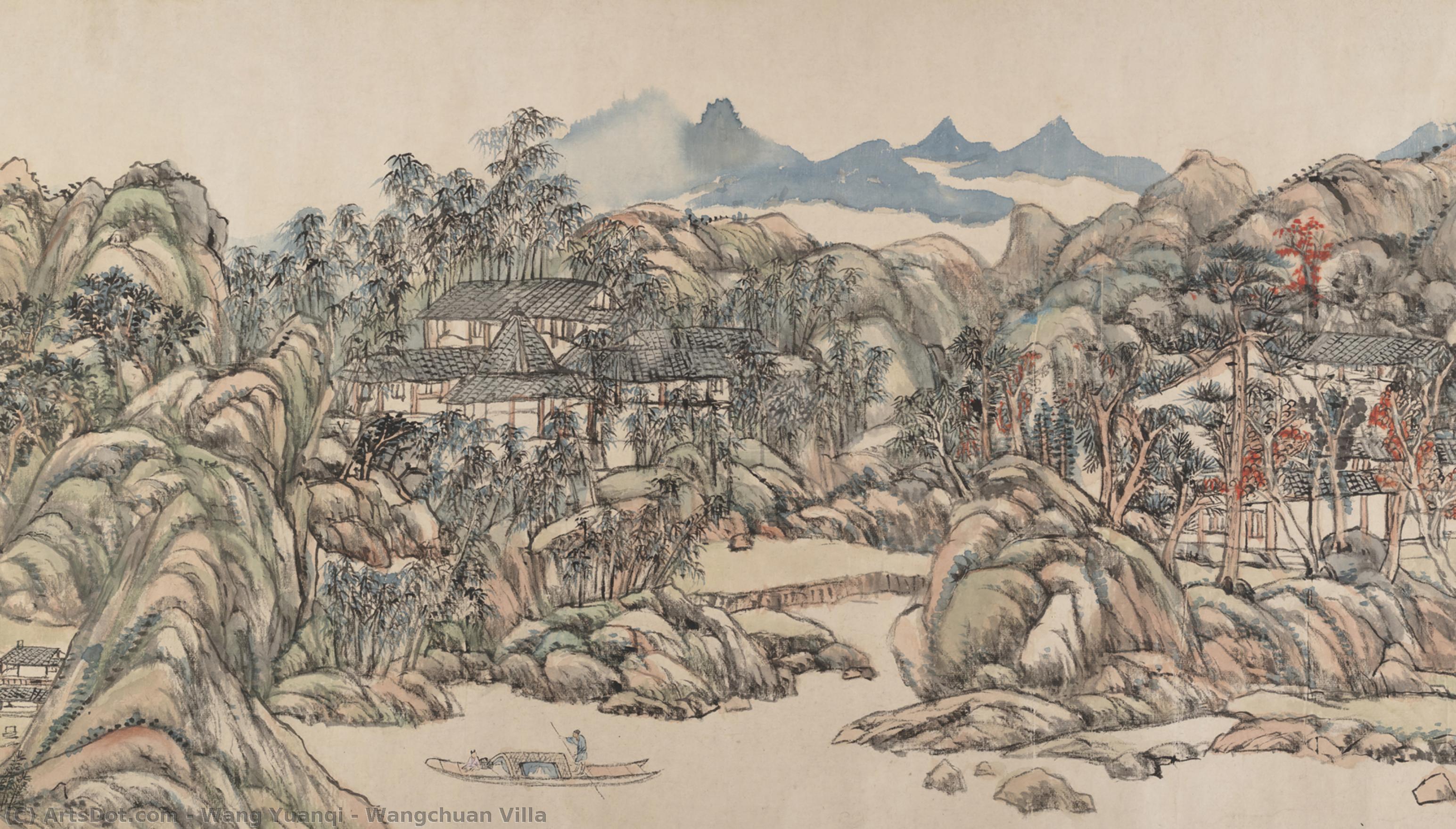
Wangchuan Villa (1711) του Wang Yuanqi

Wangchuan Villa

1711 · Ink On Paper · Μετροπολιτικό Μουσείο Τέχνης, Νέα Υόρκη

The handscroll titled Wangchuan Villa emerges from the brush of Wang Yuanqi, a painter who shaped the landscape traditions of the Qing Dynasty. Born in 1642 in Taicang, Jiangsu province, China, Wang Yuanqi carries the weight of a profound artistic lineage. He moves through the world of ink and color as a leading figure of the Orthodox School. His hand brings life to this specific vision of a mountain community,…

3
Landscape (1678) του Wang Yuanqi

Landscape

1678 · Ink On Paper · Art Institute of Chicago, Σικάγκο

In this vertical and expansive work, Wang Yuanqi organizes a vast, mountainous terrain through a high-distance perspective. The composition directs the eye from foreground rocky outcrops and trees upward through a series of receding mountain ridges. These paths lead toward distant, misty peaks that dissolve into the upper reaches of the frame. Small architectural structures are nestled among the cliffs, providing a sense of scale to the winding paths and…

4
Mountainous Landscape after Wang Meng (1678) του Wang Yuanqi

Mountainous Landscape after Wang Meng

1678 · Ink On Paper · Art Institute of Chicago, Σικάγκο

In Mountainous Landscape after Wang Meng, Wang Yuanqi organizes the vertical space into a series of ascending movements. The composition begins at the base with a detailed foreground of rocky outcrops and tangled trees. From this rugged foundation, the eye travels upward through a sequence of receding mountain ridges. These layers of stone and earth climb toward a towering, central peak that anchors the entire scene. This peak reaches into…

5
Free Spirits Among Streams and Mountains (1684) του Wang Yuanqi

Free Spirits Among Streams and Mountains

1684 · Ink On Paper · Walters Art Museum, Μπάλτιμορ

In 1684, Wang Yuanqi captured a classic depiction of nature in Free Spirits Among Streams and Mountains. The ink settles upon the surface to trace a landscape of rolling peaks and dense groves. Water flows through the composition, a calm body reflecting the stillness of the surrounding terrain. It is a vision of the natural world where the mountains do not merely exist but breathe through the mist.

6
清 王原祁 倣吳鎮山水圖 軸 Landscape after Wu Zhen (1695) του Wang Yuanqi

清 王原祁 倣吳鎮山水圖 軸 Landscape after Wu Zhen

1695 · Ink On Paper · Μετροπολιτικό Μουσείο Τέχνης, Νέα Υόρκη

Created in 1695, this hanging scroll reflects the rigorous traditions of the Qing dynasty. Wang Yuanqi, a central figure of the Orthodox School, looks backward to the Yuan dynasty to move forward. Here, the influence of Wu Zhen is palpable, particularly in the way the landscape is constructed through rhythmic, textured movements. The composition centers on a lofty mountain range, its peaks dusted with snow, rising above a verdant landscape…

7
Landscape for Zhanting (1710) του Wang Yuanqi

Landscape for Zhanting

1710 · Ink On Paper · Μετροπολιτικό Μουσείο Τέχνης, Νέα Υόρκη

The vertical composition of Landscape for Zhanting is dominated by a central mountain mass that rises through the upper half of the scroll. This geological formation is surrounded by undulating hills, rocky outcrops, and clusters of pine trees. The terrain is rendered in a monochromatic palette, utilizing varying shades of ink wash from deep charcoal to pale grey against a light beige substrate. Through the application of cun texture strokes,…

8
Landscape after Ni Zan (1707) του Wang Yuanqi

Landscape after Ni Zan

1707 · Ink On Paper · Μουσείο Τέχνης Κλίβελαντ, Κλίβελαντ

The landscape unfolds before us through the brush of Wang Yuanqi, a painter who lived from 1642 to 1715. In this work, titled Landscape after Ni Zan, the artist reaches back through the centuries to find inspiration in the spirit of the Yuan dynasty. Created in 1707, the painting captures a quiet, scholarly seclusion that feels as present now as it did when the ink first met the silk. It…

10
Landscape after Huang Gongwang (1701) του Wang Yuanqi

Landscape after Huang Gongwang

1701 · Ink · Art Institute of Chicago, Σικάγκο

A vertical expanse of mist holds the mountains in a soft, grey grip. The scene unfolds in layers, guiding the eye from the textured foreground through quiet settlements toward peaks that dissolve into the pale sky. It is a world of monochrome, where the only color is the varying depth of black ink on a light substrate. The air feels heavy with moisture, as if a sudden rain has just…

Η επιλογή του Wang Yuanqi συνεχίζεται, από τον 11 έως τον 22

Τα διάσημα έργα του Wang Yuanqi, ανά περίοδο

Τα θέματα που κίνησαν το ενδιαφέρον του Wang Yuanqi

Τα τέσσερα θέματα που εμφανίζονται πιο συχνά σε αυτά τα πρωτότυπα έργα, το καθένα με το εξαιρετικό του παράδειγμα.

Τα μουσεία που διατηρούν τα πρωτότυπα έργα του Wang Yuanqi

Τα 8 μουσεία που φιλοξενούν το μεγαλύτερο μέρος των έργων σε αυτήν τη σελίδα.

Μουσείο Πόλη Έργα του Wang Yuanqi Πάτρια από αυτή τη λίστα
Μετροπολιτικό Μουσείο Τέχνης, Νέα ΥόρκηΜετροπολιτικό Μουσείο Τέχνης Νέα Υόρκη 7 Wangchuan Villa, 清 王原祁 倣吳鎮山水圖 軸 Landscape after Wu Zhen, Landscape for Zhanting
Art Institute of Chicago, ΣικάγκοArt Institute of Chicago Σικάγκο 3 Landscape, Mountainous Landscape after Wang Meng, Landscape after Huang Gongwang
Μουσείο Τέχνης Κλίβελαντ, ΚλίβελαντΜουσείο Τέχνης Κλίβελαντ Κλίβελαντ 2 Landscape after Ni Zan, Green Peaks under Clear Sky: After Huang Gongwang
Yale University Art Gallery, Νέα ΧέιβενYale University Art Gallery Νέα Χέιβεν 2 Landscape in the Style of Huang Gongwang, Landscape
Walters Art Museum, ΜπάλτιμορWalters Art Museum Μπάλτιμορ 1 Free Spirits Among Streams and Mountains
Detroit Institute of Arts, ΝτιτρόιτDetroit Institute of Arts Ντιτρόιτ 1 Mountain and River Landscape
The Palace Museum, ΠεκίνοThe Palace Museum Πεκίνο 1 Wang Yuanqi's Thatched Cottage Ten Records
Εθνική Πινακοθήκη της Βικτώριας, ΜελβούρνηΕθνική Πινακοθήκη της Βικτώριας Μελβούρνη 1 The Fuchun Mountians

Ο Wang Yuanqi δεκαετία προς δεκαετία: το πρωτότυπο που ορίζει κάθε μία

Έργα ανά δεκαετία

Επιλέξτε μια δεκαετία για να δείτε το πρωτότυπο έργο που την χαρακτηρίζει.

Ερωτήσεις συλλεκτών για τα έργα του Wang Yuanqi

Για ποιο έργο είναι πιο γνωστός ο Wang Yuanqi;Αποκαλύψτε την απάντηση

Το Landscape for Zhanting (1710). Στη συνέχεια ακολουθούν το Wangchuan Villa (1711) και το Landscape (1678).

Πόσο ηλικία είχε ο/η Wang Yuanqi όταν δημιουργήθηκε το Landscape for Zhanting;Αποκαλύψτε την απάντηση

68 ετών: το έργο Landscape for Zhanting είναι του 1710, και ο/η Wang Yuanqi γεννήθηκε το 1642.

Ποια είναι τα δέκα πιο διάσημα έργα του Wang Yuanqi;Αποκαλύψτε την απάντηση

Landscape for Zhanting, Wangchuan Villa, Landscape, Mountainous Landscape after Wang Meng, Free Spirits Among Streams and Mountains, 清 王原祁 倣吳鎮山水圖 軸 Landscape after Wu Zhen, Landscape for Zhanting, Landscape after Ni Zan, Green Peaks under Clear Sky: After Huang Gongwang και Landscape after Huang Gongwang. Η κατάταξη παραπάνω αναγράφει το έτος και το μουσείο για το κάθε έργο.

Πόσα έργα δημιούργησε ο/η Wang Yuanqi;Αποκαλύψτε την απάντηση

Ο κατάλογός μας περιλαμβάνει 22 έργα του Wang Yuanqi, με ημερομηνίες από 1678 έως 1712.

Σε ποια μουσεία εκτίθενται τα αριστούργημα του Wang Yuanqi;Αποκαλύψτε την απάντηση

Κυρίως σε Μετροπολιτικό Μουσείο Τέχνης (Νέα Υόρκη), Art Institute of Chicago (Σικάγκο) και Μουσείο Τέχνης Κλίβελαντ (Κλίβελαντ). Ο πίνακας μουσείου παραπάνω τους περιλαμβάνει όλους.

Σε ποιες χρονιές δημιούργησε ο/η Wang Yuanqi τα πιο διάσημα έργα του/της;Αποκαλύψτε την απάντηση

Κατά την περίοδο 1700s: 5 από τα 22 έργα σε αυτήν τη σελίδα δημιουργήθηκαν τότε, με Landscape after Ni Zan από αυτά να είναι μοναδικά.

Ποια είναι τα πρώτα και τα τελευταία διάσημα πρωτότυπα του Wang Yuanqi;Αποκαλύψτε την απάντηση

Σε αυτήν τη σελίδα, το παλαιότερο είναι Landscape (1678) και το νεότερο Landscape in the Style of Huang Gongwang (1712).

Ποια θέματα επέλεξε πιο συχνά ο Wang Yuanqi;Αποκαλύψτε την απάντηση

Mountains (12), Trees (11) και River (7), σε συνολικά 22 έργα σε αυτήν τη σελίδα.

Ποια τεχνική χρησιμοποίησε περισσότερο ο Wang Yuanqi;Αποκαλύψτε την απάντηση

Ink On Paper, για 9 από τα 22 έργα σε αυτήν τη σελίδα.

Ποια έργα του Wang Yuanqi εκτίθενται στο Μετροπολιτικό Μουσείο Τέχνης;Αποκαλύψτε την απάντηση

Wangchuan Villa, 清 王原祁 倣吳鎮山水圖 軸 Landscape after Wu Zhen και Landscape for Zhanting: το Μετροπολιτικό Μουσείο Τέχνης, Νέα Υόρκη διαθέτει 7 από τα έργα σε αυτήν τη σελίδα.

Wang Yuanqi: ζωή και έργο

Wang Yuanqi: A Master of Qing Dynasty Landscape

Early Life and Education

  • Wang Yuanqi (王原祁) was born in 1642 in Taicang, Jiangsu province, China.
  • He came from a family with a strong artistic tradition; his grandfather, Wang Shimin, was a renowned painter of the early Qing dynasty.
  • Yuanqi received rigorous training in painting from his grandfather, laying the foundation for his future artistic endeavors.
  • His style name was 'Mao-ching' and his sobriquet was 'Lu-t’ai'.

Career as a Court Official

  • Wang Yuanqi rose to prominence as a court official during the Qing dynasty, beginning shortly after its establishment in 1644.
  • He served with distinction and was eventually appointed curator of the imperial collection under the Kangxi Emperor.
  • This position granted him access to a vast array of artworks, further enriching his artistic knowledge and influencing his style.
  • He remained a court official throughout his long career, balancing administrative duties with his passion for painting until his death in 1715 at age 73.

Artistic Style and Influences

  • Wang Yuanqi is considered one of the “Six Masters of the early Qing period,” also known as the ‘Four Wangs, a Wu and a Yun’.
  • He was a leading figure in the 'Orthodox School' (正统派) of Chinese landscape painting.
  • His landscapes drew inspiration from Yuan dynasty artists who moved away from the highly realistic depictions favored during the Northern Song period.
  • A key influence on his work was Huang Gongwang, particularly in the use of dry brush strokes, ink washes, and a sophisticated approach to color.
  • He skillfully integrated color patterns into his compositions, complementing abstract designs with rhythmic color flows.

Major Works and Achievements

  • Notable works include Landscape in the Style of Huang Gongwang (1711), currently held in Singapore’s Asian Civilisations Museum.
  • His rendition of Wang Wei's eighth-century hand scroll, The Wang River Villa, is housed in the Metropolitan Museum of Art, New York City.
  • Other significant paintings include “The Fuchun Mountains”, “Landscape for Zhanting” and numerous landscapes after the Four Great Yuan Masters.
  • He excelled at recreating the styles of earlier masters while imbuing his works with a unique personal touch.

Historical Significance

  • Wang Yuanqi played a crucial role in shaping the development of Chinese landscape painting during the Qing dynasty.
  • His adherence to and refinement of the Orthodox School established a standard for generations of artists.
  • He helped preserve and promote traditional artistic values while also demonstrating innovative techniques in composition and color usage.
  • His work continues to be celebrated for its technical mastery, aesthetic beauty, and historical importance within the context of Chinese art history.