Πορτρέτο του Γιώργος Γιουνγκκούκ

Τα 30 πιο διάσημα έργα του Γιώργος Γιουνγκκούκ, κάθε ένα μοναδικό

Ενημερωμένο Νοέμβριος 2026 · κατάταξη βάσει του σκορ δημοφιλίας μας (αναζητήσεις, επισκέψεις και παραγγελίες για κάθε έργο) · 30 έργα του Γιώργος Γιουνγκκούκ στον κατάλογό μας

Με σύντομη περιγραφή

Το έργο Mountain (1968) είναι το ποίτευμα του Γιώργος Γιουνγκκούκ που τραβάει περισσότερα βλέμματα. Μετά από αυτό, το βλέμμα στρέφεται στο Work και στο Mountain (1960). Ανάμεσα στα 30 έργα του Γιώργος Γιουνγκκούκ στον κατάλογό μας, αυτά τα 30 είναι τα πιο διάσημα, το καθένα ένα μοναδικό πρωτότυπο που παρουσιάζεται με την χρονολογία του, το μουσείο του και τον λόγο για τον οποίο παραμένει αιώνιο.

1916 – 2002, Ευλην Abstract expressionism Περισσότερα έργα: Statens Museum For Kunst

Τα 10 κορυφαία έργα του Γιώργος Γιουνγκκούκ, μέσα από το βλέμμα της γκαλερί

1
Mountain (1968) του Γιώργος Γιουνγκκούκ

Mountain

1968 · Oil On Canvas

Mountain is an artwork created by Yoo Youngkuk. This piece emerged in 1968, a time when the artist was refining a visual language of pure form. Yoo Youngkuk was born in 1916 in Uljin, South Korea, and remained a dedicated presence in the art world until his death in 2002. His practice sought to distill the essence of the landscape into something elemental.

2
Work του Γιώργος Γιουνγκκούκ

Work

Oil On Canvas

In the quietude of this canvas, we find a profound dialogue between the tangible earth and the purity of geometric thought. This particular piece presents a sweeping landscape where the ruggedness of a mountain range is distilled into a rhythmic arrangement of light and shadow. The eye is immediately drawn to the striking, pyramidal silhouette of the peaks, a shape that feels both ancient and avant-garde. Through a masterful command…

5
CIRCLE_A (1968) του Γιώργος Γιουνγκκούκ

CIRCLE_A

1968 · Oil On Canvas

In this 1968 oil on canvas, the canvas is divided by a warm, red field that provides a sense of depth and heat. Two distinct circles occupy the space, positioned in a way that creates a subtle tension between the upper left and the center-right. The first circle is a pale orange, while the second is a deeper, more saturated hue. These forms do not represent physical objects but instead…

6
Work (1968) του Γιώργος Γιουνγκκούκ

Work

1968 · Painting

The painting Work is an abstract composition featuring a prominent red triangle. This central triangular structure has a pointy top and a rounded bottom, with its edges transitioning into warm orange hues. At the heart of the triangle lies a luminous yellow circle, which serves as a focal point. The artwork is executed on canvas and utilizes a palette of red, yellow, and orange.

7
Work (1967) του Γιώργος Γιουνγκκούκ

Work

1967 · Oil On Canvas

The painting titled Work was created by the artist Yoo Youngkuk in 1967. It is a product of a vision shaped by the coastal landscape of Ulchin, South Korea, where the artist was born in 1916. This specific piece emerged from a period of intense formal exploration, long before the artist's death in 2002.

8
Work (1957) του Γιώργος Γιουνγκκούκ

Work

1957 · Oil On Canvas

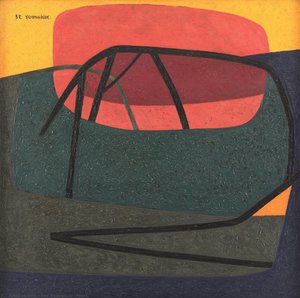
In this masterful 1957 composition, Yoo Youngkuk invites the viewer into a realm where the boundaries between form and emotion dissolve into a striking abstract landscape. The artwork presents a captivating dance of geometric shapes, dominated by a powerful interplay of black, red, and green. At first glance, the eye is met with a sense of profound mystery; the canvas feels like a fragmented window into a structured yet enigmatic…

9
Work (1968) του Γιώργος Γιουνγκκούκ

Work

1968

In the realm of mid-century abstraction, few voices resonate with as much structural purity and rhythmic vitality as that of Yoo Youngkuk. His 1968 masterpiece, Work, serves as a profound testament to his lifelong pursuit of distilling the natural world into its most fundamental geometric essences. At first glance, the viewer is met with a striking, crimson-hued triangle, a central void that commands the eye and anchors the composition. Yet,…

10
Work (1967) του Γιώργος Γιουνγκκούκ

Work

1967 · Oil On Canvas

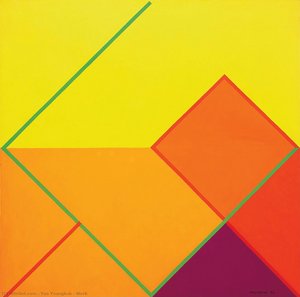
In this mesmerizing 1967 masterpiece, the legendary Korean pioneer Yoo Youngkuk invites us into a realm where the boundaries between landscape and pure abstraction dissolve. At first glance, the eye is immediately captured by a commanding, luminous yellow triangle that anchors the composition with an almost celestial intensity. This central form, bathed in a glow that suggests a light source from below, acts as a beacon of stability amidst a…

Τα διάσημα έργα του Γιώργος Γιουνγκκούκ, από το 11 έως το 30

Τα θέματα που κίνησαν το ενδιαφέρον του Γιώργος Γιουνγκκούκ

Τα τέσσερα θέματα που εμφανίζονται πιο συχνά σε αυτά τα πρωτότυπα έργα, το καθένα με το εξαιρετικό του παράδειγμα.

Τα μουσεία που διατηρούν τα πρωτότυπα έργα του Γιώργος Γιουνγκκούκ

Το μουσείο με τη μεγαλύτερη συγκέντρωση έργων σε αυτήν τη σελίδα.

Μουσείο Πόλη Έργα του Γιώργος Γιουνγκκούκ Πάτρια από αυτή τη λίστα
Statens Museum For Kunst, ΚόπενημαγκςStatens Museum For Kunst Κόπενημαγκς 2 Work, Work

Ο Γιώργος Γιουνγκκούκ μέσα από τις δεκαετίες: ένα μοναδικό πρωτότυπο για κάθε εποχή

Έργα ανά δεκαετία

Επιλέξτε μια δεκαετία για να δείτε το πρωτότυπο έργο που την χαρακτηρίζει.

Οι πίνακες του Γιώργος Γιουνγκκούκ: ερωτήσεις για την γκαλερί

Ποιο είναι το πιο διάσημο έργο του Γιώργος Γιουνγκκούκ;Αποκαλύψτε την απάντηση

Το Mountain (1968). Στη συνέχεια ακολουθούν το Work και το Mountain (1960).

Σε τι ηλικία δημιούργησε ο/η Γιώργος Γιουνγκκούκ το έργο Mountain;Αποκαλύψτε την απάντηση

52 ετών: το έργο Mountain είναι του 1968, και ο/η Γιώργος Γιουνγκκούκ γεννήθηκε το 1916.

Ποια είναι τα δέκα πιο διάσημα έργα του Γιώργος Γιουνγκκούκ;Αποκαλύψτε την απάντηση

Mountain, Work, Mountain, Work, CIRCLE_A, Work, Work, Work, Work και Work. Η κατάταξη παραπάνω αναγράφει το έτος και το μουσείο για το κάθε έργο.

Πόσα έργα του Γιώργος Γιουνγκκούκ είναι γνωστά;Αποκαλύψτε την απάντηση

Ο κατάλογός μας περιλαμβάνει 30 έργα του Γιώργος Γιουνγκκούκ, με ημερομηνίες από 1940 έως 1994.

Πού μπορούν να θαυμαστούν τα πιο διάσημα πρωτότυπα έργα του Γιώργος Γιουνγκκούκ;Αποκαλύψτε την απάντηση

Κυρίως σε Statens Museum For Kunst (Κόπενημαγκς). Ο πίνακας μουσείου παραπάνω τους περιλαμβάνει όλους.

Κατά ποια περίοδο δημιούργησε ο/η Γιώργος Γιουνγκκούκ τα πιο γνωστά του/της έργα;Αποκαλύψτε την απάντηση

Κατά την περίοδο 1960s: 12 από τα 30 έργα σε αυτήν τη σελίδα δημιουργήθηκαν τότε, με Mountain από αυτά να είναι μοναδικά.

Ποιο διάσημο έργο του Γιώργος Γιουνγκκούκ είναι το παλαιότερο και ποιο το νεότερο;Αποκαλύψτε την απάντηση

Σε αυτήν τη σελίδα, το παλαιότερο είναι Work (1940) και το νεότερο Mountain-Blue (1994).

Ποια θέματα προτίμησε ο/η Γιώργος Γιουνγκκούκ;Αποκαλύψτε την απάντηση

Geometric (7), Korean abstraction (4) και Geometric abstraction (3), σε συνολικά 30 έργα σε αυτήν τη σελίδα.

Με ποια υλικά χρησιμοποίησε περισσότερο ο Γιώργος Γιουνγκκούκ;Αποκαλύψτε την απάντηση

Oil On Canvas, για 8 από τα 30 έργα σε αυτήν τη σελίδα.

Ποιο καλλιτεχνικό κίνημα ανήκει το έργο του Γιώργος Γιουνγκκούκ;Αποκαλύψτε την απάντηση

Abstract expressionism και Abstract art, όπως προκύπτει από τα πρωτότυπα σε αυτήν τη σελίδα.

Ποια πρωτότυπα έργα του Γιώργος Γιουνγκκούκ μπορώ να δω στο Statens Museum For Kunst;Αποκαλύψτε την απάντηση

Work και Work: το Statens Museum For Kunst, Κόπενημαγκς διαθέτει 2 από τα έργα σε αυτήν τη σελίδα.

Γιώργος Γιουνγκκούκ: ένα πορτρέτο του καλλιτέχνη

Yoo Youngkuk: A Pioneer of Korean Abstract Art

Yoo Youngkuk (劉永國), often referred to as YYK, stands as a monumental figure in the history of Korean art—the undisputed progenitor of abstract painting and arguably the most influential artist of his generation. Born in 1916 in Uljin-gun, Gangwon Province, Korea, amidst the turbulent backdrop of Japanese colonial rule, Yoo’s artistic journey was marked by resilience, intellectual curiosity, and an unwavering dedication to forging a new visual language for his nation—a task he undertook with remarkable success. His formative years instilled within him a profound connection to the majestic Taebaek Mountains, which would become a recurring motif throughout his oeuvre, subtly shaping his aesthetic sensibilities and informing his artistic vision.
  • Early Life & Education:
  • Tokyo Years & Influences:
  • Sinsasil-pa & The Birth of Korean Abstractism:
  • The Mountain Within: Style Evolution & Symbolic Resonance:
  • Recognition & Legacy:

Tokyo Years & Influences

Following his graduation from Bunka Gakuin University in Tokyo in 1938 with a Bachelor of Fine Arts degree, Yoo immersed himself in the vibrant artistic landscape of Japan—a period profoundly shaped by Western avant-garde movements. Recognizing the transformative potential of encountering groundbreaking ideas and techniques abroad, he actively engaged with pioneering Japanese artists like Murai Masanari and Hasegawa Saburo, figures who championed Suprematism and Constructivism respectively. These encounters ignited Yoo’s intellectual fervor and solidified his commitment to exploring radical artistic propositions—a conviction that would propel him toward experimentation and innovation throughout his career. His participation in the Association of Free Artists (自由美術家協會) further nurtured his engagement with contemporary artistic discourse, fostering a collaborative spirit and propelling him into the vanguard of Japanese abstract art.

Sinsasil-pa & The Birth of Korean Abstractism

Returning to Korea in 1943 amidst escalating tensions surrounding World War II, Yoo joined forces with Kim Whanki and Lee Kyusang to establish Sinsasil-pa (新寫實派), a watershed moment in Korean art history. This collective represented the first concerted effort to liberate Korean painting from traditional representational constraints—a bold undertaking that challenged prevailing artistic conventions and galvanized debate within the Korean art community. Yoo’s manifesto articulated a vision of art as a reflection of Korea's realities, interpreted through the prism of abstraction—a daring stance that signaled a decisive break with established aesthetic traditions. The group’s unwavering pursuit of innovation served as an inspiration for subsequent generations of Korean artists eager to redefine artistic expression.

The Mountain Within: Style Evolution & Symbolic Resonance

Throughout the 1950s and early 60s, Yoo’s stylistic trajectory underwent a significant transformation—characterized by a gradual shift from color field painting toward geometric abstraction. Influenced by his deep appreciation for Korean landscape—particularly the towering Taebaek Mountains—he began to incorporate stylized representations of mountains into his compositions—a motif that would become synonymous with his artistic identity. These paintings transcended mere visual depiction; they embodied Yoo’s profound contemplation of nature's grandeur and resilience—a testament to his ability to distill its essence into pure form and color. His meticulous attention to detail, combined with a masterful command of compositional techniques, elevated his work to the pinnacle of aesthetic achievement.

Recognition & Legacy

Yoo Youngkuk’s contributions to Korean modern art were widely acknowledged during his lifetime—culminating in a comprehensive survey by *Monthly Art* magazine that hailed him as Korea's foremost artist among over a hundred contemporaries. His paintings garnered critical acclaim internationally, securing his position as a leading figure within the global abstract art scene. Beyond his artistic output, Yoo championed the advancement of Korean art education and fostered dialogue between artists and scholars—leaving an indelible mark on the intellectual landscape of his era. Today, Yoo Youngkuk’s legacy continues to inspire artists worldwide—a testament to his unwavering commitment to innovation and his profound connection to Korean culture and heritage. His enduring influence is palpable in the works of countless subsequent generations of Korean painters who strive to emulate his stylistic brilliance and philosophical depth.