Πορτρέτο του Ουίλιαμ Έτυ

Τα 100 πιο διάσημα έργα του Ουίλιαμ Έτυ, κάθε ένα μοναδικό

Ενημερωμένο Οκτώβριος 2026 · κατάταξη βάσει του σκορ δημοφιλίας μας (αναζητήσεις, επισκέψεις και παραγγελίες για κάθε έργο) · 523 έργα του Ουίλιαμ Έτυ στον κατάλογό μας

Με σύντομη περιγραφή

Το έργο Οι Σειρήνες και ο Οδυσσέας είναι το ποίτευμα του Ουίλιαμ Έτυ που τραβάει τα περισσότερα βλέμματα· το πρωτότυπο ανήκει στο Μάντσεστερ Άρτ Γκάλερι, Μάντσεστερ. Μετά από αυτό, το βλέμμα στρέφεται στο Candaules, King of Lydia, Shews his Wife by Stealth to Gyges, One of his Ministers, as She Goes to Bed (1830) και στο Η Γυναίκα-Δούλη (1812). Ανάμεσα στα 523 έργα του Ουίλιαμ Έτυ στον κατάλογό μας, αυτά τα 100 είναι τα πιο διάσημα, το καθένα ένα μοναδικό πρωτότυπο που παρουσιάζεται με την χρονολογία του, το μουσείο του και τον λόγο για τον οποίο παραμένει αιώνιο.

1787 – 1849, Γιορκ Romantic neoclassicism Περισσότερα έργα: Anglesey Abbey

Τα 10 κορυφαία έργα του Ουίλιαμ Έτυ, μέσα από το βλέμμα της γκαλερί

1
Οι Σειρήνες και ο Οδυσσέας του Ουίλιαμ Έτυ

Οι Σειρήνες και ο Οδυσσέας

Άνθρακα και λάδι σε καμβά · Μάντσεστερ Άρτ Γκάλερι, Μάντσεστερ

In the grand tradition of British Romanticism, William Etty’s The Sirens and Ulysses stands as a breathtaking testament to the power of epic storytelling and the raw intensity of human desire. This large-scale oil masterpiece transports the viewer directly into the heart of Homer’s Odyssey, capturing that perilous moment when the hero, Ulysses, must endure the intoxicating, lethal melodies of the Sirens. Etty does not merely illustrate a myth; he…

2
Candaules, King of Lydia, Shews his Wife by Stealth to Gyges, One of his Ministers, as She Goes to Bed (1830) του Ουίλιαμ Έτυ

Candaules, King of Lydia, Shews his Wife by Stealth to Gyges, One of his Ministers, as She Goes to Bed

1830 · Oil

In the evocative masterpiece Candaules, King of Lydia, Shews his Wife by Stealth to Gyges, One of his Ministers, as She Goes to Bed, William Etty invites the viewer into a moment of profound moral transgression and voyeuristic tension. Painted around 1830, this work captures a pivotal scene from Greek legend, where the hubris of King Candaules leads to a breach of intimacy that would forever alter the course of…

3
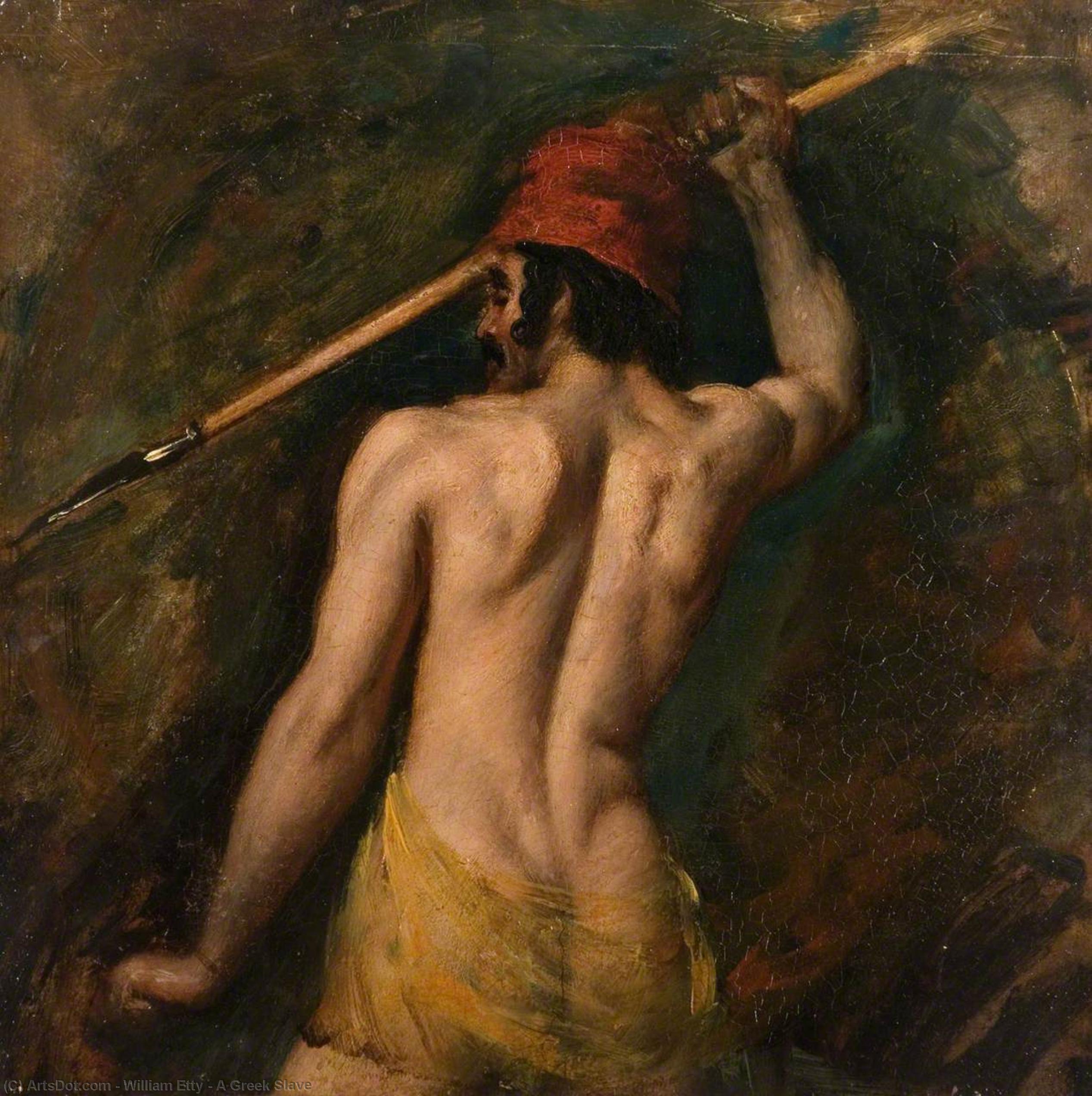
Η Γυναίκα-Δούλη (1812) του Ουίλιαμ Έτυ

Η Γυναίκα-Δούλη

1812 · Άνθρακα και λάδι σε καμβά

Ο ‘Έλληνας Δούλος’ (1812) του William Etty δεν είναι απλώς μια απεικόνιση μιας γυναικείας φιγούρας – αποτελεί μια βαθιά μελέτη για την ανθεκτικότητα, την ευαλωτότητα και τη διαρκή δύναμη της ανθρώπινης ψυχής. Αυτή η εντυπωσιακή ζωγραφική σε λάδι, διαστάσεων 43 x 43 εκ., αμέσως τραβάει τα βλέμματα με το δραματικό φωτισμό και τη συγκεντρωμένη σύνθεσή της. Ο Etty, μια καθοριστική μορφή της βρετανικής τέχνης που πρωτοπορήθηκε στην απεικόνιση των γυναικείων…

4
Άφροδίτη και Αφρόδιτος του Ουίλιαμ Έτυ

Άφροδίτη και Αφρόδιτος

Άνθρακα και λάδι σε καμβά

William Etty’s “Venus and Cupid” is not merely a depiction of classical beauty; it’s a carefully constructed narrative woven with the threads of mythology, human emotion, and the burgeoning spirit of Romanticism. Executed in rich oil paint on canvas, this artwork transports the viewer to a world where divine love and earthly desire intertwine, creating an experience that transcends simple representation.

5
The Three Graces του Ουίλιαμ Έτυ

The Three Graces

In this 1835 oil on millboard, the artist William Etty brings the mythological realm into immediate view. The Three Graces emerge from the shadows, their forms interlacing in a moment of quiet, divine presence. These three goddesses from Greek mythology—Aglaea, known as "Shining"; Euphrosyne, representing "Joy"; and Thalia, called "Blooming"—occupy the space with a sense of natural grace. They exist here not as distant statues, but as living entities caught…

6
Male Nude Sawing του Ουίλιαμ Έτυ

Male Nude Sawing

Oil

The painting depicts a male nude figure engaged in the act of sawing. Positioned on the right side of the canvas, the figure is shown with his back turned to the viewer, a pose that reveals muscular definition and a sense of movement through a dynamic posture. His left arm is extended upwards, while his right arm is bent at the elbow, holding the saw. The background consists of a…

7
Nude Female Figure (1840) του Ουίλιαμ Έτυ

Nude Female Figure

1840 · Oil

In the evocative masterpiece Nude Female Figure, painted in 1840, William Etty invites the viewer into a private, intimate moment that transcends mere observation to become an exploration of human vitality. The composition centers on the graceful silhouette of a woman, her back turned toward the observer, creating a sense of profound mystery and voyeuristic elegance. As she stands near a simple chair or bench, the light dances across the…

8
The Doves του Ουίλιαμ Έτυ

The Doves

Oil On Canvas

In The Doves, William Etty turns his gaze toward a quiet communion between human and avian life. The painting captures a woman in profile, her body turned toward the left, as she engages in a tender interaction with a group of doves. They gather within a nest or a natural setting, their soft forms pressing against her. This intimate arrangement focuses entirely on the connection between the woman and the…

9
Self-Portrait (1823) του Ουίλιαμ Έτυ

Self-Portrait

1823 · Oil On Paper · Yale Center for British Art, New Haven

William Etty painted this Self-Portrait in 1823 during his first visit to Venice. The work captures the artist in a moment of quiet study, depicted reading an opened letter. This correspondence is addressed to Walter—Monsieur Etty—at 31 Lombard Street, London, suggesting a personal connection to his brother during his Venetian sojourn.

10
John Thornton (1830) του Ουίλιαμ Έτυ

John Thornton

1830 · Oil On Canvas · Merchant Adventurers’ Hall, York

The oil painting titled John Thornton is a formal portrait executed by the artist William Etty. Created in 1830, the work depicts John Thornton, a prominent Welsh sculptor. The subject is presented in a bust-length composition, focusing on the head and upper torso of the individual. This portrait captures the likeness of Thornton through a direct and steady gaze directed toward the viewer.

Τα διάσημα έργα του Ουίλιαμ Έτυ, από το 11 έως το 100

11Cupid and Psyche (1821) του Ουίλιαμ ΈτυCupid and Psyche1821 · Minneapolis Institute of Art 12Bacchante with Tambourine (1825) του Ουίλιαμ ΈτυBacchante with Tambourine1825 13Eve, Study of a Nude Woman (1835) του Ουίλιαμ ΈτυEve, Study of a Nude Woman1835 14Male Head (1833) του Ουίλιαμ ΈτυMale Head1833 · Rhode Island School of Design Museum of Art 15The Bowman (1830) του Ουίλιαμ ΈτυThe Bowman1830 · New Walk Museum - Art Gallery 16The Indian Girl (1845) του Ουίλιαμ ΈτυThe Indian Girl1845 17John Harper (1841) του Ουίλιαμ ΈτυJohn Harper1841 · York Museums Trust 18The Wrestlers (1849) του Ουίλιαμ ΈτυThe Wrestlers1849 19Self-Portrait (1825) του Ουίλιαμ ΈτυSelf-Portrait1825 · Μουσεία Τέχνης του Χάρβαρντ 20Study of a bearded male nude (1849) του Ουίλιαμ ΈτυStudy of a bearded male nude1849 21John Thornton (1830) του Ουίλιαμ ΈτυJohn Thornton1830 · Merchant Adventurers’ Hall 22Male Nude - του Ουίλιαμ ΈτυMale Nude -York Art Gallery 23Study of a Man's Head (1841) του Ουίλιαμ ΈτυStudy of a Man's Head1841 24S. A. Bayntum, MP for York (1830–1832) (1830) του Ουίλιαμ ΈτυS. A. Bayntum, MP for York (1830–1832)1830 · Fairfax House 25Two Standing Male Nudes του Ουίλιαμ ΈτυTwo Standing Male Nudes 26Study of Female Nude (1830) του Ουίλιαμ ΈτυStudy of Female Nude1830 27Man with an Arrow (1820) του Ουίλιαμ ΈτυMan with an Arrow1820 · Scarborough Museums Trust 28Study for "The Combat" του Ουίλιαμ ΈτυStudy for "The Combat"Μουσεία Τέχνης του Χάρβαρντ 29A Naiad (copy of Peter Paul Rubens, detail from 'The Arrival of Marie de Medici at Marseilles') (1824) του Ουίλιαμ ΈτυA Naiad (copy of Peter Paul Rubens, detail from 'The Arrival of Marie de Medici at Marseilles')1824 · Royal Scottish Academy of Art - Architecture 30Sabrina and Her Nymphs (1841) του Ουίλιαμ ΈτυSabrina and Her Nymphs1841 · New Walk Museum - Art Gallery 31Figure of a Seated Man (1830) του Ουίλιαμ ΈτυFigure of a Seated Man1830 · Fairfax House 32Figure of a Seated Man (1830) του Ουίλιαμ ΈτυFigure of a Seated Man1830 · Fairfax House 33Youth At The Prow του Ουίλιαμ ΈτυYouth At The Prow 34Male Nude - του Ουίλιαμ ΈτυMale Nude - 35Standing Female Nude του Ουίλιαμ ΈτυStanding Female Nude 36Study Of A Young Boy του Ουίλιαμ ΈτυStudy Of A Young Boy 37Sleeping Nymphs And Satyrs του Ουίλιαμ ΈτυSleeping Nymphs And Satyrs 38Reclining Nude του Ουίλιαμ ΈτυReclining Nude 39Bather Turned To The Left του Ουίλιαμ ΈτυBather Turned To The Left 40Nude του Ουίλιαμ ΈτυNude 41The Deluge του Ουίλιαμ ΈτυThe Deluge 42An Israelite του Ουίλιαμ ΈτυAn Israelite 43Seated Female Nude (verso) (1845) του Ουίλιαμ ΈτυSeated Female Nude (verso)1845 · Γκαλερί Κουάρτλουντ 44Academic Study Of A Male Nude, Seen From Behind του Ουίλιαμ ΈτυAcademic Study Of A Male Nude, Seen From BehindAnglesey Abbey 45Academic Study Of A Male Nude As A Standard Bearer του Ουίλιαμ ΈτυAcademic Study Of A Male Nude As A Standard BearerAnglesey Abbey 46Study Of A Female Nude του Ουίλιαμ ΈτυStudy Of A Female Nude 47Study Of Male Nude του Ουίλιαμ ΈτυStudy Of Male Nude 48Reclining Male Nude, Raised Right Knee του Ουίλιαμ ΈτυReclining Male Nude, Raised Right Knee 49Cleopatra's Arrival In Cilicia του Ουίλιαμ ΈτυCleopatra's Arrival In CiliciaLady Lever Art Gallery 50Back View of a Standing Male Nude in a Boat (1819) του Ουίλιαμ ΈτυBack View of a Standing Male Nude in a Boat1819 · Rhode Island School of Design Museum of Art 51Arabella Morris (1818) του Ουίλιαμ ΈτυArabella Morris1818 52Study of Male Nude (1820) του Ουίλιαμ ΈτυStudy of Male Nude1820 53Seated Female Nude (1825) του Ουίλιαμ ΈτυSeated Female Nude1825 · Rhode Island School of Design Museum of Art 54Nude Study (1824) του Ουίλιαμ ΈτυNude Study1824 · Εθνική Πινακοθήκη του Καναδά 55Love's Angling, (1831) του Ουίλιαμ ΈτυLove's Angling,1831 56The Bather (1830) του Ουίλιαμ ΈτυThe Bather1830 57Guardsman Higgins (1830) του Ουίλιαμ ΈτυGuardsman Higgins1830 58Hero, Having Thrown herself from the Tower at the Sight of Leander Drowned, Dies on his Body (1829) του Ουίλιαμ ΈτυHero, Having Thrown herself from the Tower at the Sight of Leander Drowned, Dies on his Body1829 59A Bacchante and a Young Faun dancing in a Bacchic Setting (1837) του Ουίλιαμ ΈτυA Bacchante and a Young Faun dancing in a Bacchic Setting1837 · Anglesey Abbey 60Christ Appearing to Mary Magdalene after the Resurrection (1834) του Ουίλιαμ ΈτυChrist Appearing to Mary Magdalene after the Resurrection1834 61The Indian Girl (1845) του Ουίλιαμ ΈτυThe Indian Girl1845 62Head of a Cardinal (1844) του Ουίλιαμ ΈτυHead of a Cardinal1844 63Dead Pheasant (1842) του Ουίλιαμ ΈτυDead Pheasant1842 64John Harper (1841) του Ουίλιαμ ΈτυJohn Harper1841 65Head of a Monk (1842) του Ουίλιαμ ΈτυHead of a Monk1842 66Self Portrait (1845) του Ουίλιαμ ΈτυSelf Portrait1845 67Head of a Cardinal (1844) του Ουίλιαμ ΈτυHead of a Cardinal1844 68Head of a Monk (1842) του Ουίλιαμ ΈτυHead of a Monk1842 69Prometheus (1820) του Ουίλιαμ ΈτυPrometheus1820 70Guardsman Higgins (1830) του Ουίλιαμ ΈτυGuardsman Higgins1830 71A Greek Slave (1812) του Ουίλιαμ ΈτυA Greek Slave1812 72Nude Study του Ουίλιαμ ΈτυNude StudyΕθνική Γκαλερί της Ιρλανδίας 73The Assumption of the Virgin του Ουίλιαμ ΈτυThe Assumption of the Virgin 74Reclining Female Nude by a Waterfall του Ουίλιαμ ΈτυReclining Female Nude by a Waterfall 75Portrait of Elizabeth Singleton του Ουίλιαμ ΈτυPortrait of Elizabeth Singleton 76Two Female Bathers του Ουίλιαμ ΈτυTwo Female Bathers 77Venus Relieving Cupid of His Bow του Ουίλιαμ ΈτυVenus Relieving Cupid of His Bow 78A Bacchanalian Revel του Ουίλιαμ ΈτυA Bacchanalian Revel 79Head of a Young Girl του Ουίλιαμ ΈτυHead of a Young GirlTe Whare O Rehua Sarjeant Gallery 80Life Study του Ουίλιαμ ΈτυLife Study 81Arabella Morris του Ουίλιαμ ΈτυArabella Morris 82Nature Unveiling Herself του Ουίλιαμ ΈτυNature Unveiling Herself 83The Doves του Ουίλιαμ ΈτυThe Doves 84Study Of A Reclining Nude του Ουίλιαμ ΈτυStudy Of A Reclining Nude 85The Mourner του Ουίλιαμ ΈτυThe Mourner 86Seated Female Nude του Ουίλιαμ ΈτυSeated Female Nude 87John Thornton του Ουίλιαμ ΈτυJohn Thornton 88The Saviour Or The Disciple του Ουίλιαμ ΈτυThe Saviour Or The Disciple 89Nude Woman Kneeling - του Ουίλιαμ ΈτυNude Woman Kneeling - 90La Bella του Ουίλιαμ ΈτυLa Bella 91Two Standing Female Nudes του Ουίλιαμ ΈτυTwo Standing Female Nudes 92Male Nude With Right Arm Raised του Ουίλιαμ ΈτυMale Nude With Right Arm Raised 93Innocence - Head Of A Young Girl του Ουίλιαμ ΈτυInnocence - Head Of A Young Girl 94Venus And Cupid - του Ουίλιαμ ΈτυVenus And Cupid -York Art Gallery 95Female Nude, Three-quarter-length, Beside Her Left An Apple Tree του Ουίλιαμ ΈτυFemale Nude, Three-quarter-length, Beside Her Left An Apple Tree 96Mira του Ουίλιαμ ΈτυMira 97Woman With Doves του Ουίλιαμ ΈτυWoman With Doves 98Reverend william jay του Ουίλιαμ ΈτυReverend william jay 99Nude του Ουίλιαμ ΈτυNude 100Cupid Disarmed του Ουίλιαμ ΈτυCupid Disarmed

Τα διάσημα έργα του Ουίλιαμ Έτυ, ανά περίοδο

Τα θέματα που κίνησαν το ενδιαφέρον του Ουίλιαμ Έτυ

Τα τέσσερα θέματα που εμφανίζονται πιο συχνά σε αυτά τα πρωτότυπα έργα, το καθένα με το εξαιρετικό του παράδειγμα.

Τα μουσεία που διατηρούν τα πρωτότυπα έργα του Ουίλιαμ Έτυ

Τα 8 μουσεία που φιλοξενούν το μεγαλύτερο μέρος των έργων σε αυτήν τη σελίδα.

Μουσεία Πόλη Έργα του Ουίλιαμ Έτυ Πάτρια από αυτή τη λίστα
Anglesey AbbeyAnglesey Abbey 17 Academic Study Of A Male Nude, Seen From Behind, Academic Study Of A Male Nude As A Standard Bearer, A Bacchante and a Young Faun dancing in a Bacchic Setting
Fairfax House, YorkFairfax House York 4 S. A. Bayntum, MP for York (1830–1832), Figure of a Seated Man, Figure of a Seated Man
Rhode Island School of Design Museum of Art, ProvidenceRhode Island School of Design Museum of Art Providence 3 Male Head, Back View of a Standing Male Nude in a Boat, Seated Female Nude
York Art Gallery, YorkYork Art Gallery York 14 Male Nude -, Venus And Cupid -
Merchant Adventurers’ Hall, YorkMerchant Adventurers’ Hall York 2 John Thornton, John Thornton
New Walk Museum - Art Gallery, LeicesterNew Walk Museum - Art Gallery Leicester 2 The Bowman, Sabrina and Her Nymphs
Μουσεία Τέχνης του Χάρβαρντ, ΚέιμπριτζΜουσεία Τέχνης του Χάρβαρντ Κέιμπριτζ 2 Self-Portrait, Study for "The Combat"
Γκαλερί Κουάρτλουντ, ΛονδίνοΓκαλερί Κουάρτλουντ Λονδίνο 4 Seated Female Nude (verso)

Ο Ουίλιαμ Έτυ μέσα από τις δεκαετίες: ένα μοναδικό πρωτότυπο για κάθε εποχή

Έργα ανά δεκαετία

Επιλέξτε μια δεκαετία για να δείτε το πρωτότυπο έργο που την χαρακτηρίζει.

Οι πίνακες του Ουίλιαμ Έτυ: ερωτήσεις για την γκαλερί

Ποιο είναι το πιο διάσημο έργο του Ουίλιαμ Έτυ;Αποκαλύψτε την απάντηση

Οι Σειρήνες και ο Οδυσσέας, Μάντσεστερ Άρτ Γκάλερι, Μάντσεστερ. Στη συνέχεια ακολουθούν το Candaules, King of Lydia, Shews his Wife by Stealth to Gyges, One of his Ministers, as She Goes to Bed (1830) και το Η Γυναίκα-Δούλη (1812).

Ποια είναι τα δέκα πιο διάσημα έργα του Ουίλιαμ Έτυ;Αποκαλύψτε την απάντηση

Οι Σειρήνες και ο Οδυσσέας, Candaules, King of Lydia, Shews his Wife by Stealth to Gyges, One of his Ministers, as She Goes to Bed, Η Γυναίκα-Δούλη, Άφροδίτη και Αφρόδιτος, The Three Graces, Male Nude Sawing, Nude Female Figure, The Doves, Self-Portrait και John Thornton. Η κατάταξη παραπάνω αναγράφει το έτος και το μουσείο για το κάθε έργο.

Πόσα έργα του Ουίλιαμ Έτυ είναι γνωστά;Αποκαλύψτε την απάντηση

Ο κατάλογός μας περιλαμβάνει 523 έργα του Ουίλιαμ Έτυ, με ημερομηνίες από 1812 έως 1849.

Πού μπορούν να θαυμαστούν τα πιο διάσημα πρωτότυπα έργα του Ουίλιαμ Έτυ;Αποκαλύψτε την απάντηση

Κυρίως σε Anglesey Abbey, Fairfax House (York) και Rhode Island School of Design Museum of Art (Providence). Ο πίνακας μουσείου παραπάνω τους περιλαμβάνει όλους.

Κατά ποια περίοδο δημιούργησε ο/η Ουίλιαμ Έτυ τα πιο γνωστά του/της έργα;Αποκαλύψτε την απάντηση

Κατά την περίοδο 1830s: 16 από τα 100 έργα σε αυτήν τη σελίδα δημιουργήθηκαν τότε, με Candaules, King of Lydia, Shews his Wife by Stealth to Gyges, One of his Ministers, as She Goes to Bed από αυτά να είναι μοναδικά.

Ποιο διάσημο έργο του Ουίλιαμ Έτυ είναι το παλαιότερο και ποιο το νεότερο;Αποκαλύψτε την απάντηση

Σε αυτήν τη σελίδα, το παλαιότερο είναι Η Γυναίκα-Δούλη (1812) και το νεότερο The Wrestlers (1849).

Ποια θέματα προτίμησε ο/η Ουίλιαμ Έτυ;Αποκαλύψτε την απάντηση

Nude figure (19), Nudes (12) και Portrait (11), σε συνολικά 100 έργα σε αυτήν τη σελίδα.

Με ποια υλικά χρησιμοποίησε περισσότερο ο Ουίλιαμ Έτυ;Αποκαλύψτε την απάντηση

Oil, για 11 από τα 100 έργα σε αυτήν τη σελίδα.

Ποιο καλλιτεχνικό κίνημα ανήκει το έργο του Ουίλιαμ Έτυ;Αποκαλύψτε την απάντηση

Romantic neoclassicism, όπως προκύπτει από τα πρωτότυπα σε αυτήν τη σελίδα.

Ποια πρωτότυπα έργα του Ουίλιαμ Έτυ μπορώ να δω στο Anglesey Abbey;Αποκαλύψτε την απάντηση

Academic Study Of A Male Nude, Seen From Behind, Academic Study Of A Male Nude As A Standard Bearer και A Bacchante and a Young Faun dancing in a Bacchic Setting: το Anglesey Abbey διαθέτει 3 από τα έργα σε αυτήν τη σελίδα.

Πού μπορώ να παραγγείλω μια χειροποίητη αναπαραγωγή του Ουίλιαμ Έτυ;Αποκαλύψτε την απάντηση

Ναι, ως αναπαραγωγή: το πρωτότυπο παραμένει στο μουσείο του, αλλά οποιαδήποτε ζωγραφιά σε αυτή την σελίδα μπορεί να ζωγραφιστεί στο χέρι για εσάς, σε παραγγελία, μία προς μία, από την ίδια τη σελίδα του έργου.

Ουίλιαμ Έτυ: ένα πορτρέτο του καλλιτέχνη

The Early Life and Training of William Etty

To understand the technical precision of William Etty, one must look past the controversy of his later subjects to his disciplined, mechanical beginnings. Born on March 10, 1787, in York, United Kingdom, he was the seventh child of Matthew and Esther Etty. His path toward fine art was not immediate or intuitive; instead, it was forged through the rigid structure of a trade. At age 11, on 8 October 1798, he was apprenticed as a printer in Hull. This seven-year apprenticeship provided a grounding in the practicalities of visual reproduction, a stark departure from the academic circles he would eventually inhabit.

The transition from the printing house to the studio was a decisive shift in his development. In 1807, William Etty joined the Royal Academy Schools, moving from the mechanical world of typography into the rigorous environment of formal art education. His training was not limited to the classroom; he spent one year as a private pupil under Thomas Lawrence. This period of intense study provided the anatomical foundation and technical control that would define his career. He did not rely on mere talent, but on the systematic acquisition of skill through direct mentorship and institutional discipline.

Artistic Style and Technical Mastery

Etty’s technical approach was defined by a rigorous command of light and texture. He achieved a realistic rendering of flesh through a masterful technique of tonal modeling, achieved by layering thin glazes of pigment. This method allowed him to build depth and nuance in skin tones, a skill that made him the first significant British painter of nudes. His versatility extended to various media, including oil on millboard, oil on panel, drawing in chalk, charcoal, pen, and ink. He did not rely on a single method but adapted his tools to the specific demands of the subject, whether capturing the musculature of a male figure or the delicate surface of a still life.

His specialization in the nude was a departure from the prevailing British traditions of his time. He was the first English painter to focus so consistently on the human form, treating the body with anatomical precision rather than as a mere decorative element. This commitment to the physical reality of the body was matched by his engagement with still life. As the first English painter to seriously engage with the genre, he applied the same sensitivity to texture and materiality to objects as he did to human anatomy. His ability to manipulate light and shadow through glazing ensured that both his figures and his objects possessed a tangible, physical presence.

The Rise of Controversy and Success

Etty’s breakthrough arrived in 1821 with Cleopatra's Arrival in Cilicia. The work ignited a dual reaction that would define his career: widespread acclaim for its technical execution and immediate scandal regarding its subject matter. By populating his canvases with nude figures, he stepped directly into a cultural minefield. His focus on the human form was not merely a stylistic choice but a provocation to the moral sensibilities of the era.

The friction between his talent and his reputation was constant. Critics frequently attacked his depictions of the nude for a perceived lack of idealization. Rather than adhering to the polished, detached standards of classical perfection, Etty pursued a realism that felt uncomfortably immediate. This commitment to anatomical truth often drew accusations of indecency, yet it was this very refusal to sanitize the body that secured his place in the history of British art. His ability to render flesh tones with such precision made his work impossible to ignore, even when it was being condemned.

Despite the persistent whispers of impropriety, his professional ascent remained steady. In 1828, he was elected a Royal Academician, a move that solidified his status within the established art world. He had successfully navigated the tension between being a provocateur and an institutional mainstay. He proved that an artist could maintain high-level professional standing while simultaneously challenging the visual boundaries of his time.

Key Works and Major Compositions

Etty’s reputation was forged through works that forced the public to confront the physical reality of the human body. His 1821 painting, Cleopatra's Arrival in Cilicia, acted as a catalyst for both acclaim and scandal. By populating the scene with nude women bathing and gossiping, he moved beyond mere historical illustration into a territory of intense, often uncomfortable, realism. This focus on the flesh became his primary mode of expression, often pushing the boundaries of what Victorian sensibilities would tolerate.

The artist’s ability to handle complex anatomical arrangements is evident in The Three Graces, painted around 1830–1835. In this work, the interlacing bodies of the three goddesses create a tight, sensual composition that emphasizes the materiality of skin. This was not a distant, idealized depiction; it was a direct, almost moist representation of the female form. Similarly, The Sirens and Ulysses, executed in 1837, demonstrates his command over dramatic composition and the muscularity of the human figure within a mythological framework.

Even in his later years, Etty continued to explore the tension between light and anatomy. The Wrestlers, painted around 1840, depicts a match between a black man and a white man. The figures are rendered with a heavy emphasis on sweat and the way light catches the curves and musculature of the straining bodies. This work highlights his technical ability to use light to define physical exertion and volume.

Legacy and Artistic Rediscovery

The historical weight of Etty's work did not immediately translate into long-term stability. Following his death in 1849, his paintings fell into relative obscurity. Shifting tastes and the rigid moral codes of the Victorian era pushed his focus on the human form to the margins of critical interest. For decades, his reputation remained sidelined, largely forgotten by the mainstream art establishment.

A significant shift occurred at the turn of the 21st century. His inclusion in Tate Britain’s Exposed: The Victorian Nude exhibition between 2001 and 2002 sparked a necessary renewed interest in his technical approach to the body. This momentum continued when the 2010 restoration of The Sirens and Ulysses revealed the actual brilliance of his technique, cementing a modern revival of his reputation. This was not a mere academic exercise; it was a reassessment of his actual impact on British art history.

The resurgence reached a peak with a major retrospective of his work held at the York Art Gallery in 2011–12. This period of reevaluation moved him from the periphery back into serious discussion. His ability to render realistic flesh tones and anatomical detail remains the primary reason his work demands attention today. He is no longer dismissed as a mere provocateur but is recognized for his specific, unflinching commitment to the human form.

Where to See the Works Today

Etty’s physical presence in modern collections remains significant, though his distribution is uneven. In London, the Courtauld Gallery maintains a strong hold on his output with four works in its collection. For those seeking his more intimate studies or specific character studies, Fairfax House in York preserves four of his paintings. These pieces offer a direct look at the technical precision he applied to the human form, away from the larger-scale historical compositions.

His reach extends beyond the United Kingdom into mainland Europe. The Louvre in Paris holds two of his works, ensuring his influence is felt within major international institutions. In the United Kingdom, the National Trust in Cambridge also maintains a presence with three works. To see his work in its most concentrated regional context, one must look to the York Art Gallery, which houses The Wrestlers, a piece painted around 1840.

Όλα τα 523 έργα του Ουίλιαμ Έτυ →