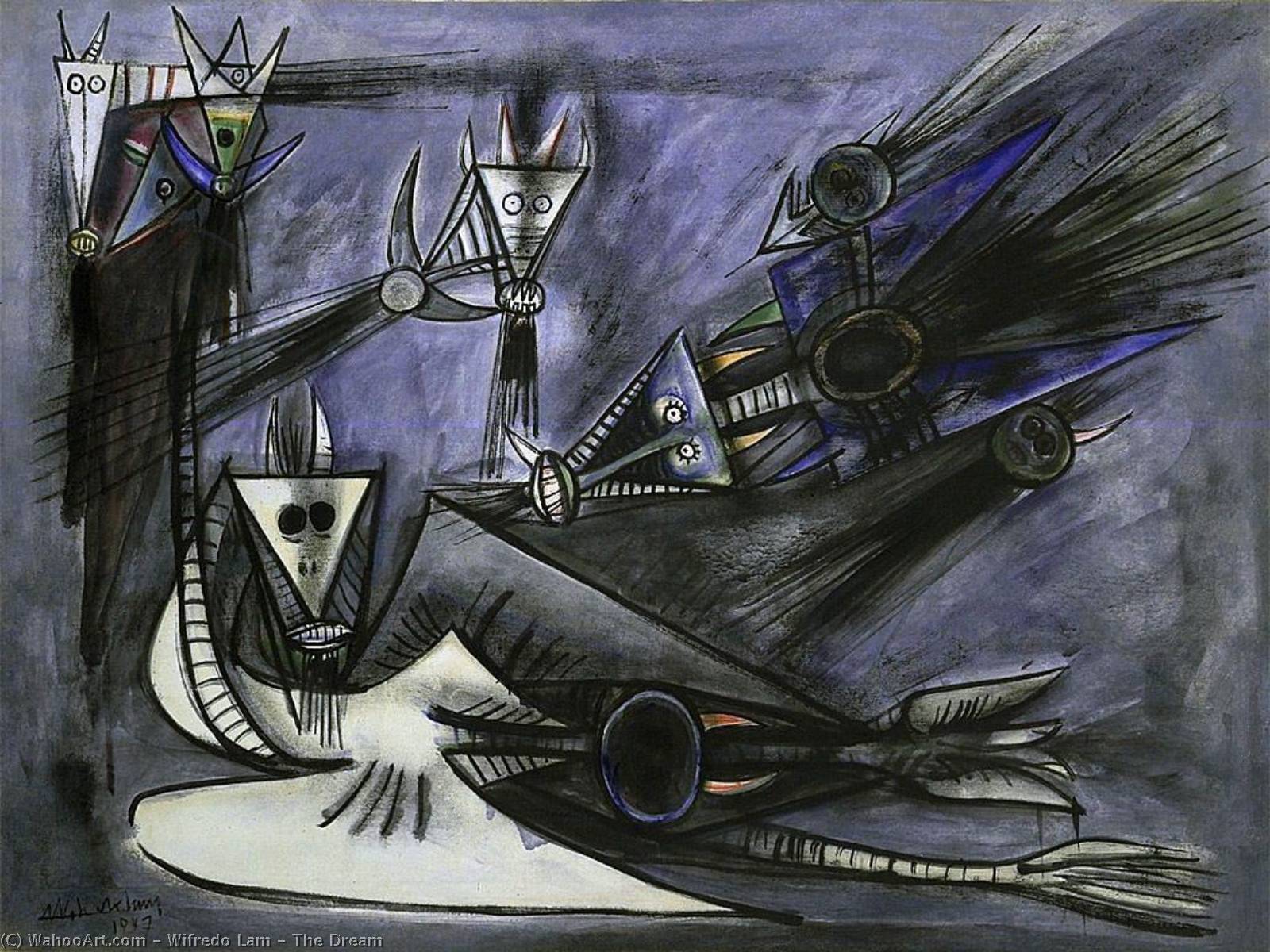
Γουίφρεδο Λάμ: ένα πορτρέτο του καλλιτέχνη
Wifredo Lam: A Crossroads of Cultures
Wifredo Óscar de la Concepción Lam y Castilla, known simply as Wifredo Lam, was a painter who embodied the complexities of cultural identity in the 20th century. Born in Sagua La Grande, Cuba, in 1902, his very lineage spoke to the island’s layered history – a father descended from Chinese immigrants and a mother tracing her roots back to Spanish conquistadors and enslaved Africans. This multicultural heritage wasn't merely biographical detail; it became the wellspring of his artistic vision, fueling a unique style that fused European modernism with Afro-Cuban spirituality and symbolism. Lam’s early life was marked by an initial pursuit of law in Havana, but even amidst legal studies, he found himself drawn to the natural world, spending time at the botanical gardens – a foreshadowing of the organic forms that would later dominate his canvases. Formal artistic training followed at the Escuela de Bellas Artes in Havana and then in Madrid under Fernando Álvarez de Sotomayor y Zaragoza, where he absorbed traditional techniques while simultaneously beginning to question their limitations.
Early Life and Influences
Wifredo Lam’s formative years were shaped by a profound connection to his familial heritage. His father, Enrique Lam-Yam, arrived in Cuba from Canton (Guangdong province) as part of the late-19th-century wave of Chinese laborers and merchants—a significant presence in Sagua La Grande, where Lam grew up surrounded by a vibrant Chinese community. This multicultural upbringing instilled within him an appreciation for diverse artistic traditions and perspectives. Simultaneously, his mother’s ancestry – blending Spanish conquistadors and enslaved Africans – introduced him to the spiritual richness of Afro-Cuban culture. Notably, he was exposed to Santería rituals from a young age through his godmother, Matonica Wilson—a priestess celebrated locally as a healer and sorceress—who instilled in him an understanding of Yoruba cosmology and symbolism. This early exposure profoundly impacted Lam’s artistic sensibilities, fostering a fascination with organic forms, masks, and the interplay between rationality and intuition.
European Encounters and Artistic Transformation
Lam’s studies at the Academy of Fine Arts in Madrid proved pivotal in shaping his artistic trajectory. He immersed himself in the masterpieces of Velázquez, Goya, and Bosch—artists who challenged conventional representations of reality and explored psychological depth—absorbing traditional techniques while simultaneously questioning their constraints. The Prado Museum served as a crucible for Lam’s intellectual development, fostering an appreciation for allegory and symbolism that would permeate his entire oeuvre. His encounter with Picasso in Madrid was particularly transformative; Picasso recognized Lam’s talent and introduced him to fellow artists who championed avant-garde experimentation—Joan Miró, André Breton, Óscar Domínguez—expanding Lam’s artistic horizons beyond the confines of academic realism. This exposure to Surrealism ignited Lam’s imagination and propelled him toward a stylistic fusion that would become his hallmark.
The Surrealist Vision and Artistic Synthesis
Lam’s arrival in Paris in 1938 coincided with the zenith of Surrealist fervor—a movement dedicated to unlocking the subconscious mind through automatism and dreamlike imagery. He quickly established connections with prominent Surrealists, including André Breton, Pablo Picasso, Henri Matisse, and René Char—artists who shared a commitment to challenging societal norms and exploring alternative modes of expression. Lam embraced Surrealist techniques—automatic drawing, collage, and assemblage—incorporating them into his artistic practice alongside Cubist influences. This synthesis resulted in a distinctive visual language characterized by fragmented forms, distorted perspectives, and vibrant color palettes—a stylistic hallmark that would define his work throughout his career. His exploration of Afro-Cuban iconography—particularly masks and stylized figures—reflected his deep engagement with the spiritual traditions of Haiti and Cuba.
Legacy and Artistic Significance
Wifredo Lam’s artistic legacy extends far beyond his individual paintings; he fundamentally reshaped the landscape of modern art by bridging European avant-garde aesthetics with Afro-Caribbean cultural heritage. His masterpiece, *La Jungla* (1943), stands as a testament to this transformative vision—a monumental canvas blending Surrealist techniques with symbolic representations of Cuban identity and colonial oppression. Lam’s work continues to inspire artists today who grapple with questions of cultural representation, social justice, and the enduring influence of history on artistic expression. He remains an undisputed icon of Cuban art and a pivotal figure in understanding the broader dialogue between Western and non-Western cultures—a testament to the power of art to transcend boundaries and illuminate the complexities of human experience.