Πορτρέτο του Τζον Άτκινσον Γκριμσόου

Πάτσαδες του Τζον Άτκινσον Γκριμσόου: Τα 100 πιο διάσημα, μέσα από το βλέμμα μιας γκαλερί

Ενημερωμένο Οκτώβριος 2026 · κατάταξη βάσει του σκορ δημοφιλίας μας (αναζητήσεις, επισκέψεις και παραγγελίες για κάθε έργο) · 260 έργα του Τζον Άτκινσον Γκριμσόου στον κατάλογό μας

Με σύντομη περιγραφή

Στο μάτι της γκαλερί, το πιο διάσημο έργο του Τζον Άτκινσον Γκριμσόου είναι το Λίβερπουλ από το Βάπινγκ (1875), το πρωτότυπο του οποίου εκτίθεται στο Philadelphia Museum of Art, Φιλαδέλφεια. Ο Ενδύμιος στην Όρα του Λαμούς (1879) και ο Κάννυ Γκλάσγουορν (1887) ολοκληρώνουν το τρίο που κάθε μάτι αναγνωρίζει. Από τα 260 έργα του Τζον Άτκινσον Γκριμσόου στον κατάλογό μας, η γκαλερί παρουσιάζει παρακάτω τα 100 πιο διάσημα, όπου κάθε ένα είναι πρωτότυπο, με την χρονολογία του, το μουσείο του και το τι το κάνει μοναδικό.

1836 – 1893, Λιντς Romanticism Περισσότερα έργα: Yale Center for British Art

Τα 10 κορυφαία έργα του Τζον Άτκινσον Γκριμσόου στη γκαλερέι

1
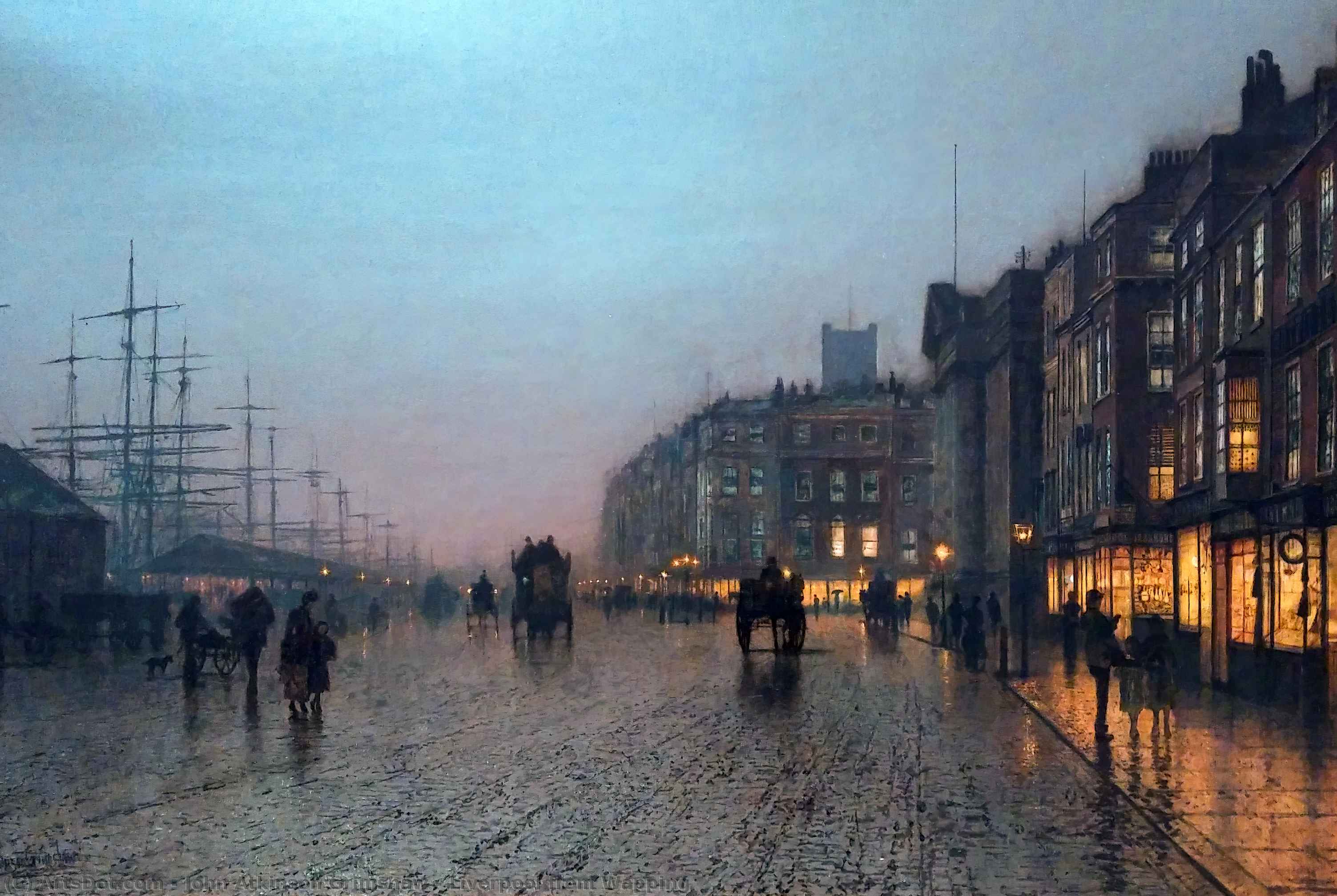
Λίβερπουλ από το Βάπινγκ (1875) του Τζον Άτκινσον Γκριμσόου

Λίβερπουλ από το Βάπινγκ

1875 · Άνθρακα και λάδι σε καμβά · Philadelphia Museum of Art, Φιλαδέλφεια

Βυθιστείτε σε ένα μαγευτικό κομμάτι της ζωής του 19ου αιώνα με το συγκινητικό ελαιογραφημένο έργο του John Atkinson Grimshaw, Λίβερπουλ από το Βάπινγκ. Ολοκληρωμένο το 1875, αυτό το έργο ξεπερνά την απλή απεικόνιση μιας αστικής τοπίας· είναι ένα ατμοσφαιρικό ποίημα με πινέλο, που προσκαλεί τους θεατές να βιώσουν τη διάθεση και την ενέργεια της Βικτοριανής Αγγλίας.

2
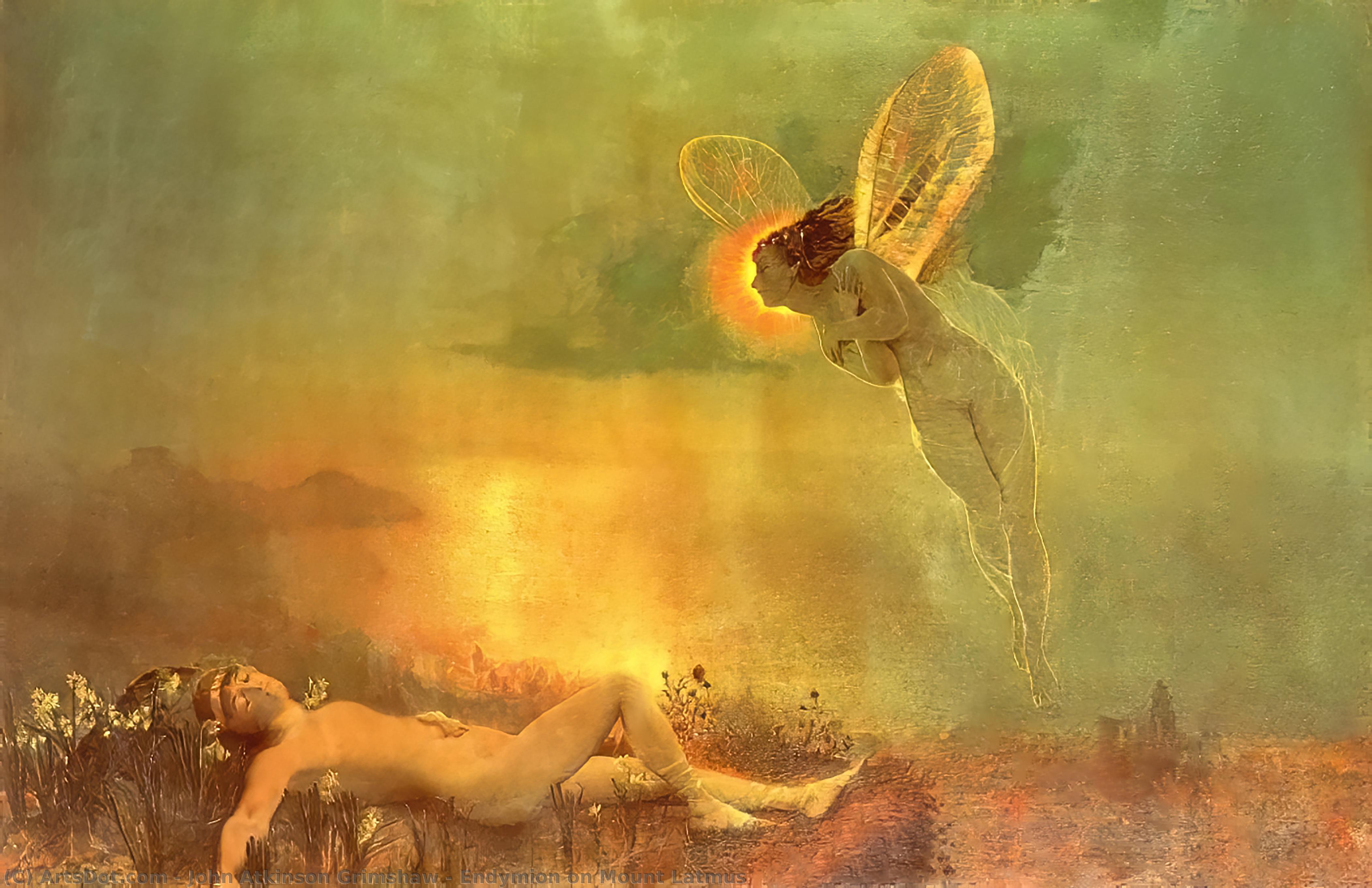
Ενδύμιος στην Όρα του Λαμούς (1879) του Τζον Άτκινσον Γκριμσόου

Ενδύμιος στην Όρα του Λαμούς

1879 · Άνθρακα και λάδι σε καμβά

Βυθιστείτε σε έναν κόσμο ονείρων και φαντασίας με τον «Ένδυμιο στον Όρος Λατμούς», ένα μαγευτικό έργο τέχνης που δημιουργήθηκε το 1879. Αυτό το γοητευτικό αριστούργημα προσκαλεί τους θεατές να εξερευνήσουν τις πλούσιες λεπτομέρειές του, συνδυάζοντας στοιχεία φαντασίας και σουρεαλισμού για να δημιουργήσει μια γαλήνια και υπερφυσική ατμόσφαιρα.

3
Κάννυ Γκλάσγουορν (1887) του Τζον Άτκινσον Γκριμσόου

Κάννυ Γκλάσγουορν

1887 · Άνθρακα και λάδι σε καμβά · Μουσείο Θυσσεν-Βορνημισάζα, Μαδρίτη

Το έργο "Canny Glasgow" του John Atkinson Grimshaw, ζωγραφισμένο το 1887, δεν είναι απλώς μια απεικόνιση μιας βροχερής πόλης. Είναι μια μεταφορά για την ψυχή της Γλασκώβης, ένα στιγμιότυπο μιας εποχής που βρίσκεται στην πορεία της, γεμάτη ένταση, αλλά και μια βαθιά αίσθηση κοινότητας και πλούτου. Η σκηνή, φωτισμένη από τις απαλές αντανακλάσεις των φώτων του δρόμου και των καταστημάτων, μας οδηγεί σε ένα κόσμο που είναι ταυτόχρονα οικείος και…

4
London, Pall Mall, and Saint James Street (1880) του Τζον Άτκινσον Γκριμσόου

London, Pall Mall, and Saint James Street

1880 · Oil On Canvas

Created in 1880, London, Pall Mall, and Saint James Street by John Atkinson Grimshaw captures a nocturnal urban landscape in oil on canvas. The scene portrays a bustling London street at night, populated by numerous individuals scattered throughout the cityscape. Pedestrians move along the sidewalks and cross the thoroughfare, contributing to the lively atmosphere of the city after dark.

5
Η Συνοικία Λίβερπουλ του Βορειανό Αγγλίας και Κοιτάζοντας προς τα Βόρεια (1890) του Τζον Άτκινσον Γκριμσόου

Η Συνοικία Λίβερπουλ του Βορειανό Αγγλίας και Κοιτάζοντας προς τα Βόρεια

1890 · Άνθρακα και λάδι σε καμβά · Walker Art Gallery, Λίβερπουλ

Ο Τζον Άτκινσον Γκριμσγουα αποτελεί μια μοναδική και συναρπαστική φιγούρα στον βικτωριανό χώρο των τεχνών. Δεν ήταν απλώς ζωγράφος τοπίου αλλά ένας ιστορικός του ατμόσφαιρας, ποιητής του φωτός και της σκιάς και παρατηρητής της αναπτυσσόμενης βιομηχανικής οντότητας γύρω του. Η πορεία του από υπάλληλος σιδηροδρόμου σε διάσημο καλλιτέχνη είναι μια ιστορία αφοσίωσης και καλλιτεχνικής όρασης που συχνά αναφέρεται ως ένα ενθαρρυτικό παράδειγμα επιδίωξης πάλης κατά των κοινωνικών προσδοκιών.

6
Reflections on the Thames, Westminster (1880) του Τζον Άτκινσον Γκριμσόου

Reflections on the Thames, Westminster

1880 · Oil On Canvas

In the quietude of 1880, John Atkinson Grimshaw captures a nocturnal moment along the banks of the Thames. Reflections on the Thames, Westminster presents a view from the Embankment, where the city of London stretches out under a heavy, dark sky. The river flows through the center of the scene, acting as a mirror for the scattered lights that define the urban landscape. It is a world of deep shadows…

7
An Idyll of Old Chelsea (1893) του Τζον Άτκινσον Γκριμσόου

An Idyll of Old Chelsea

1893 · Oil

In this 1893 work, we find ourselves standing on a damp street in London's bohemian quarter. The scene is set in the evening, looking westwards along Lordship Place toward the tower of Chelsea Old Church. There is a certain stillness here, a moment of solitude captured as the light begins to fade. A man walks alone along the wet pavement, his figure a quiet presence amidst the architecture of the…

8
Lovers in a wood (1873) του Τζον Άτκινσον Γκριμσόου

Lovers in a wood

1873 · Oil

Lovers in a Wood is an oil painting that depicts a serene woodland path. The scene features two figures, presumably lovers, strolling along a trail. They are surrounded by trees with intertwining branches that create a sense of depth and texture. The composition includes additional figures, such as one person standing near the left edge and another person positioned closer to the right side of the image.

9
Tree Shadows on the Park Wall, Roundhay Park, Leeds του Τζον Άτκινσον Γκριμσόου

Tree Shadows on the Park Wall, Roundhay Park, Leeds

Oil

The air feels heavy with the scent of damp earth and lush greenery as a man and a woman wander along a narrow, winding path. They move through a dense, scenic forest where the trees rise tall and thick, their branches interlacing to create a canopy of deep shadows and filtered light. This is a moment of profound stillness, a pause in time where the only sound is the soft…

10
Lights in the Harbour, Scarborough (1879) του Τζον Άτκινσον Γκριμσόου

Lights in the Harbour, Scarborough

1879 · Oil

There is a specific stillness that settles over a harbor once the day's industry has retreated. In this 1879 work, we find ourselves observing the Scarborough coast during those liminal hours when the moonlight begins to claim the landscape. The scene is composed of several vessels adrift upon calm, dark waters, their forms silhouetted against a sky heavy with clouds. A large boat rests toward the right, while smaller vessels…

Πάينτα του Τζον Άτκινσον Γκριμσόου, κατάταξη από 11 έως 100

11London, Piccadilly at NIght (1885) του Τζον Άτκινσον ΓκριμσόουLondon, Piccadilly at NIght1885 12Sand, Sea and Sky: A Summer Fantasy (1892) του Τζον Άτκινσον ΓκριμσόουSand, Sea and Sky: A Summer Fantasy1892 13Briggate, Leeds (1891) του Τζον Άτκινσον ΓκριμσόουBriggate, Leeds1891 14Moonlight After Rain του Τζον Άτκινσον ΓκριμσόουMoonlight After Rain 15Old Chelsea του Τζον Άτκινσον ΓκριμσόουOld Chelsea 16November Moonlight του Τζον Άτκινσον ΓκριμσόουNovember Moonlight 17Saint Cecilia (1862) του Τζον Άτκινσον ΓκριμσόουSaint Cecilia1862 18Leeds Bridge (1880) του Τζον Άτκινσον ΓκριμσόουLeeds Bridge1880 19Moonlight (1882) του Τζον Άτκινσον ΓκριμσόουMoonlight1882 20Scarborough by Moonlight (1876) του Τζον Άτκινσον ΓκριμσόουScarborough by Moonlight1876 21October Gold (1889) του Τζον Άτκινσον ΓκριμσόουOctober Gold1889 22A Golden Beam του Τζον Άτκινσον ΓκριμσόουA Golden Beam 23Moonlight on Lake του Τζον Άτκινσον ΓκριμσόουMoonlight on Lake 24Humber Docks, Hull (1884) του Τζον Άτκινσον ΓκριμσόουHumber Docks, Hull1884 25Battersea Bridge (1885) του Τζον Άτκινσον ΓκριμσόουBattersea Bridge1885 26Snow and Mist: Caprice in Yellow Minor (1892) του Τζον Άτκινσον ΓκριμσόουSnow and Mist: Caprice in Yellow Minor1892 27Dame Autumn hath a mournful face (1871) του Τζον Άτκινσον ΓκριμσόουDame Autumn hath a mournful face1871 28On the Tees, near Barnard Castle (1868) του Τζον Άτκινσον ΓκριμσόουOn the Tees, near Barnard Castle1868 29Stapleton Park near Pontefract Sun (1877) του Τζον Άτκινσον ΓκριμσόουStapleton Park near Pontefract Sun1877 30Park Row, Leeds (1882) του Τζον Άτκινσον ΓκριμσόουPark Row, Leeds1882 31Scarborough Lights (1877) του Τζον Άτκινσον ΓκριμσόουScarborough Lights1877 32A moonlit lane (1874) του Τζον Άτκινσον ΓκριμσόουA moonlit lane1874 33Sic transit gloria mundi (The Burning of the Spa Saloon) (1876) του Τζον Άτκινσον ΓκριμσόουSic transit gloria mundi (The Burning of the Spa Saloon)1876 34Snowbound (1883) του Τζον Άτκινσον ΓκριμσόουSnowbound1883 35The Lighthouse at Scarborough του Τζον Άτκινσον ΓκριμσόουThe Lighthouse at Scarborough 36a mountain road flood time honister του Τζον Άτκινσον Γκριμσόουa mountain road flood time honister 37Golden Autumn του Τζον Άτκινσον ΓκριμσόουGolden Autumn 38Autumn Gold του Τζον Άτκινσον ΓκριμσόουAutumn Gold 39Yew Court, Scalby, near Scarborough (1875) του Τζον Άτκινσον ΓκριμσόουYew Court, Scalby, near Scarborough1875 40Iris (1886) του Τζον Άτκινσον ΓκριμσόουIris1886 41Whitby (1878) του Τζον Άτκινσον ΓκριμσόουWhitby1878 · Yale Center for British Art 42A Lane In Headingley, Leeds (1881) του Τζον Άτκινσον ΓκριμσόουA Lane In Headingley, Leeds1881 43View of Southwark Bridge at Night (1882) του Τζον Άτκινσον ΓκριμσόουView of Southwark Bridge at Night1882 · The Ashmolean Museum of Art And Archaeology 44Barden Tower του Τζον Άτκινσον ΓκριμσόουBarden Tower 45untitled (3394) του Τζον Άτκινσον Γκριμσόουuntitled (3394) 46Roundhay Lake, Leeds του Τζον Άτκινσον ΓκριμσόουRoundhay Lake, Leeds 47Spirit of the Night AMK του Τζον Άτκινσον ΓκριμσόουSpirit of the Night AMK 48The Seven Arches Adel Woods του Τζον Άτκινσον ΓκριμσόουThe Seven Arches Adel Woods 49The Old Hall Under Moonlight του Τζον Άτκινσον ΓκριμσόουThe Old Hall Under Moonlight 50autumn morning του Τζον Άτκινσον Γκριμσόουautumn morning 51A Manor House in Autumn του Τζον Άτκινσον ΓκριμσόουA Manor House in Autumn 52Luxury του Τζον Άτκινσον ΓκριμσόουLuxury 53In the Golden Gloaming (1881) του Τζον Άτκινσον ΓκριμσόουIn the Golden Gloaming1881 54Two Thousand Years Ago (1878) του Τζον Άτκινσον ΓκριμσόουTwo Thousand Years Ago1878 55Spirit of the Night του Τζον Άτκινσον ΓκριμσόουSpirit of the Night 56Twilight, The Vegetable Garden (1869) του Τζον Άτκινσον ΓκριμσόουTwilight, The Vegetable Garden1869 57On the Esk, Whitby του Τζον Άτκινσον ΓκριμσόουOn the Esk, Whitby 58Landscape in the Lake District του Τζον Άτκινσον ΓκριμσόουLandscape in the Lake District 59Gloucester Docks (1890) του Τζον Άτκινσον ΓκριμσόουGloucester Docks1890 · Museum of Gloucester 60Windermere (1863) του Τζον Άτκινσον ΓκριμσόουWindermere1863 · Yale University Art Gallery 61Portrait of the artist's wife, Theodosia, as Ophelia (1863) του Τζον Άτκινσον ΓκριμσόουPortrait of the artist's wife, Theodosia, as Ophelia1863 62A Dead Linnet (1862) του Τζον Άτκινσον ΓκριμσόουA Dead Linnet1862 63Newlay Wood, Horsforth, Leeds (1861) του Τζον Άτκινσον ΓκριμσόουNewlay Wood, Horsforth, Leeds1861 64A House in a Clearing (1870) του Τζον Άτκινσον ΓκριμσόουA House in a Clearing1870 · Minneapolis Institute of Art 65Knostrop Old Hall at Dusk (1870) του Τζον Άτκινσον ΓκριμσόουKnostrop Old Hall at Dusk1870 66'The Ironbound Shore' (1869) του Τζον Άτκινσον Γκριμσόου'The Ironbound Shore'1869 67Bowder Stone, Borrowdale (1870) του Τζον Άτκινσον ΓκριμσόουBowder Stone, Borrowdale1870 68Ghyll Beck, Barden, Yorkshire (1867) του Τζον Άτκινσον ΓκριμσόουGhyll Beck, Barden, Yorkshire1867 69Colwith Force (1869) του Τζον Άτκινσον ΓκριμσόουColwith Force1869 70Poachers (1871) του Τζον Άτκινσον ΓκριμσόουPoachers1871 71The Seal of the Covenant (1868) του Τζον Άτκινσον ΓκριμσόουThe Seal of the Covenant1868 72Evening, Knostrop Old Hall (1870) του Τζον Άτκινσον ΓκριμσόουEvening, Knostrop Old Hall1870 73Nab Scar, The Lake District (1864) του Τζον Άτκινσον ΓκριμσόουNab Scar, The Lake District1864 74Landscape with a winding river (1868) του Τζον Άτκινσον ΓκριμσόουLandscape with a winding river1868 75Whitby Harbor (1874) του Τζον Άτκινσον ΓκριμσόουWhitby Harbor1874 · Yale Center for British Art 76Home Again (1877) του Τζον Άτκινσον ΓκριμσόουHome Again1877 77The Heron's Haunt (1874) του Τζον Άτκινσον ΓκριμσόουThe Heron's Haunt1874 78Arriving in the hall (1878) του Τζον Άτκινσον ΓκριμσόουArriving in the hall1878 79Whitby Docks (1876) του Τζον Άτκινσον ΓκριμσόουWhitby Docks1876 80Figure Overlooking Waterloo Lake, Rounday Park, Leeds (1872) του Τζον Άτκινσον ΓκριμσόουFigure Overlooking Waterloo Lake, Rounday Park, Leeds1872 81Under The Harvest Moon (1872) του Τζον Άτκινσον ΓκριμσόουUnder The Harvest Moon1872 82Full Moon behind Cirrus Cloud from the Rounday Park Castle Battlements (1872) του Τζον Άτκινσον ΓκριμσόουFull Moon behind Cirrus Cloud from the Rounday Park Castle Battlements1872 83The Chorale (1878) του Τζον Άτκινσον ΓκριμσόουThe Chorale1878 84Elaine (1877) του Τζον Άτκινσον ΓκριμσόουElaine1877 85The Lady of Shalott (1875) του Τζον Άτκινσον ΓκριμσόουThe Lady of Shalott1875 86The lotus gatherers (1874) του Τζον Άτκινσον ΓκριμσόουThe lotus gatherers1874 87'Burning Off', a Fishing Boat at Scarborough (1877) του Τζον Άτκινσον Γκριμσόου'Burning Off', a Fishing Boat at Scarborough1877 88Evening Glow (1884) του Τζον Άτκινσον ΓκριμσόουEvening Glow1884 · Yale Center for British Art 89A Moonlit Evening (1880) του Τζον Άτκινσον ΓκριμσόουA Moonlit Evening1880 · Μουσείο Θυσσεν-Βορνημισάζα 90Fiametta (1883) του Τζον Άτκινσον ΓκριμσόουFiametta1883 91An Autumn Idyll (1885) του Τζον Άτκινσον ΓκριμσόουAn Autumn Idyll1885 92Liverpool from Wapping (1885) του Τζον Άτκινσον ΓκριμσόουLiverpool from Wapping1885 93A Vestal (1885) του Τζον Άτκινσον ΓκριμσόουA Vestal1885 94In Peril (1879) του Τζον Άτκινσον ΓκριμσόουIn Peril1879 95Silver Moonlight (1880) του Τζον Άτκινσον ΓκριμσόουSilver Moonlight1880 96Reflections on the Thames (1880) του Τζον Άτκινσον ΓκριμσόουReflections on the Thames1880 · Leeds Art Gallery 97Ye Ladye Bountifulle (1883) του Τζον Άτκινσον ΓκριμσόουYe Ladye Bountifulle1883 98Spirit of the night (1879) του Τζον Άτκινσον ΓκριμσόουSpirit of the night1879 99Westminster Bridge by Moonlight (1880) του Τζον Άτκινσον ΓκριμσόουWestminster Bridge by Moonlight1880 100The Chill of Autumn (1881) του Τζον Άτκινσον ΓκριμσόουThe Chill of Autumn1881

Τα διάσημα έργα του Τζον Άτκινσον Γκριμσόου, ανά περίοδο

Τα θέματα που κίνησαν το ενδιαφέρον του Τζον Άτκινσον Γκριμσόου

Τα τέσσερα θέματα που εμφανίζονται πιο συχνά σε αυτά τα πρωτότυπα έργα, το καθένα με το εξαιρετικό του παράδειγμα.

Τα μουσεία που διατηρούν τα πρωτότυπα έργα του Τζον Άτκινσον Γκριμσόου

Τα 8 μουσεία που φιλοξενούν το μεγαλύτερο μέρος των έργων σε αυτήν τη σελίδα.

Μουσείο Πόλη Έργα του Τζον Άτκινσον Γκριμσόου Πάτρια από αυτή τη λίστα
Yale Center for British Art, New HavenYale Center for British Art New Haven 4 Whitby, Whitby Harbor, Evening Glow
Μουσείο Θυσσεν-Βορνημισάζα, ΜαδρίτηΜουσείο Θυσσεν-Βορνημισάζα Μαδρίτη 3 Κάννυ Γκλάσγουορν, A Moonlit Evening
Walker Art Gallery, ΛίβερπουλWalker Art Gallery Λίβερπουλ 4 Η Συνοικία Λίβερπουλ του Βορειανό Αγγλίας και Κοιτάζοντας προς τα Βόρεια
Museum of Gloucester, GloucesterMuseum of Gloucester Gloucester 2 Gloucester Docks
Leeds Art Gallery, ΛιντςLeeds Art Gallery Λιντς 2 Reflections on the Thames
Philadelphia Museum of Art, ΦιλαδέλφειαPhiladelphia Museum of Art Φιλαδέλφεια 1 Λίβερπουλ από το Βάπινγκ
The Ashmolean Museum of Art And Archaeology, ΟξφόρδηThe Ashmolean Museum of Art And Archaeology Οξφόρδη 1 View of Southwark Bridge at Night
Yale University Art Gallery, Νέα ΧέιβενYale University Art Gallery Νέα Χέιβεν 1 Windermere

Τζον Άτκινσον Γκριμσόου, ένα χαρακτηριστικό έργο ανά δεκαετία

Έργα ανά δεκαετία

Επιλέξτε μια δεκαετία για να δείτε το πρωτότυπο έργο που την χαρακτηρίζει.

Οι πίνακες του Τζον Άτκινσον Γκριμσόου: οι απαντήσεις της γκαλερί

Ποιο έργο του Τζον Άτκινσον Γκριμσόου είναι το πιο διάσημο από όλα;Αποκαλύψτε την απάντηση

Λίβερπουλ από το Βάπινγκ (1875), Philadelphia Museum of Art, Φιλαδέλφεια. Στη συνέχεια ακολουθούν το Ενδύμιος στην Όρα του Λαμούς (1879) και το Κάννυ Γκλάσγουορν (1887).

Πόσο είχε ηλικία ο Τζον Άτκινσον Γκριμσόου όταν ολοκλήρωσε το Λίβερπουλ από το Βάπινγκ;Αποκαλύψτε την απάντηση

39 ετών: το έργο Λίβερπουλ από το Βάπινγκ είναι του 1875, και ο/η Τζον Άτκινσον Γκριμσόου γεννήθηκε το 1836.

Ποιες είναι τα 10 κορυφαία έργα του Τζον Άτκινσον Γκριμσόου;Αποκαλύψτε την απάντηση

Λίβερπουλ από το Βάπινγκ, Ενδύμιος στην Όρα του Λαμούς, Κάννυ Γκλάσγουορν, London, Pall Mall, and Saint James Street, Η Συνοικία Λίβερπουλ του Βορειανό Αγγλίας και Κοιτάζοντας προς τα Βόρεια, Reflections on the Thames, Westminster, An Idyll of Old Chelsea, Lovers in a wood, Tree Shadows on the Park Wall, Roundhay Park, Leeds και Lights in the Harbour, Scarborough. Η κατάταξη παραπάνω αναγράφει το έτος και το μουσείο για το κάθε έργο.

Πόσα έργα δημιούργησε ο/η Τζον Άτκινσον Γκριμσόου;Αποκαλύψτε την απάντηση

Ο κατάλογός μας περιλαμβάνει 260 έργα του Τζον Άτκινσον Γκριμσόου, με ημερομηνίες από 1861 έως 1893.

Πού εκτίθενται τα πιο διάσημα πρωτότυπα του Τζον Άτκινσον Γκριμσόου;Αποκαλύψτε την απάντηση

Κυρίως σε Yale Center for British Art (New Haven), Μουσείο Θυσσεν-Βορνημισάζα (Μαδρίτη) και Walker Art Gallery (Λίβερπουλ). Ο πίνακας μουσείου παραπάνω τους περιλαμβάνει όλους.

Πότε δημιούργησε ο/η Τζον Άτκινσον Γκριμσόου τα πιο διάσημα έργα του/της;Αποκαλύψτε την απάντηση

Κατά την περίοδο 1870s: 33 από τα 100 έργα σε αυτήν τη σελίδα δημιουργήθηκαν τότε, με Λίβερπουλ από το Βάπινγκ από αυτά να είναι μοναδικά.

Ποια είναι τα πρώτα και τα τελευταία διάσημα έργα του Τζον Άτκινσον Γκριμσόου;Αποκαλύψτε την απάντηση

Σε αυτήν τη σελίδα, το παλαιότερο είναι Newlay Wood, Horsforth, Leeds (1861) και το νεότερο An Idyll of Old Chelsea (1893).

Ποια θέματα επέλεξε πιο συχνά ο Τζον Άτκινσον Γκριμσόου;Αποκαλύψτε την απάντηση

People (13), Buildings (11) και Victorian era (10), σε συνολικά 100 έργα σε αυτήν τη σελίδα.

Με ποια τεχνική εργάστηκε περισσότερο ο Τζον Άτκινσον Γκριμσόου;Αποκαλύψτε την απάντηση

Oil, για 15 από τα 100 έργα σε αυτήν τη σελίδα.

Με ποιο καλλιτεχνικό κίνημα σχετίζεται ο/η Τζον Άτκινσον Γκριμσόου;Αποκαλύψτε την απάντηση

Romanticism, όπως προκύπτει από τα πρωτότυπα σε αυτήν τη σελίδα.

Ποια πρωτότυπα έργα του Τζον Άτκινσον Γκριμσόου διαθέτει το Yale Center for British Art;Αποκαλύψτε την απάντηση

Whitby, Whitby Harbor και Evening Glow: το Yale Center for British Art, New Haven διαθέτει 3 από τα έργα σε αυτήν τη σελίδα.

Τζον Άτκινσον Γκριμσόου: ο καλλιτέχνης

The Life of John Atkinson Grimshaw

John Atkinson Grimshaw entered the world on 6 September 1836, born into a back-to-back house on Park Street in Leeds. He was the eldest of six children born to Mary and David Grimshaw. His upbringing was shaped by a strict Baptist household, where his parents provided a religious foundation for the family. Life in Leeds was industrious, and his early years were defined by the steady, predictable rhythms of a working-class northern city.

He did not follow the path of formal art education. Instead, he was a self-taught artist who relied on his own observations and a natural sense of light. Before he found his way into painting, he worked as a clerk for the Great Northern Railway. In 1856, he married his cousin, Frances Theodosia Hubbard. This period of his life was marked by the quiet tension between the stability of his clerical job and the pull of his creative interests.

His path was not an easy one. He eventually left his position at the railway to pursue his art, a decision that caused concern for his family. Despite the lack of professional training, he developed a way of seeing the world that would eventually define his reputation. He moved between Leeds and Scarborough as his life changed, eventually finding a home at Knostrop Old Hall.

Early Life and Family Background

Born in West Yorkshire, England, John Atkinson Grimshaw grew up in a household shaped by steady, practical labor. His father, David, spent his working life in service to the community, serving as a policeman and working for Pickfords. This was a life of routine and duty, far removed from the quiet, moonlit scenes that would later define his name. The family lived in a back-to-back house on Park Street in Leeds, a setting that provided a grounded beginning for a boy who would eventually seek to capture the shifting light of the night.

Life moved quickly for him. He left school at the age of sixteen, entering the workforce as a clerk for the Great Northern Railway. It was a stable, predictable existence, yet his interests were already pulling him toward something else. In 1856, he married his cousin, Frances Theodosia Hubbard, known to many as Fanny. Their union marked a significant chapter in his personal life as he navigated the responsibilities of adulthood while his true inclinations began to take root.

Career Transition and Early Success

Life in Leeds was steady but predictable for a young man working as a clerk for the Great Northern Railway. It was a stable existence, yet the pull of a different calling proved too strong to ignore. At the age of twenty-four, Grimshaw made the difficult choice to leave his office job behind. He walked away from the security of his clerical position to devote himself entirely to the life of a painter, a decision that likely caused much concern for his family.

His entry into the professional art world began in 1862. Under the patronage of the Leeds Philosophical and Literary Society, he held his first exhibitions. These early works were quite different from the moonlit cityscapes that would later define his name. Instead, he focused on the quiet, small details of the natural world. He spent his time painting modest still lifes, capturing the delicate forms of birds, fruit, and blossoms.

These early years were a period of finding his footing. He was a self-taught artist, building his skills through observation rather than formal training. While his initial subjects were simple, they provided the foundation for the technical precision he would later apply to much larger, more complex scenes. He was establishing himself, one small, carefully rendered object at a time.

Technique and Artistic Style

Grimshaw’s approach to the canvas was a careful balance of precision and atmosphere. He was particularly drawn to the way light behaves in the dark, focusing his efforts on nocturnal scenes of urban landscapes. To achieve a level of accuracy that felt almost photographic, he famously employed a camera obscura. By using a projector or lens to cast scenes onto his canvas, he could capture the exact perspective and intricate details of a street or a dockyard. This method allowed him to map out the complex interplay of light and shadow with a clarity that many of his contemporaries found striking.

His method for handling color was equally deliberate. He often used a scumbling technique, a process where he would drag yellow paint over a dark underpainting. This created a soft, diffused glow that mimicked the appearance of gaslight or moonlight hitting a damp surface. This technique was essential for his ability to render the specific textures of his subjects, from the wet cobblestones of a city lane to the misty air of a harbor. His work relied on this meticulous attention to detail to build a sense of mood without relying on heavy-handed strokes.

The Mastery of Nocturnal Landscapes

Grimshaw found his true calling in the quiet hours of the night. He became so associated with these dark, moonlit scenes that he was often called the "inventor of nocturnes." While many painters of his era focused on the bright clarity of daylight, he turned his attention to the shifting shadows of the evening. He had a particular knack for portraying urban scenes bathed in moonlight, finding a sense of stillness in the way light hit the streets of a city after dark.

There was a physical presence to his nightscapes. He did not simply paint a dark sky; he captured the very moisture in the air, making the mist and dampness feel tangible to anyone looking at his canvas. In his maritime works, he often rendered the spiky outlines of ships' masts rearing up against a darkening sky. This attention to the atmosphere allowed him to move beyond simple representation, capturing the heavy, humid feeling of a harbor at twilight or the cool, damp air of a coastal town.

Key Works and Notable Paintings

Grimshaw’s ability to capture the quiet pulse of a city is perhaps most visible in Liverpool from Wapping, completed in 1875. This work looks out over the industrial energy of the port, using a blend of realism and impressionistic brushwork to show the constant motion of the docks. He managed to paint not just the physical structures of the buildings, but the very atmosphere of the water and the bustling activity of the era. It is a scene that feels lived-in and heavy with the damp air of the Mersey.

His interest in the way light interacts with interior spaces led to works like Dulce Domum, painted in 1885. In this piece, he invites a sense of quiet intimacy, drawing the viewer into a richly decorated room where light and shadow define the mood. He was equally skilled at capturing the transition of light in the open air. On Hampstead Hill is often regarded as one of his finest works, specifically for how it handles the shifting light as twilight fades into night. He had a way of making the passing of time feel visible on the canvas.

In 1887, he produced Canny Glasgow, a painting that finds a certain serenity within the shadows of a maritime street. The work focuses on the interplay between the dark, overcast sky and the warm, amber glow of gas lamps reflecting off wet cobblestones. It captures a specific, quiet moment of solitude in a busy urban setting. His later years also saw him experimenting with different subjects, including scenes of fairies and more varied landscapes.

Later Years and Death

By 1870, Grimshaw had moved his life and work to Knostrop Old Hall. This move marked a significant chapter in his later years, as he established himself within this rambling, baronial setting. While his career had seen much success, the final years of his life were marked by personal hardship. He faced financial struggles around 1880, a period that added a layer of difficulty to his existence as a professional artist.

The end came in October 1893. He died at Knostrop Old Hall from cancer, which was recorded at the time as an abscess. His passing left a void for his family, who were left to manage the affairs of his estate. To provide for them, his house and his studio were sold. He was laid to rest in Woodhouse Cemetery in Leeds.

Legacy and Historical Influence

The impact of his work was felt even by those who considered themselves masters of the night. One prominent painter once admitted that he believed himself the inventor of nocturnes until he encountered the moonlit scenes produced by this Leeds-born artist. This recognition speaks to a skill in capturing the specific, fleeting quality of light that few others could replicate. His ability to render the damp, dark atmosphere of a city street or the quiet of a harbor has led many to consider him one of the most accomplished nightscape artists of all time.

While his fame fluctuated after his death, a significant revival of interest occurred during the latter half of the twentieth century. This resurgence brought his quiet, moody landscapes back into the public eye, allowing a new generation to appreciate his technical precision. His approach to light and shadow influenced later artists who sought to move beyond mere physical representation to capture a specific mood or emotion within a scene.

His influence remains visible in the way artists handle the interplay between artificial light and natural moonlight. By using tools like the camera obscura to achieve such sharp focus, he helped bridge the gap between traditional painting and the emerging photographic eye. His work continues to offer a window into the textures of the Victorian era, from the wet cobblestones of a London lane to the silhouetted masts of ships in a dockyard.

Where to See His Works Today

Finding his paintings in person allows for a closer look at the way he handled light on wet cobblestones and the subtle textures of a moonlit sky. Many of his works remain in the care of significant institutions across the United Kingdom and abroad. In Liverpool, the Walker Art Gallery holds several pieces, including his depiction of the docks. His presence in the art world is also felt in the United States, where the Philadelphia Museum of Art keeps one of his works.

For those traveling through Europe, his influence can be found in Madrid at the Thyssen-Bornemisza Museum. His ability to capture the atmosphere of a city at night is also preserved at the Ashmolean Museum of Art and Archaeology in Oxford. These collections ensure that his specific way of seeing the world remains accessible to those who wish to study his technique and the quiet moods he sought to record.