Πορτρέτο του Ιβάν Σίσκιν

Τα 100 πιο διάσημα έργα του Ιβάν Σίσκιν, κάθε ένα μοναδικό

Ενημερωμένο Νοέμβριος 2026 · κατάταξη βάσει του σκορ δημοφιλίας μας (αναζητήσεις, επισκέψεις και παραγγελίες για κάθε έργο) · 706 έργα του Ιβάν Σίσκιν στον κατάλογό μας

Με σύντομη περιγραφή

Το έργο ΕΥΤΡΩΠΗ ΣΤΟ ΞΥΛΟΣΚΟΠΟΝΙΣΜΟ (1886) είναι το ποίτευμα του Ιβάν Σίσκιν που τραβάει τα περισσότερα βλέμματα· το πρωτότυπο ανήκει στο Τρέτιακοφ Ακαδημία Μουσειακή, Μόσχα. Μετά από αυτό, το βλέμμα στρέφεται στο Ένα Πεδίο Ρακί (1877) και στο Πρωινό σε ένα Δάσος Πεύκων (1889). Ανάμεσα στα 706 έργα του Ιβάν Σίσκιν στον κατάλογό μας, αυτά τα 100 είναι τα πιο διάσημα, το καθένα ένα μοναδικό πρωτότυπο που παρουσιάζεται με την χρονολογία του, το μουσείο του και τον λόγο για τον οποίο παραμένει αιώνιο.

1831 – 1898, Γιελάμπουγκα Ρεαλισμός Περισσότερα έργα: Τρέτιακοφ Ακαδημία Μουσειακή

Τα 10 κορυφαία έργα του Ιβάν Σίσκιν, μέσα από το βλέμμα της γκαλερί

1
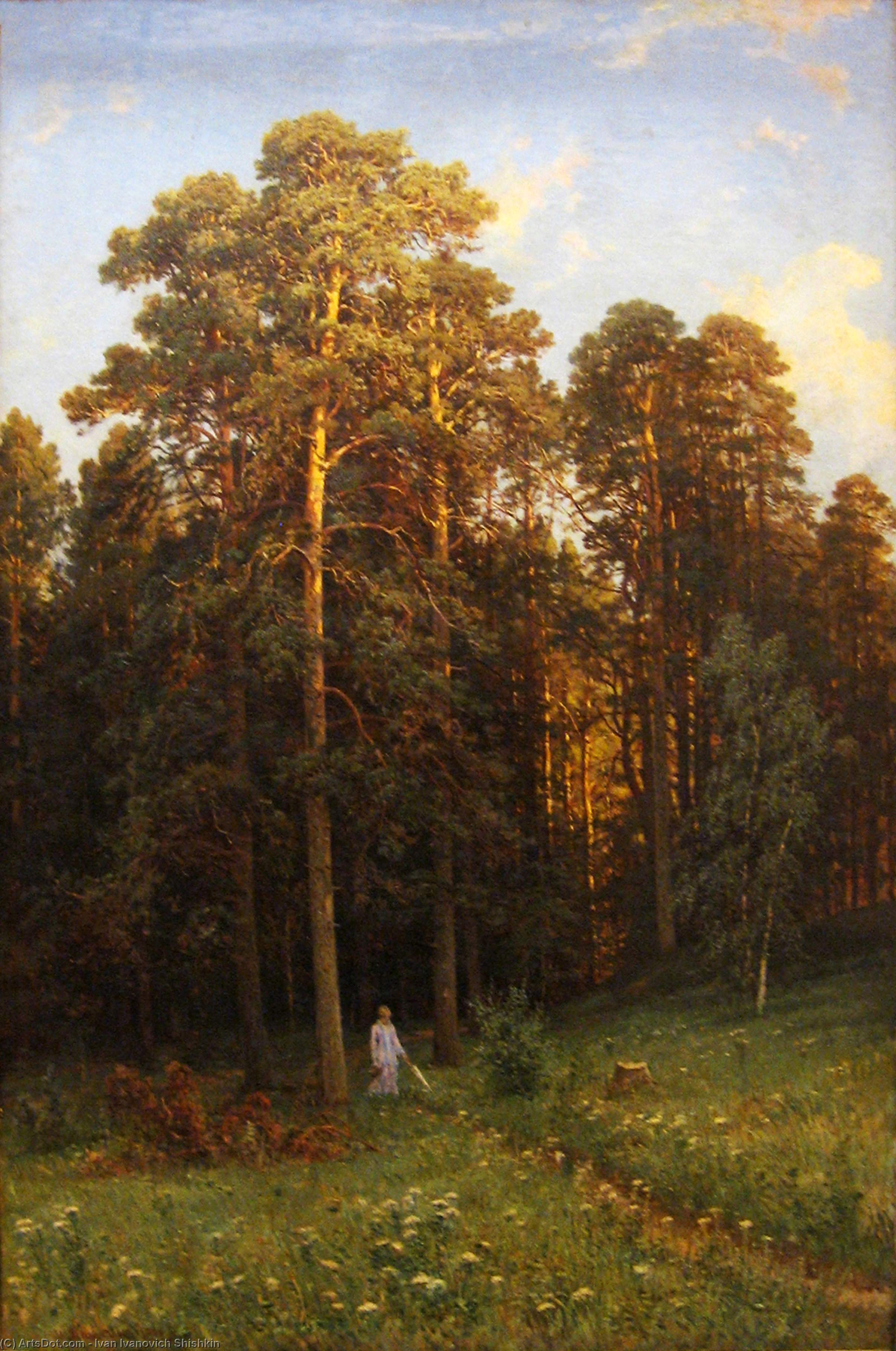
ΕΥΤΡΩΠΗ ΣΤΟ ΞΥΛΟΣΚΟΠΟΝΙΣΜΟ (1886) του Ιβάν Σίσκιν

ΕΥΤΡΩΠΗ ΣΤΟ ΞΥΛΟΣΚΟΠΟΝΙΣΜΟ

1886 · Άνθρακα και λάδι σε καμβά · Τρέτιακοφ Ακαδημία Μουσειακή, Μόσχα

Πρωινό σε Π pine Δάσος του Ivan Ivanovich Shishkin αποτελεί ένα κορυφαίο δείγμα του ρωσικού ρεαλισμού, το οποίο προσκαλεί τους θεατές σε μια γαλήνια και στοχαστική σκηνή του δάσους. Αυτό το αιχμηρό έργο με λάδι σε καμβά, δημιουργημένο το 1886, αναδεικνύει την απαράμιλλη ικανότητα του Shishkin να αγγίζει την ουσία της φύσης με μελετημένη λεπτομέρεια και συναισθηματικό βάθος.

2
Ένα Πεδίο Ρακί (1877) του Ιβάν Σίσκιν

Ένα Πεδίο Ρακί

1877 · Άνθρακας ελαιώδους βάσης · Τρέτιακοφ Ακαδημία Μουσειακή, Μόσχα

In the vast, sweeping expanse of 19th-century Russian realism, few names resonate with as much profound reverence as Ivan Ivanovich Shishkin. His masterpiece, A Rye Field, painted in 1877, serves as a breathtaking window into the heart of the Russian countryside, capturing a moment of eternal stillness. The painting presents a sprawling vista where tall, golden grasses sway in an invisible breeze, intersected by a humble dirt road that invites…

3
Πρωινό σε ένα Δάσος Πεύκων (1889) του Ιβάν Σίσκιν

Πρωινό σε ένα Δάσος Πεύκων

1889 · Άνθρακα και λάδι σε καμβά · Τρέτιακοφ Ακαδημία Μουσειακή, Μόσχα

In the quiet, amber-hued moments of dawn, Ivan Ivanovich Shishkin’s Morning in a Pine Forest breathes life into the very essence of the Russian landscape. This 1889 masterpiece is not merely a depiction of trees and light; it is an immersive experience that invites the viewer to step into a primordial world where nature remains untouched by the frantic pace of modernity. The painting captures a profound sense of tranquility,…

4
Δάσος από Βελανιδιές (1887) του Ιβάν Σίσκιν

Δάσος από Βελανιδιές

1887 · Άνθρακα και λάδι σε καμβά · Εθνική Πινακοθήκη Κιέβου, Kyiv

In the quiet depths of the late nineteenth century, Ivan Ivanovich Shishkin captured something far more profound than mere scenery; he captured the very heartbeat of the Russian landscape. His masterpiece, Oak Grove, painted in 1887, serves as a breathtaking window into a world of ancient strength and silent majesty. As one stands before this oil on canvas, the immediate sensation is one of total immersion. The viewer is not…

5
Αυγή. Μετά το ηλιοβασίλειο (1874) του Ιβάν Σίσκιν

Αυγή. Μετά το ηλιοβασίλειο

1874 · Άνθρακα και λάδι σε καμβά

Η σκηνή αποτυπώνει το δάσος ακριβώς τη στιγμή που ο ήλιος έχει γλιστρήσει κάτω από τον ορίζοντα. Τα δέντρα στο πρώτο και στο δεύτερο επίπεδο δημιουργούν στρώματα βάθους, πλαισιώνοντας μια ήρεμη έκταση νερού. Ένα μοναχικό πουλί ξεκουράζεται πάνω σε ένα κλαδί, προσφέροντας ένα μοναδικό σημείο κίνησης μέσα στη σιωπή. Η ατμόσφαιρα ορίζεται από το φως που σβήνει του λυκόβραδου, εκεί όπου ο ουρανός και το τοπίο αρχίζουν να συγχωνεύονται σε…

6
Το μονοπάτι μέσα στο δάσος, 1880 (άγγλισμα σε καμβά) (1880) του Ιβάν Σίσκιν

Το μονοπάτι μέσα στο δάσος, 1880 (άγγλισμα σε καμβά)

1880 · Άνθρακα και λάδι σε καμβά · Κρατικό Ρωσικό Μουσείο, Πετρόπολη

To gaze upon Ivan Ivanovich Shishkin's "The Path through the Woods" is not merely to observe a landscape; it is to step directly into the profound, breathing heart of Russia itself. Painted in 1880, this oil on canvas captures that quintessential moment when humanity pauses within nature’s embrace. The scene unfolds along a dirt path, inviting the viewer to follow the gentle rhythm of two women strolling deeper into the…

7
Βαθύς Δάσος (1872) του Ιβάν Σίσκιν

Βαθύς Δάσος

1872 · Άνθρακα και λάδι σε καμβά · Τρέτιακοφ Ακαδημία Μουσειακή, Μόσχα

Το έργο Βαθύς Δάσος αποτελεί μια μαγευτική αναπαράσταση ενός δάσους, όπου διάφορα δέντρα και ένα στρώμα βρύα καλύπτουν το έδαφος. Η σκηνή αγγίζει την ουσία της φύσης μέσω της απεικόνισης αρκετών δέντρων τοποθετημένων τόσο στο πρώτο σχέδιο όσο και στο βάθος, δημιουργώντας μια αίσθηση βάθους και διάστασης. Αντί να περιλαμβάνει μονοπάτια ή ανθρώπινες φιγούρες, το έργο εστιάζει στον αργό, φυσικό κύκλο της ζωής: την πτώση των δέντρων, τη σήψη τους…

8
At the edge of a pine forest (1882) του Ιβάν Σίσκιν

At the edge of a pine forest

1882 · Oil On Canvas

To gaze upon Ivan Ivanovich Shishkin's depiction, "At the edge of a pine forest," is not merely to observe a landscape; it is to step through a veil and into the very soul of the Russian wilderness. This painting captures that sublime moment where civilization gently yields to nature’s overwhelming majesty. The composition draws the viewer deep into a verdant embrace, guided by the figures meandering through the undergrowth. Shishkin,…

10
Fir forest του Ιβάν Σίσκιν

Fir forest

Oil On Canvas

To gaze upon Ivan Ivanovich Shishkin's depiction of a fir forest is not merely to observe trees; it is to step across the threshold and into the very soul of the Russian wilderness. This painting captures that profound, almost spiritual encounter one has with an ancient woodland—a place where time seems to slow its breath and the air itself feels thick with the scent of pine sap and damp earth.…

Τα διάσημα έργα του Ιβάν Σίσκιν, από το 11 έως το 100

11Gathering Mushrooms (1870) του Ιβάν ΣίσκινGathering Mushrooms1870 · Κρατικό Ρωσικό Μουσείο 12Εικόνα του Βαλάαμ (Έντυπος) (1889) του Ιβάν ΣίσκινΕικόνα του Βαλάαμ (Έντυπος)1889 · Τρέτιακοφ Ακαδημία Μουσειακή 13The Sun lit Pines (1886) του Ιβάν ΣίσκινThe Sun lit Pines1886 14Pond in an old park (1898) του Ιβάν ΣίσκινPond in an old park1898 · Τρέτιακοφ Ακαδημία Μουσειακή 15Autumn landscape. Park in Pavlovsk (1888) του Ιβάν ΣίσκινAutumn landscape. Park in Pavlovsk1888 16In grove (1869) του Ιβάν ΣίσκινIn grove1869 17To go for mushrooms (1870) του Ιβάν ΣίσκινTo go for mushrooms1870 18Oaklets near Sestroretsk (1857) του Ιβάν ΣίσκινOaklets near Sestroretsk1857 · Τρέτιακοφ Ακαδημία Μουσειακή 19Twilight (1883) του Ιβάν ΣίσκινTwilight1883 20Coniferous forest. Sunny day (1895) του Ιβάν ΣίσκινConiferous forest. Sunny day1895 21Woodland scenery with herons (1870) του Ιβάν ΣίσκινWoodland scenery with herons1870 22Mast Tree Grove (1898) του Ιβάν ΣίσκινMast Tree Grove1898 · Κρατικό Ρωσικό Μουσείο 23Gathering Storm (1884) του Ιβάν ΣίσκινGathering Storm1884 · Κρατικό Ρωσικό Μουσείο 24Stones in the forest, Valaam (etude) (1858) του Ιβάν ΣίσκινStones in the forest, Valaam (etude)1858 25Path in a forest (1880) του Ιβάν ΣίσκινPath in a forest1880 26Oaks (study) (1864) του Ιβάν ΣίσκινOaks (study)1864 27In the forest of countess Mordvinova, Petergof (1891) του Ιβάν ΣίσκινIn the forest of countess Mordvinova, Petergof1891 · Τρέτιακοφ Ακαδημία Μουσειακή 28View of Valaam Island. Kukko (1860) του Ιβάν ΣίσκινView of Valaam Island. Kukko1860 · Κρατικό Ρωσικό Μουσείο 29From the banks of the Kama River near Yelabuga (1885) του Ιβάν ΣίσκινFrom the banks of the Kama River near Yelabuga1885 30Little House in Dusseldorf (1856) του Ιβάν ΣίσκινLittle House in Dusseldorf1856 31Mixed Forest (1888) του Ιβάν ΣίσκινMixed Forest1888 32Oaks (1887) του Ιβάν ΣίσκινOaks1887 33Valaam. Forest on the rocks (1859) του Ιβάν ΣίσκινValaam. Forest on the rocks1859 34The road in forest (1869) του Ιβάν ΣίσκινThe road in forest1869 35The road in the Rye (1866) του Ιβάν ΣίσκινThe road in the Rye1866 · Τρέτιακοφ Ακαδημία Μουσειακή 36Oaklets (1886) του Ιβάν ΣίσκινOaklets1886 · Τρέτιακοφ Ακαδημία Μουσειακή 37Rye (1878) του Ιβάν ΣίσκινRye1878 · Τρέτιακοφ Ακαδημία Μουσειακή 38Ship timber grove (1898) του Ιβάν ΣίσκινShip timber grove1898 39Forest Stream (1870) του Ιβάν ΣίσκινForest Stream1870 40Go to the autumn (1880) του Ιβάν ΣίσκινGo to the autumn1880 41Piny wood (1885) του Ιβάν ΣίσκινPiny wood1885 42Forest road (1892) του Ιβάν ΣίσκινForest road1892 43Morning in piny wood (1889) του Ιβάν ΣίσκινMorning in piny wood1889 · Τρέτιακοφ Ακαδημία Μουσειακή 44In the Grove (1865) του Ιβάν ΣίσκινIn the Grove1865 · Κρατικό Ρωσικό Μουσείο 45Pine forest (1878) του Ιβάν ΣίσκινPine forest1878 46Tevtoburgsky forest (1865) του Ιβάν ΣίσκινTevtoburgsky forest1865 47Landscape with hunter, island Valaam του Ιβάν ΣίσκινLandscape with hunter, island Valaam 48Overgrown pond on edge of forest, Siverskaya (1883) του Ιβάν ΣίσκινOvergrown pond on edge of forest, Siverskaya1883 · Τρέτιακοφ Ακαδημία Μουσειακή 49Forest Stream (1870) του Ιβάν ΣίσκινForest Stream1870 50Near the monastery (1870) του Ιβάν ΣίσκινNear the monastery1870 51Forest (1869) του Ιβάν ΣίσκινForest1869 52Landscape with a Hunter. Valaam Island (1867) του Ιβάν ΣίσκινLandscape with a Hunter. Valaam Island1867 · Κρατικό Ρωσικό Μουσείο 53Forest before the storm (1872) του Ιβάν ΣίσκινForest before the storm1872 54Thicket (1879) του Ιβάν ΣίσκινThicket1879 55Forest in spring (1884) του Ιβάν ΣίσκινForest in spring1884 56In The Birch Tree Forest (1883) του Ιβάν ΣίσκινIn The Birch Tree Forest1883 · Κρατικό Ρωσικό Μουσείο 57After the rain. Etude of the forest (1881) του Ιβάν ΣίσκινAfter the rain. Etude of the forest1881 58Pine (1892) του Ιβάν ΣίσκινPine1892 59Early Autumn (1889) του Ιβάν ΣίσκινEarly Autumn1889 60Deciduous Forest (1897) του Ιβάν ΣίσκινDeciduous Forest1897 · The State Museum of Fine Arts of Tatarstan Republic 61Oak-wood (1887) του Ιβάν ΣίσκινOak-wood1887 62Thickets (1881) του Ιβάν ΣίσκινThickets1881 · Τρέτιακοφ Ακαδημία Μουσειακή 63In Crimea του Ιβάν ΣίσκινIn Crimea 64Cut down birch (1864) του Ιβάν ΣίσκινCut down birch1864 · Κρατικό Ρωσικό Μουσείο 65Fir forest on the river Kama (1877) του Ιβάν ΣίσκινFir forest on the river Kama1877 · Perm State Arts Gallery 66In the forest. Fallen Tree (1878) του Ιβάν ΣίσκινIn the forest. Fallen Tree1878 67Fir forest (1891) του Ιβάν ΣίσκινFir forest1891 68Park in Pavlovsk (1889) του Ιβάν ΣίσκινPark in Pavlovsk1889 69Forest in Mordvinovo (1891) του Ιβάν ΣίσκινForest in Mordvinovo1891 70Flowers on the forest edge (1893) του Ιβάν ΣίσκινFlowers on the forest edge1893 71Deciduous forest του Ιβάν ΣίσκινDeciduous forestΤρέτιακοφ Ακαδημία Μουσειακή 72Self-portrait (1854) του Ιβάν ΣίσκινSelf-portrait1854 73Self-portrait (1854) του Ιβάν ΣίσκινSelf-portrait1854 74In Krippen. The man on the Doorstep (1862) του Ιβάν ΣίσκινIn Krippen. The man on the Doorstep1862 · The State Museum of Fine Arts of Tatarstan Republic 75I. I. Shishkin and A. V. Gine in the Studio on the Valaam Island (1860) του Ιβάν ΣίσκινI. I. Shishkin and A. V. Gine in the Studio on the Valaam Island1860 · Κρατικό Ρωσικό Μουσείο 76Rocks on the island of Valaam. Kukko (1859) του Ιβάν ΣίσκινRocks on the island of Valaam. Kukko1859 77Forest path (1863) του Ιβάν ΣίσκινForest path1863 78In front of the mirror (1870) του Ιβάν ΣίσκινIn front of the mirror1870 79Rest in a forest (1865) του Ιβάν ΣίσκινRest in a forest1865 80View near Dusseldorf (1865) του Ιβάν ΣίσκινView near Dusseldorf1865 · Κρατικό Ρωσικό Μουσείο 81Swiss landscape (1866) του Ιβάν ΣίσκινSwiss landscape1866 · The State Museum of Fine Arts of Tatarstan Republic 82Forest (1869) του Ιβάν ΣίσκινForest1869 83Clouds above grove (1878) του Ιβάν ΣίσκινClouds above grove1878 84Clouds over the grove (1878) του Ιβάν ΣίσκινClouds over the grove1878 85On the forest boundary line (1878) του Ιβάν ΣίσκινOn the forest boundary line1878 86Coltsfoot (1878) του Ιβάν ΣίσκινColtsfoot1878 87Winter in a forest (Rime) (1877) του Ιβάν ΣίσκινWinter in a forest (Rime)1877 · Εθνική Πινακοθήκη Κιέβου 88Winter (1890) του Ιβάν ΣίσκινWinter1890 89Pines (1885) του Ιβάν ΣίσκινPines1885 90Rotten wood, covered with moss (1890) του Ιβάν ΣίσκινRotten wood, covered with moss1890 91Self-portrait (1886) του Ιβάν ΣίσκινSelf-portrait1886 92Night (1886) του Ιβάν ΣίσκινNight1886 93Flood like sea (1890) του Ιβάν ΣίσκινFlood like sea1890 94Forest swamp (1889) του Ιβάν ΣίσκινForest swamp1889 95Piny forest (1889) του Ιβάν ΣίσκινPiny forest1889 96Sands (1887) του Ιβάν ΣίσκινSands1887 97Trees του Ιβάν ΣίσκινTrees 98Forest before thunderstorm (1872) του Ιβάν ΣίσκινForest before thunderstorm1872 · Taganrog Art Museum 99The Forest Clearing (1896) του Ιβάν ΣίσκινThe Forest Clearing1896 100Oaks, evening (study for picture Oak-wood) (1887) του Ιβάν ΣίσκινOaks, evening (study for picture Oak-wood)1887 · Τρέτιακοφ Ακαδημία Μουσειακή

Τα διάσημα έργα του Ιβάν Σίσκιν, ανά περίοδο

Τα θέματα που κίνησαν το ενδιαφέρον του Ιβάν Σίσκιν

Τα τέσσερα θέματα που εμφανίζονται πιο συχνά σε αυτά τα πρωτότυπα έργα, το καθένα με το εξαιρετικό του παράδειγμα.

Τα μουσεία που διατηρούν τα πρωτότυπα έργα του Ιβάν Σίσκιν

Τα 6 μουσεία που φιλοξενούν το μεγαλύτερο μέρος των έργων σε αυτήν τη σελίδα.

Μουσείο Πόλη Έργα του Ιβάν Σίσκιν Πάτρια από αυτή τη λίστα
Τρέτιακοφ Ακαδημία Μουσειακή, ΜόσχαΤρέτιακοφ Ακαδημία Μουσειακή Μόσχα 51 ΕΥΤΡΩΠΗ ΣΤΟ ΞΥΛΟΣΚΟΠΟΝΙΣΜΟ, Ένα Πεδίο Ρακί, Πρωινό σε ένα Δάσος Πεύκων
Κρατικό Ρωσικό Μουσείο, ΠετρόποληΚρατικό Ρωσικό Μουσείο Πετρόπολη 36 Το μονοπάτι μέσα στο δάσος, 1880 (άγγλισμα σε καμβά), Gathering Mushrooms, Mast Tree Grove
The State Museum of Fine Arts of Tatarstan Republic, KazanThe State Museum of Fine Arts of Tatarstan Republic Kazan 21 Deciduous Forest, In Krippen. The man on the Doorstep, Swiss landscape
Εθνική Πινακοθήκη Κιέβου, KyivΕθνική Πινακοθήκη Κιέβου Kyiv 9 Δάσος από Βελανιδιές, Winter in a forest (Rime)
Perm State Arts Gallery, PermPerm State Arts Gallery Perm 11 Fir forest on the river Kama
Taganrog Art Museum, TaganrogTaganrog Art Museum Taganrog 1 Forest before thunderstorm

Ο Ιβάν Σίσκιν μέσα από τις δεκαετίες: ένα μοναδικό πρωτότυπο για κάθε εποχή

Έργα ανά δεκαετία

Επιλέξτε μια δεκαετία για να δείτε το πρωτότυπο έργο που την χαρακτηρίζει.

Οι πίνακες του Ιβάν Σίσκιν: ερωτήσεις για την γκαλερί

Ποιο είναι το πιο διάσημο έργο του Ιβάν Σίσκιν;Αποκαλύψτε την απάντηση

ΕΥΤΡΩΠΗ ΣΤΟ ΞΥΛΟΣΚΟΠΟΝΙΣΜΟ (1886), Τρέτιακοφ Ακαδημία Μουσειακή, Μόσχα. Στη συνέχεια ακολουθούν το Ένα Πεδίο Ρακί (1877) και το Πρωινό σε ένα Δάσος Πεύκων (1889).

Σε τι ηλικία δημιούργησε ο/η Ιβάν Σίσκιν το έργο ΕΥΤΡΩΠΗ ΣΤΟ ΞΥΛΟΣΚΟΠΟΝΙΣΜΟ;Αποκαλύψτε την απάντηση

55 ετών: το έργο ΕΥΤΡΩΠΗ ΣΤΟ ΞΥΛΟΣΚΟΠΟΝΙΣΜΟ είναι του 1886, και ο/η Ιβάν Σίσκιν γεννήθηκε το 1831.

Ποια είναι τα δέκα πιο διάσημα έργα του Ιβάν Σίσκιν;Αποκαλύψτε την απάντηση

ΕΥΤΡΩΠΗ ΣΤΟ ΞΥΛΟΣΚΟΠΟΝΙΣΜΟ, Ένα Πεδίο Ρακί, Πρωινό σε ένα Δάσος Πεύκων, Δάσος από Βελανιδιές, Αυγή. Μετά το ηλιοβασίλειο, Το μονοπάτι μέσα στο δάσος, 1880 (άγγλισμα σε καμβά), Βαθύς Δάσος, At the edge of a pine forest, Rain in the Oak Forest και Fir forest. Η κατάταξη παραπάνω αναγράφει το έτος και το μουσείο για το κάθε έργο.

Πόσα έργα του Ιβάν Σίσκιν είναι γνωστά;Αποκαλύψτε την απάντηση

Ο κατάλογός μας περιλαμβάνει 706 έργα του Ιβάν Σίσκιν, με ημερομηνίες από 1854 έως 1898.

Πού μπορούν να θαυμαστούν τα πιο διάσημα πρωτότυπα έργα του Ιβάν Σίσκιν;Αποκαλύψτε την απάντηση

Κυρίως σε Τρέτιακοφ Ακαδημία Μουσειακή (Μόσχα), Κρατικό Ρωσικό Μουσείο (Πετρόπολη) και The State Museum of Fine Arts of Tatarstan Republic (Kazan). Ο πίνακας μουσείου παραπάνω τους περιλαμβάνει όλους.

Κατά ποια περίοδο δημιούργησε ο/η Ιβάν Σίσκιν τα πιο γνωστά του/της έργα;Αποκαλύψτε την απάντηση

Κατά την περίοδο 1880s: 33 από τα 100 έργα σε αυτήν τη σελίδα δημιουργήθηκαν τότε, με ΕΥΤΡΩΠΗ ΣΤΟ ΞΥΛΟΣΚΟΠΟΝΙΣΜΟ από αυτά να είναι μοναδικά.

Ποιο διάσημο έργο του Ιβάν Σίσκιν είναι το παλαιότερο και ποιο το νεότερο;Αποκαλύψτε την απάντηση

Σε αυτήν τη σελίδα, το παλαιότερο είναι Self-portrait (1854) και το νεότερο Pond in an old park (1898).

Ποια θέματα προτίμησε ο/η Ιβάν Σίσκιν;Αποκαλύψτε την απάντηση

Trees (51), Forest (49) και Landscape (38), σε συνολικά 100 έργα σε αυτήν τη σελίδα.

Με ποια υλικά χρησιμοποίησε περισσότερο ο Ιβάν Σίσκιν;Αποκαλύψτε την απάντηση

Oil On Canvas, για 48 από τα 100 έργα σε αυτήν τη σελίδα.

Ποιο καλλιτεχνικό κίνημα ανήκει το έργο του Ιβάν Σίσκιν;Αποκαλύψτε την απάντηση

Ρεαλισμός, όπως προκύπτει από τα πρωτότυπα σε αυτήν τη σελίδα.

Ποια πρωτότυπα έργα του Ιβάν Σίσκιν μπορώ να δω στο Τρέτιακοφ Ακαδημία Μουσειακή;Αποκαλύψτε την απάντηση

ΕΥΤΡΩΠΗ ΣΤΟ ΞΥΛΟΣΚΟΠΟΝΙΣΜΟ, Ένα Πεδίο Ρακί και Πρωινό σε ένα Δάσος Πεύκων: το Τρέτιακοφ Ακαδημία Μουσειακή, Μόσχα διαθέτει 16 από τα έργα σε αυτήν τη σελίδα.

Ιβάν Σίσκιν: ένα πορτρέτο του καλλιτέχνη

Early Life, Family and Training

Ivan Ivanovich Shishkin was born on 25 January 1832 in Yelabuga, Vyatka Governorate. He grew up in a family of merchants, the son of Ivan Vasilyevich Shishkin, a grain merchant who lived until 1872. His lineage was rooted in the region, tracing back to his grandfather, Vasily Afanasyevich Shishkin-Serebryakov, who was a palace peasant and later a third-guild merchant in Yelabuga.

His formal education began at the age of 12 when he was enrolled in the First Kazan Boys' Gymnasium. This early schooling provided the foundation for a life spent observing the natural world. After his time in Kazan, he moved toward professional artistic study, entering the Moscow School of Painting, Sculpture and Architecture in 1852. He remained there for four years, honing his technical skills before moving on to the Saint Petersburg Imperial Academy of Arts in 1857. He completed his studies at the Academy in 1860.

Artistic Training and Travels

After his early schooling, Shishkin moved to the Saint Petersburg Imperial Academy of Arts, where he studied from 1857 to 1860. He worked under the guidance of Professor Sokrat Vorobyov, a landscape painter who helped shape his technical foundation. His dedication to his craft was recognized upon his graduation when he earned a gold medal from the Academy. This achievement opened doors to further study beyond the borders of Russia.

The Academy granted him an imperial scholarship, allowing him to spend three years living and working abroad. This period of travel was essential to his development. In 1861, he visited Munich, Germany, to observe the works of established artists. His travels eventually took him through Switzerland and Germany, where he spent much of his time sketching and painting from life. These years away from home allowed him to refine his ability to render the natural world with precision.

Technique and Artistic Style

Shishkin’s approach to the canvas was rooted in a deep, analytical study of the natural world. He did not merely look at the forest; he observed its smallest intricacies, from the texture of old stumps to the way driftwood rests on the earth. This commitment to realism allowed him to translate the physical reality of the Russian landscape into his works. His method was precise, driven by a need to understand how light and form actually behaved in the wild. He was as skilled with a pen as he was with a brush, proving himself an outstanding draftsman and a printmaker who could capture detail through various means.

His technical repertoire was broad, spanning oil painting, watercolor, and pen drawings. He also experimented with etching using aqua regia, a process that required significant technical control. One of the most striking aspects of his work is his handling of color, particularly the endless variations of green found in the woods. To achieve this, he utilized an extensive range of pigments, including Permanent Green, Veronese Green, Cobalt Green, Chrome Green, Cinnabar Green, Green Earth, and Emerald Green. By mixing these with various shades of yellow and blue, he could recreate the specific, shifting light of a forest floor or the deep shadows of a thicket.

His ability to render the atmosphere of a scene relied on this careful color work and his mastery of detail. Whether he was depicting the sunlight filtering through branches or the dampness of a forest after rain, his work remained grounded in the actual appearance of the land. He focused on the tangible elements of nature—the bark of a tree, the blades of grass, and the specific quality of light—to build his compositions.

Key Works and Masterpieces

Shishkin’s brush often found its way to the quietest corners of the woods. In 1869, he produced Walk in a forest, a work that offers a glimpse into a tranquil woodland scene, capturing a moment frozen in time. His ability to translate the stillness of nature was evident in his 1884 painting, Forest in Winter, which immerses the viewer in the silent grandeur of a snowy landscape. These works show a man who spent countless hours observing the intricacies of the trees and the way light moves through the branches.

His connection to the Russian landscape was perhaps most clearly felt in his 1878 oil painting, Rye. This piece depicts a field of ripening yellow rye near the village of Lekarevo, west of Yelabuga. The scene captures the vastness of the plains under a hazy summer sky. His most famous work, Morning in a Pine Forest, remains a central part of his legacy, showing sunlight filtering through towering pines to create a sense of peace and strength.

During his time spent traveling through Europe, he also looked toward the dramatic scenery of the mountains. His painting Staubbach Falls in the Lauterbrunnen Valley is held in a museum’s permanent exhibition, reflecting the influence of the Swiss landscapes he encountered during his years abroad. His output was vast, covering many different aspects of the natural world:

Professional Roles and Memberships

Shishkin’s commitment to the art community was deeply felt through his involvement with several influential groups. He was a member of the Peredvizhniki, also known as the Wanderers, a group that sought to bring art directly to the people rather than keeping it confined to academic circles. His influence extended into specialized circles as well; he was a member of the Circle of the Itinerants and the Society of Russian Etchers in St. Petersburg, as well as the Society of Russian Watercolorists. These affiliations reflected a man who was deeply embedded in the evolving landscape of Russian artistic life.

His expertise was not limited to his own canvas. From 1873 to 1898, he held the position of professor of painting. During this time, he also headed the landscape painting class at the Highest Art School in St. Petersburg. In these roles, he helped shape the technical skills of many students, passing on the meticulous methods he had refined throughout his own career. He was a constant presence in the academic and professional structures of the city, helping to guide the next generation of painters through the complexities of their craft.

Later Years and Death

The final years of Shishkin's life were spent in St. Petersburg, where he remained deeply immersed in his craft. Even as he aged, his commitment to the study of nature never wavered. On March 20, 1898, he passed away in the city. At the time of his death, he was actively working on a new painting, a detail that speaks to the constant, quiet labor of his studio life.

His passing marked the end of a life spent largely in the company of the forests he so carefully observed. He was initially buried at the Smolensk Orthodox Cemetery. Decades later, in 1950, his remains were moved to the Tikhvin Cemetery, located within the Necropolis of the Masters of Art.

Where to See the Works Today

To experience the quiet presence of Shishkin’s forests, one can visit several significant collections across Russia. The Tretyakov Gallery in Moscow holds a substantial number of his paintings, including his detailed studies of grain and woodland. These works allow viewers to see the textures of the Russian landscape up close, from the sweeping expanse of a rye field to the dense shadows of a pine grove.

Other important repositories of his art include the Yaroslavl Arts Museum and the Kartinnaja Galerija in Tambov. These institutions preserve the visual history of the landscapes he spent his life observing. In Voronezh, Russia, the Kramskoy Museum of Fine Arts also maintains his works, ensuring his specific way of seeing the natural world remains available to those who seek it.