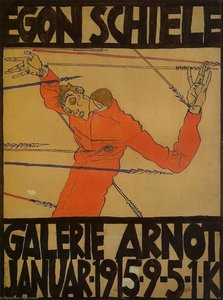
Πορτρέτο του Έγκον Σίλε

The 100 Most Famous Έγκον Σίλε Paintings, Each One of a Kind

Ενημερωμένο Οκτώβριος 2026 · κατάταξη βάσει του σκορ δημοφιλίας μας (αναζητήσεις, επισκέψεις και παραγγελίες για κάθε έργο) · 649 έργα του Έγκον Σίλε στον κατάλογό μας

In short

Ανακαλύψτε το «Πορτρέτο της Wally» του Egon Schiele, ένα στοιχειωτικό αριστούργημα του Εξπρεσιονισμού. Εξερευνήστε την τολμηρή τεχνική, την ανησυχητική ομορφιά και την ταραχώδη ιστορία του—ένα έργο τέχνης για απαιτητικούς συλλέκτες. (1912) is the Έγκον Σίλε painting that draws the most eyes; the original belongs to the Leopold Museum, Βιέννη. After it, the eye goes to Η Θάνατος και η Παρθένος (1915) and Οι Αυτοσκηνοθέτες II (Θάνατος και Άνθρωπος) (1911). Among the 649 works of Έγκον Σίλε in our catalog, these 100 are the most famous, each a unique original presented with its year, its museum and the reason it endures.

1890 – 1918, Τουλν αν ντερ Ντόναου Εκφραστισμός Περισσότερα έργα: Leopold Museum

Top 10 paintings by Έγκον Σίλε, through the gallery's eye

1
Ανακαλύψτε το «Πορτρέτο της Wally» του Egon Schiele, ένα στοιχειωτικό αριστούργημα του Εξπρεσιονισμού. Εξερευνήστε την τολμηρή τεχνική, την ανησυχητική ομορφιά και την ταραχώδη ιστορία του—ένα έργο τέχνης για απαιτητικούς συλλέκτες. (1912) του Έγκον Σίλε

Ανακαλύψτε το «Πορτρέτο της Wally» του Egon Schiele, ένα στοιχειωτικό αριστούργημα του Εξπρεσιονισμού. Εξερευνήστε την τολμηρή τεχνική, την ανησυχητική ομορφιά και την ταραχώδη ιστορία του—ένα έργο τέχνης για απαιτητικούς συλλέκτες.

1912 · Άνθρακα και λάδι σε καμβά · Leopold Museum, Βιέννη

Στα χρόνια μετά τον Α' Παγκόσμιο Πόλεμο, η τέχνη αναζητούσε νέους δρόμους έκφρασης, απομακρυνόμενη από την παραδοσιακή αισθητική και στρέφοντας το βλέμμα προς τα βάθη της ανθρώπινης ψυχής. Μέσα σε αυτό το πλαίσιο καλλιτεχνικής αναταραχής, ο Έγκον Σίλε ξεχώρισε ως ένας από τους σημαντικότερους εκπροσώπους του Αυστριακού Εξπρεσιονισμού, και το "Πορτρέτο της Wally" (1912) αποτελεί ένα κορυφαίο δείγμα της ιδιοφυΐας του. Δεν είναι απλώς μια απεικόνιση μιας γυναίκας, αλλά μια…

2
Η Θάνατος και η Παρθένος (1915) του Έγκον Σίλε

Η Θάνατος και η Παρθένος

1915 · Ακρυλικά πάνω σε καμβά · Αυστριακή Πινακοθήκη Belvedere, Βιέννη

Ένα Εκφρασιονιστικό Αριστούργημα Το έργο «Η Θάνατος και η Παρθένος» του Egon Schiele είναι ένα μαρμαρυγήμενο από ομορφιά αριστούργημα που ενσαρκώνει την ακατέργαστη συναισθηματική δύναμη του Εκφρασιονισμού. Δημιουργημένος το 1915, αυτός ο πίνακας αποτυπώνει την έντονη σύνδεση μεταξύ δύο μορφών, όπου η μία είναι καλυμμένη από το σκοτάδι και η άλλη διακοσμημένη με ζωντανές χρωματικές αποχρώσεις. Η δραματική σύνθεση και τα τολμηρά πινελιάτα καθιστούν το έργο ένα ξεχωριστό κομμάτι του…

3
Οι Αυτοσκηνοθέτες II (Θάνατος και Άνθρωπος) (1911) του Έγκον Σίλε

Οι Αυτοσκηνοθέτες II (Θάνατος και Άνθρωπος)

1911 · Άνθρακα και λάδι σε καμβά · Leopold Museum, Βιέννη

Η “Σελήφανες Β’ (Θάνατος και Άνθρωπος)” του Έγκον Σίλε, ζωγραφισμένη το 1911, δεν είναι απλώς ένα πορτρέτο – είναι μια βαθιά ψυχολογική εξερεύνηση της ανθρώπινης κατάστασης, μια ατμοσφαιρική απεικόνιση της μοναξιάς και του φόβου που διακατέχει την αρχή του 20ού αιώνα. Σε αντίθεση με τις παραδοσιακές τεχνικές ζωγραφικής, ο Σίλε χρησιμοποιεί μια ιδιαίτερα έντονη και ρευστή τεχνική, δίνοντας έμφαση στις χονδροειδείς πινελιές και την υφή του καμβά, δημιουργώντας ένα συναίσθημα…

4
Μαμά και δύο παιδιά (1917) του Έγκον Σίλε

Μαμά και δύο παιδιά

1917 · Άνθρακα και λάδι σε καμβά · Αυστριακή Πινακοθήκη Belvedere, Βιέννη

Μητέρα με δύο παιδιά: Μια Σκληρή Αντιγραφή της Οικογένειας και της Προσμονής Η Μητέρα με δύο παιδιά του Έγονα Σχιέλε αποτελεί μια βαθιά συγκλονιστική δημιουργία τέχνης που ενσαρκώνει τον χαρακτηριστικό σουρεαλισμό του καλλιτέχνη και παραμένει ένα κομβικό σημείο στην τραγική αλλά εξαιρετικά επιδραστική καριέρα του Σχιέλε. Εντυπωσιαστήκαμε ιδιαίτερα από την ιστορία της δημιουργίας του έργου καθώς ήταν μια προσπάθεια να καταγραφεί η αλήθεια για τον άνθρωπο και την τέχνη στην…

5
Η Οικογένεια (1917) του Έγκον Σίλε

Η Οικογένεια

1917 · Ακρυλικά πάνω σε καμβά · Αυστριακή Πινακοθήκη Belvedere, Βιέννη

Το έργο Η Οικογένεια του Έγων Σχιέλε, ζωγραφισμένο το 1917, είναι ένα βαθιά συγκινητικό αριστούργημα που ξεπερνά την απλή αναπαράσταση των οικογενειακών δεσμών. Πρόκειται για μια συναισθηματικά ωμή και ψυχολογικά διαπεραστική εξερεύνηση της σύνδεσης, της ευαλωτότητας και των ανησυχιών που είναι εγγενείς στις ανθρώπινες σχέσεις – μια απόδειξη της δεξιοτεχνίας του Σχιέλε στον Ενσυναίσθηση.

6
Lovers: Man and Woman I (1914) του Έγκον Σίλε

Lovers: Man and Woman I

1914 · Oil On Canvas

Egon Schiele's 1914 painting, *Lovers: Man and Woman I*, isn’t merely a depiction of two figures; it’s a visceral exploration of human connection, vulnerability, and the unsettling beauty of mortality. Created during a period of intense personal struggle for the artist – marked by illness, loss, and a profound awareness of his own precarious existence – this work embodies the core tenets of Expressionism, translating raw emotion directly onto the…

7
Self Portrait with Hands on Chest (1910) του Έγκον Σίλε

Self Portrait with Hands on Chest

1910 · Ακρυλικά πάνω σε καμβά

A Window into the Soul: Egon Schiele’s ‘Self Portrait with Hands on Chest’ (1910) This striking self-portrait by Austrian Expressionist master Egon Schiele is more than just a likeness; it's a raw and unflinching exploration of inner turmoil, vulnerability, and the search for identity. Created in 1910, at a pivotal moment in both his artistic development and personal life, this work embodies the core tenets of Expressionism while establishing Schiele’s…

8
Αγκαλιά (Εραστές II) - - , (1917) του Έγκον Σίλε

Αγκαλιά (Εραστές II) - - ,

1917 · Ακρυλικά πάνω σε καμβά

A Tangled Embrace: Decoding Schiele’s ‘Lovers II’ Egon Schiele's ‘Embrace (Lovers II)’ (1917) is not merely a depiction of intimacy; it’s a visceral exploration of the human condition, rendered with the raw emotionality that defines Expressionism. This powerful work, measuring 100 x 170 cm, transcends simple representation to become a symbolic landscape of vulnerability, desire, and perhaps even anxiety. Subject & Composition: A Study in Intertwined Forms The painting presents…

9
Θρηνητή Γυναίκα (1912) του Έγκον Σίλε

Θρηνητή Γυναίκα

1912 · Leopold Museum, Βιέννη

Πλησιάστε και ίσως βρεθείτε αιχμαλωτισμένοι στα βαριά, δακρύα μάτια αυτής της γυναίκας. Υπάρχει μια βαθιά ησυχία εδώ, αν και μακριά από την ειρήνη. Το πρόσωπο είναι χλωμό, σχεδόν σκελετώδες, με σκούρα σκιές να συσσωρεύονται γύρω από τις κοιλάδες των ματιών, υποδηλώνοντας μια βαθιά, σωματική εξάντληση. Το κεφάλι της είναι τυλιγμένο σε ένα σκούρο ύφασμα, μια λεπτομέρεια που ελκύει τον θεατή μέσα στον προσωπικό της θρήνο. Πίσω της, ένα δεύτερο, πιο…

10
Αυτοπροσωπογραφία ως Αγιος Σεμπέστιας (Ποστερ) (1914) του Έγκον Σίλε

Αυτοπροσωπογραφία ως Αγιος Σεμπέστιας (Ποστερ)

1914 · Έργο εκτύπωσης

Εγόν Σχιέλε’ς Αποκρυστάλλωση του Πνεῦματός Του ως Αγιος Σεμπέστιας Αυτή η εντυπωσιακή αναπαραγωγή αφίσας αποκαλύπτει την άμεση συναισθηματική ένταση της περπετειάδας του Εγόν Σχιέλε, το έργο του 1914 *Εγόν Σχιέλε ως Αγιος Σεμπέστιας*. Πιο από μια απλή ομοίωση, αυτή η δημιουργία είναι μια ισχυρή δήλωση για τον πόνο, την καλλιτεχνική ευθραυστότητα και τις προφητείες ενός κόσμου που κατηφορίζει στην αναρχία. Ο Σχιέλε δεν απλά απεικονίζει τον Αγιο Σεμπέστιαν· γίνεται αυτός…

Έγκον Σίλε's famous paintings, numbers 11 to 100

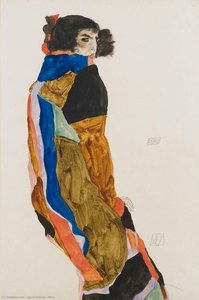
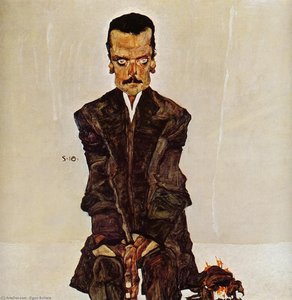
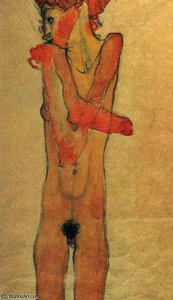
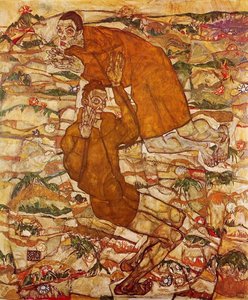
11Portrait of a Woman (1912) του Έγκον ΣίλεPortrait of a Woman1912 12Μοα (1911) του Έγκον ΣίλεΜοα1911 · Leopold Museum 13Agony (1912) του Έγκον ΣίλεAgony1912 14Σύνθεση με τρεις ανδρικές γυμνές (1910) του Έγκον ΣίλεΣύνθεση με τρεις ανδρικές γυμνές1910 · Leopold Museum 15Αυτοπροσωπογραφία με ρίγες (1910) του Έγκον ΣίλεΑυτοπροσωπογραφία με ρίγες1910 · Leopold Museum 16Self Portrait with Arm Twisting above Head (1910) του Έγκον ΣίλεSelf Portrait with Arm Twisting above Head1910 17Mother and Child (Madonna) (1908) του Έγκον ΣίλεMother and Child (Madonna)1908 18Two Women Embracing (1915) του Έγκον ΣίλεTwo Women Embracing1915 · Μουσείο Τέχνης Βουδαπέστης 19The Artist's Mother, Sleeping (1911) του Έγκον ΣίλεThe Artist's Mother, Sleeping1911 20Self Portrait (1912) του Έγκον ΣίλεSelf Portrait1912 21Couple Embracing του Έγκον ΣίλεCouple Embracing 22Self-Portrait with Bare Shoulder (1912) του Έγκον ΣίλεSelf-Portrait with Bare Shoulder1912 · Leopold Museum 23Secession 49. Exhibition (1918) του Έγκον ΣίλεSecession 49. Exhibition1918 24Self-Portrait with Splayed Fingers (1911) του Έγκον ΣίλεSelf-Portrait with Splayed Fingers1911 · Leopold Museum 25Prophets (also known as Double Self Portrait) (1911) του Έγκον ΣίλεProphets (also known as Double Self Portrait)1911 · Staatsgalerie Stuttgart 26Η Πορτραίρα της Εγκυμοσύνης και του Θανάτου (1911) του Έγκον ΣίλεΗ Πορτραίρα της Εγκυμοσύνης και του Θανάτου1911 · Εθνική Γκαλερίη Πράγας 27Crouching Woman with Green Headscarf (1914) του Έγκον ΣίλεCrouching Woman with Green Headscarf1914 · Leopold Museum 28Girl Nude with Folded Arms, 1910 (1910) του Έγκον ΣίλεGirl Nude with Folded Arms, 19101910 · Albertina 29Εγω Σχέλε Γερτί Σχέλε του Έγκον ΣίλεΕγω Σχέλε Γερτί Σχέλε 30Seated Woman with Bent Knee (1917) του Έγκον ΣίλεSeated Woman with Bent Knee1917 31Βουνικός Λαίλαπας (1918) του Έγκον ΣίλεΒουνικός Λαίλαπας1918 32Autumn Trees (1911) του Έγκον ΣίλεAutumn Trees1911 33Πορτρέτο του Εκδότη Eduard Kosmack (1910) του Έγκον ΣίλεΠορτρέτο του Εκδότη Eduard Kosmack1910 · Αυστριακή Πινακοθήκη Belvedere 34Άγνωσ τίτλος (938) του Έγκον ΣίλεΆγνωσ τίτλος (938) 35Schiele's Room in Neulengbach (1911) του Έγκον ΣίλεSchiele's Room in Neulengbach1911 · Kunsthistorisches Museum 36Self-Portrait with Lowered Head (1912) του Έγκον ΣίλεSelf-Portrait with Lowered Head1912 · Leopold Museum 37Kneeling Girl, Resting on Both Elbows (1917) του Έγκον ΣίλεKneeling Girl, Resting on Both Elbows1917 · Leopold Museum 38Portrait of Herbert Reiner (1910) του Έγκον ΣίλεPortrait of Herbert Reiner1910 39Σπίτι στη Ρυά (επίσης γνωστό ως Παλιά Κατοικία I) (1915) του Έγκον ΣίλεΣπίτι στη Ρυά (επίσης γνωστό ως Παλιά Κατοικία I)1915 · Leopold Museum 40Ο Γουστάβ Κλίμτ στο κρεβάτι του θανάτου (1918) του Έγκον ΣίλεΟ Γουστάβ Κλίμτ στο κρεβάτι του θανάτου1918 · Wien Museum 41Sitting Nude Young Naked Viennese Woman του Έγκον ΣίλεSitting Nude Young Naked Viennese Woman 42Self Portrait with Raised Arms, Back View (1912) του Έγκον ΣίλεSelf Portrait with Raised Arms, Back View1912 43The truth unveiled - - (1913) του Έγκον ΣίλεThe truth unveiled - -1913 44Περιφέρεια της Πόλης (επίσης γνωστό ως Krumau Town Crescent III) (1918) του Έγκον ΣίλεΠεριφέρεια της Πόλης (επίσης γνωστό ως Krumau Town Crescent III)1918 45Street in Krumau (1917) του Έγκον ΣίλεStreet in Krumau1917 46Wally with a Red Blouse (1913) του Έγκον ΣίλεWally with a Red Blouse1913 47Self-Portrait with Outstretched Arms1911 του Έγκον ΣίλεSelf-Portrait with Outstretched Arms1911 48Portrait of an Old Man (also known as Johann Harms) (1916) του Έγκον ΣίλεPortrait of an Old Man (also known as Johann Harms)1916 · Solomon R. Guggenheim Museum 49self-portrait (1913) του Έγκον Σίλεself-portrait1913 50Πορτρέτο του Βικτορ Ρίττερ פון Βαούερ (1918) του Έγκον ΣίλεΠορτρέτο του Βικτορ Ρίττερ פון Βαούερ1918 · Αυστριακή Πινακοθήκη Belvedere 51schiele agonia 1912 του Έγκον Σίλεschiele agonia 1912 52Portrait of Leopold Czihaczek (1907) του Έγκον ΣίλεPortrait of Leopold Czihaczek1907 53schiele sebastian του Έγκον Σίλεschiele sebastian 54pregnant woman death του Έγκον Σίλεpregnant woman death 55Portrait of Leopold Czihaczek, Standing (1907) του Έγκον ΣίλεPortrait of Leopold Czihaczek, Standing1907 56Sunflowers (1911) του Έγκον ΣίλεSunflowers1911 57Man with Blue Headband and Hand on Cheek (1909) του Έγκον ΣίλεMan with Blue Headband and Hand on Cheek1909 58Portrait of the Artist's Wife Seated, Holding Her Right Leg του Έγκον ΣίλεPortrait of the Artist's Wife Seated, Holding Her Right Leg 59untitled (2447) του Έγκον Σίλεuntitled (2447) 60Boy with Hand to Face (1910) του Έγκον ΣίλεBoy with Hand to Face1910 61Self Portrait (1911) του Έγκον ΣίλεSelf Portrait1911 62Σκηνή με ζευγάρι (Egon και Edith Schiele) του Έγκον ΣίλεΣκηνή με ζευγάρι (Egon και Edith Schiele) 63I Will Gladly Endure for Art and My Loved Ones, 1912 (1912) του Έγκον ΣίλεI Will Gladly Endure for Art and My Loved Ones, 19121912 · Albertina 64Black-Haired Girl with Lifted Skirt (1911) του Έγκον ΣίλεBlack-Haired Girl with Lifted Skirt1911 · Leopold Museum 65Study of hands (1913) του Έγκον ΣίλεStudy of hands1913 66scornful woman 1910 του Έγκον Σίλεscornful woman 1910 67Standing Nude, Facing Right του Έγκον ΣίλεStanding Nude, Facing Right 68Reclining Female Nude (1917) του Έγκον ΣίλεReclining Female Nude1917 69Autumn Sun (1912) του Έγκον ΣίλεAutumn Sun1912 70Conversion (1912) του Έγκον ΣίλεConversion1912 71Kneeling Young Man (1908) του Έγκον ΣίλεKneeling Young Man1908 72Prostitute (Dirne) του Έγκον ΣίλεProstitute (Dirne) 73femme à demi nue étendue 1911 του Έγκον Σίλεfemme à demi nue étendue 1911 74Levitation (1915) του Έγκον ΣίλεLevitation1915 75Two young girls του Έγκον ΣίλεTwo young girls 76Woman Undressing (1914) του Έγκον ΣίλεWoman Undressing1914 77Two Kneeling Figures (also known as Parallelogram) (1913) του Έγκον ΣίλεTwo Kneeling Figures (also known as Parallelogram)1913 78Lovemaking (1915) του Έγκον ΣίλεLovemaking1915 · Leopold Museum 79Reclining Female Nude (1908) του Έγκον ΣίλεReclining Female Nude1908 80Seated Woman in Corset and Boots του Έγκον ΣίλεSeated Woman in Corset and Boots 81Moa (1911) του Έγκον ΣίλεMoa1911 82untitled (5287) του Έγκον Σίλεuntitled (5287) 83The Bridge (1913) του Έγκον ΣίλεThe Bridge1913 84untitled (7272) του Έγκον Σίλεuntitled (7272) 85Reclining Girl, with Round Head του Έγκον ΣίλεReclining Girl, with Round Head 86Autumn Tree with Fuchsias (1909) του Έγκον ΣίλεAutumn Tree with Fuchsias1909 87Torso of a Seated Woman with Boots του Έγκον ΣίλεTorso of a Seated Woman with Boots 88untitled (6044) του Έγκον Σίλεuntitled (6044) 89Two Girls Lying Entwined (1915) του Έγκον ΣίλεTwo Girls Lying Entwined1915 90City on the Blue River (1910) του Έγκον ΣίλεCity on the Blue River1910 91Nude with Blue Stockings, Bending Forward (1912) του Έγκον ΣίλεNude with Blue Stockings, Bending Forward1912 · Leopold Museum 92Seated Couple, 1915 (1915) του Έγκον ΣίλεSeated Couple, 19151915 · Albertina 93Nude Self-Portrait (1910) του Έγκον ΣίλεNude Self-Portrait1910 · Leopold Museum 94Krumau Town Crescent I (1915) του Έγκον ΣίλεKrumau Town Crescent I1915 · Ισραηλινό Μουσείο 95Kneeling Female in Orange-Red Dress (1910) του Έγκον ΣίλεKneeling Female in Orange-Red Dress1910 · Leopold Museum 96untitled (1348) του Έγκον Σίλεuntitled (1348) 97Female nude (1910) του Έγκον ΣίλεFemale nude1910 98Self-Portrait in Yellow Vest, 1914 (1914) του Έγκον ΣίλεSelf-Portrait in Yellow Vest, 19141914 · Albertina 99Procession (1911) του Έγκον ΣίλεProcession1911 100Sitting Woman in a Green Blouse (1913) του Έγκον ΣίλεSitting Woman in a Green Blouse1913

Έγκον Σίλε's famous paintings, period by period

The subjects that held Έγκον Σίλε's eye

The four subjects that come back most often in these originals, each with its finest example.

The museums that keep Έγκον Σίλε's originals

Τα 8 μουσεία που φιλοξενούν το μεγαλύτερο μέρος των έργων σε αυτήν τη σελίδα.

Μουσεία Πόλη Έργα του Έγκον Σίλε Πάτρια από αυτή τη λίστα
Leopold Museum, ΒιέννηLeopold Museum Βιέννη 46 Ανακαλύψτε το «Πορτρέτο της Wally» του Egon Schiele, ένα στοιχειωτικό αριστούργημα του Εξπρεσιονισμού. Εξερευνήστε την τολμηρή τεχνική, την ανησυχητική ομορφιά και την ταραχώδη ιστορία του—ένα έργο τέχνης για απαιτητικούς συλλέκτες., Οι Αυτοσκηνοθέτες II (Θάνατος και Άνθρωπος), Θρηνητή Γυναίκα
Αυστριακή Πινακοθήκη Belvedere, ΒιέννηΑυστριακή Πινακοθήκη Belvedere Βιέννη 10 Η Θάνατος και η Παρθένος, Μαμά και δύο παιδιά, Η Οικογένεια
Albertina, ΒιέννηAlbertina Βιέννη 10 Girl Nude with Folded Arms, 1910, I Will Gladly Endure for Art and My Loved Ones, 1912, Seated Couple, 1915
Kunsthistorisches Museum, ΒιέννηKunsthistorisches Museum Βιέννη 4 Schiele's Room in Neulengbach
Wien Museum, ΒιέννηWien Museum Βιέννη 2 Ο Γουστάβ Κλίμτ στο κρεβάτι του θανάτου
Μουσείο Τέχνης Βουδαπέστης, ΒουδαπέστηΜουσείο Τέχνης Βουδαπέστης Βουδαπέστη 1 Two Women Embracing
Staatsgalerie Stuttgart, ΣτουτγκάρδηStaatsgalerie Stuttgart Στουτγκάρδη 1 Prophets (also known as Double Self Portrait)
Εθνική Γκαλερίη Πράγας, ΠράγαΕθνική Γκαλερίη Πράγας Πράγα 1 Η Πορτραίρα της Εγκυμοσύνης και του Θανάτου

Έγκον Σίλε across the years: the unique originals of each

12 years separate Έγκον Σίλε's first and last dated originals shown here, 1907 and 1918: each year has its place below.

Έργα ανά έτος

Pick a year to see its originals.

Έγκον Σίλε's paintings: questions for the gallery

What is the single most famous work of Έγκον Σίλε?Reveal the answer

Ανακαλύψτε το «Πορτρέτο της Wally» του Egon Schiele, ένα στοιχειωτικό αριστούργημα του Εξπρεσιονισμού. Εξερευνήστε την τολμηρή τεχνική, την ανησυχητική ομορφιά και την ταραχώδη ιστορία του—ένα έργο τέχνης για απαιτητικούς συλλέκτες. (1912), Leopold Museum, Βιέννη. Η Θάνατος και η Παρθένος (1915) and Οι Αυτοσκηνοθέτες II (Θάνατος και Άνθρωπος) (1911) come next.

At what age did Έγκον Σίλε create Ανακαλύψτε το «Πορτρέτο της Wally» του Egon Schiele, ένα στοιχειωτικό αριστούργημα του Εξπρεσιονισμού. Εξερευνήστε την τολμηρή τεχνική, την ανησυχητική ομορφιά και την ταραχώδη ιστορία του—ένα έργο τέχνης για απαιτητικούς συλλέκτες.?Reveal the answer

22 years old: Ανακαλύψτε το «Πορτρέτο της Wally» του Egon Schiele, ένα στοιχειωτικό αριστούργημα του Εξπρεσιονισμού. Εξερευνήστε την τολμηρή τεχνική, την ανησυχητική ομορφιά και την ταραχώδη ιστορία του—ένα έργο τέχνης για απαιτητικούς συλλέκτες. dates from 1912, and Έγκον Σίλε was born in 1890.

Which ten paintings by Έγκον Σίλε are the most famous?Reveal the answer

Ανακαλύψτε το «Πορτρέτο της Wally» του Egon Schiele, ένα στοιχειωτικό αριστούργημα του Εξπρεσιονισμού. Εξερευνήστε την τολμηρή τεχνική, την ανησυχητική ομορφιά και την ταραχώδη ιστορία του—ένα έργο τέχνης για απαιτητικούς συλλέκτες., Η Θάνατος και η Παρθένος, Οι Αυτοσκηνοθέτες II (Θάνατος και Άνθρωπος), Μαμά και δύο παιδιά, Η Οικογένεια, Lovers: Man and Woman I, Self Portrait with Hands on Chest, Αγκαλιά (Εραστές II) - - ,, Θρηνητή Γυναίκα και Αυτοπροσωπογραφία ως Αγιος Σεμπέστιας (Ποστερ). The ranking above gives each one's year and museum.

How many works by Έγκον Σίλε are known?Reveal the answer

Our catalog holds 649 works by Έγκον Σίλε, dated from 1907 to 1918.

Where can the most famous Έγκον Σίλε originals be seen?Reveal the answer

Mostly in Leopold Museum (Βιέννη), Αυστριακή Πινακοθήκη Belvedere (Βιέννη) και Albertina (Βιέννη). The museum table above lists them all.

During which period did Έγκον Σίλε create the best-known paintings?Reveal the answer

In 1911: 13 of the 100 works on this page were made then, Οι Αυτοσκηνοθέτες II (Θάνατος και Άνθρωπος) among them.

Which famous Έγκον Σίλε painting is the earliest, and which the latest?Reveal the answer

On this page, the earliest is Portrait of Leopold Czihaczek (1907) and the latest Secession 49. Exhibition (1918).

What subjects did Έγκον Σίλε favour?Reveal the answer

Mortality (25), Vienna (16) και Anxiety (15), across the 100 works on this page.

What materials did Έγκον Σίλε paint with most?Reveal the answer

Acrylic On Canvas, for 27 of the 100 works on this page.

Which movement does the work of Έγκον Σίλε belong to?Reveal the answer

Εκφραστισμός, judging by the originals on this page.

What Έγκον Σίλε originals can I see at the Leopold Museum?Reveal the answer

Ανακαλύψτε το «Πορτρέτο της Wally» του Egon Schiele, ένα στοιχειωτικό αριστούργημα του Εξπρεσιονισμού. Εξερευνήστε την τολμηρή τεχνική, την ανησυχητική ομορφιά και την ταραχώδη ιστορία του—ένα έργο τέχνης για απαιτητικούς συλλέκτες., Οι Αυτοσκηνοθέτες II (Θάνατος και Άνθρωπος) και Θρηνητή Γυναίκα: the Leopold Museum, Βιέννη holds 17 of the works on this page.

Where can I order a hand-painted Έγκον Σίλε reproduction?Reveal the answer

Yes, as a reproduction: the original stays in its museum, but any painting on this page can be painted by hand for you, made to order one at a time, from the painting's own page.

Έγκον Σίλε: a portrait of the artist

The Life of Egon Schiele

Tulln, Lower Austria, provides the setting for the beginning of Egon Schiele’s life. Born on 12 June 1890, he enters a world defined by the rigid structures of the Austro-Hungarian Empire. His father, Adolf Schiele, manages the local station as the station master for the Austrian Federal Railways. His mother, Marie, is known by her maiden name, Soukup. Within the family, Egon grows alongside his three sisters: Elvira, Melanie, and Gertrude.

The stability of this domestic life fractures early. The shadow of illness moves through the household, leaving a permanent mark on the young artist's psyche. These personal disruptions do not merely pass; they settle into the marrow of his future work. He moves through the world with a sensitivity to mortality that will eventually define his place in Austrian Expressionism. His existence becomes a struggle to translate internal tension onto the surface of the canvas.

His path leads him toward the center of a shifting European landscape. He navigates the tension between traditional academic expectations and a burgeoning need for raw, psychological truth. The life of Egon Schiele is a series of intense, often uncomfortable confrontations with the human condition. He does not seek to depict the world as it appears to the eye, but as it vibrates within the nervous system.

Early Life, Family and Training

The stability of Schiele's youth fractures in 1904. His father, Adolf Schiele, a station master, succumbs to syphilis. This illness, contracted during a honeymoon in Trieste, leaves the family impoverished and the young artist's psyche marked by the shadow of his father's mental confusion and rage. Egon grows up alongside his three sisters, Elvira, Melanie, and Gertrude, under the guardianship of his uncle-in-law, Leopold Czihaczek. Even in these turbulent years, a fascination with trains persists, a motif that would later surface in his work.

Formal training begins under the guidance of tutor Ludwig Karl Strauch. By 1906, Schiele moves to Vienna to study at the Academy of Fine Arts (Akademie der bildenden Künste). The atmosphere is rigid. He finds himself increasingly at odds with the ultra-conservative teaching of Professor Christian Griepenkerl. The friction becomes unsustainable. After three years of navigating these strict academic traditions, Schiele abandons the Academy altogether to forge an independent path.

A shift occurs when he encounters Gustav Klimt. The established artist becomes a mentor, providing the young painter with models and introducing him to the circles of the Vienna Secession. This connection marks the transition from a student struggling against tradition to a central figure in the burgeoning avant-garde.

Artistic Development in Vienna

Vienna becomes the center of Schiele's creative friction. He moves through the city's artistic circles, eventually meeting Gustav Klimt. This encounter marks a significant shift in his trajectory. While he absorbs the influence of his mentor, Schiele does not simply replicate the decorative patterns of the Secession. Instead, he begins to strip away the ornamentation. He seeks a more visceral truth. By 1909, he is actively challenging the established order, co-founding the Neues Wiener Kunstgruppe and the Neukunstgruppe. These movements signal his break from tradition.

His presence in the city is marked by a restless movement between urban centers and quieter outskirts. He works across Vienna, Krems, Klosterneuburg, Neulengbach, and Prague. This geographic spread mirrors a psychological expansion. His art moves from the formal constraints of his early training toward a raw, unshielded exploration of the human condition. The tension of the era is visible in his evolving sketches and compositions.

Technique and Expressionist Style

The line is the primary engine of Schiele’s vision. It does not merely outline a form; it vibrates with a nervous, restless energy. He employs expressive lines to map out psychological tension, often resulting in contorted poses and twisted body shapes. Figures appear elongated, their limbs stretched beyond natural proportions to convey a sense of unease. This is not a pursuit of anatomical perfection but an attempt to expose the internal state of the subject. Skin tones often appear emaciated or sickly-coloured, emphasizing a sense of fragility and physical vulnerability.

His technical approach varies by medium, yet the intensity remains constant. In his watercolors, he utilizes loose washes of color to create depth and mood, often leaving much of the paper bare to heighten the sense of isolation. When working in oil on canvas, the brushwork carries the same jagged urgency found in his drawings. Beyond the two-dimensional plane, he also explored form through sculpture, working in clay and plaster to capture the weight of the human presence.

Key Works and Subject Matter

The canvas becomes a site of psychological excavation. Schiele confronts the heavy presence of death, sexuality, anxiety, and isolation through a lens of unflinching honesty. In 1915, he produces Death and the Maiden, a work where the presence of mortality intersects with eros. The figures exist in a state of tension, reflecting the internal struggles that define his vision. He often returns to the human form to map these invisible states, using the body as a vessel for the complexities of existence.

Self-portraiture acts as a recurring method of introspection. He does not seek to present a polished image but rather a vulnerable one, often appearing in contorted or emaciated states. In Self-Portrait with Physalis, he utilizes the Physalis plant as a recurring motif. The plant, with its delicate and papery husk, symbolizes transience and the fragility of life. This botanical element anchors his preoccupation with decay and the fleeting nature of the human condition.

His intimate connections also find their way into his compositions. In 1915, he paints Portrait of Edith Schiele, capturing his wife in a way that reflects his specific expressive language. His subjects are rarely static; they pulse with a nervous energy that mirrors the shifting social and psychological landscapes of the era. The following works represent significant points in his exploration of these themes:

Later Years and Death

The landscape of Schiele's life shifts as the First World War approaches. He marries Edith Harms, a union that marks a significant personal transition. However, the stability of marriage is quickly interrupted by the demands of the conflict. He is drafted into military service, a period that places him within the chaos of the war's reach.

The end arrives with sudden, biological ferocity. In 1918, the Spanish flu pandemic sweeps through Vienna. The virus claims Schiele at the age of 28. He dies on 31 October 1918. His passing occurs shortly after the death of his wife, Edith, who succumbed to the same disease. The artist's life ends abruptly, leaving behind a body of work that captures the tension of a world in collapse.

Legacy and Artistic Influence

Schiele emerges from the early 20th century as a leading figure in Austrian Expressionism. His departure from the decorative gold of the Secession movement toward a more visceral, psychological exploration of the human form changed the trajectory of figurative painting. He stripped away the surface to map the nervous system, using jagged, restless lines to capture the tremors of anxiety and desire. This focus on the internal landscape rather than idealized beauty established him as a major figurative painter of the era.

The impact of his work extends far beyond the borders of Vienna. Subsequent generations of artists find a precedent in his radical honesty, particularly those drawn to the darker, more complex layers of the human psyche. His ability to translate personal trauma and existential tension into a universal visual language ensures his presence in the discourse of modern art. Today, his paintings are held in major museum collections worldwide, preserved as essential records of the psychological shifts of his time.

Where to See the Works Today

The weight of Schiele’s output is felt most heavily in Vienna. The Leopold Museum holds a vast concentration of his works, preserving the raw energy of his sketches and paintings. Nearby, the Österreichische Galerie Belvedere houses significant canvases, including Death and the Maiden (1915). The city’s institutional landscape continues to guard his legacy through the Kunsthistorisches Museum and the Albertina, both of which contain essential pieces of his oeuvre.

Beyond the Austrian capital, the Egon Schiele Art Centrum in Český Krumlov, Czech Republic, offers a dedicated space for his work. This museum traces his evolution through a permanent collection that includes watercolors and ink drawings. Visitors can encounter the specific intensity of his linework in this setting, which focuses on the development of his expressive style.

Όλα τα 649 έργα του Έγκον Σίλε →