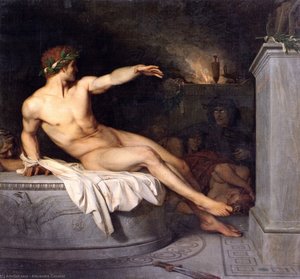
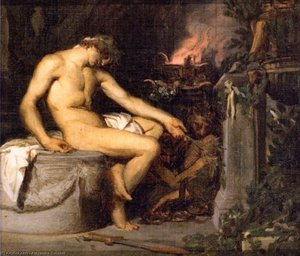
Πορτρέτο του Αλέξανδρος Καμπανέλ

Τα 100 πιο διάσημα έργα του Αλέξανδρος Καμπανέλ, μια επιλογή γκαλερί

Ενημερωμένο Οκτώβριος 2026 · κατάταξη βάσει του σκορ δημοφιλίας μας (αναζητήσεις, επισκέψεις και παραγγελίες για κάθε έργο) · 109 έργα του Αλέξανδρος Καμπανέλ στον κατάλογό μας

Με σύντομη περιγραφή

Από όλα τα πρωτότυπα έργα που άφησε ο Αλέξανδρος Καμπανέλ, το πιο διάσημο είναι το Ο Πτώτης του Άγγελου (1847), το οποίο βρίσκεται στη συλλογή του Musée Fabre, Μονπελιέ. Ακολουθούν στενά η The Birth of Venus (1863) και η Cleopatra Testing Poisons on Condemned Prisoners (1887). Ο κατάλογός μας περιλαμβάνει 109 έργα του Αλέξανδρος Καμπανέλ· η γκαλερί έχει διατηρήσει τα 100 κομμάτια που θαυμάζει ο κόσμος, το καθένα με την ημερομηνία, το μουσείο και την ιστορία του.

1823 – 1889, Μονπελιέ Academic painting Περισσότερα έργα: Musée Fabre

Τα 10 κορυφαία έργα του Αλέξανδρος Καμπανέλ: η επιλογή της γκαλερί

1
Ο Πτώτης του Άγγελου (1847) του Αλέξανδρος Καμπανέλ

Ο Πτώτης του Άγγελου

1847 · Άνθρακα και λάδι σε καμβά · Musée Fabre, Μονπελιέ

Το 1847, σε μια εποχή όπου η ακαδημαϊκή τέχνη κυριαρχούσε στο καλλιτεχνικό τοπίο της Γαλλίας, ο νεαρός Alexandre Cabanel έδωσε ζωή σε ένα έργο που ξεπέρασε την απλή αναπαράσταση και έγινε μια βαθιά εξερεύνηση της ανθρώπινης ψυχής. Το "Πτώση του Χάιδωρου" (L’Ange Déchu) δεν είναι απλώς ένα πορτρέτο ενός αρχαγγέλου, αλλά μια μεταφορά για την πτώση από την αρετή στην καταστροφή, μια στιγμή μοναξιάς και απελπισίας που στέφθηκε με μια…

2
The Birth of Venus (1863) του Αλέξανδρος Καμπανέλ

The Birth of Venus

1863 · Acrylic On Canvas · Musée d'Orsay, Παρίσι

Alexandre Cabanel’s *The Birth of Venus*, completed in 1863, stands as a cornerstone of French academic art—a testament to the artistic conventions and aspirations that dominated the mid-nineteenth century. Now residing within the hallowed halls of the Musée d'Orsay, this monumental canvas transcends mere depiction; it embodies an idealized vision of beauty rooted in classical mythology and executed with unparalleled mastery.

3
Cleopatra Testing Poisons on Condemned Prisoners (1887) του Αλέξανδρος Καμπανέλ

Cleopatra Testing Poisons on Condemned Prisoners

To stand before Alexandre Cabanel's Cleopatra Testing Poisons on Condemned Prisoners is to step directly into the opulent, dramatic heart of nineteenth-century academic painting. This monumental oil on canvas, executed in 1887, is not merely a depiction of an ancient scene; it is a meticulously crafted tableau vivant, saturated with the grandeur and theatricality characteristic of its era. Cabanel masterfully transports us to a world where myth, power, and fatal…

4
Paradise Lost (also known as The Expulsion of Adam and Eve from the Garden of Paradise) (1867) του Αλέξανδρος Καμπανέλ

Paradise Lost (also known as The Expulsion of Adam and Eve from the Garden of Paradise)

1867 · Oil On Canvas

To gaze upon Alexandre Cabanel's depiction of Paradise Lost is to step directly into the crucible moment of human history, rendered with breathtaking academic grandeur. This painting captures not merely a biblical narrative, but the raw, agonizing instant where innocence fractures against divine law. The scene pulses with dramatic energy; Adam and Eve, figures stripped bare both literally and metaphorically, are caught in the aftermath of transgression. One can almost…

5
John the Baptist (1849) του Αλέξανδρος Καμπανέλ

John the Baptist

1849 · Oil On Canvas · Musée Fabre, Μονπελιέ

Alexandre Cabanel’s “John the Baptist” is not merely a painting; it’s an immersive experience, a carefully constructed tableau of biblical drama rendered with the meticulous precision and emotional depth characteristic of 19th-century Academic Classicism. Completed in 1849, this monumental oil on canvas, currently residing within the Musée Fabre in Montpellier, France, transcends its historical subject matter to become a timeless meditation on faith, repentance, and the arrival of a transformative…

6
Fanny Clapp (1881) του Αλέξανδρος Καμπανέλ

Fanny Clapp

1881 · Oil On Canvas · Yale University Art Gallery, Hartford

Alexandre Cabanel’s “Portrait of Miss Fanny Clapp,” painted in 1881, is more than a simple likeness; it's a meticulously crafted distillation of the academic ideals that defined French art during the Second Empire. The painting immediately draws the eye with its serene composure and the subtle elegance of its subject, yet beneath this surface lies a complex interplay of light, shadow, and symbolic detail, inviting contemplation long after the initial…

7
ΤΡΥΟΜΦΗ ΤΗΣ ΦΛΩΡΑΣ του Αλέξανδρος Καμπανέλ

ΤΡΥΟΜΦΗ ΤΗΣ ΦΛΩΡΑΣ

Άνθρακα και λάδι σε καμβά · Μουσείο του Λούβρου, Παρίσι

Το έργο μας, το “Τρίομφος της Φλώρας” του Alexandre Cabanel, δεν είναι απλά μια αναπαράσταση ενός μυθικού γεγονότος. Είναι μια μεταφορά για την ανάδυση της ζωής, της ομορφιάς και της αφθονίας, ένα ταξίδι μέσα από έναν κόσμο όπου η αθανασία συνυπάρχει με την ελπίδα. Η δημιουργία του έργου αυτό το 1873, εντάσσεται στην ακμή της Ακαδημικής ζωγραφικής στη Γαλλία, μια εποχή που η τέχνη υπηρετούσε τις ιδέες της τάξης και…

8
Madame Carette (1868) του Αλέξανδρος Καμπανέλ

Madame Carette

1868 · Acrylic On Canvas · Musée National du Château de Compiègne, Compiègne

Alexandre Cabanel’s *Madame Carette*, painted in 1868, is more than just a depiction of a woman; it’s a carefully constructed tableau of Victorian elegance and restrained emotion. Executed during a pivotal moment in French art history – the final years of Cabanel's tragically short career – this work exemplifies the artist’s dedication to classical ideals and his ability to imbue even seemingly simple subjects with profound psychological depth. The painting…

9
Mary Victoria Leiter (1870–1906), Lady Curzon (1887) του Αλέξανδρος Καμπανέλ

Mary Victoria Leiter (1870–1906), Lady Curzon

1887 · Oil On Canvas · National Trust, Derby

Mary Victoria Leiter (1870–1906), Lady Curzon: A Portrait of Victorian Idealism Alexandre Cabanel’s “Mary Victoria Leiter (1870–1906), Lady Curzon” stands as a quintessential exemplar of French Academic painting—a genre dedicated to meticulous realism and idealized beauty, firmly rooted in classical traditions. Completed in 1887, this monumental canvas embodies the Victorian fascination with moral virtue and aristocratic refinement, capturing the serene dignity of Mary Leiter, wife of Lord Curzon Bahadur, Viceroy…

10
The Death of Francesca da Rimini and Paolo Malatesta (1870) του Αλέξανδρος Καμπανέλ

The Death of Francesca da Rimini and Paolo Malatesta

1870 · Oil On Canvas · Musée d'Orsay, Παρίσι

A Moment Frozen in Time: Alexandre Cabanel’s “Death of Francesca da Rimini” Alexandre Cabanel's "Death of Francesca da Rimini and Paolo Malatesta," completed in 1870, stands as a quintessential exemplar of Academic Art—a movement dedicated to upholding classical ideals of beauty and proportion. More than just a depiction of Dante Alighieri’s tragic tale, this monumental canvas delves into the profound exploration of grief, love, and mortality, cementing Cabanel's place among…

Η επιλογή του Αλέξανδρος Καμπανέλ συνεχίζεται, από τον 11 έως τον 100

11Portrait of Victor Massé (1847) του Αλέξανδρος ΚαμπανέλPortrait of Victor Massé1847 · Art Gallery of Hamilton 12The Birth of Venus του Αλέξανδρος ΚαμπανέλThe Birth of VenusMusée d'Orsay 13Samson and Delilah (1878) του Αλέξανδρος ΚαμπανέλSamson and Delilah1878 14The Nymph Echo (1874) του Αλέξανδρος ΚαμπανέλThe Nymph Echo1874 · Μετροπολιτικό Μουσείο Τέχνης 15Fallen Angel (study) (1846) του Αλέξανδρος ΚαμπανέλFallen Angel (study)1846 16La Chiaruccia (1848) του Αλέξανδρος ΚαμπανέλLa Chiaruccia1848 · Musée Fabre 17The Birth of Venus (1875) του Αλέξανδρος ΚαμπανέλThe Birth of Venus1875 · Μετροπολιτικό Μουσείο Τέχνης 18Young Roman (1849) του Αλέξανδρος ΚαμπανέλYoung Roman1849 · Musée Paul Valéry 19La Comtesse de Keller (1873) του Αλέξανδρος ΚαμπανέλLa Comtesse de Keller1873 · Musée d'Orsay 20The Birth of Venus (1863) του Αλέξανδρος ΚαμπανέλThe Birth of Venus1863 · Musée d'Orsay 21Emperor Napoleon III (1865) του Αλέξανδρος ΚαμπανέλEmperor Napoleon III1865 · Musée National du Château de Compiègne 22Portrait of an Arab (1875) του Αλέξανδρος ΚαμπανέλPortrait of an Arab1875 · Musée Fabre 23Esquisse pour Le Triomphe de Flore του Αλέξανδρος ΚαμπανέλEsquisse pour Le Triomphe de FloreΜουσείο του Λούβρου 24Florentine Poet (1861) του Αλέξανδρος ΚαμπανέλFlorentine Poet1861 · Μετροπολιτικό Μουσείο Τέχνης 25The Druidess (1868) του Αλέξανδρος ΚαμπανέλThe Druidess1868 · Musee des Beaux-Arts 26Saint Monica in a Landscape (1845) του Αλέξανδρος ΚαμπανέλSaint Monica in a Landscape1845 · Milwaukee Art Museum 27Velléda (1852) του Αλέξανδρος ΚαμπανέλVelléda1852 · Musée Fabre 28Portrait de madame Louise Marès, née Bidreman (1851) του Αλέξανδρος ΚαμπανέλPortrait de madame Louise Marès, née Bidreman1851 · Musée Fabre 29Martyr Chrétien (1855) του Αλέξανδρος ΚαμπανέλMartyr Chrétien1855 · Musée des Beaux-Arts 30The Chapelmaster's Widow (1859) του Αλέξανδρος ΚαμπανέλThe Chapelmaster's Widow1859 · Petit Palais 31Aglaida and Boniface (1857) του Αλέξανδρος ΚαμπανέλAglaida and Boniface1857 · Μουσείο Τέχνης Κλίβελαντ 32Triumph of Flora (1871) του Αλέξανδρος ΚαμπανέλTriumph of Flora1871 33Portrait of Miss Cornelia Lyman Warren (1871) του Αλέξανδρος ΚαμπανέλPortrait of Miss Cornelia Lyman Warren1871 · Davis Museum and Cultural Center 34Étude pour le Paradis perdu: Adam (1865) του Αλέξανδρος ΚαμπανέλÉtude pour le Paradis perdu: Adam1865 · Musée Fabre 35Napoleon III (1865) του Αλέξανδρος ΚαμπανέλNapoleon III1865 · Walters Art Museum 36Vénus victorieuse (1875) του Αλέξανδρος ΚαμπανέλVénus victorieuse1875 · Musée Fabre 37Portrait of the Duchess of Luynes and her children (1873) του Αλέξανδρος ΚαμπανέλPortrait of the Duchess of Luynes and her children1873 38The Titan (1884) του Αλέξανδρος ΚαμπανέλThe Titan1884 · Musée Victor Hugo 39Phèdre (1880) του Αλέξανδρος ΚαμπανέλPhèdre1880 · Petit Palais 40Rebecca et Eliézer (1883) του Αλέξανδρος ΚαμπανέλRebecca et Eliézer1883 41Self-portrait (1885) του Αλέξανδρος ΚαμπανέλSelf-portrait1885 · Βασικό Μουσείο Καλών Τεχνών Αντβέρπη 42Portrait de M. Pierre Cabanel (1883) του Αλέξανδρος ΚαμπανέλPortrait de M. Pierre Cabanel1883 · Musée Fabre 43Georgina Schuyler (1883) του Αλέξανδρος ΚαμπανέλGeorgina Schuyler1883 · New York Historical Society 44Portia - from The Merchant of Venice (1881) του Αλέξανδρος ΚαμπανέλPortia - from The Merchant of Venice1881 45Mrs. Robert Livingston Cutting (Juliana De Wolf, 1816–1891) (1888) του Αλέξανδρος ΚαμπανέλMrs. Robert Livingston Cutting (Juliana De Wolf, 1816–1891)1888 · New York Historical Society 46Portrait of Louise Cathérine Antoinette Borski (1887) του Αλέξανδρος ΚαμπανέλPortrait of Louise Cathérine Antoinette Borski1887 · Museum van Loon 47Contemplation (1868) του Αλέξανδρος ΚαμπανέλContemplation1868 · Philadelphia Museum of Art 48Catharine Lorillard Wolfe (1828–1887) (1876) του Αλέξανδρος ΚαμπανέλCatharine Lorillard Wolfe (1828–1887)1876 · Μετροπολιτικό Μουσείο Τέχνης 49Paul the First Hermit with Lions (1841) του Αλέξανδρος ΚαμπανέλPaul the First Hermit with Lions1841 · Musée Fabre 50Portrait of Prince K. A. Gorchakov του Αλέξανδρος ΚαμπανέλPortrait of Prince K. A. GorchakovΕρμιτάζ 51The Glorification of St. Louis (1853) του Αλέξανδρος ΚαμπανέλThe Glorification of St. Louis1853 · Musée Fabre 52French, ) (1823) του Αλέξανδρος ΚαμπανέλFrench, )1823 53George Lucas (1873) του Αλέξανδρος ΚαμπανέλGeorge Lucas1873 · Baltimore Museum of Art 54Orestes (1846) του Αλέξανδρος ΚαμπανέλOrestes1846 · Musee des Beaux-Arts 55Orestes (sketch) (1846) του Αλέξανδρος ΚαμπανέλOrestes (sketch)1846 56Othello Relating His Battles (1857) του Αλέξανδρος ΚαμπανέλOthello Relating His Battles1857 57Death of Moses (1851) του Αλέξανδρος ΚαμπανέλDeath of Moses1851 · Musée Fabre 58Christina Nilsson as Pandora (1873) του Αλέξανδρος ΚαμπανέλChristina Nilsson as Pandora1873 · Walters Art Museum 59Portrait of John William Mackay (1878) του Αλέξανδρος ΚαμπανέλPortrait of John William Mackay1878 60The Daughter Of Jephthah (1879) του Αλέξανδρος ΚαμπανέλThe Daughter Of Jephthah1879 61Madame Edouart Herve (1884) του Αλέξανδρος ΚαμπανέλMadame Edouart Herve1884 · Petit Palais 62Young Page in Florentine Garg (also known as The Sword-Bearing Page) (1881) του Αλέξανδρος ΚαμπανέλYoung Page in Florentine Garg (also known as The Sword-Bearing Page)1881 63Olivia Peyton Murray Cutting (1887) του Αλέξανδρος ΚαμπανέλOlivia Peyton Murray Cutting1887 · Museum of the City of New York 64Mary Frick Garrett (later Mrs. Henry Barton Jacobs) (1885) του Αλέξανδρος ΚαμπανέλMary Frick Garrett (later Mrs. Henry Barton Jacobs)1885 · Baltimore Museum of Art 65Petrarch's Laura του Αλέξανδρος ΚαμπανέλPetrarch's Laura 66Desdémone του Αλέξανδρος ΚαμπανέλDesdémone 67Portrait of a Lady του Αλέξανδρος ΚαμπανέλPortrait of a Lady 68NYMPHE ENLEVEE PAR UN FAUNE του Αλέξανδρος ΚαμπανέλNYMPHE ENLEVEE PAR UN FAUNE 69Engaving after Cabanel's 'The Sulamite' του Αλέξανδρος ΚαμπανέλEngaving after Cabanel's 'The Sulamite' 70Loves Messenger του Αλέξανδρος ΚαμπανέλLoves Messenger 71Madame Carette (née Amélia Bouvet) του Αλέξανδρος ΚαμπανέλMadame Carette (née Amélia Bouvet) 72The Death of Moses του Αλέξανδρος ΚαμπανέλThe Death of Moses 73Ondines του Αλέξανδρος ΚαμπανέλOndines 74ALFRED ARMAND του Αλέξανδρος ΚαμπανέλALFRED ARMAND 75Self Portrait 1 του Αλέξανδρος ΚαμπανέλSelf Portrait 1Musée Fabre 76Harmony του Αλέξανδρος ΚαμπανέλHarmony 77LA COMTESSE DE KELLER του Αλέξανδρος ΚαμπανέλLA COMTESSE DE KELLER 78Catharine Lorillard Wolfe (1828) του Αλέξανδρος ΚαμπανέλCatharine Lorillard Wolfe1828 · Μετροπολιτικό Μουσείο Τέχνης 79Oedipus Bids Farewell to Jocasta (study) (1843) του Αλέξανδρος ΚαμπανέλOedipus Bids Farewell to Jocasta (study)1843 80A Thinker, Young Roman Monk (1848) του Αλέξανδρος ΚαμπανέλA Thinker, Young Roman Monk1848 · Musée Fabre 81The Evening Angel (1848) του Αλέξανδρος ΚαμπανέλThe Evening Angel1848 · Musée Fabre 82Mrs. Collis Potter Huntington (1882) του Αλέξανδρος ΚαμπανέλMrs. Collis Potter Huntington1882 · Μουσεία Τέχνης της Σαν Φρανσίσκο 83Self Portrait as a Child (1836) του Αλέξανδρος ΚαμπανέλSelf Portrait as a Child1836 · Musée Fabre 84Envoys of the Senate Offer the Dictatorship to Cincinnatus (1844) του Αλέξανδρος ΚαμπανέλEnvoys of the Senate Offer the Dictatorship to Cincinnatus1844 · Musée Fabre 85Self Portrait (aged 17) (1840) του Αλέξανδρος ΚαμπανέλSelf Portrait (aged 17)1840 · Musée Fabre 86The Mocking of Christ (1845) του Αλέξανδρος ΚαμπανέλThe Mocking of Christ1845 · École Nationale Supérieure des Beaux-Arts 87Sophie and Berthe Cabanel (1872) του Αλέξανδρος ΚαμπανέλSophie and Berthe Cabanel1872 · Musée Fabre 88Nude Male Figure with a Sword (1878) του Αλέξανδρος ΚαμπανέλNude Male Figure with a Sword1878 · Μετροπολιτικό Μουσείο Τέχνης 89Sketch for the Ceiling of Madame Pereire's Residence του Αλέξανδρος ΚαμπανέλSketch for the Ceiling of Madame Pereire's ResidenceGovernment Art Collection 90Ophelia detail του Αλέξανδρος ΚαμπανέλOphelia detail 91Portrait of Countess E. A. Vorontsova-Dashkova του Αλέξανδρος ΚαμπανέλPortrait of Countess E. A. Vorontsova-Dashkova 92Portrait of Alfred Bruyas του Αλέξανδρος ΚαμπανέλPortrait of Alfred Bruyas 93Autoportrait του Αλέξανδρος ΚαμπανέλAutoportrait 94Albayde του Αλέξανδρος ΚαμπανέλAlbayde 95Nymphe et Satyr του Αλέξανδρος ΚαμπανέλNymphe et Satyr 96Cleopatra (study) του Αλέξανδρος ΚαμπανέλCleopatra (study) 97The Roman Monk του Αλέξανδρος ΚαμπανέλThe Roman Monk 98Eve After the Fall του Αλέξανδρος ΚαμπανέλEve After the Fall 99Paige του Αλέξανδρος ΚαμπανέλPaige 100Cincinnatus Receiving Deputies of the Senate του Αλέξανδρος ΚαμπανέλCincinnatus Receiving Deputies of the Senate

Τα θέματα που κίνησαν το ενδιαφέρον του Αλέξανδρος Καμπανέλ

Τα τέσσερα θέματα που εμφανίζονται πιο συχνά σε αυτά τα πρωτότυπα έργα, το καθένα με το εξαιρετικό του παράδειγμα.

Τα μουσεία που διατηρούν τα πρωτότυπα έργα του Αλέξανδρος Καμπανέλ

Τα 8 μουσεία που φιλοξενούν το μεγαλύτερο μέρος των έργων σε αυτήν τη σελίδα.

Μουσεία Πόλη Έργα του Αλέξανδρος Καμπανέλ Πάτρια από αυτή τη λίστα
Musée Fabre, ΜονπελιέMusée Fabre Μονπελιέ 20 Ο Πτώτης του Άγγελου, John the Baptist, La Chiaruccia
Μετροπολιτικό Μουσείο Τέχνης, Νέα ΥόρκηΜετροπολιτικό Μουσείο Τέχνης Νέα Υόρκη 6 The Nymph Echo, The Birth of Venus, Florentine Poet
Musée d'Orsay, ΠαρίσιMusée d'Orsay Παρίσι 8 The Birth of Venus, The Death of Francesca da Rimini and Paolo Malatesta, The Birth of Venus
Petit Palais, ΠαρίσιPetit Palais Παρίσι 3 The Chapelmaster's Widow, Phèdre, Madame Edouart Herve
Βασικό Μουσείο Καλών Τεχνών Αντβέρπη, ΆντβερπηΒασικό Μουσείο Καλών Τεχνών Αντβέρπη Άντβερπη 2 Cleopatra Testing Poisons on Condemned Prisoners, Self-portrait
Μουσείο του Λούβρου, ΠαρίσιΜουσείο του Λούβρου Παρίσι 2 ΤΡΥΟΜΦΗ ΤΗΣ ΦΛΩΡΑΣ, Esquisse pour Le Triomphe de Flore
Musée National du Château de Compiègne, CompiègneMusée National du Château de Compiègne Compiègne 2 Madame Carette, Emperor Napoleon III
Musee des Beaux-Arts, BeziersMusee des Beaux-Arts Beziers 2 The Druidess, Orestes

Ο Αλέξανδρος Καμπανέλ δεκαετία προς δεκαετία: το πρωτότυπο που ορίζει κάθε μία

Έργα ανά δεκαετία

Επιλέξτε μια δεκαετία για να δείτε το πρωτότυπο έργο που την χαρακτηρίζει.

Ερωτήσεις συλλεκτών για τα έργα του Αλέξανδρος Καμπανέλ

Για ποιο έργο είναι πιο γνωστός ο Αλέξανδρος Καμπανέλ;Αποκαλύψτε την απάντηση

Ο Πτώτης του Άγγελου (1847), Musée Fabre, Μονπελιέ. Στη συνέχεια ακολουθούν το The Birth of Venus (1863) και το Cleopatra Testing Poisons on Condemned Prisoners (1887).

Πόσο ηλικία είχε ο/η Αλέξανδρος Καμπανέλ όταν δημιουργήθηκε το Ο Πτώτης του Άγγελου;Αποκαλύψτε την απάντηση

24 ετών: το έργο Ο Πτώτης του Άγγελου είναι του 1847, και ο/η Αλέξανδρος Καμπανέλ γεννήθηκε το 1823.

Ποια είναι τα δέκα πιο διάσημα έργα του Αλέξανδρος Καμπανέλ;Αποκαλύψτε την απάντηση

Ο Πτώτης του Άγγελου, The Birth of Venus, Cleopatra Testing Poisons on Condemned Prisoners, Paradise Lost (also known as The Expulsion of Adam and Eve from the Garden of Paradise), John the Baptist, Fanny Clapp, ΤΡΥΟΜΦΗ ΤΗΣ ΦΛΩΡΑΣ, Madame Carette, Mary Victoria Leiter (1870–1906), Lady Curzon και The Death of Francesca da Rimini and Paolo Malatesta. Η κατάταξη παραπάνω αναγράφει το έτος και το μουσείο για το κάθε έργο.

Πόσα έργα δημιούργησε ο/η Αλέξανδρος Καμπανέλ;Αποκαλύψτε την απάντηση

Ο κατάλογός μας περιλαμβάνει 109 έργα του Αλέξανδρος Καμπανέλ, με ημερομηνίες από 1836 έως 1888.

Σε ποια μουσεία εκτίθενται τα αριστούργημα του Αλέξανδρος Καμπανέλ;Αποκαλύψτε την απάντηση

Κυρίως σε Musée Fabre (Μονπελιέ), Μετροπολιτικό Μουσείο Τέχνης (Νέα Υόρκη) και Musée d'Orsay (Παρίσι). Ο πίνακας μουσείου παραπάνω τους περιλαμβάνει όλους.

Σε ποιες χρονιές δημιούργησε ο/η Αλέξανδρος Καμπανέλ τα πιο διάσημα έργα του/της;Αποκαλύψτε την απάντηση

Κατά την περίοδο 1870s: 17 από τα 100 έργα σε αυτήν τη σελίδα δημιουργήθηκαν τότε, με The Death of Francesca da Rimini and Paolo Malatesta από αυτά να είναι μοναδικά.

Ποια είναι τα πρώτα και τα τελευταία διάσημα πρωτότυπα του Αλέξανδρος Καμπανέλ;Αποκαλύψτε την απάντηση

Σε αυτήν τη σελίδα, το παλαιότερο είναι Self Portrait as a Child (1836) και το νεότερο Mrs. Robert Livingston Cutting (Juliana De Wolf, 1816–1891) (1888).

Ποια θέματα επέλεξε πιο συχνά ο Αλέξανδρος Καμπανέλ;Αποκαλύψτε την απάντηση

Classical art (14), Portraiture (11) και Mythology (10), σε συνολικά 100 έργα σε αυτήν τη σελίδα.

Ποια τεχνική χρησιμοποίησε περισσότερο ο Αλέξανδρος Καμπανέλ;Αποκαλύψτε την απάντηση

Oil On Canvas, για 31 από τα 100 έργα σε αυτήν τη σελίδα.

Σε ποιο καλλιτεχνικό κίνημα ανήκει ο/η Αλέξανδρος Καμπανέλ;Αποκαλύψτε την απάντηση

Academic painting, όπως προκύπτει από τα πρωτότυπα σε αυτήν τη σελίδα.

Ποια έργα του Αλέξανδρος Καμπανέλ εκτίθενται στο Musée Fabre;Αποκαλύψτε την απάντηση

Ο Πτώτης του Άγγελου, John the Baptist και La Chiaruccia: το Musée Fabre, Μονπελιέ διαθέτει 19 από τα έργα σε αυτήν τη σελίδα.

Μπορώ να παραγγείλω μια αναπαραγωγή ενός έργου του Αλέξανδρος Καμπανέλ;Αποκαλύψτε την απάντηση

Ναι, ως αναπαραγωγή: το πρωτότυπο παραμένει στο μουσείο του, αλλά οποιαδήποτε ζωγραφιά σε αυτή την σελίδα μπορεί να ζωγραφιστεί στο χέρι για εσάς, σε παραγγελία, μία προς μία, από την ίδια τη σελίδα του έργου.

Αλέξανδρος Καμπανέλ: ζωή και έργο

Early Life, Family and Artistic Training

Alexandre Cabanel was born on September 28, 1823, in Montpellier, France. He grew up in a modest household as the son of a carpenter. While his family's daily life was rooted in manual labor and craftsmanship, the young boy possessed a natural inclination toward drawing. By the age of ten, his talent was clear enough that he began formal instruction at the local art school in Montpellier. He studied under Charles Matet at the Montpellier School of Fine Arts, where he first learned to translate observation into form.

His early promise eventually led him away from the southern coast of France toward the center of the French art world. In 1839, a scholarship allowed him to move to Paris to continue his education. He entered the École des Beaux-Arts that year, joining the studio of François-Édouard Picot in October. This training was rigorous and focused on the classical principles that would define his career. Under Picot, he learned the discipline required to master the human figure and the historical subjects that the academies demanded.

The Prix de Rome and Roman Years

The path to success became clear for Cabanel in 1845. At twenty-two years old, he won the Prix de Rome scholarship, a prize that would change the course of his life. This achievement allowed him to leave the structured classrooms of Paris for the open air and ancient history of Italy. He spent his time as a resident of the Villa Medici until 1850, a period that allowed him to live among the very classical ideals he sought to capture on canvas.

While living in Rome, his brush moved between religious devotion and grand historical narratives. In 1849, he painted St. John the Baptist, a work that reflected the weight of his studies. By 1850, he had completed The Death of Moses. This painting was significant enough to be exhibited at the Salon of 1852, marking his emergence as a serious presence in the French art scene after his return from Italy.

Patrons and Major Commissions

Success in the Parisian art world often depended on the support of influential figures, and for Cabanel, that support came from both private collectors and the highest levels of government. Alfred Bruyas, a fellow native of Montpellier, became a chief patron during a formative period of the artist's career. Bruyas’s interest in Cabanel’s work led to several significant commissions, including Albaydé, La Chiaruccia, and A Thinker, Young Roman Monk. These works allowed the artist to explore more mysterious and tragic themes that would become a hallmark of his style.

As his reputation grew, Cabanel’s reach extended into the grandest spaces of French public and private life. He was the preferred painter of Napoleon III, a connection that solidified his standing during the Second Empire. Beyond the intimate scale of portraiture, he was frequently called upon to handle large-scale decorative projects. The architect Jean-Baptiste Cicéron Lesueur commissioned him to decorate twelve pendentives in the Salon des Caryatides. This was part of a broader career in interior decoration that saw him working on significant projects for the Hôtel Pereire and the Hôtel Say.

Key Works and Artistic Success

The year 1863 brought a turning point in Cabanel's career with the presentation of The Birth of Venus. This depiction of the goddess emerging from the sea caused an immediate sensation within the art world. While some found the work's sensuality controversial, its impact was undeniable. The painting was so highly regarded that Napoleon III purchased it for his own personal collection, a move that solidified Cabanel's standing among the most sought-after painters of the Second Empire.

As his career progressed, Cabanel continued to engage with the grand traditions of classical literature. In 1880, he exhibited Phaedra at the Salon, a large-scale work focusing on a classical subject from literature. This painting eventually found its way to the Musée Fabre in his hometown of Montpellier. His ability to handle monumental subjects was also evident in his decorative work, such as The Triumph of Flora, which is held in the Louvre.

Technique and Academic Style

Cabanel’s hand was guided by the strict discipline of academic realism. He did not seek to capture the messy, fleeting impressions of a moment, but rather to achieve a sense of permanence through precise draftsmanship and meticulous detail. His brushwork was smooth, almost invisible, allowing for subtle gradations of tone that gave his figures a soft, polished finish. This technical control was most evident in his treatment of the human form; he possessed a particular talent for rendering flesh tones with a realism that made his subjects appear to possess actual warmth and life.

His compositions were built upon the classical ideals of harmony, balance, and proportion. He looked to the past to find his subjects, often turning to historical, mythological, or religious narratives to provide the foundation for his canvases. In these works, he sought to idealize his subjects, refining their features to meet a standard of classical beauty rather than simply replicating the world as it appeared. This pursuit of an idealized reality allowed him to create images that felt both grounded in human anatomy and elevated by a sense of grace.

Circle, Rivals and Pupils

Cabanel occupied a central, often defensive, position within the French art establishment. He was a determined opponent of the Impressionists, finding their approach at odds with the traditions he spent his life upholding. This tension became public during the Salon of 1863, when he and William-Adolphe Bouguereau refused to allow Édouard Manet to exhibit his work. This decision helped trigger the creation of the Salon des Refusés, marking a significant fracture in the Parisian art scene between the old guard and the new movements.

While he stood firm against these changing tides, Cabanel was also deeply invested in the future of the next generation. In 1864, he was appointed a professor at the École des Beaux-Arts, a role he held until his death in 1889. He was a dedicated teacher who shaped the hands and minds of many. His influence was widespread; his pupils could be counted by the hundred at the Salons, carrying his technical precision into the following decades.

Later Years and Death

By the middle of his career, Cabanel had reached the highest levels of the French art establishment. In 1863, he was elected as a member of the Academy of Fine Arts, occupying the tenth chair. His standing in society continued to rise, and in 1864, he was appointed an officer of the Legion of Honor. These honors reflected his influence within the official structures of the time. He remained deeply involved in the selection process for the Salon, serving as a jury member seventeen times between 1868 and 1888.

As the decades passed, the art world around him began to shift, yet he remained a steady presence in the Parisian art scene. He continued to paint and teach, maintaining his commitment to the classical traditions he had mastered decades earlier. His life eventually came to an end in Paris, France, on January 23, 1889. While he spent his final years in the capital, his roots remained in the south. He was buried in Saint-Lazare, Montpellier.

Where to See the Works Today

To find the heart of Cabanel’s legacy, one often begins in Montpellier, France. The Musée Fabre holds the largest concentration of his output, with twelve works preserved in his home region. Among these are his early explorations of light and shadow, such as the 1848 painting A Thinker, Young Roman Monk, and the 1847 work Fallen Angel. These pieces offer a direct look at the technical precision that defined his early career.

In Paris, his presence is felt through several significant collections. The Musée d'Orsay houses six of his paintings, including the famous 1863 depiction of The Birth of Venus. Nearby, the Louvre contains two works, including the undated TRIOMPHE DE FLORE. These Parisian collections allow viewers to see how his style evolved as he moved through the heights of the Salon system.

His influence extends far beyond France, reaching major institutions in the United States. The Metropolitan Museum of Art in New York holds four of his works, including the 1874 painting The Nymph Echo. Meanwhile, the Baltimore Museum of Art preserves two pieces, such as the 1885 portrait of Mary Frick Garrett (later Mrs. Henry Barton Jacobs). These international holdings ensure that his specific approach to the human form remains accessible to a global audience.

Όλα τα 109 έργα του Αλέξανδρος Καμπανέλ →