Με σύντομη περιγραφή
Από όλα τα πρωτότυπα που άφησε ο Αλεξάντερ Αρχιπένκο, το πιο διάσημο είναι το The Boxers (La Lutte) (1914). Ακολουθούν στενά η Mask (1911) και η Woman combing her hair (1914). Ο κατάλογός μας περιλαμβάνει 43 έργα του Αλεξάντερ Αρχιπένκο· η γκαλερί έχει διατηρήσει τα 43 κομμάτια που θαυμάζει ο κόσμος, το καθένα με την ημερομηνία, το μουσείο και την ιστορία του.
Τα 10 κορυφαία έργα του Αλεξάντερ Αρχιπένκο: η επιλογή της γκαλερί
Η επιλογή του Αλεξάντερ Αρχιπένκο συνεχίζεται, από τον 11 έως τον 43
Τα θέματα που κίνησαν το ενδιαφέρον του Αλεξάντερ Αρχιπένκο
Τα τέσσερα θέματα που εμφανίζονται πιο συχνά σε αυτά τα πρωτότυπα έργα, το καθένα με το εξαιρετικό του παράδειγμα.
Women 11 έργα
Nudes 7 έργα
Royalty 3 έργα
Abstract form 2 έργα
Τα μουσεία που διατηρούν τα πρωτότυπα έργα του Αλεξάντερ Αρχιπένκο
Τα 3 μουσεία που φιλοξενούν το μεγαλύτερο μέρος των έργων σε αυτήν τη σελίδα.
| Μουσεία | Πόλη | Έργα του Αλεξάντερ Αρχιπένκο | Πάτρια από αυτή τη λίστα |
|---|---|---|---|
| Ουάσιγκτον, D.C. | 1 | Standing Woman | |
| Χάμιλτον | 1 | Woman with Fan | |
| Oldenburg | 1 | Geometry |
Ο Αλεξάντερ Αρχιπένκο δεκαετία προς δεκαετία: το πρωτότυπο που ορίζει κάθε μία
Έργα ανά δεκαετία
Επιλέξτε μια δεκαετία για να δείτε το πρωτότυπο έργο που την χαρακτηρίζει.
Ερωτήσεις συλλεκτών για τα έργα του Αλεξάντερ Αρχιπένκο
Για ποιο έργο είναι πιο γνωστός ο Αλεξάντερ Αρχιπένκο;Αποκαλύψτε την απάντηση
Το The Boxers (La Lutte) (1914). Στη συνέχεια ακολουθούν το Mask (1911) και το Woman combing her hair (1914).
Πόσο ηλικία είχε ο/η Αλεξάντερ Αρχιπένκο όταν δημιουργήθηκε το The Boxers (La Lutte);Αποκαλύψτε την απάντηση
27 ετών: το έργο The Boxers (La Lutte) είναι του 1914, και ο/η Αλεξάντερ Αρχιπένκο γεννήθηκε το 1887.
Ποια είναι τα δέκα πιο διάσημα έργα του Αλεξάντερ Αρχιπένκο;Αποκαλύψτε την απάντηση
The Boxers (La Lutte), Mask, Woman combing her hair, Standing Woman, Carafe, The Past, Nude, Seated Female Nude (Black Torso), Sorrow και The Gondolier. Η κατάταξη παραπάνω αναγράφει το έτος και το μουσείο για το κάθε έργο.
Πόσα έργα δημιούργησε ο/η Αλεξάντερ Αρχιπένκο;Αποκαλύψτε την απάντηση
Ο κατάλογός μας περιλαμβάνει 43 έργα του Αλεξάντερ Αρχιπένκο, με ημερομηνίες από 1909 έως 1963.
Σε ποια μουσεία εκτίθενται τα αριστούργημα του Αλεξάντερ Αρχιπένκο;Αποκαλύψτε την απάντηση
Κυρίως σε The Phillips Collection (Ουάσιγκτον, D.C.), Art Gallery of Hamilton (Χάμιλτον) και Oldenburg State Museum for Art and Cultural History (Oldenburg). Ο πίνακας μουσείου παραπάνω τους περιλαμβάνει όλους.
Σε ποιες χρονιές δημιούργησε ο/η Αλεξάντερ Αρχιπένκο τα πιο διάσημα έργα του/της;Αποκαλύψτε την απάντηση
Κατά την περίοδο 1910s: 12 από τα 43 έργα σε αυτήν τη σελίδα δημιουργήθηκαν τότε, με The Boxers (La Lutte) από αυτά να είναι μοναδικά.
Ποια είναι τα πρώτα και τα τελευταία διάσημα πρωτότυπα του Αλεξάντερ Αρχιπένκο;Αποκαλύψτε την απάντηση
Σε αυτήν τη σελίδα, το παλαιότερο είναι Sorrow (1909) και το νεότερο King Solomon (1963).
Ποια θέματα επέλεξε πιο συχνά ο Αλεξάντερ Αρχιπένκο;Αποκαλύψτε την απάντηση
Women (11), Nudes (7) και Royalty (3), σε συνολικά 43 έργα σε αυτήν τη σελίδα.
Σε ποιο καλλιτεχνικό κίνημα ανήκει ο/η Αλεξάντερ Αρχιπένκο;Αποκαλύψτε την απάντηση
Cubism, όπως προκύπτει από τα πρωτότυπα σε αυτήν τη σελίδα.
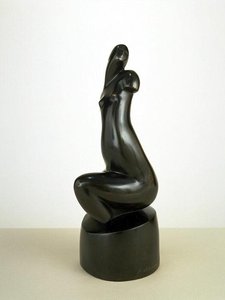
Αλεξάντερ Αρχιπένκο: ζωή και έργο
A Pioneer of Cubist Sculpture: The Life and Art of Alexander Archipenko
Alexander Porfyrovych Archipenko, born in Kyiv, Ukraine, on May 30, 1887, stands as a monumental figure in the history of modern sculpture. His journey, marked by a restless spirit and an unwavering pursuit of artistic innovation, fundamentally reshaped our understanding of three-dimensional form and space. From his early training in Kyiv to his eventual embrace of American art, Archipenko’s life was a testament to his dedication to pushing the boundaries of creative expression. He tragically passed away on February 25, 1964, leaving behind a legacy that continues to inspire artists today.- Early Years and Artistic Foundations: Archipenko's formative years in Kyiv instilled within him a deep appreciation for both Western European artistic traditions and the rich visual heritage of his native Ukraine. He initially studied painting and sculpture at the Kyiv Art School, absorbing influences from classical Greek and Roman sculpture while simultaneously experimenting with modern styles. His early exhibitions, notably in 1906 alongside Alexander Bogomazov, signaled a nascent independence and a willingness to challenge established norms.
- The Parisian Awakening: A pivotal moment arrived in 1908 when Archipenko relocated to Paris, the epicenter of European avant-garde art. He quickly immersed himself in the vibrant artistic circles of La Ruche, encountering figures like Fernand Léger and Vladimir Baranoff-Rossiné – artists who shared his desire to break free from traditional conventions. This exposure to radical ideas proved transformative, laying the groundwork for his groundbreaking contributions to Cubism.
Deconstructing Form: The Birth of a New Sculptural Language
Archipenko’s artistic vision was profoundly shaped by the burgeoning Cubist movement, yet he wasn't content merely to translate painting’s fractured perspectives into three dimensions. He sought to fundamentally redefine sculpture itself. Where traditional sculptors focused on solid mass and volume, Archipenko began exploring the power of *negative space* – voids that became integral components of his compositions. This daring approach challenged the very definition of form, suggesting that a sculpture could be defined as much by what wasn’t there as by what was. He masterfully manipulated convex and concave surfaces, creating dynamic interplay of light and shadow, imbuing his works with an unprecedented sense of movement and energy. This innovative spirit led to the creation of “sculpto-paintings,” where he boldly incorporated painted color onto intersecting planes, blurring the lines between sculpture and painting. Inspired by Cubist collage techniques, Archipenko further expanded his material palette, incorporating glass, wood, and metal into his sculptures – most notably in his captivating “Medrano” series depicting circus performers. These works weren’t simply representations of figures; they were investigations into the very essence of sculptural possibility. Key Innovations:- Negative Space: Archipenko's most significant contribution was his deliberate use of voids within sculptures, effectively redefining form and creating a sense of dynamism.
- Sculpto-Paintings: He pioneered the technique of combining sculpture and painting on intersecting planes, blurring the boundaries between the two art forms.
- Material Experimentation: Archipenko embraced unconventional materials like glass, wood, and metal, challenging traditional sculptural mediums.


