


1


Ενημερωμένο Νοέμβριος 2026 · κατάταξη βάσει του σκορ δημοφιλίας μας (αναζητήσεις, επισκέψεις και παραγγελίες για κάθε έργο) · 13 έργα του Thomas Millie Dow στον κατάλογό μας
Με σύντομη περιγραφή
Το έργο Ragweed and Crows (1882) είναι το ποίτευμα του Thomas Millie Dow που τραβάει περισσότερα βλέμματα. Μετά από αυτό, το βλέμμα στρέφεται στο The Hudson River (1884) και στο An Angel with a Lyre (triptych, right wing) (1898). Ανάμεσα στα 13 έργα του Thomas Millie Dow στον κατάλογό μας, αυτά τα 10 είναι τα πιο διάσημα, το καθένα ένα μοναδικό πρωτότυπο που παρουσιάζεται με την χρονολογία του, το μουσείο του και τον λόγο για τον οποίο παραμένει αιώνιο.


The painting The Herald of Winter by Thomas Millie Dow is a beautiful depiction of a woman standing on rocks with her trumpet raised to the sky. Created in 1894, this oil on canvas piece is a testament to the artist's skill and attention to detail. The painting is currently housed at the Mcmanus: Dundee's Art Galleries And Museums in Dundee, United Kingdom. Composition and Symbolism The composition of the…


Τα 2 μουσεία που φιλοξενούν το μεγαλύτερο μέρος των έργων σε αυτήν τη σελίδα.
| Μουσείο | Πόλη | Έργα του Thomas Millie Dow | Πάτρια από αυτή τη λίστα |
|---|---|---|---|
 Walker Art Gallery |
Λίβερπουλ | 3 | An Angel with a Lyre (triptych, right wing), An Angel with Cymbals amidst Fire (triptych, left wing), Eve (triptych, centre panel) |
 Mcmanus: Dundee's Art Galleries And Museums |
Dundee | 1 | The Herald of Winter |
Μια μακροχρόνια καριέρα 17 ετών, από το 1882 έως το 1898: τα πιο διάσημα πρωτότυπα του Thomas Millie Dow, παρουσιασμένα ανά έτος.
Επιλέξτε μια χρονιά για να δείτε τα πρωτότυπα έργα της.
The painting The Herald of Winter by Thomas Millie Dow is a beautiful depiction of a woman standing on rocks with her trumpet raised to the sky. Created in 1894, this oil on canvas piece is a testament to the artist's skill and attention to detail. The painting is currently housed at the Mcmanus: Dundee's Art Galleries And Museums in Dundee, United Kingdom. Composition and Symbolism The composition of the…
Το Ragweed and Crows (1882). Στη συνέχεια ακολουθούν το The Hudson River (1884) και το An Angel with a Lyre (triptych, right wing) (1898).
34 ετών: το έργο Ragweed and Crows είναι του 1882, και ο/η Thomas Millie Dow γεννήθηκε το 1848.
Ragweed and Crows, The Hudson River, An Angel with a Lyre (triptych, right wing), An Angel with Cymbals amidst Fire (triptych, left wing), Eve (triptych, centre panel), Sirens of the North, John Nairn, The Herald of Winter, Roses και A Spring Day, Morocco. Η κατάταξη παραπάνω αναγράφει το έτος και το μουσείο για το κάθε έργο.
Ο κατάλογός μας περιλαμβάνει 13 έργα του Thomas Millie Dow, με ημερομηνίες από 1882 έως 1898.
Κυρίως σε Walker Art Gallery (Λίβερπουλ) και Mcmanus: Dundee's Art Galleries And Museums (Dundee). Ο πίνακας μουσείου παραπάνω τους περιλαμβάνει όλους.
Κατά την περίοδο 1898: 3 από τα 10 έργα σε αυτήν τη σελίδα δημιουργήθηκαν τότε, με An Angel with a Lyre (triptych, right wing) από αυτά να είναι μοναδικά.
Σε αυτήν τη σελίδα, το παλαιότερο είναι Ragweed and Crows (1882) και το νεότερο An Angel with a Lyre (triptych, right wing) (1898).
An Angel with a Lyre (triptych, right wing), An Angel with Cymbals amidst Fire (triptych, left wing) και Eve (triptych, centre panel): το Walker Art Gallery, Λίβερπουλ διαθέτει 3 από τα έργα σε αυτήν τη σελίδα.
Thomas Millie Dow (1848-1919) remains a quietly significant figure within the vibrant tapestry of late 19th and early 20th century Scottish art. Often overshadowed by his more flamboyant contemporaries – the Glasgow Boys – Dow possessed a unique artistic voice, characterized by an exquisite sensitivity to light, color, and the serene beauty of the natural world. His paintings aren’t grand pronouncements or dramatic displays; rather, they offer intimate glimpses into landscapes imbued with a profound sense of peace and contemplative stillness, reflecting a deeply personal connection to his native Fife.
Born in Dysart, Fife, in 1848, Dow's early life was shaped by the expectations of a landed family. Educated for a legal career – a path deemed suitable for young men of his standing – he ultimately defied convention and pursued his artistic passions. This decision, fueled by an uncle’s encouragement and a burgeoning love for painting, led him to Paris in 1877, where he enrolled at the École nationale supérieure des Beaux-Arts. His time in France proved formative, exposing him to the techniques of masters like Jean-Léon Gérôme and fostering a refined approach to composition and color. Crucially, his association with fellow students – notably William Stott and Abbott Handerson Thayer – provided a stimulating intellectual and artistic environment, shaping his evolving aesthetic.
Dow’s arrival in Glasgow coincided with the emergence of what became known as the Glasgow Boys—a group of young artists who challenged the prevailing academic styles of the time. While sharing a commitment to depicting contemporary life and embracing a more accessible style, Dow distinguished himself through his particular focus on landscape. Unlike some of his peers who favored urban scenes or portraits, Dow’s work is overwhelmingly devoted to capturing the subtle nuances of Scotland's countryside – from the rugged coastlines of Fife to the rolling hills of the Highlands.
His paintings are characterized by a remarkable restraint and an almost preternatural ability to capture the fleeting effects of light. He employed a delicate palette, favoring muted greens, blues, and browns, creating atmospheric scenes that evoke a sense of quiet contemplation. Dow’s compositions often feature solitary figures – shepherds, farmers, or simply individuals immersed in nature—adding a human element to his idyllic landscapes. This subtle integration of humanity into the natural world speaks to a deep appreciation for rural life and a yearning for connection with the land.
Several paintings stand out as particularly representative of Dow’s artistic vision. “An Angel with Cymbals amidst Fire” (1898), a dramatic triptych, showcases his ability to evoke powerful emotions through carefully controlled color and composition. The scene, depicting an angel battling flames, is both visually arresting and deeply symbolic, reflecting the tensions between beauty and destruction. “Eve,” another significant work from 1898, exemplifies his Pre-Raphaelite influences, with its rich colors and allegorical themes. “Roses” (1883), a charming depiction of a flower garden, demonstrates his mastery of capturing delicate details and creating an atmosphere of idyllic tranquility.
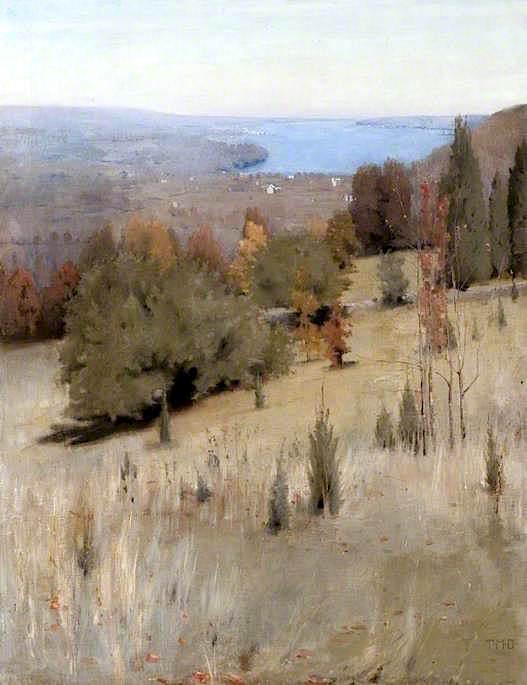
His time in America, particularly during 1883-1884, proved pivotal. The experience profoundly impacted his artistic sensibilities, leading to a renewed appreciation for the expansive landscapes of the Hudson River Valley. “The Hudson River,” painted during this period, is considered one of his finest works, capturing the shimmering light and atmospheric perspective of the region with remarkable skill.
Despite not achieving widespread fame during his lifetime, Thomas Millie Dow’s work has been increasingly recognized for its quiet beauty and understated elegance. He remains a vital figure in the story of Scottish art, representing a distinct voice within the Glasgow School movement. His paintings offer a poignant reflection on the relationship between humanity and nature—a theme that continues to resonate with viewers today. Dow's legacy lies not in grand pronouncements or dramatic displays, but in the enduring power of his serene landscapes, which invite us to pause, reflect, and appreciate the simple beauty of the natural world.
