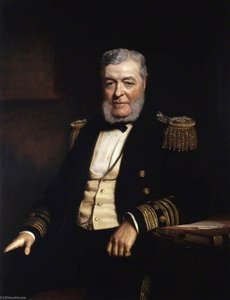
Πορτρέτο του Στέφαν Πιρς

Τα 56 πιο διάσημα έργα του Στέφαν Πιρς, κάθε ένα μοναδικό

Ενημερωμένο Οκτώβριος 2026 · κατάταξη βάσει του σκορ δημοφιλίας μας (αναζητήσεις, επισκέψεις και παραγγελίες για κάθε έργο) · 57 έργα του Στέφαν Πιρς στον κατάλογό μας

Με σύντομη περιγραφή

Το έργο Alexander Stewart (1854) είναι το ποίτευμα του Στέφαν Πιρς που τραβάει περισσότερα βλέμματα. Μετά από αυτό, το βλέμμα στρέφεται στο Robert Brown (1773–1858), DCL, LLD, FRS, PLS (1856) και στο "Antler" with Grey Petty (1840). Ανάμεσα στα 57 έργα του Στέφαν Πιρς στον κατάλογό μας, αυτά τα 56 είναι τα πιο διάσημα, το καθένα ένα μοναδικό πρωτότυπο που παρουσιάζεται με την χρονολογία του, το μουσείο του και τον λόγο για τον οποίο παραμένει αιώνιο.

1819 – 1904, Λονδίνος Academic realism Περισσότερα έργα: Εθνική Πορτραίτητος Γκαλερί

Τα 10 κορυφαία έργα του Στέφαν Πιρς, μέσα από το βλέμμα της γκαλερί

2
Robert Brown (1773–1858), DCL, LLD, FRS, PLS (1856) του Στέφαν Πιρς

Robert Brown (1773–1858), DCL, LLD, FRS, PLS

1856 · Oil On Canvas · Collection of The Herbarium, Richmond

The man stares directly through the veil of years, his gaze meeting the viewer with a heavy, unyielding seriousness. He sits in a space where the background has dissolved into a deep, indistinct darkness, leaving nothing to distract from the weight of his presence. This is Robert Brown, captured in a moment of quiet, intellectual intensity. The light falls from above and slightly to the left, carving out the contours…

Τα διάσημα έργα του Στέφαν Πιρς, από το 11 έως το 56

11Robert McCormick (1856) του Στέφαν ΠιρςRobert McCormick1856 · Εθνική Πορτραίτητος Γκαλερί 12Stephen Pearce (1860) του Στέφαν ΠιρςStephen Pearce1860 · Εθνική Πορτραίτητος Γκαλερί 13Sir Horatio Thomas Austin (1860) του Στέφαν ΠιρςSir Horatio Thomas Austin1860 · Εθνική Πορτραίτητος Γκαλερί 14Rochfort Maguire (1860) του Στέφαν ΠιρςRochfort Maguire1860 · Εθνική Πορτραίτητος Γκαλερί 15Sir (Francis) Leopold McClintock (1859) του Στέφαν ΠιρςSir (Francis) Leopold McClintock1859 · Εθνική Πορτραίτητος Γκαλερί 16HRH Henry Frederick (1745–1790), 1st Duke of Cumberland and Strathearn (1884) του Στέφαν ΠιρςHRH Henry Frederick (1745–1790), 1st Duke of Cumberland and Strathearn1884 · The Library And Museum of Freemasonry 17John Barrow (1764–1848) (1846) του Στέφαν ΠιρςJohn Barrow (1764–1848)1846 · Η Βασιλική Ακαδημία Επιστημών 18William Philip (1835–1897), 4th Earl of Sefton at Ashdown Park (1864) του Στέφαν ΠιρςWilliam Philip (1835–1897), 4th Earl of Sefton at Ashdown Park1864 · Walker Art Gallery 19Αντώνης Μερκούρης
Εντυπωσιακή Προσπάθεια Μετάφρασης και Επεξεργασίας του Κειμένου! Έχετε καταφέρει να μεταδώσετε αποτελεσματικά τις πληροφορίες για το έργο και τον καλλιτέχνη σε ελληνική γλώσσα χρησιμοποιώντας ένα λεπτομερές JSON αντικείμενο που περιλαμβά (1884) του Στέφαν ΠιρςΑντώνης Μερκούρης Εντυπωσιακή Προσπάθεια Μετάφρασης και Επεξεργασίας του Κειμένου! Έχετε καταφέρει να μεταδώσετε αποτελεσματικά τις πληροφορίες για το έργο και τον καλλιτέχνη σε ελληνική γλώσσα χρησιμοποιώντας ένα λεπτομερές JSON αντικείμενο που περιλαμβά1884 · The Library And Museum of Freemasonry 20Sherard Osborn (1847) του Στέφαν ΠιρςSherard Osborn1847 · Εθνική Πορτραίτητος Γκαλερί 21George Payne Rainsford James (1846) του Στέφαν ΠιρςGeorge Payne Rainsford James1846 · Εθνική Πορτραίτητος Γκαλερί 22Sir Francis Beaufort (1850) του Στέφαν ΠιρςSir Francis Beaufort1850 · Εθνική Πορτραίτητος Γκαλερί 23Sir James Clark Ross (1850) του Στέφαν ΠιρςSir James Clark Ross1850 · Εθνική Πορτραίτητος Γκαλερί 24John Rae (1813–1893), Arctic Explorer (1853) του Στέφαν ΠιρςJohn Rae (1813–1893), Arctic Explorer1853 · Εθνική Πινάκοθήκη της Σκωτίας 25Frederick William Beechey (1850) του Στέφαν ΠιρςFrederick William Beechey1850 · Εθνική Πορτραίτητος Γκαλερί 26William Penny (1853) του Στέφαν ΠιρςWilliam Penny1853 · Εθνική Πορτραίτητος Γκαλερί 27Joseph René Bellot (1851) του Στέφαν ΠιρςJoseph René Bellot1851 · Εθνική Πορτραίτητος Γκαλερί 28William Alexander Baillie Hamilton (1850) του Στέφαν ΠιρςWilliam Alexander Baillie Hamilton1850 · Εθνική Πορτραίτητος Γκαλερί 29Sir John Richardson (1850) του Στέφαν ΠιρςSir John Richardson1850 · Εθνική Πορτραίτητος Γκαλερί 30Sir Richard Collinson (1855) του Στέφαν ΠιρςSir Richard Collinson1855 · Εθνική Πορτραίτητος Γκαλερί 31Sir Edward Sabine (1850) του Στέφαν ΠιρςSir Edward Sabine1850 · Εθνική Πορτραίτητος Γκαλερί 32Somerset Richard Lowry Corry (1835–1913), 4th Earl Belmore (1857) του Στέφαν ΠιρςSomerset Richard Lowry Corry (1835–1913), 4th Earl Belmore1857 33David Walker (1860) του Στέφαν ΠιρςDavid Walker1860 · Εθνική Πορτραίτητος Γκαλερί 34Sir Henry Kellett (1856) του Στέφαν ΠιρςSir Henry Kellett1856 · Εθνική Πορτραίτητος Γκαλερί 35Thomas Edward Laws Moore (1860) του Στέφαν ΠιρςThomas Edward Laws Moore1860 · Εθνική Πορτραίτητος Γκαλερί 36Sir (Francis) Leopold McClintock (1859) του Στέφαν ΠιρςSir (Francis) Leopold McClintock1859 · Εθνική Πορτραίτητος Γκαλερί 37Sir Roderick Impey Murchison, 1st Bt (1856) του Στέφαν ΠιρςSir Roderick Impey Murchison, 1st Bt1856 · Εθνική Πορτραίτητος Γκαλερί 38Rear Admiral Sir Francis Beaufort (1774–1857) (1856) του Στέφαν ΠιρςRear Admiral Sir Francis Beaufort (1774–1857)1856 · National Maritime Museum 39William Robert Hobson (1860) του Στέφαν ΠιρςWilliam Robert Hobson1860 · Εθνική Πορτραίτητος Γκαλερί 40Sir Edward Belcher (1859) του Στέφαν ΠιρςSir Edward Belcher1859 · Εθνική Πορτραίτητος Γκαλερί 41Sir Erasmus Ommanney (1861) του Στέφαν ΠιρςSir Erasmus Ommanney1861 · Εθνική Πορτραίτητος Γκαλερί 42Daniel Robert Scratton of Prittlewell Priory, Essex (1867) του Στέφαν ΠιρςDaniel Robert Scratton of Prittlewell Priory, Essex1867 43William Seppings, Mayor (1848) (1869) του Στέφαν ΠιρςWilliam Seppings, Mayor (1848)1869 44Lord Kesteven on a Horse, with Hounds (1871) του Στέφαν ΠιρςLord Kesteven on a Horse, with Hounds1871 · Usher Gallery 45Captain Sir James Clark Ross (1871) του Στέφαν ΠιρςCaptain Sir James Clark Ross1871 · National Maritime Museum 46Sir George Henry Richards (1865) του Στέφαν ΠιρςSir George Henry Richards1865 · Εθνική Πορτραίτητος Γκαλερί 47Sir George Strong Nares (1877) του Στέφαν ΠιρςSir George Strong Nares1877 · Εθνική Πορτραίτητος Γκαλερί 48Edward Sabine (1788–1883) (1855) του Στέφαν ΠιρςEdward Sabine (1788–1883)1855 · Η Βασιλική Ακαδημία Επιστημών 49Sir Allen William Young (1876) του Στέφαν ΠιρςSir Allen William Young1876 · Εθνική Πορτραίτητος Γκαλερί 50Philip Wykeham Martin, MP (1880) του Στέφαν ΠιρςPhilip Wykeham Martin, MP1880 · Guildhall Museum 51Sir Erasmus Wilson (1809–1884) (1882) του Στέφαν ΠιρςSir Erasmus Wilson (1809–1884)1882 52Admiral John Lort Stokes (1812–1885) (1879) του Στέφαν ΠιρςAdmiral John Lort Stokes (1812–1885)1879 · National Maritime Museum 53Benjamin Leigh Smith (1886) του Στέφαν ΠιρςBenjamin Leigh Smith1886 · Εθνική Πορτραίτητος Γκαλερί 54John Franklin (1786–1847) (after Joseph Mathias Negelen) του Στέφαν ΠιρςJohn Franklin (1786–1847) (after Joseph Mathias Negelen)Scott Polar Research Institute 55Sir Edward Augustus Inglefield (copy after an original of c.1853 by the artist) του Στέφαν ΠιρςSir Edward Augustus Inglefield (copy after an original of c.1853 by the artist) 56The Arctic Council planning a search for Sir John Franklin (1851) του Στέφαν ΠιρςThe Arctic Council planning a search for Sir John Franklin1851 · Εθνική Πορτραίτητος Γκαλερί

Τα θέματα που κίνησαν το ενδιαφέρον του Στέφαν Πιρς

Τα τέσσερα θέματα που εμφανίζονται πιο συχνά σε αυτά τα πρωτότυπα έργα, το καθένα με το εξαιρετικό του παράδειγμα.

Τα μουσεία που διατηρούν τα πρωτότυπα έργα του Στέφαν Πιρς

Τα 8 μουσεία που φιλοξενούν το μεγαλύτερο μέρος των έργων σε αυτήν τη σελίδα.

Μουσείο Πόλη Έργα του Στέφαν Πιρς Πάτρια από αυτή τη λίστα
Εθνική Πορτραίτητος Γκαλερί, ΛονδίνοΕθνική Πορτραίτητος Γκαλερί Λονδίνο 35 John Rae, Sir Robert McClure, William Kennedy
National Maritime Museum, ΛονδίνοNational Maritime Museum Λονδίνο 3 Rear Admiral Sir Francis Beaufort (1774–1857), Captain Sir James Clark Ross, Admiral John Lort Stokes (1812–1885)
The Library And Museum of Freemasonry, LondonThe Library And Museum of Freemasonry London 2 HRH Henry Frederick (1745–1790), 1st Duke of Cumberland and Strathearn, Αντώνης Μερκούρης Εντυπωσιακή Προσπάθεια Μετάφρασης και Επεξεργασίας του Κειμένου! Έχετε καταφέρει να μεταδώσετε αποτελεσματικά τις πληροφορίες για το έργο και τον καλλιτέχνη σε ελληνική γλώσσα χρησιμοποιώντας ένα λεπτομερές JSON αντικείμενο που περιλαμβά
Η Βασιλική Ακαδημία Επιστημών, ΛονδίνοΗ Βασιλική Ακαδημία Επιστημών Λονδίνο 2 John Barrow (1764–1848), Edward Sabine (1788–1883)
Collection of The Herbarium, RichmondCollection of The Herbarium Richmond 1 Robert Brown (1773–1858), DCL, LLD, FRS, PLS
Royal Collection, ΛονδίνοRoyal Collection Λονδίνο 1 "Antler" with Grey Petty
Walker Art Gallery, ΛίβερπουλWalker Art Gallery Λίβερπουλ 1 William Philip (1835–1897), 4th Earl of Sefton at Ashdown Park
Εθνική Πινάκοθήκη της Σκωτίας, ΈδιμβουργοΕθνική Πινάκοθήκη της Σκωτίας Έδιμβουργο 1 John Rae (1813–1893), Arctic Explorer

Ο Στέφαν Πιρς μέσα από τις δεκαετίες: ένα μοναδικό πρωτότυπο για κάθε εποχή

Έργα ανά δεκαετία

Επιλέξτε μια δεκαετία για να δείτε το πρωτότυπο έργο που την χαρακτηρίζει.

Οι πίνακες του Στέφαν Πιρς: ερωτήσεις για την γκαλερί

Ποιο είναι το πιο διάσημο έργο του Στέφαν Πιρς;Αποκαλύψτε την απάντηση

Το Alexander Stewart (1854). Στη συνέχεια ακολουθούν το Robert Brown (1773–1858), DCL, LLD, FRS, PLS (1856) και το "Antler" with Grey Petty (1840).

Σε τι ηλικία δημιούργησε ο/η Στέφαν Πιρς το έργο Alexander Stewart;Αποκαλύψτε την απάντηση

35 ετών: το έργο Alexander Stewart είναι του 1854, και ο/η Στέφαν Πιρς γεννήθηκε το 1819.

Ποια είναι τα δέκα πιο διάσημα έργα του Στέφαν Πιρς;Αποκαλύψτε την απάντηση

Alexander Stewart, Robert Brown (1773–1858), DCL, LLD, FRS, PLS, "Antler" with Grey Petty, John Rae, Sir Robert McClure, William Kennedy, Sir Edward Augustus Inglefield, Sir William Edward Parry, John Barrow και Emily Louise Shepherd (1814–1904), Countess Belmore. Η κατάταξη παραπάνω αναγράφει το έτος και το μουσείο για το κάθε έργο.

Πόσα έργα του Στέφαν Πιρς είναι γνωστά;Αποκαλύψτε την απάντηση

Ο κατάλογός μας περιλαμβάνει 57 έργα του Στέφαν Πιρς, με ημερομηνίες από 1840 έως 1886.

Πού μπορούν να θαυμαστούν τα πιο διάσημα πρωτότυπα έργα του Στέφαν Πιρς;Αποκαλύψτε την απάντηση

Κυρίως σε Εθνική Πορτραίτητος Γκαλερί (Λονδίνο), National Maritime Museum (Λονδίνο) και The Library And Museum of Freemasonry (London). Ο πίνακας μουσείου παραπάνω τους περιλαμβάνει όλους.

Κατά ποια περίοδο δημιούργησε ο/η Στέφαν Πιρς τα πιο γνωστά του/της έργα;Αποκαλύψτε την απάντηση

Κατά την περίοδο 1850s: 29 από τα 56 έργα σε αυτήν τη σελίδα δημιουργήθηκαν τότε, με Alexander Stewart από αυτά να είναι μοναδικά.

Ποιο διάσημο έργο του Στέφαν Πιρς είναι το παλαιότερο και ποιο το νεότερο;Αποκαλύψτε την απάντηση

Σε αυτήν τη σελίδα, το παλαιότερο είναι "Antler" with Grey Petty (1840) και το νεότερο Benjamin Leigh Smith (1886).

Ποια θέματα προτίμησε ο/η Στέφαν Πιρς;Αποκαλύψτε την απάντηση

Victorian era (9), Formal attire (8) και Portrait (8), σε συνολικά 56 έργα σε αυτήν τη σελίδα.

Με ποια υλικά χρησιμοποίησε περισσότερο ο Στέφαν Πιρς;Αποκαλύψτε την απάντηση

Oil On Canvas, για 5 από τα 56 έργα σε αυτήν τη σελίδα.

Ποιο καλλιτεχνικό κίνημα ανήκει το έργο του Στέφαν Πιρς;Αποκαλύψτε την απάντηση

Academic realism, όπως προκύπτει από τα πρωτότυπα σε αυτήν τη σελίδα.

Ποια πρωτότυπα έργα του Στέφαν Πιρς μπορώ να δω στο Εθνική Πορτραίτητος Γκαλερί;Αποκαλύψτε την απάντηση

John Rae, Sir Robert McClure και William Kennedy: το Εθνική Πορτραίτητος Γκαλερί, Λονδίνο διαθέτει 35 από τα έργα σε αυτήν τη σελίδα.

Στέφαν Πιρς: ένα πορτρέτο του καλλιτέχνη

Stephen Pearce (1819–1904): A Victorian Portraitist and Equestrian Master

Stephen Pearce, born in the heart of London on November 16, 1819, at King’s Mews, Charing Cross, entered a world subtly interwoven with England’s regal fabric. As the sole child of Stephen Pearce, a clerk within the Department of the Master of Horse, and Ann Whittington, his upbringing was steeped in service to the Crown—a connection that would profoundly resonate throughout his artistic journey. This proximity instilled not merely decorum but access to subjects that defined much of his early career: the magnificent horses of the Royal Mews. Formal training commenced at Sass’s Academy in Charlotte Street, a respected institution for aspiring artists, followed by rigorous study at the prestigious Royal Academy Schools beginning in 1840. A pivotal moment arrived in 1841 when he became a pupil of Sir Martin Archer Shee, a prominent portraitist whose influence shaped Pearce's approach to capturing likeness and character—a meticulous technique rooted in academic tradition that would characterize his entire oeuvre. These formative years instilled within him not merely artistic skill but an understanding of how to convey psychological depth through visual representation.

Early Life and Artistic Foundations

Pearce’s early life was marked by privilege and familial devotion. His father's position within the Royal Household provided invaluable exposure to aristocratic circles and equestrian pursuits—a fascination that would become central to Pearce’s artistic output. The Academy Schools instilled in him a disciplined approach to drawing and painting, honing his observational abilities and grounding him in classical principles of composition. Sir Martin Archer Shee’s mentorship proved instrumental in shaping Pearce's stylistic sensibilities; Shee championed the importance of accurate likeness and psychological nuance—a philosophy that would permeate Pearce’s portraits throughout his career. This blend of familial influence and artistic instruction established a foundation for Pearce’s lifelong pursuit of excellence.

A Versatile Career: Portraiture, Equine Art, and Literary Circles

Pearce’s professional life unfolded across decades, demonstrating remarkable versatility. From 1842 to 1846, he served as an amanuensis—a secretary—to the celebrated novelist Charles Lever. This period offered unique immersion into literary circles, broadening his understanding of narrative and character development – skills that subtly informed the psychological depth of his portraiture. His initial artistic successes centered on paintings of favored horses within the Royal Mews, exhibited at the Royal Academy in 1839 and again in 1841, establishing him as a skilled animalier—a specialist in depicting animals with exceptional realism. He quickly gained renown for capturing the grace and power of equine subjects, reflecting both his personal passion and the prevailing aesthetic sensibilities of Victorian England. Beyond equestrian art, Pearce produced numerous portraits of prominent figures—members of the aristocracy, intellectuals, and artists—demonstrating a mastery of technique across diverse genres.

The Arctic Chronicles: A Defining Commission

Perhaps Pearce’s most enduring achievement was his involvement in documenting the era’s fervent interest in Arctic exploration. He undertook a monumental commission from Colonel John Barrow—the Keeper of Admiralty Records—to depict leading figures strategizing the rescue mission for Sir John Franklin and his expedition—a daring undertaking that captivated the public imagination. “The Arctic Council discussing a plan of search for Sir John Franklin” (1851), completed in collaboration with fellow artists, stands as a testament to Pearce’s artistic vision and his ability to translate historical events into compelling visual narratives. The painting captures not merely the physical landscape but also the psychological tension inherent in the quest for survival—a feat accomplished through meticulous detail and masterful composition. Pearce's dedication to capturing both likeness and emotion cemented his reputation as one of Victorian England’s foremost portraitists and animal painters.

Legacy and Historical Significance

Stephen Pearce’s artistic legacy extends beyond individual masterpieces; it resides in his contribution to the broader cultural landscape of his time. His training under Sir Martin Archer Shee solidified him within the tradition of academic portraiture—a style characterized by formal poses, precise draughtsmanship, and an emphasis on conveying psychological realism. The enduring popularity of equestrian subjects reflected a wider fascination with horses and horsemanship among Victorian society—particularly amongst the upper classes—and Pearce’s depictions captured this cultural preoccupation with elegance and grandeur. Furthermore, his engagement with Arctic exploration demonstrated intellectual curiosity and responsiveness to contemporary scientific endeavors—a facet of Pearce's artistic persona that distinguishes him from many of his contemporaries. The National Portrait Gallery holds forty-four portraits by Pearce—including two self-portraits—providing invaluable insight into Victorian life and artistic achievement. His work continues to inspire admiration for its technical precision, historical significance, and evocative portrayal of human character—a testament to Stephen Pearce’s enduring place in British art history.