Πορτρέτο του Πωλ Σεζάν

Τα 100 πιο διάσημα έργα του Πωλ Σεζάν, κάθε ένα μοναδικό

Ενημερωμένο Νοέμβριος 2026 · κατάταξη βάσει του σκορ δημοφιλίας μας (αναζητήσεις, επισκέψεις και παραγγελίες για κάθε έργο) · 1.227 έργα του Πωλ Σεζάν στον κατάλογό μας

Με σύντομη περιγραφή

Το έργο Οι Παίκτες της Κάρτας (1893) είναι το ποίτευμα του Πωλ Σεζάν που τραβάει τα περισσότερα βλέμματα· το πρωτότυπο ανήκει στο Musée d'Orsay, Παρίσι. Μετά από αυτό, το βλέμμα στρέφεται στο Μονή του Sainte-Victoire που βλέπεται από την εξοχική λατομεία Bibemus (1897) και στο Μεγάλοι Κολυμβητές (Philadelphia) (1905). Ανάμεσα στα 1,227 έργα του Πωλ Σεζάν στον κατάλογό μας, αυτά τα 100 είναι τα πιο διάσημα, το καθένα ένα μοναδικό πρωτότυπο που παρουσιάζεται με την χρονολογία του, το μουσείο του και τον λόγο για τον οποίο παραμένει αιώνιο.

1839 – 1906, Αιξ-αν-Προβάνς Μετα-επιρροήτισμός Περισσότερα έργα: Barnes Foundation

Τα 10 κορυφαία έργα του Πωλ Σεζάν, μέσα από το βλέμμα της γκαλερί

1
Οι Παίκτες της Κάρτας (1893) του Πωλ Σεζάν

Οι Παίκτες της Κάρτας

1893 · Άνθρακα και λάδι σε καμβά · Musée d'Orsay, Παρίσι

Μια Στιγμή Σιωπηλής Προσοχής Ο πίνακας «Οι Παίκτες της Κάρτας» του Πολ Σεζάν (1893) είναι κάτι περισσότερο από μια απλή απεικόνιση ενός παιχνιδιού αναψυχής. Είναι μια βαθιά εξερεύνηση της ανθρώπινης σύνδεσης, της κοινωνικής θέσης και του βάρους της καθημερινής ζωής. Αυτό το εμβληματικό έργο, μέρος μιας σειράς που επικεντρώνεται στους χωρικούς της Προβηγκίας, προσφέρει μια ματιά σε έναν κόσμο γεμάτο ήσυχη αξιοπρέπεια και λεπτή ένταση. Ο πίνακας αποτυπώνει δύο άνδρες…

2
Μονή του Sainte-Victoire που βλέπεται από την εξοχική λατομεία Bibemus (1897) του Πωλ Σεζάν

Μονή του Sainte-Victoire που βλέπεται από την εξοχική λατομεία Bibemus

1897 · Άνθρακα και λάδι σε καμβά · Baltimore Museum of Art, Βαλτιμόρη

Ο Paul Cézanne, ένας καλλιτεχνικός επαναστάτης που έζησε στην καρδιά της Προβητικής ύπαιθρου, μας προσφέρει με το έργο "Mont Sainte-Victoire από την Κοιλάδα του Bibemus" (1897) μια βαθιά προσωπική και αινιγματική απεικόνιση ενός κορυφαίου τοπίου. Πέρα από μια απλή αναπαράσταση της βουνού, πρόκειται για μια εξερεύνηση των γεωμετρικών δομών, των χρωμάτων και των συναισθημάτων που συνδέονται με τη φύση – ένα έργο που σηματοδότησε την αρχή μιας νέας εποχής στην…

3
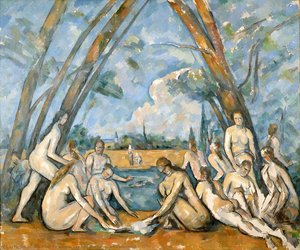
Μεγάλοι Κολυμβητές (Philadelphia) (1905) του Πωλ Σεζάν

Μεγάλοι Κολυμβητές (Philadelphia)

1905 · Άνθρακα και λάδι σε καμβά · Philadelphia Museum of Art, Φιλαδέλφεια

Μια Μνημειώδης Όραση της Αρμονίας Οι Μεγάλοι Κολυμβητές (Φιλαδέλφεια) του Πωλ Σεζάν αποτελούν, ίσως, την πιο φιλόδοξη και ολοκληρωμένη δήλωσή του για την ανθρώπινη μορφή μέσα στο τοπίο – ένα κομβικό έργο που γεφυρώνει τον Ιμπρεσιονισμό του 19ου αιώνα με την αναδυόμενη Κυβιστική κίνηση του 20ου αιώνα. Ολοκληρώθηκε σε διάστημα επτά ετών (1898-1905), αυτό το μνημειώδες καμβά ξεπερνά την απλή αναπαράσταση, προσφέροντας αντίθετα μια βαθιά εξερεύνηση της μορφής, του χώρου…

4
Κουβάς Πορτοκαλιών (1895) του Πωλ Σεζάν

Κουβάς Πορτοκαλιών

1895 · Άνθρακα και λάδι σε καμβά · Art Institute of Chicago, Σικάγκο

Το έργο "Κουβάς Πορτοκαλιών" (1895) του Πωλ Σεζάν είναι ένα αριστούργημα της σιτακωσίας ζωγραφικής που αποτυπώνει το καθημερινό με εξαιρετικό χάρισμα. Αυτή η ζωντανή σύνθεση παρουσιάζει έναν κουβά γεμάτο μήλα και αχλάδια, συνοδευόμενο από ψωμί σε πιάτο και ένα σκούρο μπουκάλι. Η διάταξη αποπνέει απλότητα αλλά παράγει καλλιτεχνική κομψότητα, καθιστώντας την μια αιώνια προσθήκη σε οποιαδήποτε συλλογή τέχνης ή εσωτερικό χώρο.

5
Παιδί με κόκκινο γιλέκο του Πωλ Σεζάν

Παιδί με κόκκινο γιλέκο

Άνθρακα και λάδι σε καμβά · Foundation E.G. Bührle Collection, Ζυρίχη

Introduction to the Artist and the Painting Paul Cezanne, a French Post-Impressionist artist, is renowned for his contributions to the transition from 19th-century Impressionism to 20th-century Cubism. Among his notable works is the Boy in a Red Vest, painted between 1888 and 1890. This oil-on-canvas masterpiece showcases Cezanne's innovative style, characterized by bold brushstrokes and vibrant colors. The Painting's Significance and Style The Boy in a Red Vest is a…

6
Mardi Gras (1888) του Πωλ Σεζάν

Mardi Gras

1888 · Άνθρακα και λάδι σε καμβά · Μουσείο Πούσκιν, Μόσχα

The Painting and Its Context Mardi Gras, a vibrant oil on canvas painting by Paul Cézanne, is a quintessential example of Post-Impressionism. Created in 1888, it is housed in the esteemed E. G. Buhrle Collection in Switzerland. This work showcases Cézanne's unique approach to capturing the essence of festive celebrations. Composition and Symbolism The painting depicts two men in elaborate costumes, one dressed as a clown and the other wearing…

7
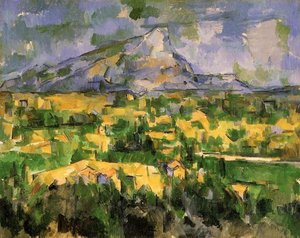
Μοντά Σαιντ Βικτωρ (1892) του Πωλ Σεζάν

Μοντά Σαιντ Βικτωρ

1892 · Άνθρακας ελαιώδους βάσης · Barnes Foundation, Φιλαδέλφεια

Paul Cézanne’s “Mont Sainte-Victoire” isn't merely a landscape painting; it’s an invitation into the artist’s mind, a meticulously constructed exploration of perception and form. Completed in 1902-04, this iconic work resides within The Barnes Foundation in Philadelphia, a testament to Cézanne’s profound connection with the Provençal mountain that dominated his artistic vision for decades. More than simply depicting a geographical feature, Cézanne sought to capture the *essence* of Mont Sainte-Victoire…

8
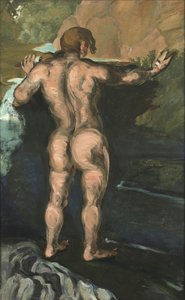
Κρεμάμενος άνδρας του Πωλ Σεζάν

Κρεμάμενος άνδρας

· Musée d'Orsay, Παρίσι

Cézanne’s Haunting Still Life: The Weight of Suspension – An Exploration of “The Hanged Man” Paul Cézanne's "The Hanged Man," painted around 1894-95, isn’t a straightforward depiction of execution; it’s a profoundly layered meditation on sacrifice, equilibrium, and the very nature of perception. This work, now housed within the collection at the House of the Hanged Man in Auvers-sur-Oise – a location that undoubtedly fueled its creation – represents a…

10
Η Μεγάλη Κολυμβήτρια (1900) του Πωλ Σεζάν

Η Μεγάλη Κολυμβήτρια

1900 · Άνθρακα και λάδι σε καμβά · Εθνική Πινακοθήκη Λονδίνου, Λονδίνο

Η Εσσία του Μετα-Επιρρεαστισμού Το έργο «Η Μεγάλη Κολυμβήτρια» (1900) του Πωλ Σεζάν στέκεται ως ένα μνημεώδες ζητούμενο στη μετάβαση από τον Εμπρεσιονισμό προς τη μοντέρνα τέχνη. Αυτό το αριστούργημα ενσαρκώνει την καινοτόμο προσέγγιση του Σεζάν, συνδυάζοντας έντονα χρώματα με δομημένες συνθέσεις που θα επηρέασαν γενιές καλλιτεχνών. Μια Γαλήνια Συνάθροιση Η ζωγραφιά απεικονίζει δέκα γυμνές μορφές σε ένα ήσυχο εξωτερικό σκηνικό, πιθανώς απασχολούμενες με χαλαρωτικές δραστηριότητες όπως η κολύμβηση ή…

Τα διάσημα έργα του Πωλ Σεζάν, από το 11 έως το 100

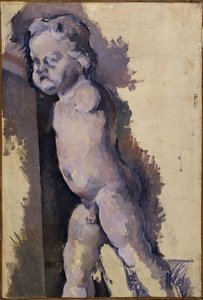
11Κατάστημα με Κύβο και Φρούτα (1894) του Πωλ ΣεζάνΚατάστημα με Κύβο και Φρούτα1894 · Whitney Museum of American Art 12Η προβλήτα από την Εστακέα (1886) του Πωλ ΣεζάνΗ προβλήτα από την Εστακέα1886 · Art Institute of Chicago 13Κάστρο Νύχτας (1904) του Πωλ ΣεζάνΚάστρο Νύχτας1904 · MoMA - Museum of Modern Art 14Οι Πολύβαθμες Κολυμβητές (1894) του Πωλ ΣεζάνΟι Πολύβαθμες Κολυμβητές1894 · Musée d'Orsay 15Μοντ Σαιντ-Βικτώρ (Metropolitan) (1885) του Πωλ ΣεζάνΜοντ Σαιντ-Βικτώρ (Metropolitan)1885 · Μετροπολιτικό Μουσείο Τέχνης 16Σπιτιά στην Προβάνσα - η κοιλάδα Riaux κοντά στο L'Estaque (1879) του Πωλ ΣεζάνΣπιτιά στην Προβάνσα - η κοιλάδα Riaux κοντά στο L'Estaque1879 · Εθνική Πινακοθήκη Τέχνης 17Τοπίο με γέφυρα: Montagne Sainte-Victoire (1887) του Πωλ ΣεζάνΤοπίο με γέφυρα: Montagne Sainte-Victoire1887 18Πορτρέτο του Victor Chocquet (1877) του Πωλ ΣεζάνΠορτρέτο του Victor Chocquet1877 · Virginia Museum of Fine Arts 19Οι Παίκτες των Χαρτιών (Barnes) (1892) του Πωλ ΣεζάνΟι Παίκτες των Χαρτιών (Barnes)1892 · Barnes Foundation 20Οι Παίκτες της Καρότας (1893) του Πωλ ΣεζάνΟι Παίκτες της Καρότας1893 · Musée d'Orsay 21Εμφάνιση της Λ' Εστακέ και του Κάστρο ντι Ιφ (1885) του Πωλ ΣεζάνΕμφάνιση της Λ' Εστακέ και του Κάστρο ντι Ιφ1885 22Bouquet of Flowers (1880) του Πωλ ΣεζάνBouquet of Flowers1880 23Μαдам Σεζάν σε το Κονσερβατόριο (1890) του Πωλ ΣεζάνΜαдам Σεζάν σε το Κονσερβατόριο1890 · Μετροπολιτικό Μουσείο Τέχνης 24Η Κούνια του Jourdan του Πωλ ΣεζάνΗ Κούνια του Jourdan 25Still Life, Bottle of Rum (1890) του Πωλ ΣεζάνStill Life, Bottle of Rum1890 · Pola Museum of Art 26Λε Στακ με Κόκκινες Στέγες (1885) του Πωλ ΣεζάνΛε Στακ με Κόκκινες Στέγες1885 27Στολιστό Ζωικό με Μήλα και Τροπιά (1905) του Πωλ ΣεζάνΣτολιστό Ζωικό με Μήλα και Τροπιά1905 · Εθνική Πινακοθήκη Τέχνης 28Καστρέλο ντε Μεντάν (1880) του Πωλ ΣεζάνΚαστρέλο ντε Μεντάν1880 · Glasgow Art Gallery and Museum 29The Seine at Bercy (1878) του Πωλ ΣεζάνThe Seine at Bercy1878 · Hamburger Kunsthalle 30Στολισμένο σενάκι με μπουκάλι, ποτήρι και λεμόνι (Bouteille, verre et citrons) (1868) του Πωλ ΣεζάνΣτολισμένο σενάκι με μπουκάλι, ποτήρι και λεμόνι (Bouteille, verre et citrons)1868 · Yale University Art Gallery 31Προβιγώματα στην Προβηγκιά (1890) του Πωλ ΣεζάνΠροβιγώματα στην Προβηγκιά1890 · Ohara Museum of Art 32still life with skull (nature morte au crane) - (1901) του Πωλ Σεζάνstill life with skull (nature morte au crane) -1901 33Στατικό Ζωρεπό με Βάζο, Κύπελλο και Μήλα (1877) του Πωλ ΣεζάνΣτατικό Ζωρεπό με Βάζο, Κύπελλο και Μήλα1877 · Μετροπολιτικό Μουσείο Τέχνης 34The Judgement of Paris (1864) του Πωλ ΣεζάνThe Judgement of Paris1864 35Still Life, Tulips and apples (1894) του Πωλ ΣεζάνStill Life, Tulips and apples1894 36Δόν Κυρίοχος, Διόριζτος ἀπό τῆς Ἀκτίνης (1875) του Πωλ ΣεζάνΔόν Κυρίοχος, Διόριζτος ἀπό τῆς Ἀκτίνης1875 37Μονต์ Σάντ-Βικτώρ (1887) του Πωλ ΣεζάνΜονต์ Σάντ-Βικτώρ1887 38Κατασκευή στην Βιβέμου (Karrière tis Bibémous) (1900) του Πωλ ΣεζάνΚατασκευή στην Βιβέμου (Karrière tis Bibémous)1900 · Μουσείο Τέχνης Νέλσον-Άτκινς 39portrait of vallier (1906) του Πωλ Σεζάνportrait of vallier1906 40Βράχοι στο Fontainebleau (1890) του Πωλ ΣεζάνΒράχοι στο Fontainebleau1890 · Μετροπολιτικό Μουσείο Τέχνης 41Still Life with Bottles and Apples του Πωλ ΣεζάνStill Life with Bottles and Apples 42Four Apples (1881) του Πωλ ΣεζάνFour Apples1881 43Ριπάδες (1905) του Πωλ ΣεζάνΡιπάδες1905 44Στολιστό Ζωικό με Ρόδι και Αχλάδια (1893) του Πωλ ΣεζάνΣτολιστό Ζωικό με Ρόδι και Αχλάδια1893 45Portrait of Madame Cézanne (1885) του Πωλ ΣεζάνPortrait of Madame Cézanne1885 · Philadelphia Museum of Art 46Ο Πύργος του Καίσαρα (1862) του Πωλ ΣεζάνΟ Πύργος του Καίσαρα1862 · Musée d'Orsay 47Self-portrait on a rose background, galerie (1877) του Πωλ ΣεζάνSelf-portrait on a rose background, galerie1877 48Still life with basket of apples,1890-94, the art in του Πωλ ΣεζάνStill life with basket of apples,1890-94, the art in 49Αυτοσχέδιο με Παλέτα (1890) του Πωλ ΣεζάνΑυτοσχέδιο με Παλέτα1890 · Foundation E.G. Bührle Collection 50Η Λεωφόρος με τα Καστανιά στο Jas de Bouffan (L'allée des marronniers au Jas de Bouffan) (1888) του Πωλ ΣεζάνΗ Λεωφόρος με τα Καστανιά στο Jas de Bouffan (L'allée des marronniers au Jas de Bouffan)1888 · Barnes Foundation 51Τα Τρία Κρανία (1898) του Πωλ ΣεζάνΤα Τρία Κρανία1898 · Detroit Institute of Arts 52Picnic on a Riverbank (1873) του Πωλ ΣεζάνPicnic on a Riverbank1873 · Yale University Art Gallery 53Καστανιές και Αγροτικό Οικοδομητό Jas de Bouffan (1876) του Πωλ ΣεζάνΚαστανιές και Αγροτικό Οικοδομητό Jas de Bouffan1876 54Three Bathers (Trois baigneuses) (1876) του Πωλ ΣεζάνThree Bathers (Trois baigneuses)1876 · Barnes Foundation 55Portrait of Madame Cezanne in a Red Dress (1890) του Πωλ ΣεζάνPortrait of Madame Cezanne in a Red Dress1890 56Μον Σεν-Βικτώαρ (1906) του Πωλ ΣεζάνΜον Σεν-Βικτώαρ1906 · Μουσείο Τέχνης Νέλσον-Άτκινς 57Group of Bathers (Groupe de baigneurs) (1893) του Πωλ ΣεζάνGroup of Bathers (Groupe de baigneurs)1893 · Barnes Foundation 58Plaster Cupid (1894) του Πωλ ΣεζάνPlaster Cupid1894 · Μουσεία Τέχνης του Χάρβαρντ 59The Lac d'Annecy (1896) του Πωλ ΣεζάνThe Lac d'Annecy1896 · Γκαλερί Κουάρτλουντ 60Τοπίο, Μελέτη από τη Φύση (επίσης γνωστό ως Το Καθιστικό στο L'Estaque) (1876) του Πωλ ΣεζάνΤοπίο, Μελέτη από τη Φύση (επίσης γνωστό ως Το Καθιστικό στο L'Estaque)1876 · Arp Museum Bahnhof Rolandseck 61Λουλούδια σε Ολιβέλαιο (1880) του Πωλ ΣεζάνΛουλούδια σε Ολιβέλαιο1880 · Philadelphia Museum of Art 62Λουλούδια σε Μπλε Κύβος (1875) του Πωλ ΣεζάνΛουλούδια σε Μπλε Κύβος1875 63Εικόνα Προσκλήσης με Συρτάρι (1887) του Πωλ ΣεζάνΕικόνα Προσκλήσης με Συρτάρι1887 64Portrait of Henri Gasquet (1896) του Πωλ ΣεζάνPortrait of Henri Gasquet1896 · McNay Art Museum 65Still life, pitcher and fruit (1894) του Πωλ ΣεζάνStill life, pitcher and fruit1894 66Πέντε Λουζόμενες (Cinq baigneuses) (1877) του Πωλ ΣεζάνΠέντε Λουζόμενες (Cinq baigneuses)1877 · Barnes Foundation 67Αυτοσχεδίο Πορτρέτο (1885) του Πωλ ΣεζάνΑυτοσχεδίο Πορτρέτο1885 68Το Σπίτι με τις Ραγισμένες Τοίχους (1892) του Πωλ ΣεζάνΤο Σπίτι με τις Ραγισμένες Τοίχους1892 · Μετροπολιτικό Μουσείο Τέχνης 69Portrait of Madame Cézanne (1885) του Πωλ ΣεζάνPortrait of Madame Cézanne1885 · Philadelphia Museum of Art 70Η Πειρασμός του Αγίου Αντονίου (1875) του Πωλ ΣεζάνΗ Πειρασμός του Αγίου Αντονίου1875 · Musée d'Orsay 71Le Déjeuner sur l'herbe (Luncheon on the Grass) (1870) του Πωλ ΣεζάνLe Déjeuner sur l'herbe (Luncheon on the Grass)1870 72αမည်λο του Πωλ Σεζάναမည်λο 73Σπίτι πίσω από δέντρα στο δρόμο προς το Θολόνετ (1887) του Πωλ ΣεζάνΣπίτι πίσω από δέντρα στο δρόμο προς το Θολόνετ1887 · Μετροπολιτικό Μουσείο Τέχνης 74Ζωή με Μήλα, ένα Μπουκάλι και μια Κάσα Γάλακτος (1904) του Πωλ ΣεζάνΖωή με Μήλα, ένα Μπουκάλι και μια Κάσα Γάλακτος1904 · Dallas Museum of Art 75Πεύσα και Βράχοι (Fontainebleau?) (1897) του Πωλ ΣεζάνΠεύσα και Βράχοι (Fontainebleau?)1897 · MoMA - Museum of Modern Art 76Afternoon in Naples (1875) του Πωλ ΣεζάνAfternoon in Naples1875 77Στολιστικό Σκηνικό, Κεράμι και Γάλα (1877) του Πωλ ΣεζάνΣτολιστικό Σκηνικό, Κεράμι και Γάλα1877 · Artizon Museum 78Ginger Jar (1895) του Πωλ ΣεζάνGinger Jar1895 · Barnes Foundation 79Βόρινες πέτρες στη Φονταναμπέλο (1893) του Πωλ ΣεζάνΒόρινες πέτρες στη Φονταναμπέλο1893 · Μετροπολιτικό Μουσείο Τέχνης 80Το Δάσος (1890) του Πωλ ΣεζάνΤο Δάσος1890 81Portrait of Mme. Cézanne (1883) του Πωλ ΣεζάνPortrait of Mme. Cézanne1883 · Foundation E.G. Bührle Collection 82Στατικό Ζωτικό: Ψωμί και Νοσάκι Αρνιού (1866) του Πωλ ΣεζάνΣτατικό Ζωτικό: Ψωμί και Νοσάκι Αρνιού1866 · Kunsthaus Zürich 83Η Εμφάνιση της Λ'Εστακ – Απόψις Μέσα από τα Δάση (1879) του Πωλ ΣεζάνΗ Εμφάνιση της Λ'Εστακ – Απόψις Μέσα από τα Δάση1879 84Harlequin (1889) του Πωλ ΣεζάνHarlequin1889 · Pola Museum of Art 85Φρούτα και Κανάτα σε ένα Τραπέζι (1894) του Πωλ ΣεζάνΦρούτα και Κανάτα σε ένα Τραπέζι1894 · Μουσείο Τέχνης Βοστώνης 86Το Μπουφέ (1877) του Πωλ ΣεζάνΤο Μπουφέ1877 · Μουσείο Τέχνης Βουδαπέστης 87Το Δρόμο (1871) του Πωλ ΣεζάνΤο Δρόμο1871 88Blue Landscape (1903) του Πωλ ΣεζάνBlue Landscape1903 · Ερμιτάζ 89Καστανιά και Αγροτικό Σπίτι (1885) του Πωλ ΣεζάνΚαστανιά και Αγροτικό Σπίτι1885 90Η Μοντά Σαιντ Βικτόρ είναι ένα έργο τέχνης που έχει καταφέρει να αποτυπώσει την ουσία του βουδιστικού τοπίου της Προβηγκίας με απλοποιημένες μορφές και ζωντανά χρώματα. Είναι ένα σημαντικό σημείο στα ιστορικά γεγονότα της τέχνης και σηματοδοτεί μια επανάσ (1895) του Πωλ ΣεζάνΗ Μοντά Σαιντ Βικτόρ είναι ένα έργο τέχνης που έχει καταφέρει να αποτυπώσει την ουσία του βουδιστικού τοπίου της Προβηγκίας με απλοποιημένες μορφές και ζωντανά χρώματα. Είναι ένα σημαντικό σημείο στα ιστορικά γεγονότα της τέχνης και σηματοδοτεί μια επανάσ1895 91Ο Ναυτικός (1906) του Πωλ ΣεζάνΟ Ναυτικός1906 · Εθνική Πινακοθήκη Τέχνης 92Τέσσερις Λουζόμενες (Quatre baigneuses) (1876) του Πωλ ΣεζάνΤέσσερις Λουζόμενες (Quatre baigneuses)1876 · Barnes Foundation 93Cote du Galet, at Pontoise (1880) του Πωλ ΣεζάνCote du Galet, at Pontoise1880 94Fisherman on the Rocks (1862) του Πωλ ΣεζάνFisherman on the Rocks1862 95Still Life - Apples, a Bottle and Chairback (1902) του Πωλ ΣεζάνStill Life - Apples, a Bottle and Chairback1902 96Οι Μεγάλοι Κολυμβητές (1885) του Πωλ ΣεζάνΟι Μεγάλοι Κολυμβητές1885 · MoMA - Museum of Modern Art 97Αγαλματούχος και Βράχοι (1866) του Πωλ ΣεζάνΑγαλματούχος και Βράχοι1866 · Chrysler Museum of Art 98Still Life with a Plate of Cherries (1887) του Πωλ ΣεζάνStill Life with a Plate of Cherries1887 99Λουόμενοι (8) (1905) του Πωλ ΣεζάνΛουόμενοι (8)1905 100Οι Παίκτες του Καραμπέ – Οι Παίκτες των Καρτών (1893) του Πωλ ΣεζάνΟι Παίκτες του Καραμπέ – Οι Παίκτες των Καρτών1893 · Μετροπολιτικό Μουσείο Τέχνης

Τα διάσημα έργα του Πωλ Σεζάν, ανά περίοδο

Τα θέματα που κίνησαν το ενδιαφέρον του Πωλ Σεζάν

Τα τέσσερα θέματα που εμφανίζονται πιο συχνά σε αυτά τα πρωτότυπα έργα, το καθένα με το εξαιρετικό του παράδειγμα.

Τα μουσεία που διατηρούν τα πρωτότυπα έργα του Πωλ Σεζάν

Τα 8 μουσεία που φιλοξενούν το μεγαλύτερο μέρος των έργων σε αυτήν τη σελίδα.

Μουσείο Πόλη Έργα του Πωλ Σεζάν Πάτρια από αυτή τη λίστα
Barnes Foundation, ΦιλαδέλφειαBarnes Foundation Φιλαδέλφεια 54 Μοντά Σαιντ Βικτωρ, Οι Παίκτες των Χαρτιών (Barnes), Η Λεωφόρος με τα Καστανιά στο Jas de Bouffan (L'allée des marronniers au Jas de Bouffan)
Μετροπολιτικό Μουσείο Τέχνης, Νέα ΥόρκηΜετροπολιτικό Μουσείο Τέχνης Νέα Υόρκη 33 Μοντ Σαιντ-Βικτώρ (Metropolitan), Μαдам Σεζάν σε το Κονσερβατόριο, Στατικό Ζωρεπό με Βάζο, Κύπελλο και Μήλα
Musée d'Orsay, ΠαρίσιMusée d'Orsay Παρίσι 60 Οι Παίκτες της Κάρτας, Κρεμάμενος άνδρας, Μήλα και Πορτοκάλια
Philadelphia Museum of Art, ΦιλαδέλφειαPhiladelphia Museum of Art Φιλαδέλφεια 17 Μεγάλοι Κολυμβητές (Philadelphia), Portrait of Madame Cézanne, Λουλούδια σε Ολιβέλαιο
Εθνική Πινακοθήκη Τέχνης, ΟυάσινγκτονΕθνική Πινακοθήκη Τέχνης Ουάσινγκτον 32 Σπιτιά στην Προβάνσα - η κοιλάδα Riaux κοντά στο L'Estaque, Στολιστό Ζωικό με Μήλα και Τροπιά, Ο Ναυτικός
MoMA - Museum of Modern Art, Νέα ΥόρκηMoMA - Museum of Modern Art Νέα Υόρκη 14 Κάστρο Νύχτας, Πεύσα και Βράχοι (Fontainebleau?), Οι Μεγάλοι Κολυμβητές
Foundation E.G. Bührle Collection, ΖυρίχηFoundation E.G. Bührle Collection Ζυρίχη 9 Παιδί με κόκκινο γιλέκο, Αυτοσχέδιο με Παλέτα, Portrait of Mme. Cézanne
Art Institute of Chicago, ΣικάγκοArt Institute of Chicago Σικάγκο 11 Κουβάς Πορτοκαλιών, Η προβλήτα από την Εστακέα

Ο Πωλ Σεζάν μέσα από τις δεκαετίες: ένα μοναδικό πρωτότυπο για κάθε εποχή

Έργα ανά δεκαετία

Επιλέξτε μια δεκαετία για να δείτε το πρωτότυπο έργο που την χαρακτηρίζει.

Οι πίνακες του Πωλ Σεζάν: ερωτήσεις για την γκαλερί

Ποιο είναι το πιο διάσημο έργο του Πωλ Σεζάν;Αποκαλύψτε την απάντηση

Οι Παίκτες της Κάρτας (1893), Musée d'Orsay, Παρίσι. Στη συνέχεια ακολουθούν το Μονή του Sainte-Victoire που βλέπεται από την εξοχική λατομεία Bibemus (1897) και το Μεγάλοι Κολυμβητές (Philadelphia) (1905).

Σε τι ηλικία δημιούργησε ο/η Πωλ Σεζάν το έργο Οι Παίκτες της Κάρτας;Αποκαλύψτε την απάντηση

54 ετών: το έργο Οι Παίκτες της Κάρτας είναι του 1893, και ο/η Πωλ Σεζάν γεννήθηκε το 1839.

Ποια είναι τα δέκα πιο διάσημα έργα του Πωλ Σεζάν;Αποκαλύψτε την απάντηση

Οι Παίκτες της Κάρτας, Μονή του Sainte-Victoire που βλέπεται από την εξοχική λατομεία Bibemus, Μεγάλοι Κολυμβητές (Philadelphia), Κουβάς Πορτοκαλιών, Παιδί με κόκκινο γιλέκο, Mardi Gras, Μοντά Σαιντ Βικτωρ, Κρεμάμενος άνδρας, Μήλα και Πορτοκάλια και Η Μεγάλη Κολυμβήτρια. Η κατάταξη παραπάνω αναγράφει το έτος και το μουσείο για το κάθε έργο.

Πόσα έργα του Πωλ Σεζάν είναι γνωστά;Αποκαλύψτε την απάντηση

Ο κατάλογός μας περιλαμβάνει 1,227 έργα του Πωλ Σεζάν, με ημερομηνίες από 1862 έως 1906.

Πού μπορούν να θαυμαστούν τα πιο διάσημα πρωτότυπα έργα του Πωλ Σεζάν;Αποκαλύψτε την απάντηση

Κυρίως σε Barnes Foundation (Φιλαδέλφεια), Μετροπολιτικό Μουσείο Τέχνης (Νέα Υόρκη) και Musée d'Orsay (Παρίσι). Ο πίνακας μουσείου παραπάνω τους περιλαμβάνει όλους.

Κατά ποια περίοδο δημιούργησε ο/η Πωλ Σεζάν τα πιο γνωστά του/της έργα;Αποκαλύψτε την απάντηση

Κατά την περίοδο 1890s: 30 από τα 100 έργα σε αυτήν τη σελίδα δημιουργήθηκαν τότε, με Οι Παίκτες της Κάρτας από αυτά να είναι μοναδικά.

Ποιο διάσημο έργο του Πωλ Σεζάν είναι το παλαιότερο και ποιο το νεότερο;Αποκαλύψτε την απάντηση

Σε αυτήν τη σελίδα, το παλαιότερο είναι Ο Πύργος του Καίσαρα (1862) και το νεότερο portrait of vallier (1906).

Ποια θέματα προτίμησε ο/η Πωλ Σεζάν;Αποκαλύψτε την απάντηση

Τοπίο (21), Landscape (16) και Geometric forms (13), σε συνολικά 100 έργα σε αυτήν τη σελίδα.

Με ποια υλικά χρησιμοποίησε περισσότερο ο Πωλ Σεζάν;Αποκαλύψτε την απάντηση

Άνθρακα και λάδι σε καμβά, για 68 από τα 100 έργα σε αυτήν τη σελίδα.

Ποιο καλλιτεχνικό κίνημα ανήκει το έργο του Πωλ Σεζάν;Αποκαλύψτε την απάντηση

Μετα-επιρροήτισμός, όπως προκύπτει από τα πρωτότυπα σε αυτήν τη σελίδα.

Ποια πρωτότυπα έργα του Πωλ Σεζάν μπορώ να δω στο Barnes Foundation;Αποκαλύψτε την απάντηση

Μοντά Σαιντ Βικτωρ, Οι Παίκτες των Χαρτιών (Barnes) και Η Λεωφόρος με τα Καστανιά στο Jas de Bouffan (L'allée des marronniers au Jas de Bouffan): το Barnes Foundation, Φιλαδέλφεια διαθέτει 8 από τα έργα σε αυτήν τη σελίδα.

Πωλ Σεζάν: ένα πορτρέτο του καλλιτέχνη

The Early Life of Paul Cézanne

Born on January 19, 1839, at 28 rue de l'Opéra in Aix-en-Provence, Paul Cézanne entered a world of established order. His father, Louis-Auguste Cézanne, was a man of significant local standing, having co-founded the banking firm Banque Cézanne et Cabassol. This financial stability provided a secure backdrop for the family, which included Paul and his two younger sisters, Marie and Rose. The quietude of a provincial upbringing stood in stark contrast to the restless creative impulse that would eventually define his life.

His formal education began at the Saint Joseph school in Aix at the age of ten. He later attended Collège Bourbon, moving through the structured academic paths expected of a young man of his station. By 1859, the weight of family expectation led him to enroll in the law faculty of the University of Aix-en-Provence. He spent two years attempting to master jurisprudence, but the legal texts offered little resonance. In 1860, he made the decisive choice to abandon his law studies, turning his focus entirely toward the pursuit of painting.

Artistic Training and Early Years

The path toward a distinct visual language began in the classrooms of Aix-en-Provence. While his father’s ambitions leaned toward the law, the young artist found his footing under the guidance of Joseph Gibert at the Free Municipal School of Drawing. It was a period of disciplined observation. By 1859, his technical proficiency was evident when he earned second prize in the school's figure studies course. This formal grounding continued at the École de dessin d'Aix-en-Provence, located within the Musée Granet, where he refined his ability to translate three-dimensional forms onto a flat surface.

The move to Paris in 1862 marked a period of both struggle and essential exposure. The rejection from the École des Beaux-Arts was a setback, yet it led him to the Académie Suisse, where he could continue his development away from the rigid constraints of the academy. During these formative years, he found work as a copyist at the Louvre. This position allowed him to study the old masters firsthand, absorbing the weight and structure of classical compositions that would later inform his own approach to the natural world.

Technique and Artistic Style

The early years of his practice were marked by a heavy, expressive brushwork and a preference for dark palettes. During this period, his work leaned toward the dramatic sensibilities of Romanticism and the landscape traditions of the Barbizon school. He moved through these darker, more emotive stages before finding a more disciplined, analytical way of seeing. He sought to uncover the permanent structure hidden within the natural world, looking past the fleeting effects of light to find the underlying geometry of existence. To him, a mountain or a piece of fruit was composed of fundamental shapes: the cone, the sphere, and the cylinder.

This search for structure led to a highly specific, constructive method. He abandoned the traditional use of light and shadow to define volume, opting instead for color modulation. By layering small, repetitive brushstrokes, he built up planes of color that formed complex, tactile fields. This technique allowed him to establish a sense of mass and weight through hue alone. He also moved away from the constraints of classical, single-point perspective. In his compositions, objects often maintain an independent presence within the space, allowing for multiple viewpoints to coexist on a single plane.

The Mont Sainte-Victoire Series

The limestone presence of Mont Sainte-Victoire became a constant in the artist's life, a recurring subject that anchored his evolving vision. He returned to this Provençal landmark throughout his career, producing approximately eighty different paintings and watercolors of the mountain. It was a pursuit of structure, a way to translate the rugged, grey-white mass into a language of color and geometry. He did not merely observe the peak; he sought to understand its internal order.

His perspective shifted as he moved through the landscape, utilizing three primary vantage points to capture the mountain's changing character. He worked from the heights of Bellevue, the depths of the Bibemus quarry, and the hill of Les Lauves. These varied positions allowed him to explore how light and atmosphere altered the mountain's perceived weight and volume. Through these different angles, the mountain became a vessel for his experiments with spatial relationships and the construction of form.

Key Works and Masterpieces

The early years of his career were marked by a preoccupation with dramatic, often violent themes. Between 1867 and 1870, he produced The Murder, a work characterized by a turbulent body of water and a nightmarish atmosphere. This period of exploration into emotional and physical intensity stood in stark contrast to the structural clarity that would define his later years. As his focus shifted toward the permanence of form, his subjects became more grounded in the quietude of daily life and the geometry of the natural world.

By the 1890s, his brushwork had become a tool for building volume through color. In 1893, he painted The Card Players, a composition that emphasized the weight and presence of its subjects. This analytical approach continued into his final period in the early 1890s with Man Smoking a Pipe. During this time, he also turned his attention to the domestic, as seen in Still Life with Apples and a Pot of Primroses from about 1890, where he used color to define shape without traditional shading. His late works often sought a sense of stability, such as in Château Noir, which he completed in 1903-04.

His final years saw a continued effort to reconcile the human figure with the landscape. The Bathers, first exhibited in 1906, remains a significant example of this pursuit. The work, which he worked on for seven years, remains unfinished at the time of his death. It reflects a deliberate departure from fleeting impressions, favoring instead a dense, rhythmic arrangement of forms.

Circle and Artistic Connections

The social landscape of Cézanne’s youth was anchored by a trio of inseparable friends: Émile Zola, Louis Marguery, and Baptistin Baille. Together, they navigated the intellectual currents of their time, debating art and literature in the shared spaces of their upbringing. While his early years were marked by a certain isolation from the mainstream, his artistic path eventually intersected with the most significant shifts in French painting. He found a vital mentor in the Impressionist Camille Pissarro, whose influence helped guide his transition from the dark, heavy palettes of his youth toward a more structured exploration of light and color.

His relationship with the broader art world was often a slow and difficult process of recognition. For many years, he worked in relative obscurity, a period that saw him move alongside contemporaries such as Paul Gauguin and Vincent van Gogh. It was not until 1895 that the art dealer Ambroise Vollard organized his first solo exhibition in Paris, a moment that finally brought his rigorous, analytical approach to a wider audience. This recognition arrived late in a life defined by a stubborn, solitary devotion to the underlying geometry of the natural world.

Legacy and Lasting Influence

The shift Cézanne initiated moved art away from the imitation of reality toward a construction of visual experience based on perception and structure. By emphasizing geometric form, he provided the essential foundation for the Cubist movement. His analytical approach to nature allowed later artists to dismantle the traditional subject. Pablo Picasso and Georges Braque drew heavily from this method, finding in his work a way to organize space through volume rather than mere light.

His influence extended into the realm of color as well. The use of bold, non-naturalistic color left a profound impression on the Fauvists, including Henri Matisse. Both Picasso and Matisse recognized the weight of his contribution, with the former famously referring to him as the father of us all. He did not merely paint the world; he reconstructed it through a rigorous, structural lens that changed how subsequent generations perceived the relationship between object and space.

Where to See His Works Today

The physical presence of his vision remains scattered across several major institutions, allowing the viewer to trace his evolution from the dark, expressive brushwork of his youth to the structured clarity of his later years. In New York, the Metropolitan Museum of Art holds a significant collection of 21 works, providing a substantial look at his development. Nearby, the Museum of Modern Art in New York City contains 6 works, including his 1904 painting, Chateau Noir. These collections offer a way to observe how he moved away from the fleeting light of his contemporaries toward a more permanent, geometric understanding of the natural world.

In Europe, the Musée d'Orsay in Paris maintains 19 of his paintings, offering a deep connection to the French tradition he both embraced and transformed. London’s Courtauld Gallery holds 9 works, while the National Gallery of Art in Washington possesses 11. These institutions house various stages of his career, from his early studies of light and shadow to his final, intense explorations of form. To see his work in these settings is to witness the deliberate, rhythmic layering of color that defined his approach to the landscape and the still life.