Πορτρέτο του Νικόλαος Τάρκοφ

Πάτσαδες του Νικόλαος Τάρκοφ: Τα 42 πιο διάσημα, μέσα από το βλέμμα μιας γκαλερί

Ενημερωμένο Νοέμβριος 2026 · κατάταξη βάσει του σκορ δημοφιλίας μας (αναζητήσεις, επισκέψεις και παραγγελίες για κάθε έργο) · 42 έργα του Νικόλαος Τάρκοφ στον κατάλογό μας

Με σύντομη περιγραφή

Στο μάτι της γκαλερί, το πιο διάσημο έργο του Νικόλαος Τάρκοφ είναι το Madame Tarkhoff with Her Two Children Jean and Boris (1907). Ο Madame Tarkhoff and Her Child (1906) και ο La Place du Maine, Paris ολοκληρώνουν το τρίο που κάθε μάτι αναγνωρίζει. Από τα 42 έργα του Νικόλαος Τάρκοφ στον κατάλογό μας, η γκαλερί παρουσιάζει παρακάτω τα 42 πιο διάσημα, όπου κάθε ένα είναι πρωτότυπο, με την χρονολογία του, το μουσείο του και το τι το κάνει μοναδικό.

1871 – 1930, Μόσχα Post-impressionism

Τα 10 κορυφαία έργα του Νικόλαος Τάρκοφ στη γκαλερέι

1
Madame Tarkhoff with Her Two Children Jean and Boris (1907) του Νικόλαος Τάρκοφ

Madame Tarkhoff with Her Two Children Jean and Boris

1907 · Oil

The composition centers on a woman reclining within the confines of a bed. She is positioned toward the left side of the frame, her body angled to accommodate two children. One child is situated more centrally, appearing awake, while the second child lies toward the right side of the bed in a state of sleep. The woman’s hand is visible in the lower portion of the scene, making contact with…

3
La Place du Maine, Paris του Νικόλαος Τάρκοφ

La Place du Maine, Paris

Oil

The canvas depicts a street scene within La Place du Maine in Paris. A horse-drawn carriage occupies the right side of the composition, moving along a paved road. Two horses are positioned toward the left, one leading the other in a staggered formation. Several figures are scattered throughout the urban environment. Some individuals stand near the carriage, while others walk or remain stationary at varying distances from the center of…

4
Merry Go Round in Montmarnasse (1901) του Νικόλαος Τάρκοφ

Merry Go Round in Montmarnasse

1901 · Oil On Canvas

The scene unfolds in the bustling heart of Paris through the work titled Merry Go Round in Montmarnasse. Painted by Nicolas Tarkhoff in 1901, this piece captures a fleeting snapshot of Parisian daily life. The energy of the city pulses through the composition, freezing a moment of public spectacle amidst the urban rush. It is a glimpse into a bygone era, where the excitement of modern life gathers around the…

5
Goats in the Sunshine (1904) του Νικόλαος Τάρκοφ

Goats in the Sunshine

1904 · Oil On Canvas

The canvas presents a group of white goats gathered closely around a basket. This basket contains hay or grain, positioned at the center of the animals' activity. The goats are densely packed, their forms overlapping to create a sense of immediate movement within the frame. Sunlight hits the white coats of the animals, creating bright highlights that contrast against the darker shadows cast by their bodies. The background consists of…

6
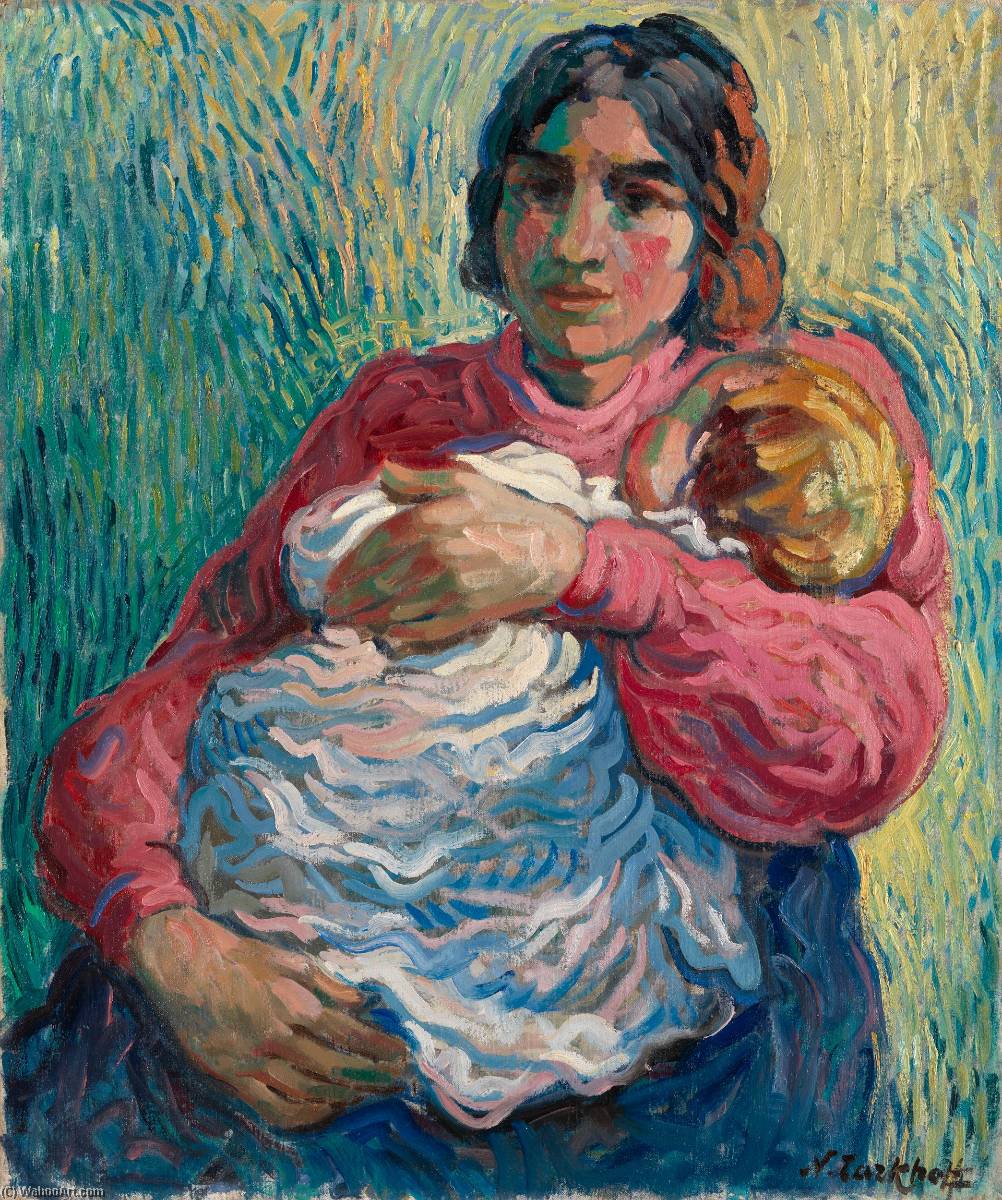
Motherhood (1906) του Νικόλαος Τάρκοφ

Motherhood

1906 · Oil On Canvas

A woman holds her infant child in this 1906 oil painting, creating an intimate connection through a centered, shallow composition. The figures emerge from a textured, vertical green field that provides a stark contrast to the organic forms of the subjects. Thick, visible brushstrokes define the contours of the mother and child, emphasizing movement and energy over precise realism. The impasto technique creates a tactile surface, where layers of paint…

7
The Kiss του Νικόλαος Τάρκοφ

The Kiss

Oil

The painting moves beyond mere depiction to capture a specific atmosphere. Through the use of bold color and varied brushwork, the artist imbues the scene with a sense of warmth and stillness. The interplay between the light hitting the mother and the shadows within the room creates a sense of movement within a frozen moment. It is a work that prioritizes the feeling of the encounter—the weight of the child,…

9
Faubourg Saint Antoine (1905) του Νικόλαος Τάρκοφ

Faubourg Saint Antoine

1905 · Oil

Painted in 1905, Faubourg Saint Antoine presents a vibrant street scene set within an urban environment. The composition is framed by buildings lining both sides of a road, their facades punctuated by numerous windows, some of which remain open to the street. The scene captures a bustling atmosphere where various elements of city life coexist in a single moment.

10
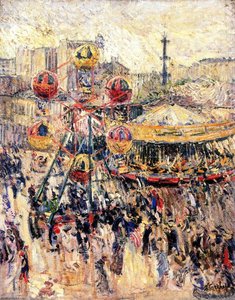
Fair (1905) του Νικόλαος Τάρκοφ

Fair

1905 · Oil

The canvas presents a crowded carnival scene centered around a large, multi-level Ferris wheel. This central structure dominates the composition, its circular frame populated by several figures seated at various heights. Around the base of the wheel, a collection of at least thirteen people are distributed throughout the space. Some individuals stand in close proximity to the machinery, while others are scattered toward the periphery of the scene. To the…

Πάιθες του Νικόλαος Τάρκοφ, κατάταξη από 11 έως 42

Τα διάσημα έργα του Νικόλαος Τάρκοφ, ανά περίοδο

Τα θέματα που κίνησαν το ενδιαφέρον του Νικόλαος Τάρκοφ

Τα τέσσερα θέματα που εμφανίζονται πιο συχνά σε αυτά τα πρωτότυπα έργα, το καθένα με το εξαιρετικό του παράδειγμα.

Νικόλαος Τάρκοφ, ένα χαρακτηριστικό έργο ανά δεκαετία

Έργα ανά δεκαετία

Επιλέξτε μια δεκαετία για να δείτε το πρωτότυπο έργο που την χαρακτηρίζει.

Οι πίνακες του Νικόλαος Τάρκοφ: οι απαντήσεις της γκαλερί

Ποιο έργο του Νικόλαος Τάρκοφ είναι το πιο διάσημο από όλα;Αποκαλύψτε την απάντηση

Το Madame Tarkhoff with Her Two Children Jean and Boris (1907). Στη συνέχεια ακολουθούν το Madame Tarkhoff and Her Child (1906) και το La Place du Maine, Paris.

Πόσο είχε ηλικία ο Νικόλαος Τάρκοφ όταν ολοκλήρωσε το Madame Tarkhoff with Her Two Children Jean and Boris;Αποκαλύψτε την απάντηση

36 ετών: το έργο Madame Tarkhoff with Her Two Children Jean and Boris είναι του 1907, και ο/η Νικόλαος Τάρκοφ γεννήθηκε το 1871.

Ποιες είναι τα 10 κορυφαία έργα του Νικόλαος Τάρκοφ;Αποκαλύψτε την απάντηση

Madame Tarkhoff with Her Two Children Jean and Boris, Madame Tarkhoff and Her Child, La Place du Maine, Paris, Merry Go Round in Montmarnasse, Goats in the Sunshine, Motherhood, The Kiss, Street Carnival, Paris, Faubourg Saint Antoine και Fair. Η κατάταξη παραπάνω αναγράφει το έτος και το μουσείο για το κάθε έργο.

Πόσα έργα δημιούργησε ο/η Νικόλαος Τάρκοφ;Αποκαλύψτε την απάντηση

Ο κατάλογός μας περιλαμβάνει 42 έργα του Νικόλαος Τάρκοφ, με ημερομηνίες από 1899 έως 1912.

Πότε δημιούργησε ο/η Νικόλαος Τάρκοφ τα πιο διάσημα έργα του/της;Αποκαλύψτε την απάντηση

Κατά την περίοδο 1900s: 21 από τα 42 έργα σε αυτήν τη σελίδα δημιουργήθηκαν τότε, με Madame Tarkhoff with Her Two Children Jean and Boris από αυτά να είναι μοναδικά.

Ποια είναι τα πρώτα και τα τελευταία διάσημα έργα του Νικόλαος Τάρκοφ;Αποκαλύψτε την απάντηση

Σε αυτήν τη σελίδα, το παλαιότερο είναι Landscape with Houses (1899) και το νεότερο Landscape with Trees, Flowers and Peasant with Plough (1912).

Ποια θέματα επέλεξε πιο συχνά ο Νικόλαος Τάρκοφ;Αποκαλύψτε την απάντηση

People (12), Woman (6) και Child (6), σε συνολικά 42 έργα σε αυτήν τη σελίδα.

Με ποια τεχνική εργάστηκε περισσότερο ο Νικόλαος Τάρκοφ;Αποκαλύψτε την απάντηση

Oil, για 22 από τα 42 έργα σε αυτήν τη σελίδα.

Με ποιο καλλιτεχνικό κίνημα σχετίζεται ο/η Νικόλαος Τάρκοφ;Αποκαλύψτε την απάντηση

Post-impressionism, όπως προκύπτει από τα πρωτότυπα σε αυτήν τη σελίδα.

Νικόλαος Τάρκοφ: ο καλλιτέχνης

Early Life and Artistic Awakening

Nicolas Alexandrovich Tarkhoff, born in Moscow on January 20, 1871, emerged from a family of prosperous merchants—a background that initially seemed destined for commerce rather than canvas. However, the young Tarkhoff possessed an innate artistic inclination, described as a “fervent desire to be a painter.” Tragedy marked his childhood; he lost his mother at age three and his father eight years later, experiences that perhaps fostered a sensitivity reflected in his later work. Despite this early loss, his passion for art persisted, though it faced initial resistance from his family who favored more conventional paths. He briefly fulfilled military obligations before finding employment with the Brest-Litovsk Railways—a period of deferment before fully embracing his artistic calling. In 1894, he bravely attempted entry into the School of Painting, Sculpture and Architecture in Moscow, but was rejected due to what was perceived as a “revolutionary temperament.” This rejection didn’t deter him; instead, it propelled him towards Konstantin Korovin's studio in 1897, where he found mentorship within Moscow’s vibrant artistic circles.

Parisian Influences and the Embrace of Post-Impressionism

The late 1890s witnessed a pivotal shift as Tarkhoff journeyed to Paris, a city already pulsating with avant-garde energy. He initially settled in Munich before permanently relocating to the French capital in November 1898. Paris offered not just a change of scenery but an immersion into a world brimming with artistic innovation. Though he enrolled at the Académie Julian under Jean-Paul Laurens, his independent spirit soon led him away from strict academic constraints. He also studied with Luc-Olivier Merson, yet it was the works of Van Gogh, Gauguin, and Cézanne that truly ignited his artistic evolution. These masters revealed “hidden talents” and charted a new course for Tarkhoff’s style—one characterized by expressive brushstrokes, bold color palettes, and an exploration of subjective experience. He quickly absorbed the lessons of Impressionism but moved beyond its purely optical concerns, embracing a more emotionally charged approach that would define his Post-Impressionist identity.

Themes and Techniques: Capturing Light and Emotion

Tarkhoff’s oeuvre is remarkably diverse, encompassing landscapes, genre scenes, still lifes, and portraits. However, certain themes consistently emerge—the bustling life of Paris, the tranquility of rural settings, and intimate moments of family connection. His Parisian paintings capture the energy of boulevards, carnivals, and racing cabs, while his later works reflect a settled life in Orsay, where he resided with his family from 1911. He masterfully employed oil paint to convey not just visual reality but also atmosphere and feeling. Textured brushwork became a hallmark of his style, creating surfaces that shimmered with light and movement. He wasn’t merely depicting scenes; he was translating emotions onto canvas. His use of color was equally significant—vibrant hues were often juxtaposed to create dynamic contrasts and evoke specific moods. Works like “Goats in the Sunshine” exemplify this approach, showcasing a rural idyll bathed in warm light and imbued with a sense of peacefulness. “My Family,” painted during his Russian Post-Impressionist period, reveals a heartwarming tenderness through its expressive style and careful attention to detail.

Recognition and Legacy

Nicolas Tarkhoff achieved considerable recognition during his lifetime, participating in numerous exhibitions across Europe. His work resonated with audiences who appreciated his unique blend of Impressionistic techniques and Post-Impressionist sensibilities. He exhibited at La Libre Esthétique in Paris, showcasing pieces like “Un Jour de neige” and “Notre-Dame,” alongside other prominent artists. Although not as widely celebrated as some of his contemporaries, Tarkhoff’s paintings continue to captivate viewers with their evocative power and emotional depth. His work is represented in various collections, including the Musée du Petit Palais, ensuring that his artistic vision endures for future generations. He stands as a testament to the enduring appeal of Post-Impressionism—a style that prioritized subjective experience and paved the way for modern art movements. His ability to capture serene moments and natural beauty through a unique artistic lens solidifies his place within the rich tapestry of early 20th-century Expressionism, offering a compelling glimpse into the heart and soul of an artist deeply connected to both the world around him and the emotions within.