Πορτρέτο του Νικολάς Κουστού

Πάτσαδες του Νικολάς Κουστού: Τα 5 πιο διάσημα, μέσα από το βλέμμα μιας γκαλερί

Ενημερωμένο Νοέμβριος 2026 · κατάταξη βάσει του σκορ δημοφιλίας μας (αναζητήσεις, επισκέψεις και παραγγελίες για κάθε έργο) · 5 έργα του Νικολάς Κουστού στον κατάλογό μας

Με σύντομη περιγραφή

Στο μάτι της γκαλερί, το πιο διάσημο έργο του Νικολάς Κουστού είναι το Louis XIII Kneeling (1712), το πρωτότυπο του οποίου εκτίθεται στο Καθεδρικός Ναός της Νωταρντάμ, Παρίσι. Ο Pietà (1712) και ο The Seine and Marne (1712) ολοκληρώνουν το τρίο που κάθε μάτι αναγνωρίζει. Από τα 5 έργα του Νικολάς Κουστού στον κατάλογό μας, η γκαλερί παρουσιάζει παρακάτω τα 5 πιο διάσημα, όπου κάθε ένα είναι πρωτότυπο, με την χρονολογία του, το μουσείο του και το τι το κάνει μοναδικό.

1658 – 1733, Λιόν Περισσότερα έργα: Καθεδρικός Ναός της Νωταρντάμ

Τα 10 κορυφαία έργα του Νικολάς Κουστού στη γκαλερέι

1
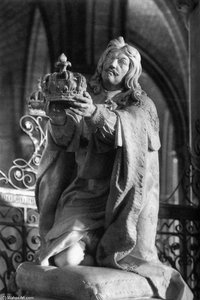
Louis XIII Kneeling (1712) του Νικολάς Κουστού

Louis XIII Kneeling

1712 · Oil On Canvas · Καθεδρικός Ναός της Νωταρντάμ, Παρίσι

Before us stands an arresting image, a testament to the skill and ambition of 18th-century French sculpture – a meticulously rendered marble depiction of Louis XIII kneeling. More than just a portrait, this work embodies the grandeur of the Bourbon monarchy, steeped in symbolism and executed with a profound understanding of Baroque aesthetics. The photograph captures not merely a king, but an embodiment of power, piety, and the weighty responsibilities…

2
Pietà (1712) του Νικολάς Κουστού

Pietà

The sculpture of the Pietà, crafted in 1712 by Nicolas Coustou, stands as a monumental achievement of French Baroque art—a poignant meditation on grief and faith housed within the venerable Notre Dame Cathedral in Paris. More than just stone; it’s an embodiment of artistic genius, capturing the profound emotional depth characteristic of its era.

3
The Seine and Marne (1712) του Νικολάς Κουστού

The Seine and Marne

1712 · Photography · Tuileries Gardens, Παρίσι

The Seine and Marne is an allegorical sculpture by Nicolas Coustou. Created about 1712, the work transforms heavy stone into the fluid essence of two vital French rivers. The figures embody the movement of water through the stillness of marble. They exist as symbols of the landscape, capturing the spirit of the waterways they represent.

4
Pediment of the Custom House (1726) του Νικολάς Κουστού

Pediment of the Custom House

1726 · Stone · Hôtel des Douanes, Rouen

The Pediment of the Custom House is a stone relief sculpture created by the French sculptor Nicolas Coustou. This work dates to about 1726. The relief is situated within a triangular architectural frame, following the specific form of a pediment. The composition features a variety of figures arranged to fit the constraints of the architectural space.

5
Apollo (1711) του Νικολάς Κουστού

Apollo

1711 · Bronze · Μουσείο του Λούβρου, Παρίσι

Nicolas Coustou’s “Apollo,” crafted in 1711, is more than just a sculpture; it's a vibrant embodiment of the dynamism and theatricality characteristic of French Baroque art. This remarkable piece, currently housed within the esteemed collections of the Louvre Museum in Paris, captures the Greek god Apollo in a moment of arresting movement – seemingly mid-stride, poised for action, yet radiating an almost serene power. The photograph itself offers a compelling…

Τα θέματα που κίνησαν το ενδιαφέρον του Νικολάς Κουστού

Τα τέσσερα θέματα που εμφανίζονται πιο συχνά σε αυτά τα πρωτότυπα έργα, το καθένα με το εξαιρετικό του παράδειγμα.

Τα μουσεία που διατηρούν τα πρωτότυπα έργα του Νικολάς Κουστού

Τα 4 μουσεία που φιλοξενούν το μεγαλύτερο μέρος των έργων σε αυτήν τη σελίδα.

Μουσείο Πόλη Έργα του Νικολάς Κουστού Πάτρια από αυτή τη λίστα
Καθεδρικός Ναός της Νωταρντάμ, ΠαρίσιΚαθεδρικός Ναός της Νωταρντάμ Παρίσι 2 Louis XIII Kneeling, Pietà
Tuileries Gardens, ΠαρίσιTuileries Gardens Παρίσι 1 The Seine and Marne
Hôtel des Douanes, RouenHôtel des Douanes Rouen 1 Pediment of the Custom House
Μουσείο του Λούβρου, ΠαρίσιΜουσείο του Λούβρου Παρίσι 1 Apollo

Νικολάς Κουστού, τα χαρακτηριστικά έργα κάθε έτους

16 χρόνια της τέχνης του Νικολάς Κουστού, από το 1711 έως το 1726: η γκαλερί τους ακολουθεί πλάγια, πλάγια, χρόνο προς χρόνο, μέσα από τα πιο διάσημα πρωτότυπα κάθε χρονιάς.

Έργα ανά έτος

Επιλέξτε μια χρονιά για να δείτε τα πρωτότυπα έργα της.

Οι πίνακες του Νικολάς Κουστού: οι απαντήσεις της γκαλερί

Ποιο έργο του Νικολάς Κουστού είναι το πιο διάσημο από όλα;Αποκαλύψτε την απάντηση

Louis XIII Kneeling (1712), Καθεδρικός Ναός της Νωταρντάμ, Παρίσι. Στη συνέχεια ακολουθούν το Pietà (1712) και το The Seine and Marne (1712).

Πόσο είχε ηλικία ο Νικολάς Κουστού όταν ολοκλήρωσε το Louis XIII Kneeling;Αποκαλύψτε την απάντηση

54 ετών: το έργο Louis XIII Kneeling είναι του 1712, και ο/η Νικολάς Κουστού γεννήθηκε το 1658.

Πόσα έργα δημιούργησε ο/η Νικολάς Κουστού;Αποκαλύψτε την απάντηση

Ο κατάλογός μας περιλαμβάνει 5 έργα του Νικολάς Κουστού, με ημερομηνίες από 1711 έως 1726.

Πού εκτίθενται τα πιο διάσημα πρωτότυπα του Νικολάς Κουστού;Αποκαλύψτε την απάντηση

Κυρίως σε Καθεδρικός Ναός της Νωταρντάμ (Παρίσι), Tuileries Gardens (Παρίσι) και Hôtel des Douanes (Rouen). Ο πίνακας μουσείου παραπάνω τους περιλαμβάνει όλους.

Πότε δημιούργησε ο/η Νικολάς Κουστού τα πιο διάσημα έργα του/της;Αποκαλύψτε την απάντηση

Κατά την περίοδο 1712: 3 από τα 5 έργα σε αυτήν τη σελίδα δημιουργήθηκαν τότε, με Louis XIII Kneeling από αυτά να είναι μοναδικά.

Ποια είναι τα πρώτα και τα τελευταία διάσημα έργα του Νικολάς Κουστού;Αποκαλύψτε την απάντηση

Σε αυτήν τη σελίδα, το παλαιότερο είναι Apollo (1711) και το νεότερο Pediment of the Custom House (1726).

Ποια θέματα επέλεξε πιο συχνά ο Νικολάς Κουστού;Αποκαλύψτε την απάντηση

Baroque (2), Figures (2) και Sculpture (2), σε συνολικά 5 έργα σε αυτήν τη σελίδα.

Ποια πρωτότυπα έργα του Νικολάς Κουστού διαθέτει το Καθεδρικός Ναός της Νωταρντάμ;Αποκαλύψτε την απάντηση

Louis XIII Kneeling και Pietà: το Καθεδρικός Ναός της Νωταρντάμ, Παρίσι διαθέτει 2 από τα έργα σε αυτήν τη σελίδα.

Νικολάς Κουστού: ο καλλιτέχνης

A Legacy in Stone: The Life and Art of Nicolas Coustou

Nicolas Coustou, a name synonymous with the grandeur of French Baroque sculpture, emerged from the artistic heart of Lyon in 1658. His journey was one deeply interwoven with family, patronage, and an unwavering dedication to mastering his craft. Born into a lineage of artisans—his father, François Coustou, being a skilled woodcarver—the young Nicolas received his earliest training within the intimate setting of his family’s workshop. This foundational experience instilled in him not only technical proficiency but also a profound respect for the transformative power of artistic creation. A pivotal moment arrived with his relocation to Paris at the age of eighteen, where he entered the studio of his maternal uncle, the esteemed sculptor Charles Antoine Coysevox. Coysevox, then president of the newly established Académie royale de peinture et de sculpture, provided Coustou with access to the epicenter of French artistic innovation and a rigorous academic framework that would shape his future trajectory. This familial connection proved invaluable, opening doors to commissions and fostering an environment conducive to growth.

Rome and the Synthesis of Classical Ideals

Coustou’s burgeoning talent did not go unnoticed. In 1681, he was awarded the prestigious Colbert Prize—the Prix de Rome—a distinction that granted him a four-year sojourn at the French Academy in Rome. This period proved transformative. Immersed in the world of classical antiquity, Coustou meticulously studied the masterpieces of Michelangelo and Algardi, absorbing their distinct approaches to form and expression. He sought not merely to imitate these masters but to synthesize their strengths—Michelangelo’s dynamic energy and Algardi’s refined classicism—into a style uniquely his own. The Roman experience instilled in him a deep appreciation for anatomical accuracy, dramatic composition, and the power of sculpture to convey narrative and emotion. It was here that Coustou began to forge the artistic identity that would define his career, blending Baroque exuberance with the timeless elegance of classical ideals.

Royal Commissions and Collaborative Triumph

Upon his return to France, Coustou quickly established himself as a leading sculptor of the era. From 1700 onwards, he embarked on an extended period of collaboration with Coysevox, working on ambitious projects at the palaces of Marly and Versailles—symbols of royal power and artistic magnificence. These commissions demanded not only exceptional technical skill but also an ability to translate the opulent vision of Louis XIV into tangible form. Coustou’s contributions to these grand residences were significant, encompassing allegorical figures, mythological scenes, and portrait busts that adorned the palace gardens and interiors. He rose through the ranks of the Académie royale de peinture et de sculpture, eventually becoming rector and chancellor, solidifying his position as a central figure in the French art world. His collaborative spirit extended to his younger brother, Guillaume Coustou, also a renowned sculptor; their partnership often blurred the lines of authorship, resulting in works that showcased a harmonious blend of individual talents. Notable examples include *Apollo pursuing Daphne*, a dynamic group embodying the Baroque pursuit of emotional intensity and dramatic movement.

Enduring Masterpieces and Lasting Influence

Despite the ravages of time and the destruction wrought by the French Revolution, several of Coustou’s masterpieces continue to inspire awe and admiration. *La Seine et la Marne*, a captivating allegorical sculpture representing two vital French rivers, stands as a testament to his ability to imbue stone with life and movement. The monumental *Descent from the Cross*, located behind the choir altar of Notre Dame de Paris, showcases his dramatic flair and technical prowess. *Le Passage du Rhin*, a bas-relief housed in the Louvre, demonstrates his skill in narrative sculpture, capturing a pivotal moment in French history with compelling detail. His portraits of Julius Caesar and Louis XV, also residing in the Louvre, reveal his ability to capture both physical likeness and regal authority. Nicolas Coustou’s legacy extends beyond these individual works; he played a crucial role in shaping the aesthetic landscape of Baroque sculpture in France, leaving an indelible mark on generations of artists who followed. He died in Paris on May 1st, 1733, having secured his place as one of the most celebrated sculptors of his time—a master whose artistry continues to resonate with viewers centuries later.