Πορτρέτο του Morris Graves

Πάτσαδες του Morris Graves: Τα 30 πιο διάσημα, μέσα από το βλέμμα μιας γκαλερί

Ενημερωμένο Οκτώβριος 2026 · κατάταξη βάσει του σκορ δημοφιλίας μας (αναζητήσεις, επισκέψεις και παραγγελίες για κάθε έργο) · 32 έργα του Morris Graves στον κατάλογό μας

Με σύντομη περιγραφή

Στο μάτι της γκαλερί, το πιο διάσημο έργο του Morris Graves είναι το Bird Singing in the Moonlight (1938). Ο Crow, Surf and Moon (1943) και ο Logged Mountains (1943) ολοκληρώνουν το τρίο που κάθε μάτι αναγνωρίζει. Από τα 32 έργα του Morris Graves στον κατάλογό μας, η γκαλερί παρουσιάζει παρακάτω τα 30 πιο διάσημα, όπου κάθε ένα είναι πρωτότυπο, με την χρονολογία του, το μουσείο του και το τι το κάνει μοναδικό.

1910 – 2001, Fox Περισσότερα έργα: Art Museum

Τα 10 κορυφαία έργα του Morris Graves στη γκαλερέι

3
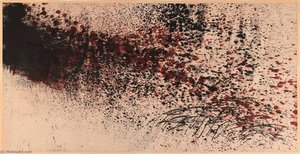
Logged Mountains (1943) του Morris Graves

Logged Mountains

1943 · Smithsonian American Art Museum, Ουάσινγκτον, D.C.

The Logged Mountains painting by Morris Graves is a thought-provoking artwork that showcases the artist's skill in combining natural elements with artistic expression. Created in 1943, this oil on canvas painting measures 66 x 92 cm and is currently housed at the Smithsonian American Art Museum in the United States. Artist Background Morris Graves was an American artist known for his delicate and contemplative drawings that capture the essence of…

Πάينτα του Morris Graves, κατάταξη από 11 έως 30

Τα μουσεία που διατηρούν τα πρωτότυπα έργα του Morris Graves

Τα 3 μουσεία που φιλοξενούν το μεγαλύτερο μέρος των έργων σε αυτήν τη σελίδα.

Μουσείο Πόλη Έργα του Morris Graves Πάτρια από αυτή τη λίστα
Art Museum, ΣιάτλArt Museum Σιάτλ 6 Crow, Surf and Moon, Bird in the Night, Sea, Fish and Constellation
The Phillips Collection, Ουάσιγκτον, D.C.The Phillips Collection Ουάσιγκτον, D.C. 3 Surf and Bird, Young Gander Ready for Flight, August Still Life
Smithsonian American Art Museum, Ουάσινγκτον, D.C.Smithsonian American Art Museum Ουάσινγκτον, D.C. 1 Logged Mountains

Morris Graves, ένα χαρακτηριστικό έργο ανά δεκαετία

Έργα ανά δεκαετία

Επιλέξτε μια δεκαετία για να δείτε το πρωτότυπο έργο που την χαρακτηρίζει.

Οι πίνακες του Morris Graves: οι απαντήσεις της γκαλερί

Ποιο έργο του Morris Graves είναι το πιο διάσημο από όλα;Αποκαλύψτε την απάντηση

Το Bird Singing in the Moonlight (1938). Στη συνέχεια ακολουθούν το Crow, Surf and Moon (1943) και το Logged Mountains (1943).

Πόσο είχε ηλικία ο Morris Graves όταν ολοκλήρωσε το Bird Singing in the Moonlight;Αποκαλύψτε την απάντηση

28 ετών: το έργο Bird Singing in the Moonlight είναι του 1938, και ο/η Morris Graves γεννήθηκε το 1910.

Ποιες είναι τα 10 κορυφαία έργα του Morris Graves;Αποκαλύψτε την απάντηση

Bird Singing in the Moonlight, Crow, Surf and Moon, Logged Mountains, Surf and Bird, Snake and Moon, Wheelbarrow, Bird in the Night, Sea, Fish and Constellation, Bird in the Spirit και Nestling. Η κατάταξη παραπάνω αναγράφει το έτος και το μουσείο για το κάθε έργο.

Πόσα έργα δημιούργησε ο/η Morris Graves;Αποκαλύψτε την απάντηση

Ο κατάλογός μας περιλαμβάνει 32 έργα του Morris Graves, με ημερομηνίες από 1934 έως 1988.

Πού εκτίθενται τα πιο διάσημα πρωτότυπα του Morris Graves;Αποκαλύψτε την απάντηση

Κυρίως σε Art Museum (Σιάτλ), The Phillips Collection (Ουάσιγκτον, D.C.) και Smithsonian American Art Museum (Ουάσινγκτον, D.C.). Ο πίνακας μουσείου παραπάνω τους περιλαμβάνει όλους.

Πότε δημιούργησε ο/η Morris Graves τα πιο διάσημα έργα του/της;Αποκαλύψτε την απάντηση

Κατά την περίοδο 1940s: 11 από τα 30 έργα σε αυτήν τη σελίδα δημιουργήθηκαν τότε, με Crow, Surf and Moon από αυτά να είναι μοναδικά.

Ποια είναι τα πρώτα και τα τελευταία διάσημα έργα του Morris Graves;Αποκαλύψτε την απάντηση

Σε αυτήν τη σελίδα, το παλαιότερο είναι Wheelbarrow (1934) και το νεότερο Summer Still Life (1988).

Ποια πρωτότυπα έργα του Morris Graves διαθέτει το Art Museum;Αποκαλύψτε την απάντηση

Crow, Surf and Moon, Bird in the Night και Sea, Fish and Constellation: το Art Museum, Σιάτλ διαθέτει 6 από τα έργα σε αυτήν τη σελίδα.

Morris Graves: ο καλλιτέχνης

The Visionary of the Pacific Northwest

In the mist-shrouded landscapes where the rugged beauty of Oregon meets the contemplative stillness of the Puget Sound, the spirit of Morris Graves found its eternal home. Born in 1910, Graves was an artist who did not merely observe the world but sought to pierce through its physical veil to reveal the consciousness beneath. As a cornerstone of the Northwest School, his work emerged from a profound intimacy with nature—a landscape steeped in both wild resilience and a quiet, almost spiritual, grace. His journey was one of self-directed discovery, eschewing traditional academic rigor for a life lived in deep conversation with the elements: the flight of a bird, the delicate curve of a petal, and the shifting light of a coastal morning.

Eastern Echoes and the Mystic's Eye

The essence of Graves’s artistry was deeply intertwined with his fascination with Eastern aesthetics and Zen Buddhism. A formative voyage to Japan in the early 1930s left an indelible mark on his soul, instilling a reverence for simplicity, suggestion, and the beauty of the ephemeral. This influence manifested in a unique symbolic vocabulary where animals—most notably birds—served not as mere biological subjects but as metaphors for the human psyche and the fragility of existence. Through his mastery of texture and light, he developed a language that was both intimate and universal, characterized by:

  • Symbolic Motifs: The recurring use of birds, flowers, and chalices to represent spiritual vessels and the essence of life.
  • Atmospheric Depth: A technique that captures the ethereal, misty quality of the Northwest through delicate washes and shadows.
  • Philosophical Resonance: An integration of Eastern meditative principles into the very structure of his compositions.

His ability to blend these elements allowed him to create works like Folded Wings Memory the Moon Weeping, which haunt the viewer with their sense of isolation and transcendence.

A Legacy of Light and Shadow

Throughout his prolific career, Graves’s evolution was marked by a transition from delicate, contemplative drawings to more complex, abstract expressions. His breakthrough in 1942 at New York's Museum of Modern Art cemented his position as a leading figure of American Modernism, standing alongside contemporaries such as Mark Tobey. Even as he moved toward the abstractions of the machine age in later years, his work remained anchored in a deep-seated respect for quietude and the natural order. Pieces such as Hibernation and Logged Mountains stand as testaments to his ability to capture the tension between the organic world and the encroaching modern era. His legacy remains that of a true mystic, an artist who transformed the damp, grey atmosphere of the Pacific Northwest into a luminous window onto the infinite.