Πορτρέτο του Χοακίν Σορόγια

Τα 100 πιο διάσημα έργα του Χοακίν Σορόγια, μια επιλογή γκαλερί

Ενημερωμένο Νοέμβριος 2026 · κατάταξη βάσει του σκορ δημοφιλίας μας (αναζητήσεις, επισκέψεις και παραγγελίες για κάθε έργο) · 969 έργα του Χοακίν Σορόγια στον κατάλογό μας

Με σύντομη περιγραφή

Από όλα τα πρωτότυπα έργα που άφησε ο Χοακίν Σορόγια, το πιο διάσημο είναι το Η παραλία της Βαλένθια στο πρωινό φως (1908), το οποίο βρίσκεται στη συλλογή του Hispanic Society Museum - Library, Νέα Υόρκη. Ακολουθούν στενά η Εγώ είμαι το ψωμί της ζωής (επίσης γνωστό ως Εγώ είμαι το ψωμί της ζωής) (1897) και η The Pink robe. Ο κατάλογός μας περιλαμβάνει 969 έργα του Χοακίν Σορόγια· η γκαλερί έχει διατηρήσει τα 100 κομμάτια που θαυμάζει ο κόσμος, το καθένα με την ημερομηνία, το μουσείο και την ιστορία του.

1863 – 1923, Βαλένθια Εκφραστική ζωγραφική Περισσότερα έργα: Hispanic Society Museum - Library

Τα 10 κορυφαία έργα του Χοακίν Σορόγια: η επιλογή της γκαλερί

1
Η παραλία της Βαλένθια στο πρωινό φως (1908) του Χοακίν Σορόγια

Η παραλία της Βαλένθια στο πρωινό φως

1908 · Άνθρακα και λάδι σε καμβά · Hispanic Society Museum - Library, Νέα Υόρκη

In the soft, burgeoning glow of a Mediterranean dawn, Joaquín Sorolla y Bastida captures more than just a landscape; he captures the very breath of life. Valencia Beach in the Morning Light, completed in 1908, stands as a breathtaking testament to Spanish Impressionism, inviting the viewer to step into a world where the boundary between sea and sky dissolves into pure luminosity. As one gazes upon this masterpiece, there is…

2
Εγώ είμαι το ψωμί της ζωής (επίσης γνωστό ως Εγώ είμαι το ψωμί της ζωής) (1897) του Χοακίν Σορόγια

Εγώ είμαι το ψωμί της ζωής (επίσης γνωστό ως Εγώ είμαι το ψωμί της ζωής)

1897 · Άνθρακα και λάδι σε καμβά

Joaquín Sorolla y Bastida's "Yo soy el pan de la vida," also known as "I am the Bread of Life," is a monumental oil on canvas painting completed in 1897. Measuring an impressive 415 x 533 cm, this artwork depicts a pivotal moment from the New Testament – Jesus Christ addressing a large crowd near the Sea of Galilee. The scene is dynamic and bustling, filled with numerous figures rendered…

3
The Pink robe του Χοακίν Σορόγια

The Pink robe

Oil On Canvas

To step into the world of Joaquín Sorolla y Bastida is to step directly into the radiant warmth of a Mediterranean afternoon. His masterpiece, "The Pink Robe," transcends mere depiction; it embodies the very essence of Impressionism, capturing a moment suspended in time—a quiet dialogue between two women bathed in the golden glow of sunlight. Painted circa 1908-1909, this artwork offers an unparalleled glimpse into Sorolla's masterful vision, where light…

4
Extremadura, The Market (1917) του Χοακίν Σορόγια

Extremadura, The Market

1917 · Oil On Canvas · Hispanic Society Museum - Library, Νέα Υόρκη

In the grand tapestry of Spanish Impressionism, few works capture the pulse of a nation as vibrantly as Joaquín Sorolla y Bastida’s “Extremadura, The Market.” Completed in 1917, this monumental oil on canvas is far more than a mere depiction of commerce; it is a breathtaking window into the soul of rural Spain. As part of his celebrated Vision of Spain series, Sorolla transcends the boundaries of traditional genre painting…

5
Περπάτημα κατά την Ακτή (1909) του Χοακίν Σορόγια

Περπάτημα κατά την Ακτή

1909 · Άνθρακα και λάδι σε καμβά · Sorolla Museum, Μαδρίτη

Το έργο «Περπάτημα αλά entlang της ακτοπλαγίου» του Joaquín Sorolla y Bastida, ζωημένο το 1949, δεν είναι απλώς μια απεικόνιση μιας καλοκαιρινής απόηλίας· είναι μια εξαιρετική απόσταξη φωτός, κίνησης και της φευγαλέας ομορφιάς της καθημερινής ζωής. Δημιουργημένο κατά μια περίοδο τεράστιας καλλιτεχνικής επιτυχίας για τον Ισπανό ζωγράφο –ακολουθώντας τις διάσημες εκθέσεις του στην Αμερική– αυτό το έργο αντιπροσωπεύει μια κομβική στροφή στο στυλ του Sorolla, κινούμενος προς μια πιο impressionistic…

6
The Smugglers (1919) του Χοακίν Σορόγια

The Smugglers

1919 · Oil On Canvas

To gaze upon Joaquín Sorolla y Bastida’s 1919 masterpiece, "The Smugglers," is to step directly into the radiant embrace of a Spanish summer. This expansive canvas, measuring an impressive 84 x 165 cm, does far more than merely depict a coastal scene; it serves as a profound sensory experience, capturing the very soul of the Mediterranean coast near Ibiza. Sorolla, often revered as the "Master of Light," utilizes the shimmering…

7
Lighthouse walk at Biarritz (1906) του Χοακίν Σορόγια

Lighthouse walk at Biarritz

1906 · Oil On Canvas · Μουσείο Τέχνης Βοστώνης, Μπόσττον

In the luminous masterpiece Lighthouse Walk at Biarritz, Joaquín Sorolla y Bastida invites us into a world where the boundaries between reality and impression dissolve into a golden haze. Completed in 1906, this breathtaking canvas is far more than a mere depiction of a seaside stroll; it is a profound celebration of the Spanish Belle Époque, captured with an unparalleled mastery of light. As we gaze upon the scene, we…

8
Clotilde on the Beach (1904) του Χοακίν Σορόγια

Clotilde on the Beach

1904 · Acrylic On Canvas · Sorolla Museum, Μαδρίτη

Joaquín Sorolla’s “Clotilde on the Beach,” painted in 1904, isn't merely a depiction of a seaside scene; it’s an immersion into the heart of Spanish summer – a vibrant distillation of light, color, and the quiet joy of family life. Sorolla, a master of *plein air* painting, captures a fleeting moment with breathtaking immediacy, transporting the viewer to the warm sands of Valencia's Playa de El Cabanyal. The canvas breathes…

9
Messalina in the Arms of the Gladiator (1886) του Χοακίν Σορόγια

Messalina in the Arms of the Gladiator

1886 · Oil

The ground is a bed of scattered flora and heavy silence. A woman lies motionless, her hair woven with blossoms that seem to hold the weight of her stillness. She is a pale shape against the earth, appearing either lost in a deep unconsciousness or surrendered to death. Above her, a man looms, his presence defined by the sharp edge of a knife held in his hand. The outdoor setting…

10
Study for Sad Inheritance (1899) του Χοακίν Σορόγια

Study for Sad Inheritance

1899 · Oil On Canvas

This oil painting on canvas depicts a poignant scene of disabled children wading into the Valencian sea, observed by a dark-robed monk. Rather than a scene of simple leisure, the composition carries a profound melancholy, capturing the intersection of human vulnerability and the restorative power of nature. The artwork utilizes a predominantly cool color palette dominated by blues and greens, punctuated by warmer tones in the sand and skin. Lines…

Η επιλογή του Χοακίν Σορόγια συνεχίζεται, από τον 11 έως τον 100

11The Cry of El Palleter (1884) του Χοακίν ΣορόγιαThe Cry of El Palleter1884 · Palau de la Generalitat 12Promenade by the Sea (1909) του Χοακίν ΣορόγιαPromenade by the Sea1909 13Fountain of Neptune, La Granja (1907) του Χοακίν ΣορόγιαFountain of Neptune, La Granja1907 14Español Castilla' o 'La fiesta del pan (1913) του Χοακίν ΣορόγιαEspañol Castilla' o 'La fiesta del pan1913 15Self-portrait (1909) του Χοακίν ΣορόγιαSelf-portrait1909 · Sorolla Museum 16Reflections at the Cape, Javea (1905) του Χοακίν ΣορόγιαReflections at the Cape, Javea1905 17Español Patio de la casa (1917) του Χοακίν ΣορόγιαEspañol Patio de la casa1917 · Museo Carmen Thyssen 18Valencian fisherman (1897) του Χοακίν ΣορόγιαValencian fisherman1897 19Η Σιέστα (1911) του Χοακίν ΣορόγιαΗ Σιέστα1911 · Sorolla Museum 20End of the Day, Javea (1900) του Χοακίν ΣορόγιαEnd of the Day, Javea1900 21Landscape of San Sebastian with Mount Igueldo (1911) του Χοακίν ΣορόγιαLandscape of San Sebastian with Mount Igueldo1911 22Rocks of the Cape, Javea (1905) του Χοακίν ΣορόγιαRocks of the Cape, Javea1905 · Hispanic Society Museum - Library 23Segovia Family, the Suckling Child (1894) του Χοακίν ΣορόγιαSegovia Family, the Suckling Child1894 24Carlos Urcola Ibarra and His Daughter (1914) του Χοακίν ΣορόγιαCarlos Urcola Ibarra and His Daughter1914 25triste herencia του Χοακίν Σορόγιαtriste herencia 26Valencian Fisherwomen (1915) του Χοακίν ΣορόγιαValencian Fisherwomen1915 27Δίχτυα Ψαράδων (1893) του Χοακίν ΣορόγιαΔίχτυα Ψαράδων1893 28Santiago Ramon y Cajal (1906) του Χοακίν ΣορόγιαSantiago Ramon y Cajal1906 29After the Bath, Valencia του Χοακίν ΣορόγιαAfter the Bath, Valencia 30Maria con mantilla (1910) του Χοακίν ΣορόγιαMaria con mantilla1910 31Orange trees on the road to Seville (1903) του Χοακίν ΣορόγιαOrange trees on the road to Seville1903 32Sea and rocks in San Esteban, Asturias (1903) του Χοακίν ΣορόγιαSea and rocks in San Esteban, Asturias1903 33To the Water, Valencia (also known as Going for a Bath, Valencia) (1908) του Χοακίν ΣορόγιαTo the Water, Valencia (also known as Going for a Bath, Valencia)1908 34Wallflowers in the Garden of the Sololla House (1918) του Χοακίν ΣορόγιαWallflowers in the Garden of the Sololla House1918 35Looking for Crabs among the Rocks, Javea (1905) του Χοακίν ΣορόγιαLooking for Crabs among the Rocks, Javea1905 36Spanish Fuente en un Patio sevillano Fountain in a courtyard, Seville (1915) του Χοακίν ΣορόγιαSpanish Fuente en un Patio sevillano Fountain in a courtyard, Seville1915 37My Kids (1897) του Χοακίν ΣορόγιαMy Kids1897 38Manuel B. Cossio (1908) του Χοακίν ΣορόγιαManuel B. Cossio1908 39Tipos de Salamanca (1912) του Χοακίν ΣορόγιαTipos de Salamanca1912 40Ο Ψαράς της Βαλενσιέλας (1916) του Χοακίν ΣορόγιαΟ Ψαράς της Βαλενσιέλας1916 41The Jota (Aragon) (1914) του Χοακίν ΣορόγιαThe Jota (Aragon)1914 · Hispanic Society Museum - Library 42Mediodia en la playa de Valencia (1904) του Χοακίν ΣορόγιαMediodia en la playa de Valencia1904 43A stroll on the beach του Χοακίν ΣορόγιαA stroll on the beach 44Courtyard of the Dances, Alcazar of Sevilla (1910) του Χοακίν ΣορόγιαCourtyard of the Dances, Alcazar of Sevilla1910 · Μουσείο J. Paul Getty 45Children bathing in the afternoon sun (1910) του Χοακίν ΣορόγιαChildren bathing in the afternoon sun1910 46Gathering the Sail (1908) του Χοακίν ΣορόγιαGathering the Sail1908 47Seascape, Ships in the Port (1881) του Χοακίν ΣορόγιαSeascape, Ships in the Port1881 48The Painter's Studio (1888) του Χοακίν ΣορόγιαThe Painter's Studio1888 49Clotilde in Evening Dress (1910) του Χοακίν ΣορόγιαClotilde in Evening Dress1910 50Vuelta de la Pesca. Playa de Valencia (The Return from Fishing, Valencia Beach) του Χοακίν ΣορόγιαVuelta de la Pesca. Playa de Valencia (The Return from Fishing, Valencia Beach) 51After a Bathe του Χοακίν ΣορόγιαAfter a BatheHispanic Society Museum - Library 52The Two Sisters (1909) του Χοακίν ΣορόγιαThe Two Sisters1909 · Art Institute of Chicago 53Grandmother and granddaughter of the Valley of Ansó (1911) του Χοακίν ΣορόγιαGrandmother and granddaughter of the Valley of Ansó1911 · Sorolla Museum 54The Return from Fishing: Hauling the Boat (study) (1894) του Χοακίν ΣορόγιαThe Return from Fishing: Hauling the Boat (study)1894 · Musée d'Orsay 55Fiesta Gallega του Χοακίν ΣορόγιαFiesta Gallega 56La bendicion de Isaac του Χοακίν ΣορόγιαLa bendicion de Isaac 57Queen Victoria Eugenia of Spain (1911) του Χοακίν ΣορόγιαQueen Victoria Eugenia of Spain1911 · Hispanic Society Museum - Library 58At the Pool in the Artist (1898) του Χοακίν ΣορόγιαAt the Pool in the Artist1898 · Μουσείο Τέχνης Πόνσε 59Elaboración de la pasa (Jávea) (1900) του Χοακίν ΣορόγιαElaboración de la pasa (Jávea)1900 · Μουσείο Πούσκιν 60The Siesta (1911) του Χοακίν ΣορόγιαThe Siesta1911 61And They Still Say Fish is Expensive του Χοακίν ΣορόγιαAnd They Still Say Fish is Expensive 62Maria la guapa (1914) του Χοακίν ΣορόγιαMaria la guapa1914 63Sea Idyll (1908) του Χοακίν ΣορόγιαSea Idyll1908 · Hispanic Society Museum - Library 64The Kiss (1899) του Χοακίν ΣορόγιαThe Kiss1899 65My Children (1904) του Χοακίν ΣορόγιαMy Children1904 · Museo Sorolla 66Children on the Seashore (1903) του Χοακίν ΣορόγιαChildren on the Seashore1903 · Philadelphia Museum of Art 67Maria Planas de Gil (1906) του Χοακίν ΣορόγιαMaria Planas de Gil1906 68Mi mujer y mis hijas en el jardin (1910) του Χοακίν ΣορόγιαMi mujer y mis hijas en el jardin1910 69Ramón Pérez de Ayala (1920) του Χοακίν ΣορόγιαRamón Pérez de Ayala1920 · Hispanic Society Museum - Library 70Christopher Columbus Leaving Palos (1910) του Χοακίν ΣορόγιαChristopher Columbus Leaving Palos1910 71The Return from the Fishing (1898) του Χοακίν ΣορόγιαThe Return from the Fishing1898 · Εθνικό Μουσείο Καλών Τεχνών 72Under the awning, Zarauz (1910) του Χοακίν ΣορόγιαUnder the awning, Zarauz1910 · Saint Louis Art Museum 73Fisherwomen (1911) του Χοακίν ΣορόγιαFisherwomen1911 74Penitents, Holy Week, Seville (1914) του Χοακίν ΣορόγιαPenitents, Holy Week, Seville1914 · Hispanic Society Museum - Library 75Swimmers, Jávea (1905) του Χοακίν ΣορόγιαSwimmers, Jávea1905 · Sorolla Museum 76The Waves at San Sebastian (1915) του Χοακίν ΣορόγιαThe Waves at San Sebastian1915 77Paris Boulevard (1885) του Χοακίν ΣορόγιαParis Boulevard1885 · Sorolla Museum 78Joaquín (1917) του Χοακίν ΣορόγιαJoaquín1917 · Sorolla Museum 79Types of Lagartera or Lagarterana bride (1912) του Χοακίν ΣορόγιαTypes of Lagartera or Lagarterana bride1912 · Sorolla Museum 80La siesta (1912) του Χοακίν ΣορόγιαLa siesta1912 81Ni ntilde os en la playa, Valencia (Children on the beach, Valencia) (1903) του Χοακίν ΣορόγιαNi ntilde os en la playa, Valencia (Children on the beach, Valencia)1903 82Wounded foot (1909) του Χοακίν ΣορόγιαWounded foot1909 83Seville, the Bullfighters (1915) του Χοακίν ΣορόγιαSeville, the Bullfighters1915 · Hispanic Society Museum - Library 84Mending the Sail (1896) του Χοακίν ΣορόγιαMending the Sail1896 85Aureliano de Beruete y Moret, Jr. (1902) του Χοακίν ΣορόγιαAureliano de Beruete y Moret, Jr.1902 · Μουσείο του Πράδο 86La vuelta de la pesca (1894) του Χοακίν ΣορόγιαLa vuelta de la pesca1894 87Design for the decoration of the Casa Sorolla του Χοακίν ΣορόγιαDesign for the decoration of the Casa Sorolla 88Maria in a Red Blouse (1910) του Χοακίν ΣορόγιαMaria in a Red Blouse1910 89On the coast of Biarritz (1906) του Χοακίν ΣορόγιαOn the coast of Biarritz1906 90On the sand, Zarauz beach (1910) του Χοακίν ΣορόγιαOn the sand, Zarauz beach1910 · Sorolla Museum 91Beneath the Canopy του Χοακίν ΣορόγιαBeneath the Canopy 92The Small cove, Javea (1898) του Χοακίν ΣορόγιαThe Small cove, Javea1898 93untitled (2616) του Χοακίν Σορόγιαuntitled (2616) 94Running along the beach (1908) του Χοακίν ΣορόγιαRunning along the beach1908 95Don Rafael Altamira y Crevea (1913) του Χοακίν ΣορόγιαDon Rafael Altamira y Crevea1913 · Hispanic Society Museum - Library 96Elenita at the Beach, Asturias (1903) του Χοακίν ΣορόγιαElenita at the Beach, Asturias1903 97On the Coast of Valencia (1898) του Χοακίν ΣορόγιαOn the Coast of Valencia1898 · Εθνικό Μουσείο Καλών Τεχνών 98The Alcazar at Seville του Χοακίν ΣορόγιαThe Alcazar at Seville 99Coast at Santa Cristina (1914) του Χοακίν ΣορόγιαCoast at Santa Cristina1914 100Copy of (1882) του Χοακίν ΣορόγιαCopy of1882 · Sorolla Museum

Τα διάσημα έργα του Χοακίν Σορόγια, ανά περίοδο

Late Impressionism

1905 – 1919 · 3 έργα σε αυτή τη λίστα

Τα θέματα που κίνησαν το ενδιαφέρον του Χοακίν Σορόγια

Τα τέσσερα θέματα που εμφανίζονται πιο συχνά σε αυτά τα πρωτότυπα έργα, το καθένα με το εξαιρετικό του παράδειγμα.

Τα μουσεία που διατηρούν τα πρωτότυπα έργα του Χοακίν Σορόγια

Τα 8 μουσεία που φιλοξενούν το μεγαλύτερο μέρος των έργων σε αυτήν τη σελίδα.

Μουσείο Πόλη Έργα του Χοακίν Σορόγια Πάτρια από αυτή τη λίστα
Hispanic Society Museum - Library, Νέα ΥόρκηHispanic Society Museum - Library Νέα Υόρκη 110 Η παραλία της Βαλένθια στο πρωινό φως, Extremadura, The Market, Rocks of the Cape, Javea
Sorolla Museum, ΜαδρίτηSorolla Museum Μαδρίτη 67 Περπάτημα κατά την Ακτή, Clotilde on the Beach, Self-portrait
Εθνικό Μουσείο Καλών Τεχνών, Μπουένος ΆιρεςΕθνικό Μουσείο Καλών Τεχνών Μπουένος Άιρες 8 The Return from the Fishing, On the Coast of Valencia
Μουσείο του Πράδο, ΜαδρίτηΜουσείο του Πράδο Μαδρίτη 8 Aureliano de Beruete y Moret, Jr.
Μουσείο J. Paul Getty, Λος ΆντζελεςΜουσείο J. Paul Getty Λος Άντζελες 5 Courtyard of the Dances, Alcazar of Sevilla
Musée d'Orsay, ΠαρίσιMusée d'Orsay Παρίσι 4 The Return from Fishing: Hauling the Boat (study)
Art Institute of Chicago, ΣικάγκοArt Institute of Chicago Σικάγκο 2 The Two Sisters
Μουσείο Τέχνης Βοστώνης, ΜπόσττονΜουσείο Τέχνης Βοστώνης Μπόσττον 1 Lighthouse walk at Biarritz

Ο Χοακίν Σορόγια δεκαετία προς δεκαετία: το πρωτότυπο που ορίζει κάθε μία

Έργα ανά δεκαετία

Επιλέξτε μια δεκαετία για να δείτε το πρωτότυπο έργο που την χαρακτηρίζει.

Ερωτήσεις συλλεκτών για τα έργα του Χοακίν Σορόγια

Για ποιο έργο είναι πιο γνωστός ο Χοακίν Σορόγια;Αποκαλύψτε την απάντηση

Η παραλία της Βαλένθια στο πρωινό φως (1908), Hispanic Society Museum - Library, Νέα Υόρκη. Στη συνέχεια ακολουθούν το Εγώ είμαι το ψωμί της ζωής (επίσης γνωστό ως Εγώ είμαι το ψωμί της ζωής) (1897) και το The Pink robe.

Πόσο ηλικία είχε ο/η Χοακίν Σορόγια όταν δημιουργήθηκε το Η παραλία της Βαλένθια στο πρωινό φως;Αποκαλύψτε την απάντηση

45 ετών: το έργο Η παραλία της Βαλένθια στο πρωινό φως είναι του 1908, και ο/η Χοακίν Σορόγια γεννήθηκε το 1863.

Ποια είναι τα δέκα πιο διάσημα έργα του Χοακίν Σορόγια;Αποκαλύψτε την απάντηση

Η παραλία της Βαλένθια στο πρωινό φως, Εγώ είμαι το ψωμί της ζωής (επίσης γνωστό ως Εγώ είμαι το ψωμί της ζωής), The Pink robe, Extremadura, The Market, Περπάτημα κατά την Ακτή, The Smugglers, Lighthouse walk at Biarritz, Clotilde on the Beach, Messalina in the Arms of the Gladiator και Study for Sad Inheritance. Η κατάταξη παραπάνω αναγράφει το έτος και το μουσείο για το κάθε έργο.

Πόσα έργα δημιούργησε ο/η Χοακίν Σορόγια;Αποκαλύψτε την απάντηση

Ο κατάλογός μας περιλαμβάνει 969 έργα του Χοακίν Σορόγια, με ημερομηνίες από 1881 έως 1920.

Σε ποια μουσεία εκτίθενται τα αριστούργημα του Χοακίν Σορόγια;Αποκαλύψτε την απάντηση

Κυρίως σε Hispanic Society Museum - Library (Νέα Υόρκη), Sorolla Museum (Μαδρίτη) και Εθνικό Μουσείο Καλών Τεχνών (Μπουένος Άιρες). Ο πίνακας μουσείου παραπάνω τους περιλαμβάνει όλους.

Σε ποιες χρονιές δημιούργησε ο/η Χοακίν Σορόγια τα πιο διάσημα έργα του/της;Αποκαλύψτε την απάντηση

Κατά την περίοδο 1910s: 35 από τα 100 έργα σε αυτήν τη σελίδα δημιουργήθηκαν τότε, με Extremadura, The Market από αυτά να είναι μοναδικά.

Ποια είναι τα πρώτα και τα τελευταία διάσημα πρωτότυπα του Χοακίν Σορόγια;Αποκαλύψτε την απάντηση

Σε αυτήν τη σελίδα, το παλαιότερο είναι Seascape, Ships in the Port (1881) και το νεότερο Ramón Pérez de Ayala (1920).

Ποια θέματα επέλεξε πιο συχνά ο Χοακίν Σορόγια;Αποκαλύψτε την απάντηση

Sunlight (16), Spain (16) και Coastal scene (15), σε συνολικά 100 έργα σε αυτήν τη σελίδα.

Ποια τεχνική χρησιμοποίησε περισσότερο ο Χοακίν Σορόγια;Αποκαλύψτε την απάντηση

Oil On Canvas, για 83 από τα 100 έργα σε αυτήν τη σελίδα.

Σε ποιο καλλιτεχνικό κίνημα ανήκει ο/η Χοακίν Σορόγια;Αποκαλύψτε την απάντηση

Εκφραστική ζωγραφική, όπως προκύπτει από τα πρωτότυπα σε αυτήν τη σελίδα.

Ποια έργα του Χοακίν Σορόγια εκτίθενται στο Hispanic Society Museum - Library;Αποκαλύψτε την απάντηση

Η παραλία της Βαλένθια στο πρωινό φως, Extremadura, The Market και Rocks of the Cape, Javea: το Hispanic Society Museum - Library, Νέα Υόρκη διαθέτει 11 από τα έργα σε αυτήν τη σελίδα.

Χοακίν Σορόγια: ζωή και έργο

Early Life, Family and Training

Joaquín Sorolla y Bastida entered the world on 27 February 1863 in Valencia, Spain. He was the eldest child of a tradesman, Joaquín Sorolla, and his wife, Concepción Bastida. Life for the young boy was marked by a sudden and heavy silence when, in August 1865, a cholera epidemic claimed both of his parents. This tragedy left Joaquín and his sister, Concha, as orphans. They were taken in by their maternal aunt and uncle, a locksmith, who provided the stability the siblings needed to grow.

The spark of talent appeared early in his youth in Valencia. He received his first lessons in art within his home city, developing a natural aptitude that could not be ignored. This early instruction laid the foundation for a formal education under established artists, including Cayetano Capuz and José Benlliure. These mentors helped shape the technical skills that would eventually allow him to move beyond the local scene and seek broader horizons.

Life and Career in Madrid

In 1888, Joaquín married Clotilde García del Castillo, a woman he had known since he was a young man working in her father's studio. Their life together moved to Madrid in 1890, a transition that marked a significant chapter in his personal and professional development. As they settled into the capital, their family grew, with Maria, Joaquín, and Elena arriving by 1895. These years were a period of building both a household and a reputation that would eventually reach far beyond the borders of Spain.

During the decade that followed his move to Madrid, Sorolla’s focus shifted toward the creation of large-scale canvases. He spent much of his time working on monumental subjects, ranging from mythological and historical scenes to orientalist themes and social studies. His ambition was reflected in the scale of his work, as he sought to tackle complex narratives through his brush. This period of intense production saw his reputation expand through various international exhibitions. He presented his work in salons across Europe and the Americas, including cities such as Paris, Venice, Munich, Berlin, and Chicago.

Key Works and Major Achievements

A significant turning point in his career arrived with the creation of Sad Inheritance in 1899. This large-scale canvas, which depicted children bathing in the sea, was presented at the Universal Exhibition in Paris. The work brought him a level of recognition that would change his life, leading to him being named a Knight of the Legion of Honour in 1900. That same year, he received the Grand Prix and a medal of honor at the Paris exhibition, marking his arrival on the international stage.

His success continued to grow through the early years of the new century. In 1901, he was awarded the medal of honour at the National Exhibition in Madrid. These accolades reflected his ability to move between heavy social themes and the bright, sun-drenched scenes that would eventually define his reputation. His reach extended far beyond the borders of Spain, as his reputation for capturing light and life earned him commissions from major international institutions.

One of his most ambitious projects was the commission to create Vision of Spain for the Hispanic Society of America. This series of monumental works allowed him to express his deep connection to his homeland through large-scale storytelling. His career was marked by these moments of high achievement, where his technical skill met a profound sense of purpose.

Technique and Artistic Style

Sorolla had a way of working that felt as restless and alive as the Mediterranean itself. He was a painter who preferred the directness of the outdoors, choosing to paint almost all of his works en plein air. This commitment to working in the open air allowed him to confront the shifting elements head-on. He did not merely aim to record a scene; he sought to capture the way light interacts with the world, particularly the way it dances across sunlit water and illuminates the skin of his subjects. His brushwork was loose and energetic, using thick, expressive strokes to translate the ephemeral movement of sunlight onto the canvas.

His technical focus was often split between the intimate and the monumental. He was equally comfortable rendering a quiet portrait as he was tackling large-scale social or historical themes. There is a certain dexterity in how he handled the landscape, often placing people within a bright, Spanish sun that seems to dissolve the boundaries between the sea and the sky. This approach turned ordinary moments into something that felt immediate and breathing. He focused on the textures of daily life, using light to define the shapes of the people and the environments they inhabited.

Later Years and Death

The final years of Sorolla's life were marked by a significant undertaking that required immense physical and mental stamina. He spent much of this period working on his monumental murals, a project that demanded his full attention and strength. He managed to complete the final panel of these large-scale works in July 1919, marking a major conclusion to his creative output.

However, his ability to continue painting was soon interrupted by health struggles. In 1920, he suffered a stroke, an event that curtailed his painting activity and changed the pace of his life. This period of recovery was a quiet departure from the energetic, outdoor sessions that had defined his earlier years. He passed away on 10 August 1923. He was laid to rest in the Cementeri de Valencia, Spain, returning to the region that had always been so central to his life and his art.

Legacy and Enduring Influence

The impact of Joaquín Sorolla y Bastida reached far beyond the shores of his native Spain. His presence in the international art community was solidified through his membership in several prestigious institutions, including the Académie des Beaux-Arts in Paris, the National Academy of Fine Arts in Lisbon, and the Real Academia de Bellas Artes de San Carlos in Valencia. These honors reflected a career that successfully bridged the gap between local identity and global recognition. He was celebrated as the Favourite Son of Valencia, a title that spoke to the deep connection between the painter and the light of his home region.

Today, his canvases are held in collections across Spain, Europe, and America. His ability to translate the movement of the sea and the warmth of the sun onto a flat surface ensured that his vision would remain part of the public consciousness. The works continue to be studied and admired in major museums, maintaining a presence that spans continents. His influence is felt in the way he captured a specific sense of place and light, leaving behind a body of work that remains a vital part of the artistic landscape.

Where to See the Works Today

For those wishing to walk through the spaces that shaped his life, the Museo Sorolla in Madrid offers a rare glimpse into his private world. This single-artist museum is housed in his former home and studio, preserving the atmosphere where he lived and worked. Within these walls, one can find intimate pieces like My Children, which offer a look at his personal connections away from the large-scale commissions of his career.

His influence stretches far beyond the borders of Spain, reaching into major international collections. In New York, the Hispanic Society Museum - Library holds many of his works, preserving a significant portion of his output for those traveling to the United States. His presence in Europe is equally felt, particularly in Paris, where the Musée d'Orsay maintains The Return from Fishing; Hauling the Boat.

  • My Children, Museo Sorolla, Madrid
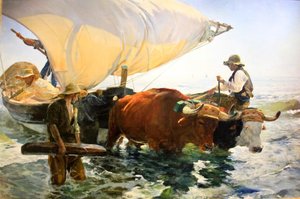
  • The Return from Fishing; Hauling the Boat, Musée d'Orsay, Paris