Πορτρέτο του Τζένι Χόλζερ

Τα 15 πιο διάσημα έργα του Τζένι Χόλζερ, μια επιλογή γκαλερί

Ενημερωμένο Νοέμβριος 2026 · κατάταξη βάσει του σκορ δημοφιλίας μας (αναζητήσεις, επισκέψεις και παραγγελίες για κάθε έργο) · 16 έργα του Τζένι Χόλζερ στον κατάλογό μας

Με σύντομη περιγραφή

Από όλα τα πρωτότυπα έργα που άφησε ο Τζένι Χόλζερ, το πιο διάσημο είναι το Survival Series: Men don’t protect… (1989), το οποίο βρίσκεται στη συλλογή του Μουσείο Guggenheim Bilbao, Βίλβαο. Ακολουθούν στενά η Hm paris και η Electric Sign from the series Under the Rock (1986). Ο κατάλογός μας περιλαμβάνει 16 έργα του Τζένι Χόλζερ· η γκαλερί έχει διατηρήσει τα 15 κομμάτια που θαυμάζει ο κόσμος, το καθένα με την ημερομηνία, το μουσείο και την ιστορία του.

γεννημένος το 1950, Γάλιπολις Neo-conceptualism Περισσότερα έργα: Μουσείο Guggenheim Bilbao

Τα 10 κορυφαία έργα του Τζένι Χόλζερ: η επιλογή της γκαλερί

1
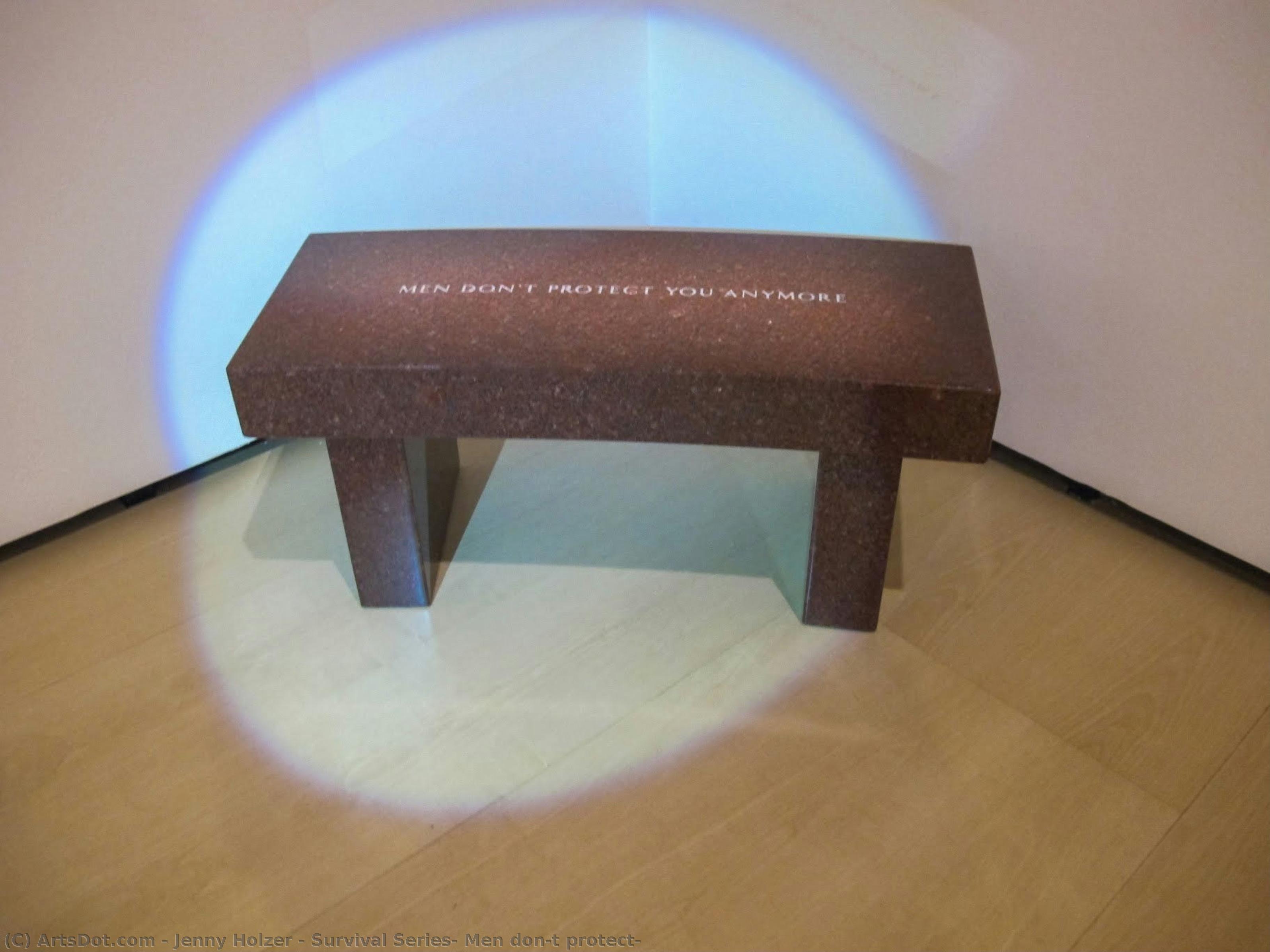
Survival Series: Men don’t protect… (1989) του Τζένι Χόλζερ

Survival Series: Men don’t protect…

1989 · Mixed Media · Μουσείο Guggenheim Bilbao, Βίλβαο

Jenny Holzer’s work possesses an undeniable immediacy, transforming mundane architectural elements into potent canvases for philosophical discourse. This piece, Survival Series: Men don’t protect…, is a striking meditation rendered upon the cool, enduring surface of granite. It captures the ephemeral nature of spoken promises against the permanence of stone. The very act of inscribing words—a declaration, a warning, a lament—onto such a solid material creates an inherent tension that defines…

2
Hm paris του Τζένι Χόλζερ

Hm paris

Photography

In this work, titled Hm paris, we encounter the precise, language-driven approach of Jenny Holzer. The piece engages with the way text occupies space, moving beyond the traditional boundaries of the canvas to interact with the architecture of the environment. It is a quiet but firm intervention into the visual landscape, utilizing the medium of digital display to present fragmented, abstract text along a minimalist handrail.

3
Electric Sign from the series Under the Rock (1986) του Τζένι Χόλζερ

Electric Sign from the series Under the Rock

1986 · Other-None · MoMA - Museum of Modern Art, Νέα Υόρκη

Jenny Holzer's "Electric Sign from the series Under the Rock," a deceptively simple neon installation, isn’t merely a display of light and text; it’s a carefully constructed interrogation of language, power, and the very fabric of public discourse. Created in 1986, this piece embodies the core tenets of Holzer's neo-conceptualist practice – a deliberate blurring of art and life, where words become visual statements demanding immediate engagement. The work’s starkness—a…

4
Living Series: It can be startling to see someone’s breath… (1989) του Τζένι Χόλζερ

Living Series: It can be startling to see someone’s breath…

1989 · Stone · Μουσείο Guggenheim Bilbao, Βίλβαο

In the realm of contemporary neo-conceptualism, few voices resonate with as much profound authority as Jenny Holzer. Her work, particularly within the Living Series, transcends the boundaries of traditional sculpture to become an immersive experience that bridges the gap between public discourse and private reflection. The piece titled "It can be startling to see someone’s breath…" is not merely an object of contemplation but a physical manifestation of thought itself.…

5
Arno Pair (2010) του Τζένι Χόλζερ

Arno Pair

2010 · Acrylic On Canvas · Μουσείο Guggenheim Bilbao, Βίλβαο

Jenny Holzer’s “Arno Pair,” created in 2010, is more than just a visually striking artwork; it’s an invitation to contemplate the enduring power of language and its poignant resonance within public space. Donated to the Collection, this piece serves as a powerful complement to her earlier installation, "Installation for Bilbao," demonstrating Holzer's consistent exploration of themes surrounding communication, loss, and the shifting boundaries between private experience and collective consciousness. The…

6
Survival Series: Let your hand wander… (1989) του Τζένι Χόλζερ

Survival Series: Let your hand wander…

1989 · Μουσείο Guggenheim Bilbao, Βίλβαο

Jenny Holzer’s “Survival Series,” particularly exemplified by works like the iconic red granite bench, isn’t merely a piece of public art; it’s an invitation to a profound dialogue with ourselves and the world around us. Beginning in 1983, this series represents a pivotal moment in Holzer's career – a shift away from ephemeral street posters towards a more enduring, tactile engagement with the viewer. The core concept is deceptively simple:…

Η επιλογή του Τζένι Χόλζερ συνεχίζεται, από τον 11 έως τον 15

Τα θέματα που κίνησαν το ενδιαφέρον του Τζένι Χόλζερ

Τα τέσσερα θέματα που εμφανίζονται πιο συχνά σε αυτά τα πρωτότυπα έργα, το καθένα με το εξαιρετικό του παράδειγμα.

Τα μουσεία που διατηρούν τα πρωτότυπα έργα του Τζένι Χόλζερ

Τα 2 μουσεία που φιλοξενούν το μεγαλύτερο μέρος των έργων σε αυτήν τη σελίδα.

Μουσείο Πόλη Έργα του Τζένι Χόλζερ Πάτρια από αυτή τη λίστα
Μουσείο Guggenheim Bilbao, ΒίλβαοΜουσείο Guggenheim Bilbao Βίλβαο 4 Survival Series: Men don’t protect…, Living Series: It can be startling to see someone’s breath…, Arno Pair
MoMA - Museum of Modern Art, Νέα ΥόρκηMoMA - Museum of Modern Art Νέα Υόρκη 1 Electric Sign from the series Under the Rock

Ο Τζένι Χόλζερ δεκαετία προς δεκαετία: το πρωτότυπο που ορίζει κάθε μία

Έργα ανά δεκαετία

Επιλέξτε μια δεκαετία για να δείτε το πρωτότυπο έργο που την χαρακτηρίζει.

Ερωτήσεις συλλεκτών για τα έργα του Τζένι Χόλζερ

Για ποιο έργο είναι πιο γνωστός ο Τζένι Χόλζερ;Αποκαλύψτε την απάντηση

Survival Series: Men don’t protect… (1989), Μουσείο Guggenheim Bilbao, Βίλβαο. Στη συνέχεια ακολουθούν το Hm paris και το Electric Sign from the series Under the Rock (1986).

Πόσο ηλικία είχε ο/η Τζένι Χόλζερ όταν δημιουργήθηκε το Survival Series: Men don’t protect…;Αποκαλύψτε την απάντηση

39 ετών: το έργο Survival Series: Men don’t protect… είναι του 1989, και ο/η Τζένι Χόλζερ γεννήθηκε το 1950.

Ποια είναι τα δέκα πιο διάσημα έργα του Τζένι Χόλζερ;Αποκαλύψτε την απάντηση

Survival Series: Men don’t protect…, Hm paris, Electric Sign from the series Under the Rock, Living Series: It can be startling to see someone’s breath…, Arno Pair, Survival Series: Let your hand wander…, Left Palm and Knife Edge 000417, PALM, FINGERS & FINGERTIPS (RIGHT HAND) 000394, RIGHT HAND DOD-050577 και Left Hand DOD-044401. Η κατάταξη παραπάνω αναγράφει το έτος και το μουσείο για το κάθε έργο.

Πόσα έργα δημιούργησε ο/η Τζένι Χόλζερ;Αποκαλύψτε την απάντηση

Ο κατάλογός μας περιλαμβάνει 16 έργα του Τζένι Χόλζερ, με ημερομηνίες από 1986 έως 2012.

Σε ποια μουσεία εκτίθενται τα αριστούργημα του Τζένι Χόλζερ;Αποκαλύψτε την απάντηση

Κυρίως σε Μουσείο Guggenheim Bilbao (Βίλβαο) και MoMA - Museum of Modern Art (Νέα Υόρκη). Ο πίνακας μουσείου παραπάνω τους περιλαμβάνει όλους.

Σε ποιες χρονιές δημιούργησε ο/η Τζένι Χόλζερ τα πιο διάσημα έργα του/της;Αποκαλύψτε την απάντηση

Κατά την περίοδο 2000s: 5 από τα 15 έργα σε αυτήν τη σελίδα δημιουργήθηκαν τότε, με Left Palm and Knife Edge 000417 από αυτά να είναι μοναδικά.

Ποια είναι τα πρώτα και τα τελευταία διάσημα πρωτότυπα του Τζένι Χόλζερ;Αποκαλύψτε την απάντηση

Σε αυτήν τη σελίδα, το παλαιότερο είναι Electric Sign from the series Under the Rock (1986) και το νεότερο Accordingly (2012).

Ποια θέματα επέλεξε πιο συχνά ο Τζένι Χόλζερ;Αποκαλύψτε την απάντηση

Language (4), Public space (3) και Public art (3), σε συνολικά 15 έργα σε αυτήν τη σελίδα.

Σε ποιο καλλιτεχνικό κίνημα ανήκει ο/η Τζένι Χόλζερ;Αποκαλύψτε την απάντηση

Neo-conceptualism, όπως προκύπτει από τα πρωτότυπα σε αυτήν τη σελίδα.

Ποια έργα του Τζένι Χόλζερ εκτίθενται στο Μουσείο Guggenheim Bilbao;Αποκαλύψτε την απάντηση

Survival Series: Men don’t protect…, Living Series: It can be startling to see someone’s breath… και Arno Pair: το Μουσείο Guggenheim Bilbao, Βίλβαο διαθέτει 4 από τα έργα σε αυτήν τη σελίδα.

Τζένι Χόλζερ: ζωή και έργο

Jenny Holzer: Architect of Public Thought

Jenny Holzer, a name synonymous with provocative public art and the potent deployment of language, stands as a pivotal figure in neo-conceptualism. Born in Gallipolis, Ohio, in 1950, her journey from aspiring painter to globally recognized artist is marked by a relentless interrogation of power, society, and the very nature of communication. Holzer’s work isn't merely visual; it’s an immersive experience designed to challenge viewers, sparking reflection and demanding engagement with complex ideas. Her career, spanning decades and encompassing diverse media – from billboards and LED projections to stone benches and painted signs – has cemented her legacy as a vital voice in contemporary art.

Early Influences and Artistic Beginnings

Holzer’s artistic roots were initially planted in the traditional world of painting. She began formal training at Duke University, Durham, North Carolina, followed by studies at the University of Chicago and Ohio University, where she honed her skills in drawing, printmaking, and painting. However, a pivotal shift occurred during her time at the Rhode Island School of Design (RISD) in 1974-75. It was here that she began to experiment with language as a primary artistic medium, moving beyond representational imagery and embracing the directness of text. This nascent interest coincided with her relocation to New York City in 1976, where she joined the Whitney Museum’s Independent Study Program – a crucible for experimental art practices. Crucially, Holzer found work as a typesetter for Laundry News, a laundromat-industry trade newspaper, providing a grounding in typography and printmaking that would later inform her distinctive visual style.

The Rise of “Truisms” and Public Intervention

Holzer’s breakthrough arrived with the creation of *Truisms* (1977-79), a series of nearly 300 aphoristic statements printed on white paper in black italic script and wheat-pasted onto buildings, walls, and fences throughout Manhattan. These deceptively simple pronouncements – often drawn from her extensive reading list at the Whitney Independent Study Program – served as a radical intervention into the urban landscape. *Truisms* weren’t intended to be aesthetically pleasing; their power lay in their bluntness, challenging viewers to question assumptions about truth, knowledge, and societal norms. The anonymity of the project further amplified its impact, fostering a sense of collective engagement and critical dialogue. This early work established Holzer's core methodology: deploying concise, often unsettling statements within public spaces to provoke thought and challenge conventional perspectives.

Expanding the Medium: LED Projections and Beyond

Following *Truisms*, Holzer continued to explore the possibilities of language in public space. The *Living* series (1980-82), presented on aluminum and bronze plaques, addressed the mundane necessities of daily life – eating, breathing, sleeping, and human relationships – with a stark, matter-of-fact tone. This period also saw Holzer’s first foray into electronic signage, culminating in her iconic display at Times Square in 1982. From this point forward, LED projections became a central element of her practice, allowing for dynamic, site-specific installations that responded to the architecture and context of their surroundings. Holzer's work has since diversified dramatically, incorporating traditional media such as painting, stone benches, and even a race car for BMW, demonstrating an ongoing commitment to experimentation and pushing the boundaries of artistic expression.

Legacy and Critical Significance

Jenny Holzer’s impact on contemporary art is undeniable. She belongs to a generation of artists who sought new ways to integrate narrative and commentary into visual objects, challenging traditional notions of representation. Her work has been exhibited worldwide, including at major institutions such as the Guggenheim Museum in New York and the Neue Nationalgalerie in Berlin. Holzer’s exploration of themes like power, gender, war, and surveillance continues to resonate deeply with audiences today, prompting critical reflection on the social and political forces shaping our world. Her legacy extends beyond individual artworks; she has fundamentally altered the way public space is perceived and utilized as a site for artistic intervention, solidifying her position as a pioneering voice in neo-conceptualism and a vital commentator on the complexities of modern society.