Πορτρέτο του James Allen

Τα 48 πιο διάσημα έργα του James Allen, μια επιλογή γκαλερί

Ενημερωμένο Νοέμβριος 2026 · κατάταξη βάσει του σκορ δημοφιλίας μας (αναζητήσεις, επισκέψεις και παραγγελίες για κάθε έργο) · 48 έργα του James Allen στον κατάλογό μας

Με σύντομη περιγραφή

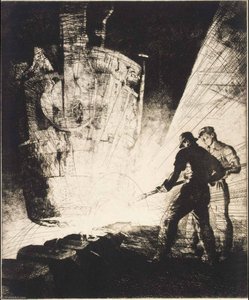
Από όλα τα πρωτότυπα που άφησε ο James Allen, το πιο διάσημο είναι το The Loon (1937). Ακολουθούν στενά η Prayer for Rain (1938) και η Teeming Ingots (1935). Ο κατάλογός μας περιλαμβάνει 48 έργα του James Allen· η γκαλερί έχει διατηρήσει τα 48 κομμάτια που θαυμάζει ο κόσμος, το καθένα με την ημερομηνία, το μουσείο και την ιστορία του.

1894 – 1964 Social realism

Τα 10 κορυφαία έργα του James Allen: η επιλογή της γκαλερί

2
Prayer for Rain (1938) του James Allen

Prayer for Rain

1938

The Prayer for Rain is a poignant lithograph created by James E. Allen in 1938, a time of great drought and hardship in the United States. This powerful piece of art is a testament to the struggles faced by farmers during the Dust Bowl era and the importance of faith and hope in times of adversity. The Artist and His Work James E. Allen was an American printmaker and artist,…

8
The Plowman (1936) του James Allen

The Plowman

1936

The Plowman is a captivating lithograph created by James E. Allen in 1936, showcasing the artist's exceptional skill in capturing the essence of traditional farming practices. This black and white lithograph measures 23 x 33 cm and is currently housed at the Smithsonian American Art Museum in the United States. Artistic Style and Technique James E. Allen's work is characterized by his ability to convey the strength and endurance of…

9
The Breakers (1937) του James Allen

The Breakers

1937

The Breakers is a remarkable painting created by James E. Allen in 1937. This lithograph on paper, measuring 23 x 32 cm, is currently housed at the Smithsonian American Art Museum in the United States. The image depicts a scene of people in a boat on the water, showcasing the artist's unique style and technique. Artist Background James E. Allen was an American printmaker and illustrator, known for his exceptional…

10
The Trench (1937) του James Allen

The Trench

1937

The painting The Trench by James E Allen is a remarkable example of industrial art, showcasing the daily lives of workers in a trench. Created in 1937, this lithograph on paper measures 39 x 26 cm and is currently housed at the Smithsonian American Art Museum. The image depicts men working on a large pipe or cylinder in a muddy area, highlighting the challenges and dangers faced by these workers.…

Η επιλογή του James Allen συνεχίζεται, από τον 11 έως τον 48

Τα θέματα που κίνησαν το ενδιαφέρον του James Allen

Τα τέσσερα θέματα που εμφανίζονται πιο συχνά σε αυτά τα πρωτότυπα έργα, το καθένα με το εξαιρετικό του παράδειγμα.

Ο James Allen ανά έτος: τα πρωτότυπα που τον ορίζουν

Η επιλογή καλύπτει τον/την James Allen σε βάθος 12 χρόνια, από το 1932 έως το 1943, διατηρώντας τα κορυφαία πρωτότυπα κάθε έτους.

Έργα ανά έτος

Επιλέξτε μια χρονιά για να δείτε τα πρωτότυπα έργα της.

Ερωτήσεις συλλεκτών για τα έργα του James Allen

Για ποιο έργο είναι πιο γνωστός ο James Allen;Αποκαλύψτε την απάντηση

Το The Loon (1937). Στη συνέχεια ακολουθούν το Prayer for Rain (1938) και το Teeming Ingots (1935).

Πόσο ηλικία είχε ο/η James Allen όταν δημιουργήθηκε το The Loon;Αποκαλύψτε την απάντηση

43 ετών: το έργο The Loon είναι του 1937, και ο/η James Allen γεννήθηκε το 1894.

Ποια είναι τα δέκα πιο διάσημα έργα του James Allen;Αποκαλύψτε την απάντηση

The Loon, Prayer for Rain, Teeming Ingots, Socketing, The Connectors, The Accident, Magellan, The Plowman, The Breakers και The Trench. Η κατάταξη παραπάνω αναγράφει το έτος και το μουσείο για το κάθε έργο.

Πόσα έργα δημιούργησε ο/η James Allen;Αποκαλύψτε την απάντηση

Ο κατάλογός μας περιλαμβάνει 48 έργα του James Allen, με ημερομηνίες από 1932 έως 1943.

Σε ποιες χρονιές δημιούργησε ο/η James Allen τα πιο διάσημα έργα του/της;Αποκαλύψτε την απάντηση

Κατά την περίοδο 1937: 14 από τα 48 έργα σε αυτήν τη σελίδα δημιουργήθηκαν τότε, με The Loon από αυτά να είναι μοναδικά.

Ποια είναι τα πρώτα και τα τελευταία διάσημα πρωτότυπα του James Allen;Αποκαλύψτε την απάντηση

Σε αυτήν τη σελίδα, το παλαιότερο είναι The Sky Man (1932) και το νεότερο Parachutists (1943).

Ποια θέματα επέλεξε πιο συχνά ο James Allen;Αποκαλύψτε την απάντηση

Industrial labor (6), 1930s (3) και Industrial art (2), σε συνολικά 48 έργα σε αυτήν τη σελίδα.

Σε ποιο καλλιτεχνικό κίνημα ανήκει ο/η James Allen;Αποκαλύψτε την απάντηση

Social realism και Contemporary realism, όπως προκύπτει από τα πρωτότυπα σε αυτήν τη σελίδα.

James Allen: ζωή και έργο

James E. Allen: The Steelworker’s Vision

James Edmund Allen, a name perhaps less familiar than many of his contemporaries in the American art scene of the early 20th century, nevertheless possessed a singular and profoundly moving vision. Born in rural Montana in 1894, Allen's life was shaped by hardship and resilience – experiences that would deeply inform his artistic output. His early years, marked by the sudden loss of his father and subsequent family struggles, instilled within him a profound appreciation for the dignity of labor and the quiet heroism of everyday people. This formative period laid the groundwork for his enduring fascination with the working class, particularly steelworkers and pipe workers, whom he depicted with remarkable empathy and detail. Allen’s artistic journey began modestly, studying at the Art Institute of Chicago and later honing his skills within the influential Interlaken Colony near Asbury Park, New Jersey – a community renowned for its dedication to realism and social commentary. It was here that he developed his signature style: meticulously rendered scenes of industrial life, capturing not just the physicality of these laborers but also their inherent strength, determination, and quiet dignity.

A Career Bridging Illustration and Printmaking

Allen’s career spanned over three decades, encompassing a diverse range of activities that ultimately cemented his place as a significant figure in American art. Initially establishing himself as a freelance illustrator for popular magazines like *American Boy*, *Blue Book*, and *Harper's Bazaar*, he quickly gained recognition for his ability to imbue ordinary subjects with extraordinary character. His illustrations weren’t merely decorative; they were imbued with a subtle social awareness, reflecting the realities of American life during a period of rapid industrialization. However, Allen’s artistic ambitions extended beyond illustration. He embraced printmaking – lithography and etching – as a means of exploring his themes more deeply and offering greater control over his compositions. This shift allowed him to create works that were both technically sophisticated and emotionally resonant. His prints, often characterized by their stark contrasts and carefully considered arrangements of line and tone, became increasingly powerful in conveying the struggles and triumphs of the working class.

The Power of “The Plowman” and Other Iconic Works

Among Allen’s most celebrated works is "The Plowman" (1937), a lithograph that has become synonymous with his artistic vision. This powerful image, depicting a solitary farmer tilling the land, transcends mere representation to embody themes of perseverance, resilience, and connection to the earth. The composition—a study in light and shadow, emphasizing the figure’s muscular build and weathered face—evokes a sense of quiet dignity and unwavering determination. Similarly, "The Trench" (1937), another lithograph, captures the grim realities of industrial labor during World War II, portraying steelworkers with an unflinching honesty that underscored their vital role in supporting the war effort. These works, along with others such as “Distress,” demonstrate Allen’s ability to transform everyday subjects into potent symbols of American identity and values. His meticulous attention to detail—the texture of clothing, the lines of muscle, the weariness in the eyes—created a sense of immediacy and authenticity that resonated deeply with viewers.

Influences and Artistic Development

Allen’s artistic development was shaped by a confluence of influences, ranging from his early exposure to the rugged landscapes of Montana to his engagement with European art movements. The Interlaken Colony provided him with access to a network of talented artists who encouraged experimentation and innovation. He studied under figures like Joseph Pennell and William Auerbach-Levy, absorbing their techniques and approaches while maintaining his own distinctive style. Notably, Allen’s work was influenced by the principles of social realism, which sought to depict the lives of ordinary people with honesty and empathy. However, he also drew inspiration from Cubism and other avant-garde movements, incorporating elements of abstraction and geometric form into his compositions. His exploration of printmaking techniques—particularly lithography—allowed him to achieve a level of tonal control and visual complexity that was rarely seen in American art at the time.

Legacy and Historical Significance

James E. Allen’s legacy lies not in grand museums or widespread fame, but rather in his quietly powerful depictions of the working class—a group often overlooked by mainstream artists. His work serves as a poignant reminder of the dignity of labor and the importance of social justice. Allen's meticulous attention to detail and his ability to capture the essence of his subjects have ensured that his art continues to resonate with viewers today. He stands as a testament to the power of observation, empathy, and artistic integrity—qualities that remain vitally important in an increasingly complex world. His work is now housed in collections across the United States, offering a valuable window into the social and cultural landscape of early 20th-century America.