


1


Ενημερωμένο Νοέμβριος 2026 · κατάταξη βάσει του σκορ δημοφιλίας μας (αναζητήσεις, επισκέψεις και παραγγελίες για κάθε έργο) · 71 έργα του Τζακ Λίβιν στον κατάλογό μας
Με σύντομη περιγραφή
Στο μάτι της γκαλερί, το πιο διάσημο έργο του Τζακ Λίβιν είναι το Man with the Stained Glass Eye (1952). Ο Untitled (644) και ο Untitled (809) ολοκληρώνουν το τρίο που κάθε μάτι αναγνωρίζει. Από τα 71 έργα του Τζακ Λίβιν στον κατάλογό μας, η γκαλερί παρουσιάζει παρακάτω τα 69 πιο διάσημα, όπου κάθε ένα είναι πρωτότυπο, με την χρονολογία του, το μουσείο του και το τι το κάνει μοναδικό.


 The Syndicate1939
12
 The End of the Line1948 · The Phillips Collection
13
 Portrait of a Girl1946
14
 Reception in Miami1948
15
 Homage To Boston1949
16
 Hezekiah1956
17
 35 Minutes from Times Square1956
18
 The Scribe1956
19
 Girl with Red Hair1962 · New Britain Museum of American Art
20
 The Last Waltz1962
21
 Flowers1962
22
 The Green Cloche1962
23
 The Turnkey1956
24
 Untitled (407)
25
 Untitled (800)
26
 Untitled (666)
27
 Untitled (402)
28
 Untitled (635)
29
 Untitled (313)
30
 Untitled (833)
31
 Untitled (414)
32
 Untitled (988)
33
 Untitled (306)
34
 Untitled (772)
35
 Untitled (415)
36
 Untitled (337)
37
 Untitled (764)
38
 Untitled (252)
39
 Untitled (381)
40
 Untitled (901)
41
 Untitled (836)
42
 Untitled (273)
43
 Untitled (818)
44
 Untitled (751)
45
 Untitled (922)
46
 Untitled (166)
47
 Untitled (207)
48
 Untitled (904)
49
 Untitled (134)
50
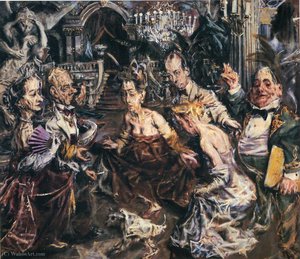 Untitled (170)
51
 Untitled (622)
52
 Untitled (434)
53
 Untitled (600)
54
 Untitled (962)
55
 Untitled (444)
56
 Untitled (816)
57
 Untitled (635)
58
 Untitled (491)
59
 Untitled (782)
60
 Untitled (265)
61
 Untitled (796)
62
 Untitled (196)
63
 Untitled (389)
64
 Untitled (744)
65
 Untitled (966)
66
 Untitled (832)
67
 Untitled (377)
68
 Untitled (199)
69
 Act Of Legislature1949
Τα τέσσερα θέματα που εμφανίζονται πιο συχνά σε αυτά τα πρωτότυπα έργα, το καθένα με το εξαιρετικό του παράδειγμα.
Τα 2 μουσεία που φιλοξενούν το μεγαλύτερο μέρος των έργων σε αυτήν τη σελίδα.
| Μουσείο | Πόλη | Έργα του Τζακ Λίβιν | Πάτρια από αυτή τη λίστα |
|---|---|---|---|
 The Phillips Collection |
Ουάσιγκτον, D.C. | 1 | The End of the Line |
 New Britain Museum of American Art |
New Britain | 1 | Girl with Red Hair |
Επιλέξτε μια δεκαετία για να δείτε το πρωτότυπο έργο που την χαρακτηρίζει.


Το Man with the Stained Glass Eye (1952). Στη συνέχεια ακολουθούν το Untitled (644) και το Untitled (809).
37 ετών: το έργο Man with the Stained Glass Eye είναι του 1952, και ο/η Τζακ Λίβιν γεννήθηκε το 1915.
Man with the Stained Glass Eye, Untitled (644), Untitled (809), Untitled (836), Untitled (604), Untitled (578), Untitled (259), Untitled (284), The Passing Scene και Burlesque Dancer Verso (Untitled). Η κατάταξη παραπάνω αναγράφει το έτος και το μουσείο για το κάθε έργο.
Ο κατάλογός μας περιλαμβάνει 71 έργα του Τζακ Λίβιν, με ημερομηνίες από 1939 έως 1962.
Κυρίως σε The Phillips Collection (Ουάσιγκτον, D.C.) και New Britain Museum of American Art (New Britain). Ο πίνακας μουσείου παραπάνω τους περιλαμβάνει όλους.
Κατά την περίοδο 1940s: 7 από τα 69 έργα σε αυτήν τη σελίδα δημιουργήθηκαν τότε, με The Passing Scene από αυτά να είναι μοναδικά.
Σε αυτήν τη σελίδα, το παλαιότερο είναι The Syndicate (1939) και το νεότερο Girl with Red Hair (1962).
Portrait (4), Reflection (3) και Elderly man (2), σε συνολικά 69 έργα σε αυτήν τη σελίδα.
Social realism, όπως προκύπτει από τα πρωτότυπα σε αυτήν τη σελίδα.


