


1


Ενημερωμένο Νοέμβριος 2026 · κατάταξη βάσει του σκορ δημοφιλίας μας (αναζητήσεις, επισκέψεις και παραγγελίες για κάθε έργο) · 6 έργα του Χεματσάντρα στον κατάλογό μας
Με σύντομη περιγραφή
Στο μάτι της γκαλερί, το πιο διάσημο έργο του Χεματσάντρα είναι το Seated Rishabha Enthroned, Folio 1 verso of a Yoga-shastra of Hemachandra (1279), το πρωτότυπο του οποίου εκτίθεται στο Μουσείο Τέχνης Κλίβελαντ, Κλίβελαντ. Ο Leaf from a Jain Manuscript: Yoga-shastra: Jain monk with Disciple and Two Laymen, Two Nuns and a Laywoman below (verso) (1279) και ο Rishabha enthroned, folio 1 (verso) from a Yoga-shastra of Hemachandra (1275) ολοκληρώνουν το τρίο που κάθε μάτι αναγνωρίζει. Από τα 6 έργα του Χεματσάντρα στον κατάλογό μας, η γκαλερί παρουσιάζει παρακάτω τα 3 πιο διάσημα, όπου κάθε ένα είναι πρωτότυπο, με την χρονολογία του, το μουσείο του και το τι το κάνει μοναδικό.


Το μουσείο με τη μεγαλύτερη συγκέντρωση έργων σε αυτήν τη σελίδα.
| Μουσείο | Πόλη | Έργα του Χεματσάντρα | Πάτρια από αυτή τη λίστα |
|---|---|---|---|
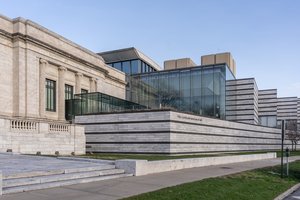 Μουσείο Τέχνης Κλίβελαντ |
Κλίβελαντ | 3 | Seated Rishabha Enthroned, Folio 1 verso of a Yoga-shastra of Hemachandra, Leaf from a Jain Manuscript: Yoga-shastra: Jain monk with Disciple and Two Laymen, Two Nuns and a Laywoman below (verso), Rishabha enthroned, folio 1 (verso) from a Yoga-shastra of Hemachandra |
Seated Rishabha Enthroned, Folio 1 verso of a Yoga-shastra of Hemachandra (1279), Μουσείο Τέχνης Κλίβελαντ, Κλίβελαντ. Στη συνέχεια ακολουθούν το Leaf from a Jain Manuscript: Yoga-shastra: Jain monk with Disciple and Two Laymen, Two Nuns and a Laywoman below (verso) (1279) και το Rishabha enthroned, folio 1 (verso) from a Yoga-shastra of Hemachandra (1275).
Ο κατάλογός μας περιλαμβάνει 6 έργα του Χεματσάντρα.
Κυρίως σε Μουσείο Τέχνης Κλίβελαντ (Κλίβελαντ). Ο πίνακας μουσείου παραπάνω τους περιλαμβάνει όλους.
Seated Rishabha Enthroned, Folio 1 verso of a Yoga-shastra of Hemachandra, Leaf from a Jain Manuscript: Yoga-shastra: Jain monk with Disciple and Two Laymen, Two Nuns and a Laywoman below (verso) και Rishabha enthroned, folio 1 (verso) from a Yoga-shastra of Hemachandra: το Μουσείο Τέχνης Κλίβελαντ, Κλίβελαντ διαθέτει 3 από τα έργα σε αυτήν τη σελίδα.
Hemachandra was a prolific scholar and monk of the Śvetāmbara school of Jainism. Born in Dhandhuka, India, he was a man of immense intellect, earning the title kalikālasarvajña, meaning "the knower of all knowledge in his times." His vast contributions spanned numerous disciplines, including mathematics, history, philosophy, poetry, and grammar. As a grammarian, he produced the Siddha-Hema-Śabdanuśāśana, a work that included six different languages. He is also recognized as the father of the Gujarati language.
His mathematical insights were profound; he described the Fibonacci sequence around 1150, decades before Fibonacci. He also applied mathematical principles to the study of Sanskrit poetic rhythms, calculating the various patterns possible from short and long syllables.
Throughout his life, Hemachandra served as an adviser to King Kumārapāla and was a prominent figure in the Chaulukya royal court. His literary output was vast, ranging from the epic poem Triśaṣṭi-śalākā-puruṣacarita, which details the lives of important figures in Jainism, to political treatises like the Arhannīti. He was a master of many forms, including lexicography, prosody, and logic.
Hemachandra's influence extended into the social and religious fabric of the region. His involvement in the construction of the Jain temple at Taranga and his influence on King Kumārapāla contributed to Jainism becoming the official religion of Gujarat. He concluded his life through the practice of sallekhana, a Jaina fast, and died in Patan.