Πορτρέτο του Γιούλα Τόρνάι

Πάτσαδες του Γιούλα Τόρνάι: Τα 39 πιο διάσημα, μέσα από το βλέμμα μιας γκαλερί

Ενημερωμένο Νοέμβριος 2026 · κατάταξη βάσει του σκορ δημοφιλίας μας (αναζητήσεις, επισκέψεις και παραγγελίες για κάθε έργο) · 40 έργα του Γιούλα Τόρνάι στον κατάλογό μας

Με σύντομη περιγραφή

Στο μάτι της γκαλερί, το πιο διάσημο έργο του Γιούλα Τόρνάι είναι το The Favourite Of The Harem. Ο The Artist’s Mother (1884) και ο Geisha ολοκληρώνουν το τρίο που κάθε μάτι αναγνωρίζει. Από τα 40 έργα του Γιούλα Τόρνάι στον κατάλογό μας, η γκαλερί παρουσιάζει παρακάτω τα 39 πιο διάσημα, όπου κάθε ένα είναι πρωτότυπο, με την χρονολογία του, το μουσείο του και το τι το κάνει μοναδικό.

1861 – 1928, Σπισκί Χρχόβ Orientalism Περισσότερα έργα: Εθνική Γκαλερία της Ουγγαρίας

Τα 10 κορυφαία έργα του Γιούλα Τόρνάι στη γκαλερέι

1
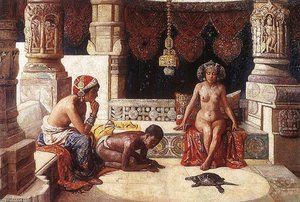
The Favourite Of The Harem του Γιούλα Τόρνάι

The Favourite Of The Harem

Oil On Canvas

The artwork is titled The Favourite Of The Harem. This oil on canvas is attributed to the Hungarian painter Gyula Tornai. The piece presents a scene within an opulent setting, characterized by detailed carvings and various furnishings. The composition includes several figures positioned throughout a lavishly decorated room.

2
The Artist’s Mother (1884) του Γιούλα Τόρνάι

The Artist’s Mother

1884 · Black and White Photography · Εθνική Γκαλερία της Ουγγαρίας, Μπουδάπεστη

In "The Artist’s Mother" by Gyula Tornai, a black and white photograph captures a quiet, candid moment from about 1884. The medium close-up focuses on two figures caught in a private exchange. On the left, a man is seen in profile, his body angled toward his companion. He raises his right hand in a gesture, perhaps mid-sentence or mid-song. Opposite him, a woman faces him, her expression softened by a…

Πάينτα του Γιούλα Τόρνάι, κατάταξη από 11 έως 39

Τα θέματα που κίνησαν το ενδιαφέρον του Γιούλα Τόρνάι

Τα τέσσερα θέματα που εμφανίζονται πιο συχνά σε αυτά τα πρωτότυπα έργα, το καθένα με το εξαιρετικό του παράδειγμα.

Τα μουσεία που διατηρούν τα πρωτότυπα έργα του Γιούλα Τόρνάι

Τα 2 μουσεία που φιλοξενούν το μεγαλύτερο μέρος των έργων σε αυτήν τη σελίδα.

Μουσείο Πόλη Έργα του Γιούλα Τόρνάι Πάτρια από αυτή τη λίστα
Εθνική Γκαλερία της Ουγγαρίας, ΜπουδάπεστηΕθνική Γκαλερία της Ουγγαρίας Μπουδάπεστη 3 The Artist’s Mother, The Yard of the Church at Dilvára, The Artist’s Father
Gardiner Museum of Ceramic Art, TorontoGardiner Museum of Ceramic Art Toronto 1 Box Decorated with Playing Putti

Γιούλα Τόρνάι, τα χαρακτηριστικά έργα κάθε έτους

Κάθε πρωτότυπο έργο με ημερομηνία από τον/την Γιούλα Τόρνάι σε αυτήν τη σελίδα δημιουργήθηκε το 1884: ορίστε, ξεκινώντας από τα πιο διάσημα.

Έργα ανά έτος

Επιλέξτε μια χρονιά για να δείτε τα πρωτότυπα έργα της.

Οι πίνακες του Γιούλα Τόρνάι: οι απαντήσεις της γκαλερί

Ποιο έργο του Γιούλα Τόρνάι είναι το πιο διάσημο από όλα;Αποκαλύψτε την απάντηση

Το The Favourite Of The Harem. Στη συνέχεια ακολουθούν το The Artist’s Mother (1884) και το Geisha.

Ποιες είναι τα 10 κορυφαία έργα του Γιούλα Τόρνάι;Αποκαλύψτε την απάντηση

The Favourite Of The Harem, The Artist’s Mother, Geisha, Box Decorated with Playing Putti, A Street Musician, The Oriental Lute Player, In The Harem, An Oriental Man With A Copper Bowl, The Moorish Smoker και Portrait of jaroslava the artists daughter. Η κατάταξη παραπάνω αναγράφει το έτος και το μουσείο για το κάθε έργο.

Πόσα έργα δημιούργησε ο/η Γιούλα Τόρνάι;Αποκαλύψτε την απάντηση

Ο κατάλογός μας περιλαμβάνει 40 έργα του Γιούλα Τόρνάι.

Πού εκτίθενται τα πιο διάσημα πρωτότυπα του Γιούλα Τόρνάι;Αποκαλύψτε την απάντηση

Κυρίως σε Εθνική Γκαλερία της Ουγγαρίας (Μπουδάπεστη) και Gardiner Museum of Ceramic Art (Toronto). Ο πίνακας μουσείου παραπάνω τους περιλαμβάνει όλους.

Ποια θέματα επέλεξε πιο συχνά ο Γιούλα Τόρνάι;Αποκαλύψτε την απάντηση

Woman (2), Man (2) και Nude figure (2), σε συνολικά 39 έργα σε αυτήν τη σελίδα.

Με ποιο καλλιτεχνικό κίνημα σχετίζεται ο/η Γιούλα Τόρνάι;Αποκαλύψτε την απάντηση

Orientalism, όπως προκύπτει από τα πρωτότυπα σε αυτήν τη σελίδα.

Ποια πρωτότυπα έργα του Γιούλα Τόρνάι διαθέτει το Εθνική Γκαλερία της Ουγγαρίας;Αποκαλύψτε την απάντηση

The Artist’s Mother, The Yard of the Church at Dilvára και The Artist’s Father: το Εθνική Γκαλερία της Ουγγαρίας, Μπουδάπεστη διαθέτει 3 από τα έργα σε αυτήν τη σελίδα.

Γιούλα Τόρνάι: ο καλλιτέχνης

Gyula Tornai: Life and Legacy

Early Life and Education

  • Born: 1861 in Görgö, Hungary (now Spišský Hrhov, Slovakia).
  • Gyula Tornai received his foundational art education at prestigious academies in Vienna and Munich.
  • He further honed his skills under the guidance of Hans Makart and Gyula Benczúr at Benczúr's Studios in Budapest. This period significantly shaped his early artistic style.
  • His initial works focused on popular, everyday themes, reflecting a traditional approach to genre painting.

Artistic Development and Influences

  • Early Style: Tornai’s early paintings were heavily influenced by Hans Makart's style – known as “Makartstil” in German – characterized by opulent detail and dramatic compositions.
  • Shift to Orientalism: Travel played a crucial role in his artistic evolution. Journeys to Spain, Algeria, and particularly Morocco sparked a profound shift towards Orientalist themes.
  • He spent ten years immersed in North African culture, including a year living in Tangiers (1890-1891), which deeply informed his depictions of street life, merchants, musicians, and harem scenes.

Travels to the Far East and Patronage

  • Expanding Horizons: In 1905, Tornai embarked on a transformative journey to the Far East, extending his Orientalist interests to India and Japan.
  • Count Okuma’s Patronage: Upon arriving in Japan, he painted a portrait of Count Okuma, the former Prime Minister, who became a significant patron. This patronage granted Tornai unprecedented access to Japanese society and culture.
  • This unique position allowed him to explore Buddhism and Shintoism in depth, enriching his artistic understanding and representation of Japanese life.
  • Notable Works from Japan: During his 16-month stay, he created paintings such as “A Japanese Princess Going to Church,” “Geisha,” “The Geisha House,” and “The Samurai Warrior.”

Recognition and Major Achievements

  • Exposition Universelle (1900): Tornai achieved international acclaim at the Exposition Universelle in Paris, winning a bronze medal for his work.
  • Exhibitions: His paintings were exhibited in Paris and London (1907), Budapest’s Műcsarnok (1909), and the National Salon (1917).
  • Posthumous Exhibition (1929): An exhibition of his legacies was organized by an auction hall following his death.
  • Critical Reception: Contemporary critics praised his works for their vibrant colors, appreciation of Eastern aesthetics, irony, humor and wit. His painting “The Connoisseurs” is a prime example of this unique approach.

Historical Significance and Legacy

  • Orientalist Contribution: Gyula Tornai’s work significantly contributed to the Orientalist movement, offering fresh perspectives on Eastern cultures through a European lens.
  • Hungarian National Gallery: Several of his paintings are now held in the Hungarian National Gallery, solidifying his place in Hungarian art history.
  • Unique Perspective: Tornai’s ability to blend exotic themes with humor and insightful observations set him apart from other Orientalist painters. He didn't merely depict the East; he offered a nuanced commentary on it.
  • Death: Gyula Tornai passed away in 1928, leaving behind a rich artistic legacy that continues to captivate audiences today.