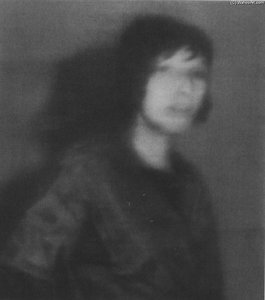
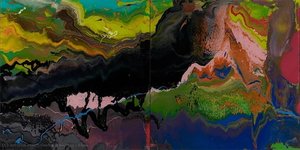
Πορτρέτο του Γκέρχαρντ Ρίχτερ

Τα 100 πιο διάσημα έργα του Γκέρχαρντ Ρίχτερ, μια επιλογή γκαλερί

Ενημερωμένο Νοέμβριος 2026 · κατάταξη βάσει του σκορ δημοφιλίας μας (αναζητήσεις, επισκέψεις και παραγγελίες για κάθε έργο) · 134 έργα του Γκέρχαρντ Ρίχτερ στον κατάλογό μας

Με σύντομη περιγραφή

Από όλα τα πρωτότυπα που άφησε ο Γκέρχαρντ Ρίχτερ, το πιο διάσημο είναι το Αφηρημένο Καμβά 780-1 (1992). Ακολουθούν στενά η Αφηρημένη Ζωγραφική 805-4 και η Μπέτι (1988). Ο κατάλογός μας περιλαμβάνει 134 έργα του Γκέρχαρντ Ρίχτερ· η γκαλερί έχει διατηρήσει τα 100 κομμάτια που θαυμάζει ο κόσμος, το καθένα με την ημερομηνία, το μουσείο και την ιστορία του.

γεννημένος το 1932, Δρέσδη Σύγχρονος ρεαλισμός Περισσότερα έργα: Art Institute of Chicago

Τα 10 κορυφαία έργα του Γκέρχαρντ Ρίχτερ: η επιλογή της γκαλερί

1
Αφηρημένο Καμβά 780-1 (1992) του Γκέρχαρντ Ρίχτερ

Αφηρημένο Καμβά 780-1

1992 · Άνθρακα και λάδι σε καμβά

Gerhard Richter's "Abstract Painting 780-1," created in 1992, isn’t merely a painting; it’s an immersive experience. This work immediately captivates with its vibrant energy and dynamic composition—a testament to Richter’s mastery of abstract expressionism. The piece invites the viewer into a world where color doesn't simply decorate but actively commands attention, creating a powerful dialogue between the artist and the observer. The vertical orientation, dividing the canvas into distinct zones…

2
Αφηρημένη Ζωγραφική 805-4 του Γκέρχαρντ Ρίχτερ

Αφηρημένη Ζωγραφική 805-4

Άνθρακα και λάδι σε καμβά

Το "Abstract Painting 805-4" του Gerhard Richter δεν είναι απλώς ένα έργο τέχνης, αλλά μια εμπειρία. Ένα ταξίδι μέσα από έναν κόσμο χρωμάτων και υφών που προκαλεί σκέψεις και αφήνει μια βαθιά εντύπωση. Η δυναμική σύνθεση, η έντονη παλέτα και η τεχνική του Richter συνδυάζονται για να δημιουργήσουν ένα έργο που ξεπερνά τα όρια της αντιληπτής πραγματικότητας και μας καλεί σε μια προσωπική ερμηνεία.

3
Μπέτι (1988) του Γκέρχαρντ Ρίχτερ

Μπέτι

1988 · Άνθρακα και λάδι σε καμβά

Gerhard Richter's 'Betty,' painted in 1988, isn’t merely a portrait; it’s an exquisitely layered meditation on memory, perception, and the elusive nature of representation. This arresting work, currently residing within the esteemed collection of the Saint Louis Art Museum, immediately draws the viewer into its quiet intensity. Richter, a titan of contemporary art, masterfully employs a deceptively simple composition – the back of his daughter’s head – to conjure a…

4
Μονοφόρο (1965) του Γκέρχαρντ Ρίχτερ

Μονοφόρο

1965 · Ακρυλικά πάνω σε καμβά

Gerhard Richter’s “Motorboat,” created in 1965, stands as a pivotal emblem of the burgeoning postmodern art movement. Born amidst the fracturing realities of post-war Germany – specifically Düsseldorf's embrace of Western artistic sensibilities following the Berlin Wall’s construction – Richter’s oeuvre reflects this transformative period with remarkable precision.

5
1024 Χρώματα (1973) του Γκέρχαρντ Ρίχτερ

1024 Χρώματα

1973 · Άνθρακα και λάδι σε καμβά

Gerhard Richter, ένας κολοσσός της σύγχρονης τέχνης, συνεχίζει να μαγευτεύει το κοινό με το μοναδικό του όραμα—ένα μαστοτεχνικό μείγμα αφαίρεσης και εννοιολογικής διερεύνησης. Ανάμεσα στις πιο εμβληματικές δημιουργίες του ξεχωρίζει τα «1024 Χρώματα», που απολήφθηκαν το 1973, και αποτελούν ακρογωνιαίο της Εννοιολογικής Τέχνης, ενσαρκώνοντας την αδιάκοπη δέσμευση του Richter στην πρόκληση των παραδοσιακών καλλιτεχνικών παραδείγμάτων.

6
Κεριά του Γκέρχαρντ Ρίχτερ

Κεριά

Άνθρακα και λάδι σε καμβά

Gerhard Richter, arguably the most influential figure in contemporary art, crafted a series of paintings titled *Candles*, which transcend mere visual representation to embody profound philosophical concepts – hope and mortality. Created in 1983, *Kertz*—as it’s known in German—holds its place within The Art Institute of Chicago's collection, attracting considerable attention from art connoisseurs like Frances Outred during the Christie Auction House’s Post-War & Contemporary Art gallery in 2011. Outred…

7
Reading (1994) του Γκέρχαρντ Ρίχτερ

Reading

1994 · Oil On Canvas

Gerhard Richter's 'Reading,' painted in 1994, isn’t merely a portrait; it’s an exploration of the very act of looking, of absorption, and of the subtle dance between reality and representation. The work immediately draws you into a quiet intimacy, centered around Sabine Moritz, a woman whose presence is both strikingly present and profoundly elusive. Richter masterfully employs a technique that leans heavily on photo-realism, yet deliberately softens the edges, creating…

8
Καύκωνες (1982) του Γκέρχαρντ Ρίχτερ

Καύκωνες

1982 · Άνθρακα και λάδι σε καμβά

A Symphony of Abstraction: Exploring Gerhard Richter’s “Clouds” Gerhard Richter's 1982 masterpiece, "Clouds," is a pivotal work in contemporary art, embodying his lifelong exploration of the boundaries between representation and abstraction. This large-scale painting isn't merely an image *of* clouds; it’s an investigation into perception, the act of seeing, and the very nature of painting itself. It invites us to question what we expect from a landscape and revel in…

9
Abstract Picture του Γκέρχαρντ Ρίχτερ

Abstract Picture

Oil On Canvas

To stand before an Abstract Picture by Gerhard Richter is to enter a realm where the boundaries between reality and illusion dissolve into a vibrant, textured haze. This masterpiece does not merely present a scene; it orchestrates a sensory experience that challenges the very nature of sight. At first glance, the eye is drawn to a kaleidoscopic explosion of color—deep, resonant reds, sun-drenched yellows, and cool, tranquil blues that dance…

10
Wallace Bournes του Γκέρχαρντ Ρίχτερ

Wallace Bournes

Ακρυλικά πάνω σε καμβά

Ο Gerhard Richter, ένας από τους σημαντικότερους καλλιτέχνes της σύγχρονης γερμανικής σκηνής, δεν είναι απλώς ένας ζωγράφος – είναι ένας εξερευνητής των ορίων της αντίληψης και της ανθρώπινης εμπειρίας. Η ζωή του, βαθιά ριζωμένη στις ανατροπές της μεταπολεμικής Γερμανίας, διαμόρφωσε την αισθητική του γλώσσα, μια γλώσσα που χαρακτηρίζεται από μια ειλικρινή αποδοχή της αβεβαιότητας και μια συνεχή αναζήτηση για την ουσία των πραγμάτων. Η παιδική του εποχή, σε μικρές πόλεις…

Η επιλογή του Γκέρχαρντ Ρίχτερ συνεχίζεται, από τον 11 έως τον 100

11Λίμνη Λουτσέρνη του Γκέρχαρντ ΡίχτερΛίμνη Λουτσέρνη 12Αφηρημένη Εικόνα (1994) του Γκέρχαρντ ΡίχτερΑφηρημένη Εικόνα1994 13Λιλιές (2000) του Γκέρχαρντ ΡίχτερΛιλιές2000 · Εθνική Πινακοθήκη του Καναδά 14Ιούλιος (1983) του Γκέρχαρντ ΡίχτερΙούλιος1983 15Abstract Picture του Γκέρχαρντ ΡίχτερAbstract Picture 16Phantom Interceptors (1964) του Γκέρχαρντ ΡίχτερPhantom Interceptors1964 17Brigid Polk (1971) του Γκέρχαρντ ΡίχτερBrigid Polk1971 18Ludorff του Γκέρχαρντ ΡίχτερLudorff 19Fuji του Γκέρχαρντ ΡίχτερFuji 20Group of People (1965) του Γκέρχαρντ ΡίχτερGroup of People1965 21Ella (2007) του Γκέρχαρντ ΡίχτερElla2007 22Ομάδα Κυνηγετών (Jagdgesellschaft) (1966) του Γκέρχαρντ ΡίχτερΟμάδα Κυνηγετών (Jagdgesellschaft)1966 · Art Institute of Chicago 23Seascape (Cloudy) (1969) του Γκέρχαρντ ΡίχτερSeascape (Cloudy)1969 24Townscape Madrid (1968) του Γκέρχαρντ ΡίχτερTownscape Madrid1968 25Red Blue Yellow (1972) του Γκέρχαρντ ΡίχτερRed Blue Yellow1972 26Ema (1992) του Γκέρχαρντ ΡίχτερEma1992 27Abstract Painting (1978) του Γκέρχαρντ ΡίχτερAbstract Painting1978 28Curtain II (soft) (1966) του Γκέρχαρντ ΡίχτερCurtain II (soft)1966 · Bavarian State Painting Collections 29Abstract Painting (849-3) (1997) του Γκέρχαρντ ΡίχτερAbstract Painting (849-3)1997 · Μουσείο του Ισραήλ 30Forest (7) (2005) του Γκέρχαρντ ΡίχτερForest (7)2005 31Untitled (1968) του Γκέρχαρντ ΡίχτερUntitled1968 32Abstract Painting 610-1 του Γκέρχαρντ ΡίχτερAbstract Painting 610-1 33Uncle Rudi (1965) του Γκέρχαρντ ΡίχτερUncle Rudi1965 34ELLA του Γκέρχαρντ ΡίχτερELLA 35Ice 2 του Γκέρχαρντ ΡίχτερIce 2 36Jungle Image του Γκέρχαρντ ΡίχτερJungle Image 37Γιώργη (1975) του Γκέρχαρντ ΡίχτερΓιώργη1975 38Πόλινις F (1968) του Γκέρχαρντ ΡίχτερΠόλινις F1968 · Staatliche Kunsthalle Karlsruhe 39180 Colors του Γκέρχαρντ Ρίχτερ180 Colors 4050% undivided interest in "Abstraktes Bild (825-7)" (1995) του Γκέρχαρντ Ρίχτερ50% undivided interest in "Abstraktes Bild (825-7)"1995 · Μουσείο Τέχνης Βοστώνης 41Townscape (P1) [Stabtbild (P1)] (1968) του Γκέρχαρντ ΡίχτερTownscape (P1) [Stabtbild (P1)]1968 · Art Institute of Chicago 42Eight Student Nurses (1966) του Γκέρχαρντ ΡίχτερEight Student Nurses1966 43I.G. (1993) του Γκέρχαρντ ΡίχτερI.G.1993 44S. with Child (1995) του Γκέρχαρντ ΡίχτερS. with Child1995 45Abstraktes Bild (753 7) του Γκέρχαρντ ΡίχτερAbstraktes Bild (753 7) 46Μαύρο, Κόκκινο, Χρυσό (1998) του Γκέρχαρντ ΡίχτερΜαύρο, Κόκκινο, Χρυσό1998 · Statens Museum For Kunst 47Abstraktes Bild (Rot Blau Gelb) (1973) του Γκέρχαρντ ΡίχτερAbstraktes Bild (Rot Blau Gelb)1973 48Davos (1981) του Γκέρχαρντ ΡίχτερDavos1981 · Art Institute of Chicago 49Pyramide (1966) του Γκέρχαρντ ΡίχτερPyramide1966 50Stadtbild SA (219/1) του Γκέρχαρντ ΡίχτερStadtbild SA (219/1)MAXXI Εθνικό Μουσείο Τέχνης του 21ου Αιώνα 51Courbet του Γκέρχαρντ ΡίχτερCourbet 52Confrontation 1 (1988) του Γκέρχαρντ ΡίχτερConfrontation 11988 53Wolken (Clouds) του Γκέρχαρντ ΡίχτερWolken (Clouds) 54Βενετία (Σκάλες) [Venedig (Treppe)] (1985) του Γκέρχαρντ ΡίχτερΒενετία (Σκάλες) [Venedig (Treppe)]1985 · Art Institute of Chicago 55Ανώνυμο (167) του Γκέρχαρντ ΡίχτερΑνώνυμο (167) 56Star Picture (1969) του Γκέρχαρντ ΡίχτερStar Picture1969 57The Schmidt Family (1964) του Γκέρχαρντ ΡίχτερThe Schmidt Family1964 · Hamburger Kunsthalle 58I.G. (1993) του Γκέρχαρντ ΡίχτερI.G.1993 59Seascape (1975) του Γκέρχαρντ ΡίχτερSeascape1975 60Untitled (D2WVMP) (2005) του Γκέρχαρντ ΡίχτερUntitled (D2WVMP)2005 61Self-portrait (1996) του Γκέρχαρντ ΡίχτερSelf-portrait1996 62Flow (2013) του Γκέρχαρντ ΡίχτερFlow2013 63Star Picture (1969) του Γκέρχαρντ ΡίχτερStar Picture1969 64Abstract Painting (1976) του Γκέρχαρντ ΡίχτερAbstract Painting1976 65Star Picture (1969) του Γκέρχαρντ ΡίχτερStar Picture1969 66Alps (1968) του Γκέρχαρντ ΡίχτερAlps1968 67Grey (Bark) (1973) του Γκέρχαρντ ΡίχτερGrey (Bark)1973 · Museum Het Valkhof 68Moritz (2000) του Γκέρχαρντ ΡίχτερMoritz2000 69Φλόρεντζα (2000) του Γκέρχαρντ ΡίχτερΦλόρεντζα2000 70Moritz (2000) του Γκέρχαρντ ΡίχτερMoritz2000 71Administrative Building (1964) του Γκέρχαρντ ΡίχτερAdministrative Building1964 72I.G. (1993) του Γκέρχαρντ ΡίχτερI.G.1993 735 Nov. 1995 του Γκέρχαρντ Ρίχτερ5 Nov. 1995 74Untitled (484) του Γκέρχαρντ ΡίχτερUntitled (484) 75Juist (2005) του Γκέρχαρντ ΡίχτερJuist2005 76Dark (1968) του Γκέρχαρντ ΡίχτερDark1968 77Vermalung (Braun) του Γκέρχαρντ ΡίχτερVermalung (Braun) 78Abstract Painting (2009) του Γκέρχαρντ ΡίχτερAbstract Painting2009 79Mediation του Γκέρχαρντ ΡίχτερMediation 80Skull (1983) του Γκέρχαρντ ΡίχτερSkull1983 81Stadtbild M 6 του Γκέρχαρντ ΡίχτερStadtbild M 6 82Untitled (D2X7FK) (2007) του Γκέρχαρντ ΡίχτερUntitled (D2X7FK)2007 83Betty (1977) του Γκέρχαρντ ΡίχτερBetty1977 84Kitchen Chair (1965) του Γκέρχαρντ ΡίχτερKitchen Chair1965 85Station του Γκέρχαρντ ΡίχτερStation 86Basel 2 του Γκέρχαρντ ΡίχτερBasel 2 87Rot Blau Gelb (338 42) του Γκέρχαρντ ΡίχτερRot Blau Gelb (338 42) 88D.Z του Γκέρχαρντ ΡίχτερD.Z 8919.3.92 (1992) του Γκέρχαρντ Ρίχτερ19.3.921992 90Untitled (500) του Γκέρχαρντ ΡίχτερUntitled (500) 9117.3.92 του Γκέρχαρντ Ρίχτερ17.3.92 92Untitled (828) του Γκέρχαρντ ΡίχτερUntitled (828) 93Βαλέρι του Γκέρχαρντ ΡίχτερΒαλέρι 94Abstraktes Bild, 21. Nov. 43 (715 5) του Γκέρχαρντ ΡίχτερAbstraktes Bild, 21. Nov. 43 (715 5) 95S. with Child (1995) του Γκέρχαρντ ΡίχτερS. with Child1995 96Untitled του Γκέρχαρντ ΡίχτερUntitled 97Zwei-Mann-Bob (Two-man bobsled) - Gerhard Richter (2026) του Γκέρχαρντ ΡίχτερZwei-Mann-Bob (Two-man bobsled) - Gerhard Richter2026 98S. with Child (1995) του Γκέρχαρντ ΡίχτερS. with Child1995 99Abstract Bilding (1992) του Γκέρχαρντ ΡίχτερAbstract Bilding1992 100Korn (1982) του Γκέρχαρντ ΡίχτερKorn1982

Τα διάσημα έργα του Γκέρχαρντ Ρίχτερ, ανά περίοδο

Περιόδος Ωριμότητας

1973 · 4 έργα σε αυτή τη λίστα

Τα θέματα που κίνησαν το ενδιαφέρον του Γκέρχαρντ Ρίχτερ

Τα τέσσερα θέματα που εμφανίζονται πιο συχνά σε αυτά τα πρωτότυπα έργα, το καθένα με το εξαιρετικό του παράδειγμα.

Τα μουσεία που διατηρούν τα πρωτότυπα έργα του Γκέρχαρντ Ρίχτερ

Τα 8 μουσεία που φιλοξενούν το μεγαλύτερο μέρος των έργων σε αυτήν τη σελίδα.

Μουσείο Πόλη Έργα του Γκέρχαρντ Ρίχτερ Πάτρια από αυτή τη λίστα
Art Institute of Chicago, ΣικάγκοArt Institute of Chicago Σικάγκο 4 Ομάδα Κυνηγετών (Jagdgesellschaft), Townscape (P1) [Stabtbild (P1)], Davos
Μουσείο Τέχνης Βοστώνης, ΜπόσττονΜουσείο Τέχνης Βοστώνης Μπόσττον 2 50% undivided interest in "Abstraktes Bild (825-7)"
Εθνική Πινακοθήκη του Καναδά, ΟττάβαΕθνική Πινακοθήκη του Καναδά Οττάβα 1 Λιλιές
Bavarian State Painting Collections, ΜόναχοBavarian State Painting Collections Μόναχο 1 Curtain II (soft)
Μουσείο του Ισραήλ, ΙερουσαλήμΜουσείο του Ισραήλ Ιερουσαλήμ 1 Abstract Painting (849-3)
Staatliche Kunsthalle Karlsruhe, ΚαρλσρούεStaatliche Kunsthalle Karlsruhe Καρλσρούε 1 Πόλινις F
Statens Museum For Kunst, ΚόπενημαγκςStatens Museum For Kunst Κόπενημαγκς 1 Μαύρο, Κόκκινο, Χρυσό
MAXXI Εθνικό Μουσείο Τέχνης του 21ου Αιώνα, ΡώμηMAXXI Εθνικό Μουσείο Τέχνης του 21ου Αιώνα Ρώμη 1 Stadtbild SA (219/1)

Ο Γκέρχαρντ Ρίχτερ δεκαετία προς δεκαετία: το πρωτότυπο που ορίζει κάθε μία

Έργα ανά δεκαετία

Επιλέξτε μια δεκαετία για να δείτε το πρωτότυπο έργο που την χαρακτηρίζει.

Ερωτήσεις συλλεκτών για τα έργα του Γκέρχαρντ Ρίχτερ

Για ποιο έργο είναι πιο γνωστός ο Γκέρχαρντ Ρίχτερ;Αποκαλύψτε την απάντηση

Το Αφηρημένο Καμβά 780-1 (1992). Στη συνέχεια ακολουθούν το Αφηρημένη Ζωγραφική 805-4 και το Μπέτι (1988).

Πόσο ηλικία είχε ο/η Γκέρχαρντ Ρίχτερ όταν δημιουργήθηκε το Αφηρημένο Καμβά 780-1;Αποκαλύψτε την απάντηση

60 ετών: το έργο Αφηρημένο Καμβά 780-1 είναι του 1992, και ο/η Γκέρχαρντ Ρίχτερ γεννήθηκε το 1932.

Ποια είναι τα δέκα πιο διάσημα έργα του Γκέρχαρντ Ρίχτερ;Αποκαλύψτε την απάντηση

Αφηρημένο Καμβά 780-1, Αφηρημένη Ζωγραφική 805-4, Μπέτι, Μονοφόρο, 1024 Χρώματα, Κεριά, Reading, Καύκωνες, Abstract Picture και Wallace Bournes. Η κατάταξη παραπάνω αναγράφει το έτος και το μουσείο για το κάθε έργο.

Πόσα έργα δημιούργησε ο/η Γκέρχαρντ Ρίχτερ;Αποκαλύψτε την απάντηση

Ο κατάλογός μας περιλαμβάνει 134 έργα του Γκέρχαρντ Ρίχτερ, με ημερομηνίες από 1964 έως 2026.

Σε ποια μουσεία εκτίθενται τα αριστούργημα του Γκέρχαρντ Ρίχτερ;Αποκαλύψτε την απάντηση

Κυρίως σε Art Institute of Chicago (Σικάγκο), Μουσείο Τέχνης Βοστώνης (Μπόσττον) και Εθνική Πινακοθήκη του Καναδά (Οττάβα). Ο πίνακας μουσείου παραπάνω τους περιλαμβάνει όλους.

Σε ποιες χρονιές δημιούργησε ο/η Γκέρχαρντ Ρίχτερ τα πιο διάσημα έργα του/της;Αποκαλύψτε την απάντηση

Κατά την περίοδο 1960s: 21 από τα 100 έργα σε αυτήν τη σελίδα δημιουργήθηκαν τότε, με Μονοφόρο από αυτά να είναι μοναδικά.

Ποια είναι τα πρώτα και τα τελευταία διάσημα πρωτότυπα του Γκέρχαρντ Ρίχτερ;Αποκαλύψτε την απάντηση

Σε αυτήν τη σελίδα, το παλαιότερο είναι Phantom Interceptors (1964) και το νεότερο Zwei-Mann-Bob (Two-man bobsled) - Gerhard Richter (2026).

Ποια θέματα επέλεξε πιο συχνά ο Γκέρχαρντ Ρίχτερ;Αποκαλύψτε την απάντηση

Richter (20), Landscape (16) και Photography (11), σε συνολικά 100 έργα σε αυτήν τη σελίδα.

Ποια τεχνική χρησιμοποίησε περισσότερο ο Γκέρχαρντ Ρίχτερ;Αποκαλύψτε την απάντηση

Oil On Canvas, για 44 από τα 100 έργα σε αυτήν τη σελίδα.

Σε ποιο καλλιτεχνικό κίνημα ανήκει ο/η Γκέρχαρντ Ρίχτερ;Αποκαλύψτε την απάντηση

Σύγχρονος ρεαλισμός και Αντιεκφραστισμός, όπως προκύπτει από τα πρωτότυπα σε αυτήν τη σελίδα.

Ποια έργα του Γκέρχαρντ Ρίχτερ εκτίθενται στο Art Institute of Chicago;Αποκαλύψτε την απάντηση

Ομάδα Κυνηγετών (Jagdgesellschaft), Townscape (P1) [Stabtbild (P1)] και Davos: το Art Institute of Chicago, Σικάγκο διαθέτει 4 από τα έργα σε αυτήν τη σελίδα.

Γκέρχαρντ Ρίχτερ: ζωή και έργο

The Early Life of Gerhard Richter

Dresden, Germany, 1932. The setting is the Hospital Dresden-Neustadt. Gerhard Richter enters a world defined by the tightening grip of National Socialism. His father, Horst Richter, navigates the academic rigor of the Technische Hochschule in Dresden as a student of mathematics and physics. His mother, Hildegard Schönfelder, works as a bookseller. The household is shaped by these disparate intellectual and commercial pursuits. In 1936, the family expands with the birth of his sister, Gisela.
War and political upheaval fracture the family's stability. The shadow of the regime extends into the most private spheres of existence. Richter’s aunt, Marianne, becomes a victim of the Nazi euthanasia program, a casualty of the state's systematic violence against those deemed undesirable. This period of displacement and loss leaves a mark on the family's history, as the realities of the Third Reich permeate the domestic landscape of his childhood.

Artistic Training and Early Career

The path to formal training is rarely linear. After dropping out of school at age fifteen, Richter enters the industrial landscape of post-war Germany. He finds work as a sign painter in a factory, a pragmatic step in a period of survival. By 1948, having graduated from trade school, he secures his first paid work as a painter. The years that follow are defined by manual labor and technical apprenticeship; he works as an advertising and stage-set painter, learning the mechanics of representation through the lens of commercial and theatrical utility.

Ambition meets resistance in 1950. Richter applies to the Dresden Art Academy, but the institution rejects him. He does not stay away for long. In 1951, he begins formal studies at the Dresden Academy of Fine Arts. This period is marked by the heavy influence of socialist realism, the state-mandated style of East Germany. He navigates the tension between these ideological requirements and his own developing technical mastery. From 1957 to 1961, he remains within the academy's structure, working as a master trainee.

Escape to West Germany and Düsseldorf

The year 1961 marks a sharp fracture in Richter’s life. Two months before the construction of the Berlin Wall, he makes the decision to leave East Germany behind. He moves to West Germany alongside his wife, Marianne Eufinger. This is more than a change of geography; it is a flight from the ideological constraints of the East toward the experimental freedom of the West.

In Düsseldorf, the atmosphere is thick with the energy of a burgeoning art scene. Richter enrolls at the Staatliche Kunstakademie, entering a space where the rigid traditions of socialist realism no longer hold sway. He studies under a group of instructors, including Karl von Appen, Heinz Lohmar, Will Grohmann, and Karl Otto Götz. The academic setting provides the technical foundation for what is to come, but the real shifts happen in the company of his peers. Alongside Sigmar Polke and Konrad Lueg, Richter becomes part of a circle of students navigating a landscape of rapid cultural change.

The Emergence of Capitalist Realism

Düsseldorf becomes a crucible of tension. The post-war landscape is shifting, moving away from austerity toward the bright, pervasive influence of consumer culture and mass media. Richter finds himself at the center of this friction, navigating the intersection of the Fluxus and Pop Art movements. He is not merely observing this change; he is actively dismantling established artistic norms alongside a circle of peers.

The year 1963 marks a sharp departure from traditional practice. Richter, Sigmar Polke, and Konrad Fischer stage a provocative happening titled Living with Pop. The scene unfolds within a Düsseldorf department store. They present themselves as living sculptures amidst furniture displays, a gesture that blurs the boundaries between art, commerce, and everyday existence. This act helps define the term 'Capitalist Realism,' a deliberately ambiguous label used by Richter and Polke to reflect their shared skepticism toward the aesthetics and ideologies of a consumer-driven society.

Techniques of Photorealism and Abstraction

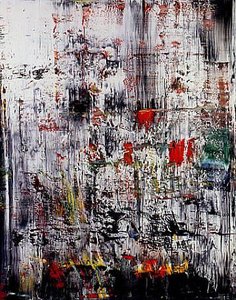
The canvas becomes a site of tension between the sharp clarity of a photograph and the chaotic movement of paint. In his photorealistic works, Richter often employs a signature blurring effect, a technique that distorts the subject and creates a sense of detachment. He builds these images through a layering process, applying thin glazes of paint to create depth and a sense of filtered memory. This method allows him to recreate the appearance of a photographic print while simultaneously questioning the reliability of the image itself.

The approach shifts radically when he moves toward abstraction. Here, the controlled application of paint gives way to a more visceral, unpredictable process. He uses squeegees to drag thick layers of paint across the surface, manipulating the medium in ways that invite chance and spontaneity. This technique breaks the surface into textured, gestural marks that defy the precision of his figurative work. Beyond the traditional canvas, his experimentation extends into other forms, including the creation of monotypes and glass sculpture.

  • Betty (1988)
  • Fuji (2013)
  • Wand (Wall) (1994)

Exploration of Color and Form

The investigation into color moves away from the emotional toward the systematic. Between 1966 and 2008, Richter produced his Color Charts (*Farbtafeln*), a series defined by the rigorous arrangement of colored squares. These works strip away the spontaneity of the brushstroke, replacing it with a controlled, grid-like logic. The focus shifts to the inherent properties of the pigment itself, organized into a repetitive, almost clinical structure that challenges the traditional expectation of what a painting should communicate.

This pursuit of neutrality extends into the monochromatic. From 1966 to 2014, the Gray Paintings (*Graue Bilder*) explored the subtle tonal nuances found within a single hue. Here, the complexity lies in the minute shifts of light and shadow across a gray surface. It is a study of perception, where the absence of varied color forces a confrontation with the texture and depth of the medium. This disciplined approach to the spectrum finds an unexpected application in the sacred. In 2007, Richter applied his understanding of color and geometry to a stained-glass window for the Cologne Cathedral, translating his modern sensibilities into a traditional architectural medium.

Significant Works and Major Paintings

The market and the canvas often collide in Richter's career. In 2015, his 1986 work Abstraktes Bild sold for over $44.5 million. This piece belongs to a body of work that moves between the precision of a photograph and the chaotic layering of paint. While some works focus on the mechanics of color, others turn toward the personal. In 1988, he produced Betty, an oil painting of his daughter looking toward one of his abstract works. It remains one of his most frequently cited pieces, appearing in the top three of his most requested reproductions.

History and memory provide the weight for his more somber investigations. The 1988 series October 18, 1977 addresses the Baader-Meinhof group, a controversial German terrorist organization. This period of work sits alongside his more recent large-scale endeavors. In 2014, he created the Birkenau cycle, consisting of four large-scale abstract paintings. These works confront the trauma of the Holocaust through abstraction rather than literal depiction. Even his landscapes carry a sense of distance; Fuji, painted in 2013, uses a muted palette of red, orange, and blue to suggest a faded memory of the Japanese mountain.

Legacy and Global Influence

The scale of Richter’s presence in the contemporary landscape is measured by sheer frequency. He has presented his work at Documenta more times than any other artist, a record that tracks his persistent engagement with the evolution of modern painting. In 1972, he represented West Germany at the Venice Biennale, a moment that solidified his standing on the international stage. His canvases have moved from the experimental spaces of Düsseldorf to the permanent collections of the Museum of Modern Art in New York.

His influence reaches into the very definition of the medium. He has been called the 'Picasso of the 21st century,' a title reflecting a career that refuses to settle into a single mode. He moves between the precision of the photographic and the chaos of the abstract, never allowing one to fully replace the other. This refusal to be categorized has made him a central figure in the discourse of contemporary art, influencing how subsequent generations approach the tension between reality and representation.

Where to See His Works Today

The physical presence of Richter’s practice spans major institutional collections across Europe. In Essen, Germany, the Museum Folkwang maintains works from his extensive output. The reach of his imagery extends to Rome, where the MAXXI National Museum of XXI Century Arts holds pieces within its permanent collection. These locations offer a direct encounter with the tension between his photographic and abstract methods.

In London, the Tate features his paintings, placing his visual language within the context of British institutional history. The Kunstmuseum Winterthur also maintains works in its collection, ensuring his influence remains visible in Switzerland. These museums act as repositories for the various stages of his career, from early experiments to large-scale canvases.