


Βασικά στοιχεία
- Works on this site: 5
- Died: 2013
- Also known as: F.E. Τσαούντρη
- Color intensity: μονόχρωμο
- Copyright status: Under copyright
- Top-ranked work: Partition 1947 - Women At A Refugee Camp
- Top 3 works:
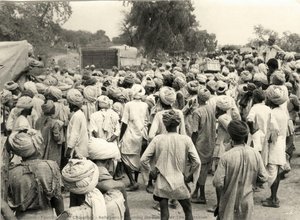
- Partition 1947 - Women At A Refugee Camp
- 1947 Partition - Boli Camp, Lahore
- 1947 Partition - A Hospital At Walton Camp, Lahore.
Quiz
Για κάθε ερώτηση υπάρχει μόνο μία σωστή απάντηση.
Ερώτηση 1:
Ποια ήταν το surnom (nickname) του Faustin Elmer Chaudhry;
Ερώτηση 2:
Σε ποια πόλη δίδασκε επιστήμης ο F.E. Chaudhry στο St. Anthony’s High School;
Ερώτηση 3:
Ποιο σημαντικό ιστορικό γεγονός κατέγραψε ο F.E. Chaudhry ως ντόπιος πακιστανός φωτογράφος;
Ερώτηση 4:
Ποια ήταν η επάγγελμα του F.E. Chaudhry πριν ξεκινήσει η καριέρα του ως ελεύθερος φωτογράφος;
Ερώτηση 5:
Ποια χρονιά πέθανε ο Faustin Elmer Chaudhry;
Ημερολόγιο

Earth & Elegance: Top 10 Famous Paintings Dominated by Khaki Tones
Immerse yourself in the serene beauty of earth tones. Explore 10 iconic paintings defined by khaki and neutral palettes, from Impressionist landscapes to classical masterpieces. Find inspiration for your decor with museum-quality reproductions. Discover all masterpieces on OriginalUniqueArt.com.


Indian contemporary realist painters
Indian contemporary realist painters like Devender Pal Singh redefine truth. Explore the full collection online at OriginalUniqueArt.com.

The Weight of Witness: Assessing the Historical Gravity of Documentary Photography
Explore the profound history of documentary photography from Niépce to modern social reform. Discover the power of the lens today.



Ερωτήσεις και Απαντήσεις
Είναι το έργο του Φαυστίνος Έλμερ Τσαούντρη στο δημόσιο περιεχόμενο;
Όχι. Τα έργα του Φαυστίνος Έλμερ Τσαούντρη προστατεύονται ακόμη από πνευματικά δικαιώματα.
Σε ποια μουσεία βρίσκονται τα έργα του Φαυστίνος Έλμερ Τσαούντρη;
Τα έργα του Φαυστίνος Έλμερ Τσαούντρη βρίσκονται στα The Citizens Archive of Pakistan.
Πόσα χρόνια έζησε ο/η Φαυστίνος Έλμερ Τσαούντρη;
Ο/Η Φαυστίνος Έλμερ Τσαούντρη έζησε περίπου 104 χρόνια, από το 1909 έως το 2013.
Πού και πότε γεννήθηκε ο/η Φαυστίνος Έλμερ Τσαούντρη;
Ο/Η Φαυστίνος Έλμερ Τσαούντρη γεννήθηκε στην/στη Σαχαράνπουρ το 1909.
Με τι άλλα ονόματα ή ψευδώνυμα είναι γνωστός/η Φαυστίνος Έλμερ Τσαούντρη;
Ο/Η Φαυστίνος Έλμερ Τσαούντρη είναι γνωστός/η επίσης ως F.E. Τσαούντρη.
Σε ποια ιστορική περίοδο δραστηριοποιήθηκε ο/η Φαυστίνος Έλμερ Τσαούντρη;
Ο/Η Φαυστίνος Έλμερ Τσαούντρη δραστηριοποιήθηκε κατά την περίοδο του/της Μοντέρνα εποχή. Η συγκεκριμένη εποχή τοποθετεί τη δραστηριότητα του/της καλλιτέχνη/στη στην ιστορία.
Υπάρχει οδηγός μελέτης για ένα έργο του Φαυστίνος Έλμερ Τσαούντρη;
Ναι. Δείτε τον οδηγό μελέτης για το Partition 1947 - Women At A Refugee Camp, ένα εκτυπώσιμο φύλλο πληροφοριών.
Για ποιες ζωγραφιές είναι γνωστός/η ο/η Φαυστίνος Έλμερ Τσαούντρη;
Ο/Η Φαυστίνος Έλμερ Τσαούντρη είναι γνωστός/η για τα έργα που περιλαμβάνονται στις πιο διάσημες ζωγραφιές του/της Φαυστίνος Έλμερ Τσαούντρη.